
Internal Nasal Stent vs External Nasal Clip: Full Comparison

Back2Sleep vs Airmax: Which Nasal Dilator Actually Stops Snoring?
An honest, research-backed comparison of two fundamentally different approaches to nasal breathing. One opens your nostrils. The other opens your entire airway. Here is what that means for your sleep.
Internal Nasal Stent vs External Nasal Dilator: Why the Difference Matters
If you have been searching for a nasal dilator to stop snoring, you have probably seen both Back2Sleep and Airmax pop up in your results. They look similar at first glance. Both go inside your nose. Both claim to improve airflow. But the way they work is so different that comparing them side by side reveals a gap most review sites completely ignore.
Choose Your Size →Airmax is a small plastic clip that sits at the entrance of your nostrils. It widens the nasal valve, the narrowest point of your nasal passage. Back2Sleep is a soft silicone stent that travels deeper, reaching all the way to the soft palate to keep the entire upper airway open. That distinction between opening the door versus clearing the whole hallway is what determines whether you just breathe a bit easier or actually stop snoring.
In this comparison, we break down the clinical evidence, real-world user feedback, cost, comfort, and practical results. No marketing spin. Just data and honest experience so you can pick the right device for your situation.
Try the Back2Sleep Starter KitHow Each Device Works Inside Your Nose
Airmax: Nostril Opener
Airmax is a small, rigid plastic clip with two curved wings. You push it into the opening of your nostrils, and the wings press outward against the nasal valve. This is the same area that Breathe Right strips target from the outside, but Airmax pushes from within. The result is a wider nostril entrance that lets more air through during inhalation.
Back2Sleep: Airway Stent
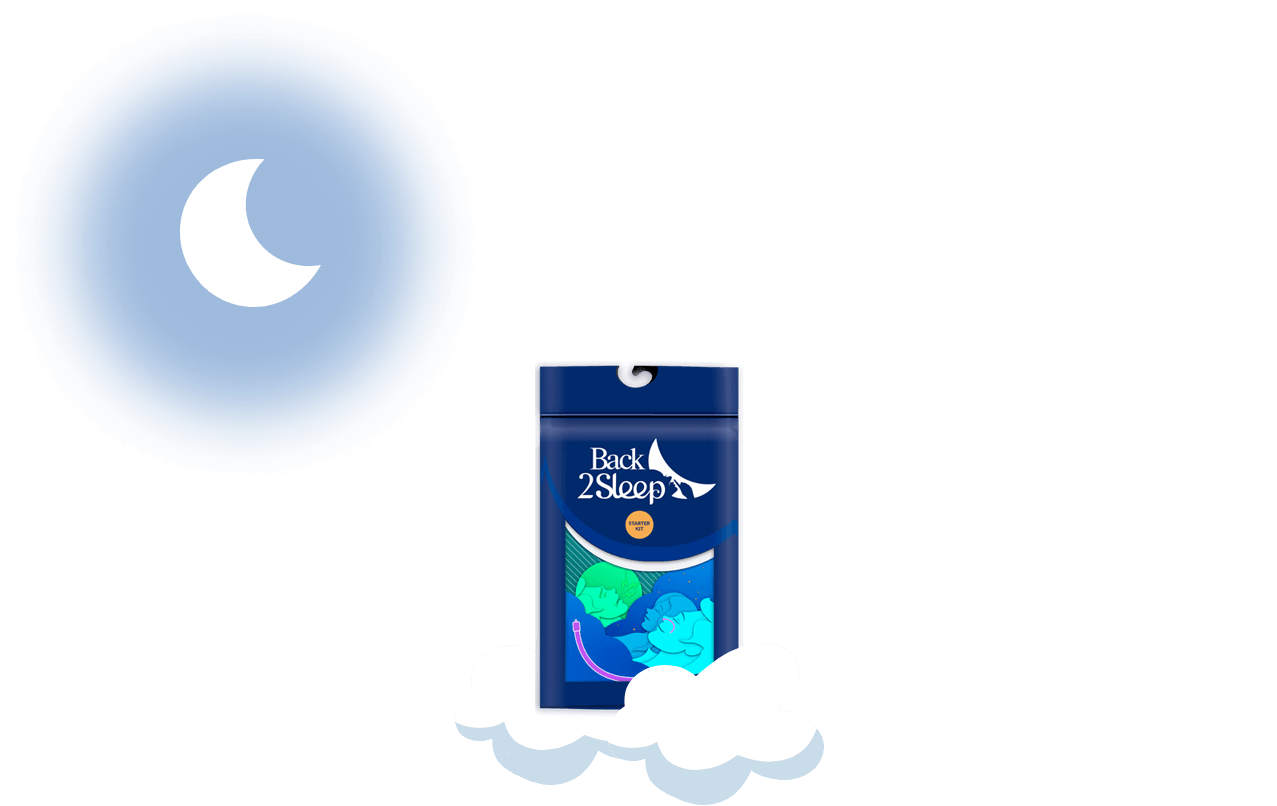
Back2Sleep is a flexible silicone tube that inserts into one nostril and extends past the nasal cavity down to the soft palate. It creates an unobstructed air channel through the entire upper airway, bypassing both the nasal valve and the area where soft tissue collapses during sleep. This is where most snoring actually originates.

What Clinical Research Says About Internal vs External Dilators
The clinical picture is clearer than most comparison articles suggest. Multiple peer-reviewed studies have tested both types of nasal dilators, and the data consistently shows that internal devices outperform external ones for snoring reduction.
A 2016 systematic review published in Pulmonary Medicine analyzed 14 studies covering 294 patients. The subanalysis comparing internal versus external nasal dilators found a striking gap: internal devices reduced the snoring index by 86.54 points, while external devices managed only 3.08 points. That is not a small margin. It is a fundamentally different level of effectiveness.
A 2019 clinical trial published in Acta Biomedica compared Nas-air (an internal dilator similar in concept to Airmax) against Breathe Right strips in 41 patients. Both devices reduced snoring time, but the internal dilator was effective in more patients and produced better sleep quality scores on a visual analog scale (p<0.05).
Separately, the Airmax-specific PNIF study in adolescent athletes (Dinardi et al., 2016) measured peak nasal inspiratory flow at 104.27 L/min with Airmax versus 97.73 L/min with placebo. That is a real improvement in nasal airflow, but PNIF measures air at the nostril, not snoring reduction downstream where tissue collapse occurs.
For Back2Sleep, clinical testing showed REI dropping from 22.4 to 15.7 (p<0.01) and lowest SpO2 rising from 81.9% to 86.6% (p<0.01). These are sleep apnea-level metrics that nostril-only dilators do not address.
Learn How Back2Sleep WorksHead-to-Head Comparison: Back2Sleep vs Airmax
| Feature | Back2Sleep | Airmax |
|---|---|---|
| Device type | Intranasal stent (soft silicone tube) | Nasal valve dilator (rigid plastic clip) |
| Where it sits | Nostril to soft palate (full airway) | Nostril entrance only (nasal valve) |
| Material | Medical-grade soft silicone, dermatologically tested | Medical-grade rigid polymer |
| Sizes available | S, M, L, XL (Starter Kit includes all 4) | Small, Medium (Trial Pack has both) |
| Snoring mechanism addressed | Nasal obstruction + soft palate collapse + airway narrowing | Nasal valve narrowing only |
| Mild sleep apnea | Yes, CE-certified for mild-to-moderate OSA | No, not designed for sleep apnea |
| Comfort reports | 3-5 day adaptation; soft silicone minimizes irritation | Mixed; some users report sharp edges and septum irritation |
| Stays in at night | Yes, tube anchors behind soft palate | Can slip out; sizing is critical |
| Device lifespan | ~15 days per stent | ~2 months per clip |
| Starter cost | €39 (4 sizes included) | ~€15-20 (trial pack, 2 sizes) |
| Annual cost (subscription) | ~€299/year (yearly plan) | ~€90-120/year (replace every 2 months) |
| Clinical evidence for snoring | REI reduction (p<0.01), SpO2 improvement (p<0.01) | PNIF improvement at nostril level (p=0.01) |
| Travel-friendly | Yes, no electricity, fits in pocket | Yes, compact clip |
4 Key Differences That Decide Which Device Works for You
Depth of Action
Airmax opens the nostril entrance, improving nasal valve airflow. Back2Sleep bypasses the entire nasal cavity to keep the soft palate airway open. If your snoring comes from deeper tissue collapse rather than a stuffy nose, the deeper device addresses the actual cause.
Comfort Over Time
Airmax is rigid plastic. Users on Amazon report sharp edges, septum pain, and the device cutting nasal tissue. Back2Sleep uses soft medical silicone that flexes with your anatomy. The trade-off: a 3-5 day adaptation period before it feels natural.
Staying Put All Night
Airmax sits at the nostril opening and can slip out during sleep, especially for side sleepers. Back2Sleep anchors deeper behind the soft palate. Once placed, it stays. Users report waking up with it still in position, even after tossing and turning.
Sleep Apnea Relevance
Airmax is designed for nasal congestion and snoring only. Back2Sleep carries CE medical certification for mild-to-moderate obstructive sleep apnea. A 2016 meta-analysis confirmed nasal dilators alone cannot treat OSA, but stent-type devices that reach the soft palate show measurable AHI reduction.
Real User Experiences: What People Actually Say
We looked at verified reviews across Amazon, Walmart, Trustpilot, and product forums. The patterns are consistent and revealing.
Common Airmax Complaints
The most frequent negative feedback about Airmax falls into three categories:
- Sharp edges and irritation: Multiple verified Amazon buyers report the rigid plastic wings irritating or even cutting the inside of the nose. One reviewer wrote that the medium size pressed too hard and caused nose pain, while the small was too loose and fell out.
- Falls out during sleep: Rigid clips that only sit at the nostril entrance tend to dislodge when you change position. Users who move in their sleep often wake up to find the device on the pillow.
- Limited snoring reduction: Many users report easier breathing but minimal change in snoring. This aligns with the clinical data: opening the nostril helps airflow but does not address the soft palate vibration that produces snoring sounds.
What Back2Sleep Users Report
The adaptation period is real. About 3 to 5 nights are needed before the device feels natural. Some users report mild discomfort on the first night, similar to wearing contact lenses for the first time. By night three or four, most people forget it is there. Clinical testing noted that 5 of 23 subjects dropped out due to initial discomfort, which means the device is not for everyone, but 78% adapted successfully.

Who Should Choose Airmax (and Who Should Not)
Airmax is not a bad product. It has legitimate clinical research behind it, including a study showing 176% PNIF improvement in patients with nasal valve problems. For certain people, it is the right choice.
The 2025 meta-analysis in Journal of Clinical Medicine (17 studies, 496 participants) concluded that nasal dilators alone cannot be recommended as monotherapy for sleep-disordered breathing. They may help as adjunctive therapy for mild symptoms or nasal congestion, but they are not a standalone treatment for snoring caused by airway collapse.
Why Back2Sleep Addresses What Airmax Cannot
The fundamental advantage of Back2Sleep is depth of action. While Airmax improves airflow at the nostril entrance, Back2Sleep creates an unobstructed channel from the nostril all the way to the soft palate. This matters because:
- Snoring originates at the soft palate in the majority of cases, not at the nostrils. The vibration of relaxed soft tissue is what your partner hears.
- Airway collapse happens deeper than the nasal valve. During sleep, muscle tone drops, and the tongue base, soft palate, and pharyngeal walls narrow the airway. A nostril clip does not reach this area.
- Oxygen saturation improves when the full airway is supported. Back2Sleep clinical data shows SpO2 rising from 81.9% to 86.6%, which means measurably more oxygen reaching your blood during sleep.
Think of it this way. If your garden hose has a kink in the middle, widening the nozzle will not fix the flow. You need to straighten the kink itself. Back2Sleep reaches the kink. Airmax only widens the nozzle.
Shop the Back2Sleep Nasal StentCost Breakdown: What You Actually Pay Over 12 Months
Airmax looks cheaper upfront. A trial pack costs around 15 to 20 euros. But the full picture over a year is more nuanced.
| Cost Factor | Back2Sleep | Airmax |
|---|---|---|
| Starter pack | €39 (includes 4 sizes: S, M, L, XL + lubricant + manual) | ~€15-20 (trial pack with 2 sizes) |
| Monthly subscription | €35/month (free delivery) | Not available; buy individually ~€15 every 2 months |
| Annual plan | €299/year (~€24.91/month) | ~€90-120/year (6 replacements) |
| What you get | Full airway support, CE-certified medical device, mild OSA treatment | Nostril opening only, no sleep apnea treatment |
| Cost per night (annual plan) | ~€0.82 | ~€0.25-0.33 |
Yes, Back2Sleep costs more. But it is also a CE-certified medical device that addresses snoring and mild-to-moderate sleep apnea. If you factor in the cost of poor sleep, lost productivity, and relationship strain from ongoing snoring that a nostril clip does not fix, the value equation shifts. A device that does not solve the problem is not a bargain at any price.
The Adaptation Timeline: What to Expect with Each Device
Night 1-2
Airmax: Immediate effect on nostril width. Some users feel pressure or sharp edges. 71% of first-time internal dilator users report difficulty with initial insertion.
Back2Sleep: Noticeable airflow improvement. Mild awareness of the tube. Some users compare it to wearing contact lenses for the first time.
Night 3-5
Airmax: Users who tolerate it settle in. Those with septum irritation often quit during this window.
Back2Sleep: Most users stop noticing the device. The soft silicone conforms to nasal anatomy. Snoring reduction becomes consistent.
Night 6+
Airmax: Stable results for users who found the right size. 19 of 30 patients in one study continued use after 4 weeks.
Back2Sleep: Fully adapted. 10-second insertion becomes routine. Partners report sustained silence through the night.
How Both Compare to Other Anti-Snoring Options
Nasal dilators are not the only option. Here is how Back2Sleep and Airmax fit into the broader landscape of anti-snoring devices.
| Device Type | How It Works | Snoring Reduction | Sleep Apnea | Comfort |
|---|---|---|---|---|
| Breathe Right strips | External adhesive opens nostrils from outside | Minimal (snoring index -3.08) | No | Good, but 23% fall off at night |
| Airmax | Internal clip widens nasal valve | Moderate (PNIF +76% at nostril) | No | Mixed; sharp edges reported |
| Mandibular advancement device | Pushes jaw forward to open throat | Good for tongue-base snoring | Mild-moderate | Jaw soreness common |
| CPAP | Pressurized air via mask | Excellent | Yes, gold standard | Low compliance (30-50% quit) |
| Back2Sleep nasal stent | Silicone tube from nostril to soft palate | Strong (snoring index -86.5 class) | Mild-moderate OSA | 3-5 day adaptation, then comfortable |
For people who have tried Breathe Right strips or Airmax without meaningful snoring reduction, the logical next step is a device that reaches deeper into the airway. Back2Sleep fills that gap between a simple nostril clip and a full CPAP machine.
Practical Tips for Getting the Best Results
Whichever device you choose, these tips improve your odds of success:
Frequently Asked Questions
Is Airmax the same as Back2Sleep?
Can Airmax help with sleep apnea?
Does Back2Sleep fall out during sleep?
Which device is more comfortable?
Is Back2Sleep worth the higher price?
Can I use both devices together?
Where can I buy Back2Sleep?
Ready to Stop Snoring from Night One?
The Back2Sleep Starter Kit includes 4 sizes, lubricant, and a full instruction guide. Find your fit in 15 nights. Free returns within 15 days.
Order the Starter Kit - €39