Sleep Apnea and Diabetes: How Breathing Pauses Spike Your Blood Sugar
Over 50% of people with type 2 diabetes have undiagnosed sleep apnea. Every breathing pause floods your body with stress hormones that drive insulin resistance, raise HbA1c, and sabotage glucose control — even if you eat well and exercise.
The Hidden Link Between Sleep Apnea and Blood Sugar
If your blood sugar stays stubbornly high despite medication, diet changes, and regular exercise, the problem might not be on your plate. It could be in your airway.
Obstructive sleep apnea (OSA) causes repeated breathing pauses during sleep — sometimes 30, 60, or even 100 times per hour. Each pause starves your cells of oxygen. Your brain triggers a stress response. Cortisol and adrenaline surge. And your liver dumps glucose into the bloodstream whether you need it or not.
This cycle happens all night, every night. By morning, your fasting blood sugar is elevated before you eat a single bite. A 2022 meta-analysis published in Sleep Science and Practice confirmed that over 50% of people with type 2 diabetes also have OSA. Most of them don't know it.
The relationship runs both ways. Sleep apnea increases the risk of developing diabetes by 35% (adjusted relative risk: 1.35, per pooled data from 10 prospective cohort studies). And diabetes, particularly when combined with obesity, makes sleep apnea worse.
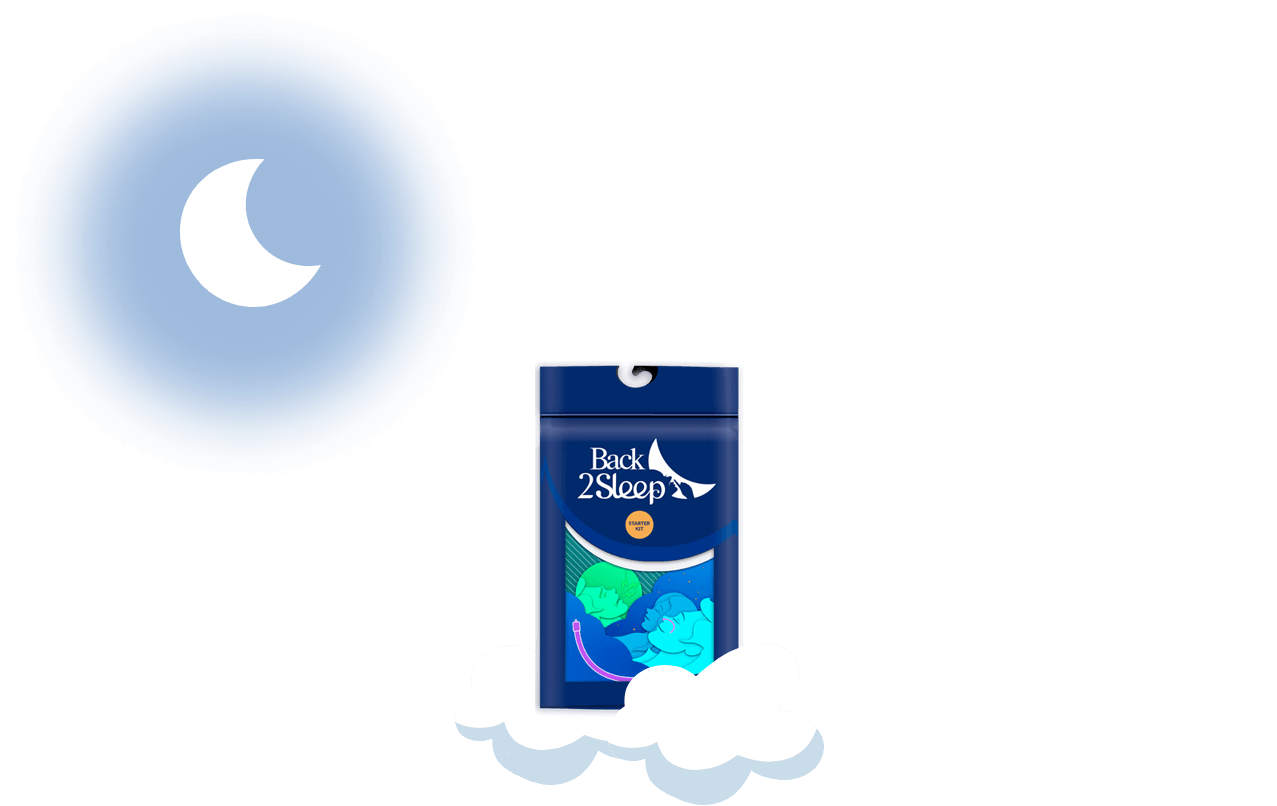
Try the Back2Sleep Starter Kit
Sleep Apnea and Diabetes: The Numbers That Matter
50-70%
of type 2 diabetics have OSA
80%
of OSA cases go undiagnosed
+0.8%
higher HbA1c in severe OSA
45%
dawn phenomenon reduction with treatment
These figures come from research published by the American Diabetes Association, the American Thoracic Society, and the University of Chicago. They paint a clear picture: if you have diabetes and your numbers won't cooperate, a sleep apnea screening could be the missing piece.
How Obstructive Sleep Apnea Drives Insulin Resistance
Understanding the biology helps explain why sleep apnea and high blood sugar are so tightly connected. Here are the four main pathways:
Intermittent Hypoxia
Each breathing pause drops blood oxygen levels. A study in the Journal of Applied Physiology showed that just 5 hours of intermittent hypoxia reduced insulin sensitivity by 17% in healthy volunteers — without any change in insulin production.
Cortisol & Stress Hormones
Every apnea event triggers your fight-or-flight system. Cortisol and norepinephrine spike repeatedly throughout the night, telling your liver to release stored glucose. This keeps blood sugar elevated even while you sleep.
Sleep Fragmentation
Researchers using acoustic stimuli to fragment sleep (without changing oxygen levels) found that insulin sensitivity dropped 20-25% after just one night. Broken sleep alone is enough to impair glucose metabolism.
Pancreatic Beta-Cell Damage
Chronic intermittent hypoxia doesn't just make cells resistant to insulin — it damages the cells that produce insulin. Rodent studies show beta-cell dysfunction and even beta-cell death after prolonged oxygen deprivation cycles.
Why morning glucose is highest: The dawn phenomenon occurs between 4-8 a.m. when cortisol naturally rises. Sleep apnea amplifies this spike dramatically. University of Chicago research found that treating OSA reduced the dawn phenomenon by 45% within one week.
★★★★★
"Since I started using the Back2Sleep Starter Kit, my quality of life has literally changed. I had significant snoring problems that disturbed not only my sleep but also my partner's. From the very first use, I noticed a clear improvement: I breathe better, I sleep more deeply, and I wake up more rested. This kit is not only effective but also very comfortable to wear all night. I highly recommend it to anyone who suffers from snoring or mild apnea. The value for money is excellent and the results are impressive!"
— Alex Purchase on Amazon
Who Is at Risk? Recognizing Dual Symptoms
Sleep apnea and diabetes share several overlapping risk factors. That overlap is precisely why so many cases get missed — doctors attribute symptoms to diabetes alone when OSA is the hidden driver.
Warning signs that OSA may be worsening your diabetes
-
High fasting glucose despite good diet and medication adherence
-
Morning headaches and excessive daytime sleepiness
-
Loud snoring or gasping during sleep (often noticed by a partner)
-
HbA1c that won't come down no matter what you try
-
Unexplained weight gain or difficulty losing weight
-
Night sweats and frequent bathroom trips at night
-
Irritability, brain fog, depression — often dismissed as diabetes fatigue
Women with OSA are especially underdiagnosed. Instead of classic loud snoring, they tend to report insomnia, fatigue, and depressive symptoms. If you're a woman with type 2 diabetes and persistent tiredness, ask your doctor about a sleep study.
Choose Your Size →
The Dawn Phenomenon: Why Your Morning Glucose Is So High
If you check your blood sugar first thing in the morning and find it higher than your bedtime reading, that's the dawn phenomenon. It happens because your body releases cortisol, growth hormone, and glucagon between 4 a.m. and 8 a.m. to prepare you for waking up.
In people without sleep apnea, this rise is modest — maybe 10-20 mg/dL. But in someone with untreated OSA, the body has been in survival mode all night. Stress hormone levels are already elevated from hundreds of micro-awakenings. The dawn effect stacks on top of an already elevated baseline.
A proof-of-concept study at the University of Chicago put this to the test. After just one week of proper OSA treatment, 24-hour mean plasma glucose dropped by 13.7 mg/dL compared to only 2.9 mg/dL in the sham-treatment group. The dawn phenomenon specifically dropped by 45%.
10:00 PM
Bedtime reading: 110 mg/dL. You fall asleep feeling good about your numbers.
1:00 AM
First apnea cluster: 30+ breathing pauses per hour. Oxygen drops. Cortisol rises. Liver releases glucose. Blood sugar creeps to 130 mg/dL.
4:00 AM
Dawn effect begins: Natural hormone surge + OSA-driven stress hormones compound. Blood sugar climbs past 150 mg/dL.
7:00 AM
Wake up: Fasting glucose reads 165 mg/dL. You ate nothing. The damage happened while you were asleep.
★★★★★
"Significantly reduces snoring. Super product!"
— Choufred Purchase on Amazon
Treatment Options: What Actually Lowers Blood Sugar in OSA Patients?
Treating sleep apnea won't replace your diabetes medication. But for many people, it's the intervention that finally makes everything else work better.
| Treatment |
HbA1c Impact |
Ease of Use |
Best For |
| CPAP therapy |
-0.24% to -0.4% (meta-analysis) |
Moderate — requires mask and machine nightly |
Moderate-to-severe OSA with good adherence |
| Intranasal stent (Back2Sleep) |
Improves airflow & oxygen levels; supports metabolic function |
High — 10-second insertion, silent, portable |
Mild-to-moderate OSA, snoring, CPAP-intolerant patients |
| Oral appliance (MAD) |
Comparable to CPAP in mild-moderate cases |
Moderate — custom dental fitting required |
Mild-to-moderate OSA, jaw anatomy dependent |
| Weight loss (10-15%) |
-0.5% to -1.0% + may resolve mild OSA |
Challenging — requires sustained lifestyle change |
Overweight patients with both conditions |
| GLP-1 medications |
-1.0% to -1.5% + reduces AHI |
Weekly injection or daily oral |
Type 2 diabetes with obesity and OSA |
| Positional therapy |
Indirect — reduces supine apnea events |
High — wearable or pillow-based |
Positional OSA (worse when sleeping on back) |
A meta-analysis in the European Respiratory Review (2023) found that higher nightly CPAP use correlated directly with greater HbA1c reduction. Every additional hour of treatment lowered HbA1c by an extra 0.17%. The takeaway: consistency matters more than perfection.
Learn About the Back2Sleep Solution
Real-World Experiences: What Patients Report
Medical studies provide the data. But the experiences of real people show what those numbers feel like in daily life.
Clinical observation: One patient started OSA treatment and within two weeks reported having more energy. Two months later, his HbA1c dropped from 8.2% to 7.1%. He began walking daily, lost 12 pounds, and needed less insulin. His endocrinologist hadn't changed his medication. The only new variable was treating his sleep apnea. — Reported by Sleep Analyst, 2024
This pattern repeats across diabetes forums and sleep clinics worldwide. People describe the same sequence:
-
Diagnosis surprise: "I had no idea my snoring was connected to my blood sugar. My doctor never mentioned sleep apnea."
-
Treatment start: Within days, morning glucose readings begin to drop. Energy improves. The afternoon crash disappears.
-
Metabolic cascade: Better sleep leads to more energy. More energy leads to movement. Movement improves insulin sensitivity. A positive spiral replaces the vicious cycle.
-
Lab confirmation: At the 3-month checkup, HbA1c is lower. Sometimes enough to reduce medication doses.
People who struggle with CPAP masks often find that simpler devices make the difference. A quiet, portable intranasal stent that opens the airway without a machine, tubes, or electricity gives many patients a treatment they actually use every night — and adherence is what drives results.
Order the Starter Kit — Find Your Size
★★★★★
"The only device that actually works against snoring. Highly recommended!"
— Yavor Purchase on Amazon
New Research: GLP-1 Drugs, Weight Loss Surgery, and the Future of Dual Treatment
The landscape for treating OSA and diabetes together is shifting fast. Two developments stand out in 2025-2026 research:
GLP-1 receptor agonists (semaglutide, tirzepatide)
Originally designed for diabetes, these medications cause significant weight loss — which also reduces the severity of sleep apnea. A growing body of evidence suggests they address both conditions simultaneously. For patients who are overweight with type 2 diabetes and moderate OSA, GLP-1 drugs may reduce AHI (apnea-hypopnea index) alongside HbA1c.
Bariatric surgery
Weight loss surgery resolves OSA in a significant percentage of patients while dramatically improving diabetes. Some patients achieve remission of both conditions. However, this is a major surgical intervention reserved for severe cases.
The combination approach
The most promising clinical results come from combining treatments: airway support at night (whether CPAP, an intranasal device, or oral appliance) plus metabolic treatment during the day (medication, diet, exercise). Neither alone is sufficient for most patients with both conditions.
Key insight: A Circulation Research review (2025) from the American Heart Association emphasized that OSA treatment alone rarely "cures" insulin resistance. But it creates the metabolic conditions — lower cortisol, better oxygen, deeper sleep — that allow other interventions to actually work.
Try Back2Sleep Tonight →
Your 5-Step Action Plan: Tackling Sleep Apnea and Diabetes Together
Step 1
Get screened for OSA. Ask your doctor about a home sleep test or polysomnography. Mention snoring, morning headaches, or unexplained high fasting glucose. The STOP-BANG questionnaire takes 2 minutes and flags high-risk patients.
Step 2
Start airway treatment immediately. Whether it's CPAP, an oral appliance, or an
intranasal stent from Back2Sleep, opening your airway at night reduces the stress hormone cascade that sabotages blood sugar.
Step 3
Track your morning glucose. After 1-2 weeks of treatment, compare your fasting readings to your pre-treatment baseline. Many people see a 10-20 mg/dL drop within the first week.
Step 4
Retest HbA1c at 3 months. This gives enough time for the cumulative effect to show. Studies show reductions of 0.24-0.4% from OSA treatment alone — equivalent to adding a new diabetes medication.
Step 5
Build the positive spiral. Better sleep gives you energy to move. Movement improves insulin sensitivity. Improved sensitivity means better glucose control. Better control means fewer complications. Each step reinforces the next.
Stop Letting Sleep Apnea Sabotage Your Blood Sugar
Back2Sleep's intranasal stent opens your airway from the first night. No machine. No mask. No noise. Just quiet, uninterrupted breathing that lets your body regulate glucose the way it should.
The Starter Kit includes 4 sizes (S, M, L, XL) so you find your perfect fit. Over 92% of users report improvement from night one.
Order the Starter Kit — €44.90
Available at select pharmacies across Europe • Read more on our blog
Frequently Asked Questions: Sleep Apnea & Diabetes
Can sleep apnea directly cause type 2 diabetes?
Sleep apnea significantly increases the risk. A meta-analysis of 10 prospective studies found that people with OSA have a 35% higher risk of developing type 2 diabetes (adjusted relative risk: 1.35). The mechanisms — intermittent hypoxia, cortisol surges, sleep fragmentation — directly impair insulin sensitivity and glucose metabolism. It may not "cause" diabetes alone, but it's a powerful accelerator, especially when combined with genetic predisposition and lifestyle factors.
How much can treating OSA lower my HbA1c?
Clinical trials show reductions of 0.24% to 0.4% in HbA1c with consistent OSA treatment. That may sound small, but a 0.4% drop translates to a 6-8% reduction in cardiovascular risk and up to 15% fewer microvascular complications. The benefit is greatest for newly diagnosed patients and those with severe OSA whose HbA1c starts above 7.5%.
Why is my fasting blood sugar high even when I eat well?
Untreated sleep apnea triggers repeated cortisol and adrenaline surges throughout the night. These stress hormones tell your liver to release stored glucose regardless of what you ate. Add the dawn phenomenon (a natural cortisol rise between 4-8 a.m.) and your fasting glucose can be 30-50 mg/dL higher than it should be. Treating OSA can reduce this morning spike by up to 45%.
Can a nasal stent help with sleep apnea-related blood sugar issues?
An intranasal stent like Back2Sleep improves nasal airflow and reduces airway obstruction, which decreases apnea events and improves blood oxygen levels during sleep. Better oxygenation means fewer stress hormone surges and less overnight glucose dumping. While nasal stents are best suited for mild-to-moderate OSA and snoring, improving any degree of sleep-disordered breathing supports better metabolic health.
Should I tell my endocrinologist about my snoring?
Absolutely. The American Diabetes Association recommends screening for OSA in patients with type 2 diabetes, especially those with treatment-resistant hyperglycemia, obesity, or unexplained fatigue. Yet up to 83% of diabetic patients with OSA remain undiagnosed. Mentioning snoring, morning headaches, or daytime sleepiness to your endocrinologist could uncover the hidden factor behind stubborn blood sugar levels.
Does losing weight fix both sleep apnea and diabetes?
Weight loss of 10-15% can significantly improve both conditions. In some cases, mild OSA resolves completely with weight loss. However, not all sleep apnea is weight-related (thin people get it too), and waiting to lose weight while leaving OSA untreated means months of ongoing metabolic damage. The best approach is to treat OSA immediately while pursuing weight loss as a complementary long-term strategy.
How quickly will I see blood sugar improvements after starting OSA treatment?
Many people notice lower fasting glucose within the first 1-2 weeks. A controlled study showed a 13.7 mg/dL drop in 24-hour mean glucose after just one week of treatment. HbA1c improvements take longer to appear on lab tests (usually 2-3 months) because HbA1c reflects a 90-day average. Track your daily fasting glucose for the earliest signal of improvement.
Medical Disclaimer: This article is for informational purposes only and does not replace professional medical advice, diagnosis, or treatment. Always consult your physician or endocrinologist before making changes to your diabetes management plan or starting any new treatment for sleep apnea. Back2Sleep is a CE-certified Class I medical device intended for reducing snoring and improving nasal airflow in cases of mild-to-moderate obstructive sleep apnea.