
Comparing Hypoglossal Nerve Stimulation Implants With Jaw Advancement Surgery When CPAP Has Failed

Hypoglossal nerve stimulation vs jaw advancement surgery compared on eligibility, recovery and reversibility across European centres
Two definitive routes exist after CPAP fails, and your sleep endoscopy result plus the country you live in usually decide which one you can actually have.
Hypoglossal Nerve Stimulation vs Jaw Advancement Surgery at a Glance
The choice between hypoglossal nerve stimulation vs jaw advancement surgery is usually settled by your anatomy and your country, not by preference. Hypoglossal nerve stimulation (HNS), also called upper airway stimulation (UAS), is an implanted device that activates cranial nerve XII so the genioglossus muscle holds the tongue forward during sleep. Maxillomandibular advancement (MMA) is orthognathic surgery that moves both jaws forward and enlarges the posterior airway space permanently.
One is a device you switch on every night. The other is a single skeletal operation that cannot be undone. If you are still early in this decision, our guide to implant candidacy and how stimulation compares with non-invasive options maps the territory before an operating date exists.
| Question | Hypoglossal nerve stimulation | Jaw advancement (MMA) |
|---|---|---|
| What it does | Stimulates cranial nerve XII in time with breathing to prevent tongue-base collapse | Le Fort I osteotomy plus bilateral sagittal split osteotomy (BSSO) move the maxilla and mandible forward |
| Where it works | Retroglossal obstruction and tongue-base collapse | The whole pharynx, by increasing posterior airway space and the SNB angle |
| Key assessment | Drug-induced sleep endoscopy (DISE) for respiratory-sensing designs | Cephalometric imaging and virtual surgical planning |
| Typical eligibility | AHI 15–65 and BMI up to 35 kg/m² in the German ENT society position paper (2021); France applies IAH 15–50, IMC under 32 and fewer than 25% central events (SFRMS, 2025) | Moderate to severe OSA, often with skeletal deficiency, judged on imaging rather than a device eligibility range |
| When it starts working | About four weeks after surgery, at activation and titration | Once swelling and healing settle after the operation |
| Reported effectiveness | 66% met responder criteria at 12 months, median AHI down 68% (STAR trial, 2014) | 80–90% surgical success and 47% complete remission (PubMed Central review, 2026) |
| Reversibility | Switch off any night; explanting leads is a second operation | Permanent — osteotomies and fixation plates stay |
| Repeat procedures | Generator replacement roughly every ten years (ADHERE registry data, 2020) | Usually one operation for life |
- Stimulation treats one collapse pattern; jaw advancement rebuilds the whole airway.
- An implant works from the activation appointment, not from the day of surgery.
- Only one of the two routes can be switched off.

Why CPAP Failure Sends So Many People to a Surgeon
CPAP intolerance is the most common reason patients reach this comparison. A 2025 Thorax (BMJ) study of 1,000 patients across five UK sleep centres found only 38% were still CPAP-adherent at three months, and 98% of the non-adherent group had already stopped by the end of month one. A 2026 review in Frontiers in Surgery reports that obstructive sleep apnoea affects up to one billion adults worldwide, and that more than half of patients are intolerant of or non-adherent to CPAP.
PAP non-adherence is not a character flaw, and neither route is a punishment for failing. Both are recognised later-line therapies once positive airway pressure has genuinely been tried. In France, a mandibular advancement device (orthèse d'avancée mandibulaire, or OAM) must also have failed or been unusable before stimulation is reimbursed, a mandatory step most international guides skip entirely.
- Most CPAP drop-out happens in the first month, not after years.
- Surgery is a recognised next step, not a last resort for the desperate.
- French patients must document a failed oral device before implant funding.
The Sleep Endoscopy Result Usually Decides for You
Drug-induced sleep endoscopy (DISE) is the examination that most often makes this choice for the patient. Under light sedation, a surgeon watches your airway collapse in real time and records the pattern. The finding that matters most is complete concentric collapse (CCC) at the velum, where the soft palate closes inward like a camera shutter rather than front to back.
Complete concentric collapse contraindicates respiratory-sensing hypoglossal stimulation, but it does not rule out jaw advancement. The German ENT society position paper (European Archives of Oto-Rhino-Laryngology, 2021) reports that this pattern is present in 20–25% of PAP-intolerant patients. Roughly one in five to one in four people who arrive hoping for a respiratory-sensing implant therefore need a different plan.
Tongue-base collapse without concentric palatal closure points the other way, towards stimulation. A newer implant generation complicates that rule usefully. The leadless, bilateral stimulators now available in several European countries do not depend on the same collapse-pattern screening, which can reopen a door a single endoscopy appeared to close.
- DISE is a gatekeeper test, not a formality.
- Concentric palatal collapse blocks respiratory-sensing stimulation, not jaw surgery.
- Leadless bilateral designs are screened differently and may still qualify you.
Eligibility for Hypoglossal Nerve Stimulation vs Jaw Advancement Surgery Changes at the Border
Identical patients get different answers in different European countries. Both implant families are CE-marked medical devices regulated under the EU MDR (Regulation 2017/745) through notified bodies, so approval thresholds and insurance rules published for other markets describe nothing a European patient can actually obtain.
| Country | Stimulation criteria and route | Access reality | Jaw advancement funding |
|---|---|---|---|
| France | Third-line only, after documented PPC (CPAP) intolerance and a failed or unusable OAM; IAH 15–50, IMC under 32 kg/m², fewer than 25% central events, and a sleep endoscopy excluding concentric collapse | Reimbursed since September 2024, capped at 400 devices a year, roughly €20,000 per procedure, fewer than ten implanting centres in 2025 (SFRMS, 2025) | No device quota applies; ask a maxillofacial team how funding is assessed locally |
| Germany | Position paper criteria of AHI 15–65 and BMI up to 35 kg/m² (German ENT society, 2021) | More than 35 certified implanting centres; the Zungenschrittmacher is handled as an inpatient standard method by the gesetzliche Krankenkassen | Bimaxilläre Umstellungsosteotomie usually needs an Einzelfallantrag and is granted only in rare cases |
| United Kingdom | NICE-governed pathway (IPG598 and later guidance) with DISE screening before listing | Funded through the NHS Specialised Services Device Programme rather than an insurer | Provided through NHS maxillofacial services; ask your centre how it is commissioned |
| Belgium, Netherlands, Switzerland | A leadless, battery-free bilateral stimulator is CE-marked and commercially launched | Both implant families are placed in specialist units, so centre availability varies | Follows each country's national surgical pathway |
The practical consequence is blunt. A patient with an AHI of 55 and a BMI of 34 sits inside the German position-paper range and outside French reimbursement, where the ceiling is IAH 50 and IMC 32. German patients also have a statutory lever worth knowing. Under SGB V § 13, if the Krankenkasse does not decide within three weeks and gives no adequate reason, the service is deemed approved, which is why clinics advise sending funding requests by registered post. Our breakdown of what sleep apnoea treatment costs across Europe puts these pathways beside the everyday options.
- Eligibility is national policy, not only anatomy.
- France rations volume; Germany applies wider AHI and BMI limits.
- Waiting time and travel distance are genuine decision inputs in the EU.
What Happens Between the Implant Operation and the Device Working
An implant does not treat your apnoea on the operating table. This is the biggest misunderstanding patients bring to consultation, because jaw surgery genuinely does change the airway the moment it is finished. Stimulation follows a staged pathway instead.
1Surgery and healing
The implantable pulse generator and stimulation lead are placed under general anaesthetic, typically with a short inpatient stay. The device stays switched off while tissues heal, usually for around four weeks.
2Activation appointment
A sleep clinician switches the generator on, teaches you the remote control, and sets a starting amplitude while watching your tongue move. Patients commonly describe a firm pulling sensation rather than pain.
3Titration polysomnography
You spend a night in the sleep laboratory while stimulation strength is stepped through settings. This titration study finds the amplitude that opens the airway without waking you.
4Confirmation study and review
A follow-up sleep study confirms the response using the apnoea–hypopnoea index (AHI), the oxygen desaturation index (ODI) and your Epworth Sleepiness Scale (ESS) score. Real-world ADHERE registry data (2020) show a median AHI reduction of 23.3 events per hour at 12 months, with average nightly use of about 5.6 hours.
Response is judged on the Sher criteria, meaning at least a 50% reduction in AHI to below 20 events per hour. In the STAR trial (2014), 66% of participants met that bar at 12 months, and long-term responder rates of 63–75% were reported at five years.
- Budget about four weeks from implant to activation.
- Two sleep studies sit between the operation and a confirmed result.
- Nightly use still matters, exactly as it does with any device.
Recovery, Bite and Facial Profile After Jaw Advancement
Maxillomandibular advancement changes your face, and no honest comparison hides that. Advancing both jaws by roughly a centimetre alters the profile visibly, usually by projecting the chin and mid-face. Surgeons plan this with virtual surgical planning and can show a simulated outcome before you consent, so ask to see yours.
Most patients need pre-surgical orthodontics for months beforehand, because moving the skeleton without moving the teeth creates malocclusion. Splints, elastics and a soft diet follow. Sleep apnoea surgery recovery time is the other honest difference. Implant patients are commonly back to routine activity within one to two weeks, while surgical teams typically quote four to eight weeks after a bimaxillary osteotomy, following an inpatient hospital stay.
Numbness matters too. Inferior alveolar nerve paraesthesia affecting the lower lip and chin is common early after BSSO and usually improves, though it can persist. Against that sits the strongest reported effectiveness in the field. A 2026 PubMed Central review reports a mean AHI reduction of approximately 77% with a 47% complete remission rate (AHI below 5), and the 2026 Frontiers in Surgery review describes roughly an 80% reduction in the apnoea–hypopnoea index.
- Expect orthodontics before surgery and bite adjustment after it.
- Four to eight weeks of recovery, against one to two for an implant.
- Jaw advancement reports the largest AHI reductions and is the least reversible.
What Reversible Really Means and the Lifetime Arithmetic
Reversible does not mean removable without consequence. Switching a stimulator off takes a second, and that is what most patients actually mean when they call an implant reversible. Device explantation is a different matter. Retrieving the generator is straightforward, removing the stimulation lead requires a second neck operation, and many surgeons leave leads in situ rather than dissect them out.
Two further practicalities are rarely explained. Implanted stimulators are MRI-conditional, meaning scans are possible only under defined conditions and for defined body regions, which matters if you have a condition needing regular imaging. The generator also runs on a battery, and ADHERE registry data (2020) indicate a working life of roughly ten years.
That produces arithmetic a younger patient should do on paper. On that ten-year figure, someone implanted at 35 could face three or more generator replacement procedures by their seventies, each with its own anaesthetic and infection risk. Jaw advancement is one operation, and the airway gain, along with the new facial profile, is permanent whether or not you like the result. The younger you are, the more this single factor can flip the answer.
| Reversibility question | Stimulation implant | Jaw advancement |
|---|---|---|
| Stop the treatment tonight | Yes, switch off with the remote | Not possible |
| Remove the hardware | Second operation; leads often left in place | Osteotomy permanent; plates rarely removed |
| Undo the appearance change | No appearance change to undo | No, the profile change is permanent |
| Future procedures expected | Generator replacement roughly each decade | None planned |
| MRI scanning | Conditional, with restrictions | No implanted-device restrictions |
- Switching off is easy; explanting is surgery.
- Plan for a generator change every decade or so.
- Age at treatment changes the maths more than any brochure claim.
How Surgeons Sequence Hypoglossal Nerve Stimulation vs Jaw Advancement Surgery
These two routes are not mutually exclusive, despite how most pages present them. Published practice includes upper airway stimulation added after jaw advancement as a staged or salvage therapy, and stimulation offered after unsuccessful pharyngeal surgery. If you have already had soft-palate surgery for snoring without a durable result, an implant assessment is still reasonable.
Safety data are broadly reassuring for both. Serious adverse events after hypoglossal stimulation occurred in fewer than 2% of subjects in the evidence summarised by a 2026 PubMed Central review, with tongue soreness, incisional discomfort and transient tongue weakness the usual complaints. The German ENT society position paper (2021) reports complication rates of about 2–6% across international registries. A 2026 abstract in the journal SLEEP compared 1,266 propensity-score-matched OSA patients and found no significant difference in total major adverse cardiovascular events or hypertension outcomes between stimulation and jaw advancement.
- Failing one route does not disqualify you from the other.
- Cardiovascular outcomes looked comparable in matched 2026 data.
- Ask your surgeon directly what plan B looks like.
If Neither Door Opens, or While You Wait in the Queue
Some readers of this article will be screened out of both routes. A BMI above the national ceiling, concentric collapse with no reachable implanting centre, unfitness for a four-to-eight-week osteotomy recovery, or simply France's 400-device annual quota can each close the file. Others wait many months through ENT referral, endoscopy, surgical planning and a funding decision.
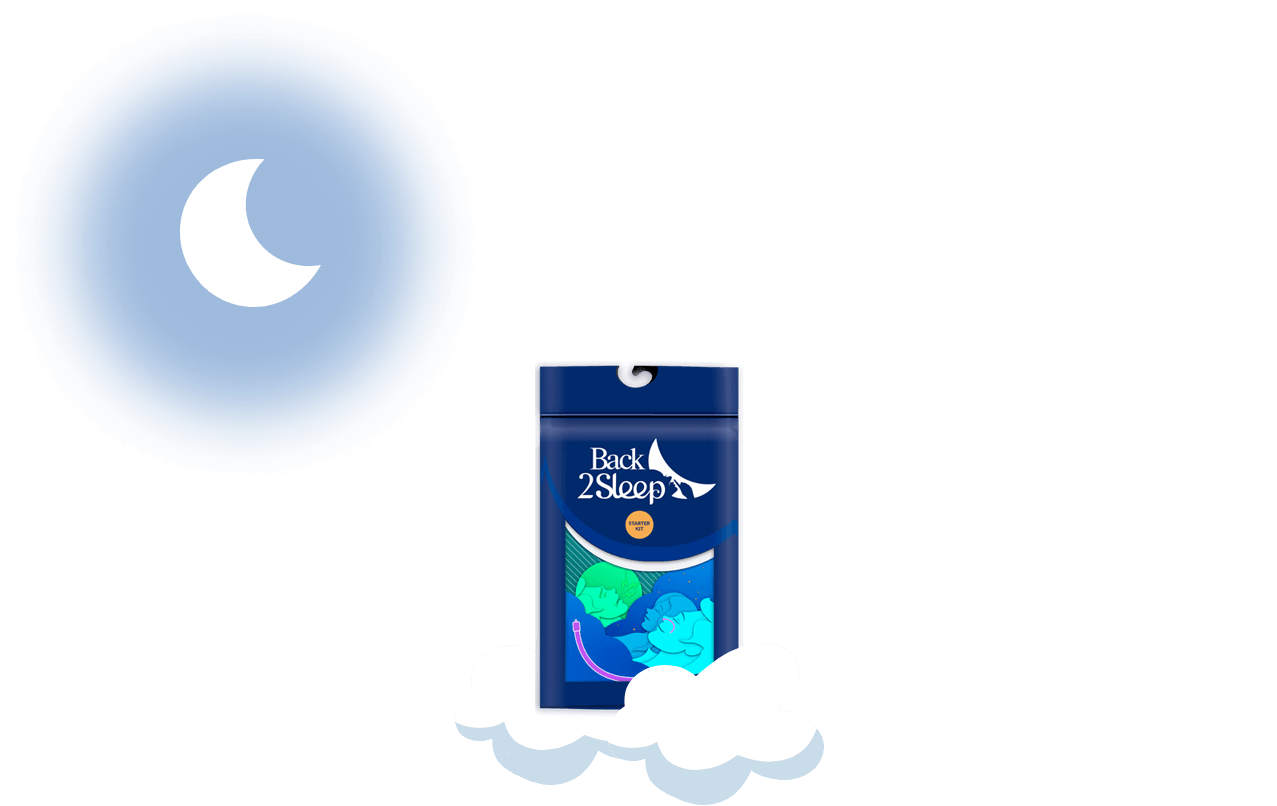
Testing sometimes reclassifies people in that group as having mild-to-moderate obstructive sleep apnoea or primary snoring rather than the more severe disease these operations target. That is the narrow situation where a simple nasal device belongs in the conversation. Back2Sleep is a CE-certified Class I soft silicone intranasal stent that keeps the nasal airway open during sleep, with four sizes in the starter kit, no prescription, no electricity, noise or tubing, and EU shipping.
Be clear about the limit. It is intended for snoring and mild-to-moderate obstructive sleep apnoea only, it is not a substitute for CPAP prescribed for severe apnoea, and it is not an alternative to either operation described above. Anyone weighing an implant against an osteotomy should keep using prescribed therapy while they wait, and treat a nasal stent as support for the milder end of the spectrum.
- Screening exclusions and queues are common, so plan for them.
- Repeat testing if your last sleep study is years old.
- Mild-to-moderate disease has simpler options than surgery.

What Back2Sleep Users Say
Frequently Asked Questions
What disqualifies you from getting a hypoglossal nerve stimulator?
Complete concentric collapse at the velum on drug-induced sleep endoscopy rules out respiratory-sensing stimulation, and the German ENT society position paper (2021) reports this pattern in 20-25% of PAP-intolerant patients. Other exclusions are central apnoea events above 25%, an AHI outside the accepted range, and a BMI above your national ceiling, which is 32 kg/m2 in France.
Is a nerve stimulation implant reversible, and can it be removed later?
Partly. You can switch stimulation off with the remote on any night, which is what most people mean by reversible. Full explantation is a second operation: the generator comes out easily, but the stimulation lead needs neck surgery, and many surgeons leave leads in place. Implants also remain MRI-conditional.
Will jaw advancement surgery change how my face looks?
Yes. Advancing both jaws by roughly a centimetre projects the chin and mid-face, so the profile change is visible and permanent. Surgeons use virtual surgical planning to simulate the result before you consent, and most patients need pre-surgical orthodontics, because moving the skeleton without the teeth creates malocclusion.
Which is more effective for severe sleep apnoea, jaw surgery or a nerve stimulator?
Jaw advancement reports higher numbers. A 2026 PubMed Central review describes an approximate 77% mean AHI reduction and a 47% complete remission rate for maxillomandibular advancement, against 66% of stimulation patients meeting responder criteria at 12 months in the STAR trial (2014). Effectiveness only matters if your anatomy qualifies.
Can I have a nerve stimulator after jaw surgery, or jaw surgery after a failed implant?
Usually yes. Published practice includes upper airway stimulation added after maxillomandibular advancement as staged or salvage therapy, and stimulation offered after unsuccessful pharyngeal surgery. The two routes are not mutually exclusive, so ask your surgeon what plan B looks like before consenting to either operation.
Does the Krankenkasse or Assurance Maladie pay for sleep apnoea surgery if CPAP failed?
Rules differ sharply. France has reimbursed stimulation since September 2024 as third-line therapy, after CPAP and oral-device failure, capped at 400 devices a year at roughly EUR 20,000 per procedure (SFRMS, 2025). In Germany the tongue pacemaker is an inpatient standard method, while bimaxillary advancement usually needs individual-case approval.
Can a home sleep apnoea test decide between an implant and jaw surgery?
No. A home test can confirm your AHI, but the decision needs more. Stimulation assessment normally requires drug-induced sleep endoscopy, and jaw advancement planning uses cephalometric imaging and virtual surgical planning. An in-laboratory titration study follows an implant. Home testing opens the pathway rather than settling the choice.
How often does the implant battery need replacing?
Roughly every decade. ADHERE registry data (2020) indicate an implantable pulse generator working life of around ten years, so replacement is a planned procedure rather than an emergency. Someone implanted at 35 could face three or more generator changes by their seventies, which matters against a single osteotomy.
Ready for quieter nights? Discover the Back2Sleep starter kit and find the right fit for you.
Not sure if you are at risk? Take our sleep risk screening to find out in just a few minutes.
Want to learn how it works? Explore the Back2Sleep nasal stent designed for comfortable, effective relief.