
Deviated Septum and Snoring: Do You Need Surgery or a Nasal Stent?

Deviated Septum & Snoring: Surgery vs. Non-Surgical Alternatives
Up to 80% of people have some degree of septal deviation. If yours causes snoring, here is what actually works — and what the research says about septoplasty, nasal dilators, and internal nasal stents.
Why a Deviated Septum Makes You Snore
A deviated nasal septum shifts the thin wall between your nostrils to one side. That shift narrows the airway in one or both nasal passages, forces you to mouth-breathe during sleep, and creates turbulent airflow that vibrates the soft tissues in your throat. The result is loud, persistent snoring that disrupts your sleep and your partner's rest.
However, the septum is rarely the only cause. As ENT specialist Dr. Marc Error from the University of Utah explains: "Snoring is actually caused because the muscles in the throat, the tongue, the side walls, and the roof of the mouth relax during sleep. You try to force air through that floppy tube behind your tongue, and it starts to vibrate." That means fixing the nose alone does not always stop the snoring.
So should you rush into septoplasty, or should you explore non-surgical options first? This guide walks through the evidence for each approach, gives you real numbers from clinical studies, and helps you decide what is worth trying before committing to an operating room.
- A deviated septum contributes to snoring but is rarely the sole cause
- Septoplasty improves nasal airflow in 86% of patients, but fully stops snoring in only about 12%
- Non-surgical options like internal nasal stents may reduce snoring from the very first night
- The American Academy of Otolaryngology recommends at least 4 weeks of conservative treatment before considering surgery
Deviated Septum: The Numbers You Should Know
These numbers come from a systematic review of 21 studies analysing nasal surgery outcomes for sleep-disordered breathing, published in the Journal of Clinical Medicine (2022). The message is clear: septoplasty reliably opens the nose, but it is not a reliable snoring cure on its own.
How a Deviated Septum Actually Causes Snoring
Understanding the mechanism helps you pick the right treatment. A crooked septum contributes to snoring through three pathways:
Airflow Obstruction
The deviation narrows one nasal passage, increasing air velocity and creating turbulence. Faster airflow through a tight space generates noise, just like wind whistling through a cracked window.
Mouth Breathing
When the nose cannot deliver enough air, the jaw drops open during sleep. Mouth breathing dries the throat tissues and allows the tongue to fall backward, directly increasing snoring intensity.
Negative Pressure Effect
Increased nasal resistance creates stronger negative pressure in the throat during inhalation. This suction force pulls the soft palate and throat walls inward, making them vibrate more.
Compensatory Turbinate Swelling
The body often enlarges the turbinate on the wider side of the nose to balance airflow. This swelling further reduces total nasal capacity and worsens nighttime congestion.

Septoplasty: What the Research Actually Shows
Septoplasty is the surgical straightening of the nasal septum. It takes 30 to 90 minutes under general anaesthesia, with a recovery period of 1 to 3 weeks. But how well does it work for snoring specifically?
The Good News
- 86% of patients reported improved snoring scores after septoplasty, with an average improvement of 46% (meta-analysis of 52 patients with sleep apnea and deviated septums)
- Nasal resistance decreased significantly in most studies, meaning easier breathing through the nose
- 18 of 21 studies in a systematic review showed significantly lower daytime sleepiness scores (ESS) after nasal surgery
- Patients using CPAP machines needed 2.6 cmH₂O less pressure after combined septoplasty and turbinate surgery
The Honest Reality
- Only 12-19% of patients achieved complete snoring relief from septoplasty alone
- In a British Snoring & Sleep Apnoea Association survey, 79% said nasal surgery did not stop their snoring, 14% said it helped initially but snoring returned, and only 7% reported lasting relief
- A study published in Chest journal found that while nasal resistance decreased after surgery, snoring time, snoring intensity, and sleep architecture did not change
- The AHI (apnoea-hypopnoea index) showed only a mean decrease of 4.08 points — not clinically significant for most patients
When Septoplasty Makes Sense
Surgery is most likely to help when:
- You have significant nasal obstruction that bothers you during the day, not just at night
- Conservative treatments (sprays, dilators, stents) have been tried for at least 4 weeks without adequate relief
- Your snoring clearly worsens during nasal congestion and improves when your nose is open
- A sleep study has ruled out moderate-to-severe obstructive sleep apnea as the primary issue
Surgery vs. Non-Surgical Options: Full Comparison
Before deciding on septoplasty, it helps to compare all the available approaches side by side. This table covers the key factors most people care about: effectiveness, cost, recovery, and convenience.
| Factor | Septoplasty | Internal Nasal Stent | External Nasal Strips | Nasal Steroid Spray |
|---|---|---|---|---|
| Snoring improvement | 86% report some improvement; 12% complete relief | Effective in a larger number of patients than strips (clinical study, 41 patients) | Significant snoring time reduction (p<0.001) | Reduces swelling; variable snoring impact |
| Time to results | 2-6 weeks post-surgery recovery | First night; 3-5 day adaptation period | Immediate, lasts one night per strip | 2-4 weeks for full effect |
| Cost | €3,000-€8,000 (varies by country) | €44.90 starter kit (4 sizes included) | €8-€15 per pack of 30 | €10-€25 per bottle |
| Invasiveness | General anaesthesia, 1-3 week recovery | Non-invasive, 10-second insertion | Non-invasive, external adhesive | Non-invasive, daily spray |
| Reversibility | Permanent structural change | Fully reversible — remove any time | Fully reversible | Fully reversible |
| Sleep quality | Improved daytime sleepiness in 86% of studies | Best perception of good sleep quality (p<0.05 vs strips) | Some improvement reported | Indirect improvement via less congestion |
| Travel friendly | N/A (one-time procedure) | Compact, fits in a pocket | Portable, lightweight | Small bottle, liquid restrictions on flights |
A 2019 clinical comparison published in Acta Otorhinolaryngologica Italica found that internal nasal dilators were effective in a larger number of patients compared to external nasal strips. The internal device also produced better sleep quality perception (p<0.05), with a stronger correlation between device effectiveness and patient satisfaction.
Explore the Back2Sleep Nasal StentReal Experiences: What Patients Say About Each Option
Clinical data gives you averages. Real stories give you context. Here is what people have shared about their journeys with deviated septum snoring.
Septoplasty Experiences
Nasal Stent Experiences
Individual results may vary. Testimonials reflect personal experiences and are not a guarantee of outcomes. Always consult a healthcare professional for advice tailored to your situation.
The Conservative Treatment Pathway: What to Try Before Surgery
The American Academy of Otolaryngology recommends at least 4 weeks of medical therapy with intranasal corticosteroids before considering surgical intervention. Here is a step-by-step pathway that many ENT specialists follow:
1 Nasal Steroid Spray (Weeks 1-4)
Prescription or over-the-counter nasal corticosteroids reduce inflammation and turbinate swelling. They take 2-4 weeks for full effect but may be enough to open the airway if the deviation is mild to moderate.
Evidence: Recommended as first-line treatment by the AAO before any surgical intervention.
2 Internal Nasal Stent (Week 1 onward)
A soft silicone nasal stent physically opens the narrowed passage from the inside. Unlike sprays, it works from the first night. The device bypasses the deviation by gently holding the nostril open and extending to the soft palate area to prevent airway collapse.
Evidence: Clinical study of 41 patients showed internal dilators were effective in more patients than external strips, with superior sleep quality ratings (p<0.05).
3 Sleep Position Training (Week 1 onward)
Sleeping on your side reduces the gravitational effect on throat tissues. Combine with a nasal stent for additive benefits. A tennis ball sewn into the back of pyjamas is a low-tech but effective approach.
Evidence: Positional therapy may reduce AHI by 50% or more in position-dependent snorers.
4 Lifestyle Adjustments (Ongoing)
Weight management, alcohol avoidance before bed, and staying hydrated all reduce snoring severity. Even modest weight loss of 5-10% body weight can measurably decrease snoring frequency.
Evidence: BMI is one of the strongest independent predictors of snoring severity, regardless of septal anatomy.
How a Nasal Stent Works for Deviated Septum Snoring
An internal nasal stent is a soft, medical-grade silicone device that sits inside the nostril and physically opens the airway. Unlike external strips that pull the nostrils from the outside, an internal stent addresses obstruction at the source — right where the deviation narrows the passage.
Why Internal Beats External for Deviated Septums
External nasal strips work by pulling the nostrils open from the outside. This helps with nasal valve collapse but does very little for a deviation deeper inside the nose. An internal nasal stent, by contrast:
- Physically opens the passage where the deviation causes the narrowing
- Extends to the soft palate area, helping prevent airway collapse at multiple points
- Reduces nasal resistance by 31-65%, according to published nasal dilator research
- Works on the first night of use, with a 3-5 day adaptation period for optimal comfort
The Back2Sleep Approach
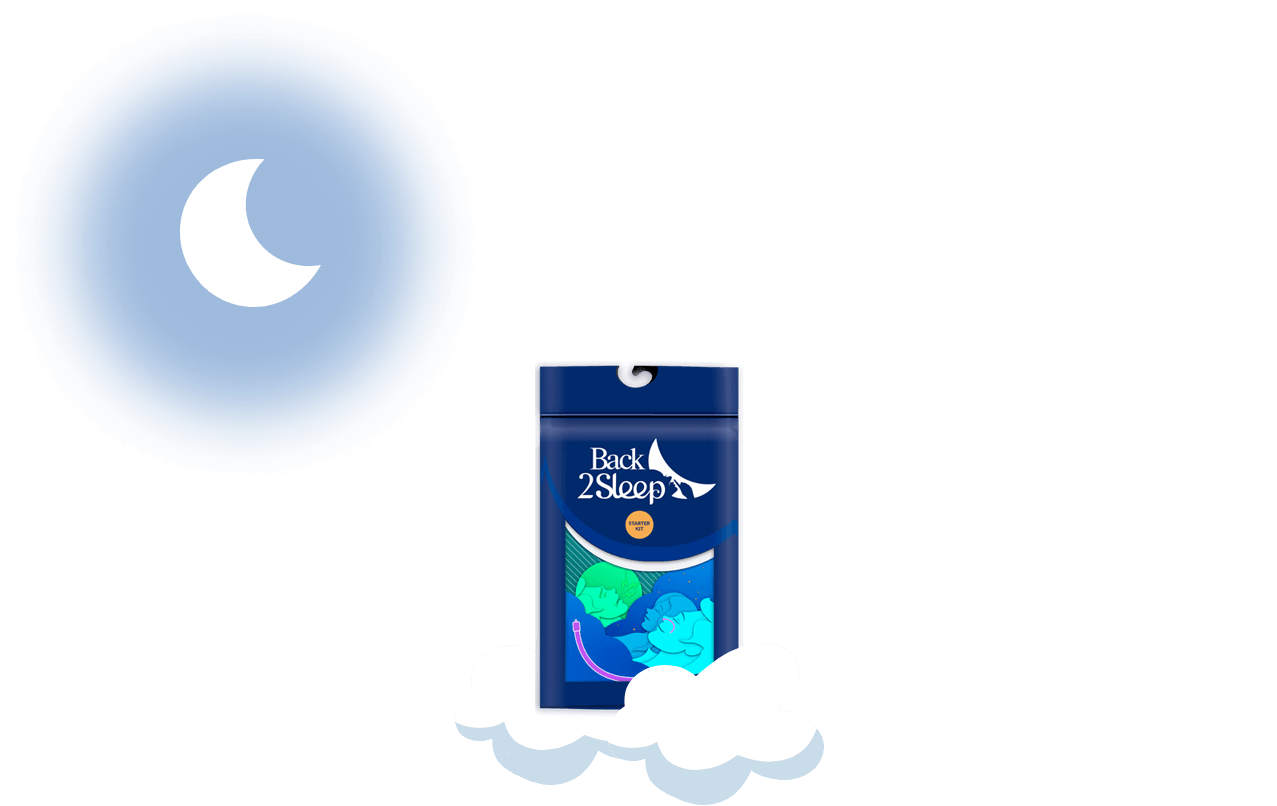
The Back2Sleep starter kit includes four sizes (S, M, L, XL) so you can find the fit that works with your unique nasal anatomy and deviation. The soft, CE-certified medical silicone is dermatologically tested, inserts in about 10 seconds, and lasts approximately 15 days per stent.
Over 92% user satisfaction has been reported, with more than one million devices sold. Many users describe the adaptation as similar to getting used to contact lenses — slightly unusual at first, then completely unnoticed within a few nights.
Start Your 15-Night Trial — €44.90When You Should See a Doctor
A deviated septum combined with snoring does not always require medical intervention. But certain warning signs should prompt a visit to an ENT specialist or sleep medicine physician:
- Witnessed breathing pauses during sleep (your partner notices you stop breathing)
- Excessive daytime sleepiness despite 7-8 hours of sleep
- Morning headaches that occur regularly
- Chronic one-sided nasal blockage that does not respond to sprays or stents
- Recurring nosebleeds from the deviated side
- Gasping or choking that wakes you up at night
These symptoms may indicate obstructive sleep apnea, which requires proper diagnosis through a sleep study. A nasal stent may help improve CPAP tolerance if you are diagnosed — research shows nasal surgery reduces required CPAP pressure by an average of 2.6 cmH₂O, and a non-surgical stent may offer similar airway-opening benefits.
Your Decision Framework: Surgery or Stent?
Use this practical framework to help decide which approach may be right for you. This is not a substitute for professional medical advice but can help you prepare for a conversation with your doctor.
| Your Situation | Recommended Starting Point | Why |
|---|---|---|
| Mild deviation, snoring bothers partner | Internal nasal stent + positional therapy | Non-invasive, immediate results, reversible |
| Moderate deviation, daytime congestion too | Nasal steroid spray + internal stent | Combined approach addresses inflammation and mechanical obstruction |
| Severe deviation, daily breathing difficulty | ENT consultation; try stent while waiting for appointment | Surgery may be warranted, but the stent provides relief in the interim |
| Suspected sleep apnea symptoms | Sleep study first; nasal stent as adjunct | Proper diagnosis is essential; a stent may improve CPAP compliance |
| Post-septoplasty, still snoring | Internal nasal stent | Addresses residual airway narrowing that surgery did not resolve |
| Cannot afford or want to avoid surgery | Internal nasal stent + lifestyle changes | Cost-effective, evidence-based, no downtime |
5 Lifestyle Changes That Help Alongside Any Treatment
Whether you choose surgery, a nasal stent, or a combination, these evidence-based habits amplify results:
- Sleep on your side. Gravity pulls the tongue and soft palate backward when you lie on your back. Side-sleeping alone can reduce snoring frequency by up to 50% in position-dependent snorers.
- Keep the bedroom humid. Dry air worsens nasal congestion, especially in winter. A cool-mist humidifier set to 40-60% relative humidity keeps nasal tissues from drying and swelling.
- Avoid alcohol within 3 hours of bedtime. Alcohol relaxes throat muscles far more than normal sleep does, dramatically increasing snoring volume and duration. Staff testing at one snoring clinic showed measurably worse readings on nights with alcohol.
- Manage allergies proactively. Pollen, dust mites, and pet dander cause nasal tissue swelling that compounds the effect of a deviated septum. Seasonal allergies alone can turn mild daytime deviation into severe nighttime obstruction.
- Maintain a healthy weight. Even a 5-10% reduction in body weight can measurably decrease snoring severity. Excess tissue around the neck compresses the airway, and this effect is independent of septal anatomy.
Frequently Asked Questions
Can a deviated septum cause snoring even if I breathe fine during the day?
Yes. When you lie down, gravity causes nasal tissues to swell, and a mild daytime deviation can become a significant nighttime obstruction. This is called "hidden nasal congestion." Many people breathe well during the day but experience restricted airflow at night, which leads to mouth breathing and snoring.
What is the success rate of septoplasty for snoring?
About 86% of patients report some improvement in snoring after septoplasty, but only 12-19% achieve complete snoring relief. A British Snoring & Sleep Apnoea Association survey found that 79% of respondents said nasal surgery did not stop their snoring. Septoplasty is most effective when combined with turbinate reduction and when nasal obstruction, rather than throat tissue, is the primary snoring cause.
How does an internal nasal stent compare to septoplasty?
A nasal stent is non-invasive, works from the first night, costs a fraction of surgery, and is fully reversible. Septoplasty is a permanent structural correction that requires anaesthesia and weeks of recovery. Clinical evidence suggests internal nasal dilators are effective in a larger number of patients than external strips and produce superior sleep quality ratings. However, for severe structural deviations causing daily breathing problems, septoplasty may still be the most appropriate option. Consult your healthcare provider.
Can I use a nasal stent if I have a deviated septum?
Yes. Internal nasal stents are designed to gently open the nasal passage, which can be particularly beneficial when a deviation narrows the airway. The Back2Sleep starter kit includes four sizes (S, M, L, XL) so you can find the one that fits your specific anatomy. If your deviation is severe, start with a smaller size and gradually work up. The soft medical silicone adapts to your nasal contours.
Should I try non-surgical options before septoplasty?
The American Academy of Otolaryngology recommends at least 4 weeks of medical therapy, including intranasal corticosteroids, before surgical intervention. Trying a nasal stent and nasal sprays first makes sense because they are low-risk, low-cost, and provide immediate feedback on whether your snoring responds to improved nasal airflow. If conservative measures fail, you have stronger evidence that surgery may help.
Will my septoplasty be covered by insurance in Europe?
Septoplasty for documented nasal obstruction causing functional breathing problems is typically covered by national health systems and private insurance in most EU countries. However, if the procedure is primarily for snoring without documented obstructive symptoms, coverage may be limited or denied. A sleep study and ENT assessment documenting functional impairment strengthens your case. Check with your specific insurer or national healthcare provider.
Can I still snore after septoplasty?
Yes, this is common. Snoring often originates from the throat, not the nose. The soft palate, tongue base, and lateral pharyngeal walls vibrate during sleep, and septoplasty does not address these structures. Research shows that while septoplasty significantly improves nasal airflow, snoring time, intensity, and sleep architecture often remain unchanged. An internal nasal stent that extends to the soft palate area may provide additional benefit after surgery.
Take the First Step Tonight
You do not need to wait for a surgical consultation to start sleeping better. Over one million people have already tried the Back2Sleep nasal stent, and more than 92% reported satisfaction from the very first night.
The Back2Sleep starter kit gives you four sizes to find your ideal fit, a water-based lubricant, and a usage guide — everything you need for a 15-night trial at €44.90. If your deviated septum is contributing to your snoring, a properly fitted internal stent may be the quickest, most affordable way to find out if improved nasal airflow is the key to quieter nights.
Have questions about whether Back2Sleep is right for your situation? Visit our FAQ page or read more guides on our blog.
Try Back2Sleep Tonight — €44.90