
Nasal Dilator vs Anti-Snoring Mouth Guard: Which One Do You Need?

Nasal Dilator vs Anti-Snoring Mouth Guard: Which One Actually Stops Your Snoring?
A head-to-head comparison based on clinical trials, real-world user data, and 81% side-effect rates your dentist might not mention
You snore. Your partner nudges you at 2 AM. You search "best anti-snoring device" and get buried in ads for mouth guards and nasal dilators. Both claim to work. Neither explains when they fail.
Here is the truth: a nasal dilator and a mandibular advancement device (MAD) treat completely different problems. Pick the wrong one and you waste money, sleep, and patience. Pick the right one and you could reduce snoring by 70-91% starting tonight.
This guide breaks down both devices using data from randomized clinical trials, a 14-study meta-analysis, five-year follow-up research, and what real users actually say in sleep forums. No fluff. No fake claims. Just the information you need to stop snoring.
How Each Device Works (and Why It Matters)
Snoring happens when soft tissue vibrates in a narrowed airway. But where the narrowing occurs determines which device you need.
Nasal Dilator (Stent)
A small silicone device inserted into the nostril. It mechanically holds the nasal valve open, reducing airflow resistance. Internal dilators push outward from inside the nose. Think of it like a tunnel brace preventing collapse.
Mouth Guard (MAD)
A boil-and-bite or custom-fitted tray that sits between your upper and lower teeth. It pushes the lower jaw forward 5-10mm, pulling the tongue base away from the back of the throat. This widens the pharyngeal airway.
Target: Nose vs. Throat
Nasal dilators fix blockages at the nasal valve — the narrowest point inside your nose. MADs fix collapse at the velopharynx — the soft tissue behind your tongue. Wrong target = device does nothing.
The Combination Factor
Snoring often involves both nose and throat. A 2024 Washington University trial found that combining nasal dilation with positional therapy helped 58% of partners report improvement. But a MAD alone helped 91%.

Clinical Trial Data: Hard Numbers You Can Trust
Forget marketing claims. Here is what peer-reviewed research says about each device.
Mandibular Advancement Devices (MADs)
- A 2024 JAMA Otolaryngology randomized trial (50 couples) found MADs reduced snoring in 91% of users, versus 58% for combined nasal dilation + positional therapy
- A meta-analysis found MADs produce an estimated 66% reduction in AHI (apnea-hypopnea index)
- Complete OSA resolution occurs in roughly 40% of patients; two-thirds see clinical benefit
- Adherence rates: 70-85% after one year (vs. 50-60% for CPAP)
Nasal Dilators and Stents
- A systematic review of 14 studies (294 patients) found no significant AHI improvement with nasal dilators (mean change: just 0.36 events/hour)
- Internal nasal dilators reduced the apnea index by 4.87 events/hour — external strips actually slightly worsened it (+0.64)
- Nasal airway stent (NAS) therapy reduced snore volume and percentage of snoring time above 50dB
- For mild-to-moderate OSA: 25% showed complete AHI response, 10% partial response
Side-by-Side Comparison: MAD vs. Nasal Dilator vs. Nasal Stent
| Feature | Mouth Guard (MAD) | Nasal Strip (External) | Nasal Stent (Internal) |
|---|---|---|---|
| How it works | Pushes jaw forward 5-10mm | Pulls nostrils open from outside | Holds nasal valve open from inside; reaches soft palate |
| Best for | Throat-based snoring, mild-moderate OSA | Nasal congestion, allergies | Nasal + upper airway obstruction |
| Snoring reduction | 70-91% | Minimal (no significant change in meta-analysis) | Significant volume reduction; 92% user satisfaction |
| AHI improvement | 66% reduction (meta-analysis) | +0.64 events/hr (worsened slightly) | 25% complete response, 10% partial |
| Side effects | Jaw pain (45%), tooth shift, TMJ risk, 81% dental changes at 5 years | Skin irritation, adhesive residue | Mild nasal irritation; resolves in 3-5 days |
| Cost | $50-$150 OTC; $1,000+ custom | $3-$20 (disposable nightly) | €39 starter kit (4 sizes, 15-night trial) |
| Adaptation time | 2-4 weeks; jaw pain first 2-3 days | Immediate (no adaptation) | 3-5 days |
| Tooth/jaw risk | Overjet decreases 1-2.6mm; overbite drops 1-2.8mm over years | None | None |
| Reusable | 6-24 months | Single use (nightly) | ~15 days per stent |
| Travel-friendly | Yes (bulky case needed) | Yes | Extremely (fits in pocket) |
The Side Effects Nobody Talks About
Most comparison articles gloss over side effects. They should not. The data is stark — especially for mouth guards.
MAD Side Effects (Backed by 5-Year Studies)
A landmark study tracking 40 patients over five years found:
- 91% reported side effects at the first checkup. By year five, 67% still reported them.
- 45% experienced jaw pain that self-resolved in days (2024 JAMA trial)
- 65% report mild jaw soreness in the first week; this drops to 21% by week three
- Overjet decreased by 1.06-2.6mm and overbite by 1.0-2.8mm — permanent changes in many patients
- 24% developed pain-related TMJ disorders in the first 2-3 months (vs. 6% in control groups)
- Only 37.5% of original patients were still using the device at five years (15 of 40)
- Average of 2.5 unscheduled dental visits per year for repairs and adjustments
- 50% experience excessive salivation initially
Forum users are blunt about this. One user wrote that after stopping their MAD for six weeks, the tooth sensitivity "slowly went away, except for one mating upper and lower tooth." Another reported: "I stopped snoring, but now my jaw hurts."
Nasal Stent Side Effects
- Mild nasal irritation that decreases as users adapt (typically 3-5 days)
- Some initial runny nose and slight discomfort — similar to wearing contact lenses for the first time
- No tooth movement. No jaw pain. No bite changes.
- No TMJ risk whatsoever
Which Device Do You Actually Need? A Decision Framework
The choice depends on where your snoring originates. Here is a practical guide.
You breathe through your mouth at night
Your snoring likely originates from the throat. The tongue falls backward, narrowing the pharyngeal airway. A MAD could help — but consider the TMJ and tooth-shift risks first. A nasal stent that reaches the soft palate can also address this by keeping the upper airway open without touching your teeth.
You have nasal congestion or allergies
Your nasal valve collapses or swells at night, forcing mouth breathing and turbulent airflow. A nasal dilator or stent directly addresses this. External strips work for mild cases; internal stents work for moderate-to-severe nasal resistance.
You have TMJ issues or dental work
MADs are not recommended if you have TMJ disorders, dentures, loose teeth, or dental implants. A nasal stent has zero interaction with your teeth or jaw — making it the safer choice for anyone with existing dental concerns.
You travel frequently or share rooms
CPAP machines are not practical for travel. MADs require a case and cleaning. A nasal stent is invisible, silent, needs no electricity, and fits in your pocket. For people who avoid overnight trips because of snoring anxiety, this is a game-changer.

What Real Users Say: Unfiltered Experiences
Marketing copy says everything works. Real people tell a different story. Here is what actual users report about both device types.
MAD Users — The Honest Version
In sleep forums, the most common MAD complaint is jaw pain during the first week. One user on a popular snoring forum reported: "I did have jaw pain the first 2-3 days of using it." Others describe waking up unable to "find their bite" — where the teeth do not align properly for 20-30 minutes each morning.
SnoreLab tracking data shared by users shows dramatic results for some: scores dropping from the 80s and 100s (epic snoring) to single digits overnight. But the dropout rates tell the other side. That 5-year study? Only 15 of 40 original patients kept using it. Eleven quit because the device simply did not work for them. Three quit because of side effects. The rest drifted away.
Long-term users describe a trade-off: effective snoring reduction at the cost of gradual tooth movement they did not expect. As one dental sleep practice noted: "I stopped snoring, but now my jaw hurts" is a complaint they hear regularly.
Nasal Stent Users — Back2Sleep Customers
The adaptation pattern is consistent: mild discomfort for 3-5 nights, then it becomes second nature. Clinical staff documented the process — baseline testing without the device, three days of adaptation, then full use. The comparison to contact lenses comes up repeatedly: uncomfortable at first, then you forget it is there.
Not Sure Which Size Fits You?
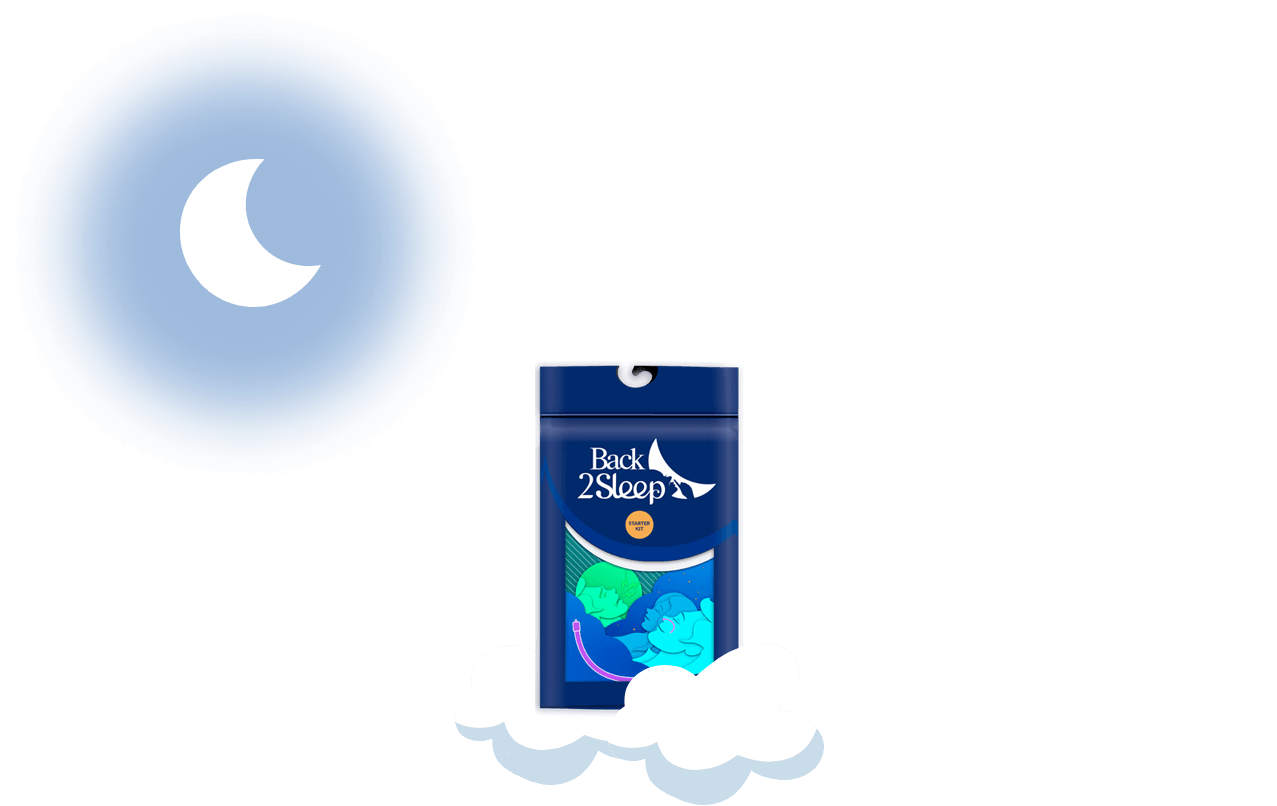
The Back2Sleep Starter Kit includes four sizes (S, M, L, XL) so you can find your fit in the first 15 nights. No jaw pain. No dental visits. No tooth movement.
Get Your Starter Kit - €39Adaptation Timeline: What to Expect Week by Week
| Timeline | Mouth Guard (MAD) | Nasal Stent |
|---|---|---|
| Night 1 | Jaw soreness, excessive drooling, disrupted sleep from discomfort | Mild nasal awareness; slight runny nose possible |
| Days 2-3 | Peak jaw pain; 65% report soreness; morning bite feels "off" for 20-30 min | Discomfort decreasing; most users sleeping through the night |
| Week 1 | Jaw soreness beginning to ease; some drooling persists; snoring reduction noticeable | Nasal sensation normalized; snoring significantly reduced |
| Week 2-3 | Jaw pain drops to 21%; adjusting to device; full snoring benefit emerging | Fully adapted; device feels invisible during sleep |
| Month 2-3 | 24% develop TMJ-related pain; device may need adjustment at dentist | Routine established; 10-second insertion, no issues |
| Year 1+ | Overjet and overbite reduction begins; 2.5 unscheduled dental visits/year average | No cumulative side effects; replace stent every ~15 days |
True Cost Over Time: MAD vs. Nasal Stent
The sticker price is misleading. Here is what each device actually costs when you factor in maintenance, replacements, and dental visits.
OTC Mouth Guard
$50-$150 upfront
Needs replacement every 6-24 months. If jaw pain develops, add dental consultation costs ($100-$300). Some users cycle through 2-3 brands before finding one that works.
Custom MAD (Dentist-Fitted)
$1,000-$3,000+ upfront
The 5-year study found an average of 2.5 unscheduled visits and 0.8 repairs per year. That adds up to hundreds in ongoing costs. Insurance may cover part if you have a sleep apnea diagnosis.
External Nasal Strips
$3-$20 per box
Disposable — one per night. At $0.30-$0.50 per strip, that is $110-$180 per year. No side effects, but minimal clinical benefit for most snorers.
Back2Sleep Nasal Stent
€39 starter kit
Monthly subscription: €35/month (free delivery). Yearly: €299/year (~€25/month). No dental visits. No repairs. No hidden costs. Also available in pharmacies.
When You Should NOT Use a Mouth Guard
MADs are not for everyone. Clinical guidelines and dental experts flag these contraindications:
- TMJ/TMD disorders — The device puts direct stress on the temporomandibular joint. If you already have jaw clicking, pain, or limited opening, a MAD can make it worse.
- Dentures or dental implants — MADs anchor to your teeth. They can dislodge dentures and stress implant crowns.
- Loose teeth or advanced gum disease — The forward force accelerates tooth mobility.
- Bruxism (teeth grinding) — Combining jaw clenching with mandibular advancement multiplies TMJ stress.
- Severe sleep apnea — MADs work for mild-to-moderate cases. Severe OSA (AHI > 30) typically requires CPAP or surgical intervention.
- Children and adolescents — Growing jaws should not be forced into fixed forward positions.
A nasal stent bypasses all of these issues. It never touches your teeth, jaw, or tongue. It works inside the nasal passage, which is why it suits people who have been told they cannot use oral appliances.
Why a Nasal Stent Deserves a Spot in the Conversation
Most "best anti-snoring device" lists focus on MADs and CPAP. Nasal stents rarely get equal coverage. That is changing — and here is why.
The Back2Sleep nasal stent is a CE-certified medical device. It is not a basic nasal strip. The soft silicone tube extends from the nostril to the soft palate, keeping both the nasal passage and upper airway open. This dual-action approach addresses a limitation that regular nasal dilators have: they only open the nose. The stent addresses both nasal and upper airway obstruction.
What makes it different from a standard nasal dilator:
- Reaches the soft palate — not just the nostril. This gives it airway-level benefits that external strips cannot match.
- CE-certified medical device — tested to European medical device standards, not just a wellness gadget.
- Four sizes in the starter kit — anatomy varies; one-size-fits-all nasal products fail because noses are not identical.
- 10-second insertion — compared to the boil-and-bite molding process MADs require, or CPAP mask fitting.
- Zero dental interaction — no teeth, no jaw, no bite changes. Period.
- Over 1 million units sold and a 92% satisfaction rate reported by users.
Clinical data backs this up. A study on nasal airway stents found significant reductions in REI (22.4 to 15.7, p<0.01) and improvements in lowest SpO2 (81.9% to 86.6%, p<0.01). The effect was immediate and maintained at one month follow-up.
Order the Back2Sleep Starter KitBeyond Devices: Lifestyle Factors That Amplify Results
No device works in isolation. These evidence-based changes multiply the effectiveness of any anti-snoring device:
Side Sleeping Position
Gravity pulls the tongue backward when you sleep on your back. A tennis ball sewn into the back of a t-shirt sounds ridiculous — but positional therapy reduces snoring by more than half in position-dependent snorers. Combine with your device.
Alcohol and Sedatives
Alcohol relaxes throat muscles 4-6 hours after consumption. Staff testing at one sleep clinic documented significantly worse snoring on nights after drinking. Avoid alcohol within 3 hours of bedtime.
Weight Management
A 10% weight loss can reduce AHI by 26%. Neck fat compresses the airway. Even modest weight loss amplifies device effectiveness significantly.
Room Humidity
Dry air irritates nasal passages, increasing resistance and snoring. A bedroom humidifier (40-60% humidity) can reduce nasal congestion that makes any device work harder than it needs to.
Frequently Asked Questions
Ready to Sleep Without Snoring — And Without Jaw Pain?
The Back2Sleep starter kit ships in 48 hours. Four sizes included. Returns accepted within 15 days. Over 1 million units sold across Europe.
Order Your Starter Kit Now Read More Sleep ResearchSources and Clinical References
- JAMA Otolaryngology 2024 — Mandibular Advancement vs Combined Airway and Positional Therapy for Snoring: A Randomized Clinical Trial (PMC11117146)
- Camacho et al. 2016 — Nasal Dilators (Breathe Right Strips and NoZovent) for Snoring and OSA: A Systematic Review and Meta-Analysis (PMC5187471)
- Respiration 2021 — The Effectiveness of Nasal Airway Stent Therapy for Mild-to-Moderate OSAS (Karger, vol.100, p.193)
- Clinical Medical Reviews 2019 — Efficacy and Tolerability of the Nasal Airway Stent in the Treatment of Snoring
- 5-Year MAD Follow-up Study — Side Effects and Technical Complications (PMC8978723)
- Systematic Review 2018 — Side Effects of Mandibular Advancement Splints for Snoring and OSA (PMC6150709)
- American Thoracic Society — Side Effects of Mandibular Advancement Devices for Sleep Apnea Treatment