
Sleep Apnea and Depression: How to Break the Hidden Cycle That Wrecks Your Mental Health

Sleep Apnea & Depression: Breaking the Hidden Cycle That Wrecks Your Mental Health
Millions of people take antidepressants for years without improvement. The real problem? Undiagnosed obstructive sleep apnea that starves the brain of oxygen and serotonin every single night.
The Depression That No Pill Could Fix
Sleep apnea and depression are locked in a vicious cycle that most doctors never identify. You feel exhausted, hopeless, unable to concentrate. Your doctor prescribes an antidepressant. Months pass. Nothing changes. Sound familiar?
Here is what the research now confirms: obstructive sleep apnea (OSA) and major depressive disorder share so many symptoms that up to 35% of OSA patients receive a depression diagnosis first. The real cause, airway collapse during sleep, remains hidden. Meanwhile, certain antidepressants actually worsen the breathing problem by relaxing upper-airway muscles.
This article unpacks the biological mechanism behind the sleep apnea depression link, shows you the research-backed numbers, and explains practical steps to break the cycle. Whether you suspect OSA or already use a CPAP, you will find strategies here that most websites never mention.

The Numbers Behind the OSA-Depression Overlap
The connection between OSA and mental health is not speculative. Large-scale studies paint a striking picture.
A 2025 study in JAMA Network Open followed over 30,000 adults and found that high-risk OSA patients were 40% more likely to have depression and 44% more likely to develop a new psychiatric condition within three years. That is not a minor correlation. It is a public health alarm.
Yet the diagnostic overlap keeps both conditions hidden. Fatigue, poor concentration, low mood, weight gain, irritability, and loss of interest in daily life appear on both checklists. A doctor who does not ask about snoring or nighttime awakenings may never suspect the airway.
Misdiagnosed for Years: When Depression Is Actually Sleep Apnea
Online communities are filled with people who spent years on antidepressants before a sleep study revealed the truth. Their stories follow a pattern so consistent it should be a diagnostic red flag.
"I was on SSRIs for five years. Therapy twice a month. Nothing worked. Then a new doctor ordered a sleep study because I mentioned waking up with headaches. Turns out I stopped breathing 38 times an hour. Within three weeks of treatment, the fog lifted. I felt emotions again for the first time in years."
Shared in an online sleep apnea support community, 2024"My wife said I snored, but I thought everyone did. The depression came on gradually: no energy, no motivation, gaining weight. Two different psychiatrists adjusted my meds. It was my dentist, of all people, who noticed my airway and referred me for a sleep test. AHI of 27. I wish someone had checked five years earlier."
Shared in an online sleep health forum, 2025These stories echo clinical data. A study from the Journal of Clinical Sleep Medicine found that only 4% of patients who successfully completed CPAP therapy still met criteria for clinical depression afterward. That means the vast majority of "depressed" OSA patients were never truly depressed in the psychiatric sense. Their brains were suffocating.
Red flags your "depression" might be OSA
- Antidepressants bring minimal or zero improvement after 8+ weeks
- Morning headaches that fade by midday
- Partner reports snoring, gasping, or pauses in breathing
- Daytime sleepiness even after 7-8 hours in bed
- Sudden weight gain paired with mood decline
- Waking with a dry mouth or sore throat
- Brain fog that coffee cannot clear
If three or more of these apply, talk to your doctor about a sleep apnea evaluation before adding another medication.
The Serotonin-Oxygen Connection: Why OSA Destroys Your Mood
Understanding how sleep apnea triggers depression changes everything. It is not just poor sleep. It is a neurochemical disaster.
Intermittent Hypoxia
Every apnea episode drops blood oxygen. The brain experiences repeated cycles of oxygen deprivation and re-oxygenation, damaging neurons in the prefrontal cortex and striatum, the exact regions that regulate mood.
Serotonin Depletion
Hypoxia depletes serotonin in the prefrontal cortex. A 2025 study in the Journal of Clinical Medicine confirmed that serotonin levels correlate negatively with the oxygen desaturation index. Less oxygen means less serotonin.
Inflammatory Cascade
Oxygen drops trigger a flood of pro-inflammatory cytokines: IL-1, IL-6, and TNF-alpha. These inflammatory markers cross the blood-brain barrier and interfere with neurotransmitter synthesis, amplifying depressive symptoms.
BDNF Collapse
Brain-derived neurotrophic factor (BDNF) supports serotonin neuron maintenance and plasticity. Chronic intermittent hypoxia suppresses BDNF production, creating a feedback loop: less BDNF leads to less serotonin, which leads to deeper depression.
Put simply: every time your airway collapses at night, your brain loses oxygen. That oxygen loss directly reduces the neurotransmitter responsible for mood stability. No antidepressant can overcome a problem that reoccurs hundreds of times per night. The airway must be treated first.
The Dangerous Irony: How Antidepressants Can Worsen Sleep Apnea
Here is the detail that should concern every prescribing physician. Some of the most commonly prescribed antidepressants can make obstructive sleep apnea worse.
| Medication Type | Effect on Upper Airway | OSA Impact |
|---|---|---|
| SSRIs (fluoxetine, sertraline) | Associated with worse sleep-related breathing disturbances in depressed patients | May increase apnea events |
| Tricyclics (amitriptyline) | Sedation and muscle relaxation reduce upper-airway tone | Can worsen obstruction |
| Benzodiazepines (prescribed for sleep) | Relax pharyngeal muscles and suppress respiratory drive | Significantly worsens OSA |
| Mirtazapine | Mixed evidence: may reduce AHI in some studies but causes weight gain | Weight gain offsets airway benefit |
| Trazodone | Modest AHI reduction observed in some trials | Least harmful, but not a treatment for OSA |
A study published in the Journal of Clinical Sleep Medicine found that SSRI use was associated with worse sleep-related breathing disturbances in individuals with depressive disorders. This creates a devastating loop:
- OSA causes depressive symptoms through oxygen deprivation
- Doctor prescribes an SSRI for "depression"
- The SSRI worsens breathing disturbances during sleep
- More severe OSA deepens the depression
- Doctor increases the SSRI dose
Treatment-Resistant Depression? Screen for Sleep Apnea First
In clinical terms, treatment-resistant depression (TRD) means two or more antidepressant trials have failed. Research now points to undiagnosed OSA as a major, overlooked driver.
A study from the American Journal of Managed Care stated plainly: "If you have obstructive sleep apnea, you are not going to respond well to an antidepressant." The data backs this up. Self-reported OSA was significantly associated with nonresponse to antidepressant pharmacotherapy in late-life depression.
The logic is straightforward. If the biological cause of your low mood is intermittent hypoxia, not a neurotransmitter imbalance, then a serotonin-boosting pill cannot address the root cause. The brain needs oxygen before it needs serotonin. Fix the airway, and the mood often follows.
How Treating Sleep Apnea Improves Depression Scores by Up to 73%
When the airway opens, the brain recovers. The clinical evidence is now overwhelming.
| Study / Source | Finding | Depression Improvement |
|---|---|---|
| SAVE Trial (2,687 patients) | CPAP significantly reduced depression caseness, especially in patients with pre-existing depression | Significant reduction within months |
| Journal of Clinical Sleep Medicine | PHQ-9 scores dropped from 11.3 to 3.7 after 3 months of compliant CPAP use | 73% improvement |
| PLOS Medicine meta-analysis (9 RCTs, 1,052 patients) | CPAP improved depression scores; effect larger with 4+ hours nightly use | SMD 0.38 with good adherence |
| JCSM depressive symptoms study | Only 4% of successful CPAP users still had clinical depression | 96% resolution rate |
The PHQ-9 result deserves attention. A score of 11.3 indicates moderate depression. After three months of consistent airway treatment, that score dropped to 3.7, which falls in the minimal or no depression range. That is a transformation no antidepressant alone achieved for these patients.
The key factor? Adherence. Patients who used their airway device for four or more hours per night saw greater mood improvements than those with lower usage. This is where comfort matters enormously. A treatment you actually use every night beats a treatment you abandon.
Learn How Back2Sleep WorksThe Bidirectional Trap: How Depression Also Worsens Sleep Apnea
The relationship between sleep apnea and depression runs in both directions. OSA causes depression, and depression worsens OSA. Understanding this two-way trap is essential to breaking it.
How depression feeds back into OSA
- Weight gain: Depression reduces activity levels and often triggers emotional eating. Extra weight, particularly around the neck, narrows the airway and increases apnea events.
- Medication effects: Sedating antidepressants and anti-anxiety drugs relax the muscles that keep the airway open during sleep.
- Sleep hygiene collapse: Depressed individuals often have irregular sleep schedules, increased alcohol use, and reduced physical activity, all of which worsen OSA severity.
- Reduced treatment adherence: Depression saps motivation. Patients with comorbid depression are less likely to use CPAP consistently, which prevents recovery from both conditions.
This bidirectional mechanism explains why treating one condition without addressing the other often fails. The most effective approach treats the airway and supports mental health simultaneously.
Practical Steps to Break the Sleep Apnea-Depression Cycle
Breaking this cycle requires action on multiple fronts. Here is a structured approach based on current clinical evidence.
Step 1: Get a Sleep Study
Request a polysomnography or home sleep test. This single test can change the entire trajectory of your treatment. Many are now covered by insurance or available as affordable home kits.
Step 2: Start Airway Treatment
If OSA is confirmed, begin treatment immediately. Options include CPAP, oral appliances, and intranasal stents for mild-to-moderate cases. Choose the option you will actually use nightly.
Step 3: Reassess Medications
Work with your doctor to evaluate whether current antidepressants may be contributing to airway problems. A medication adjustment combined with OSA treatment often produces better results than either alone.
Step 4: Track Your Progress
Use a depression screening tool (PHQ-9) before and after starting OSA treatment. Many patients see measurable mood improvement within 2-4 weeks of consistent airway therapy.
Beyond CPAP: Lightweight Alternatives for Mild-to-Moderate OSA
CPAP remains the gold standard for severe obstructive sleep apnea. But for mild-to-moderate OSA, the condition most commonly linked to depression misdiagnosis, lighter solutions exist. And adherence, not technology, determines whether depression lifts.
Many patients with moderate OSA abandon CPAP within the first year. The mask feels claustrophobic. The noise disturbs their partner. The setup feels like sleeping in a hospital. Depression itself reduces the motivation to persist with an uncomfortable treatment. The result? The airway stays blocked, and the depression stays.
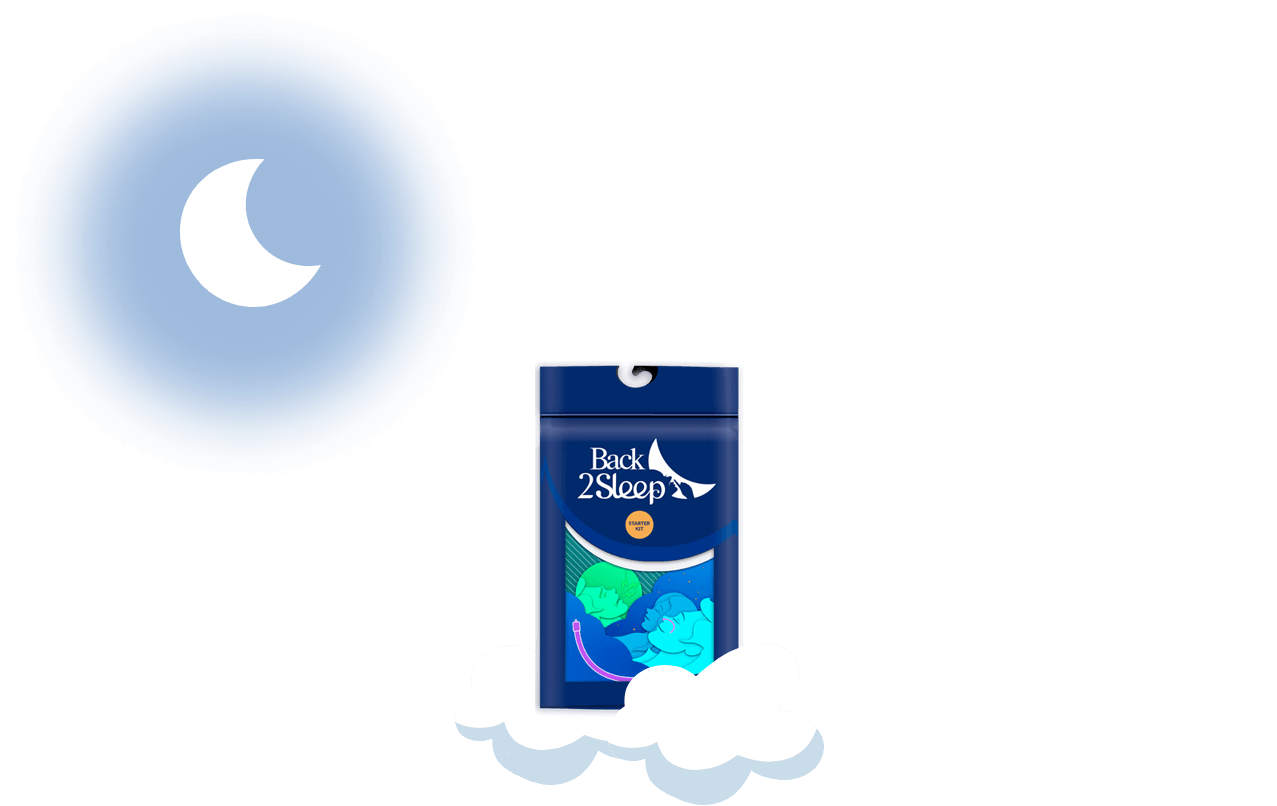
Intranasal stents offer a different approach. The Back2Sleep device is a soft silicone tube that inserts into one nostril in about ten seconds. It reaches the soft palate to keep the airway open without external masks, straps, or power outlets. For travellers, couples, and people who tried CPAP but could not tolerate it, this kind of device changes the equation.
Clinical data from Back2Sleep trials showed significant reductions in the Respiratory Event Index (REI: 22.4 to 15.7, p<0.01) and improvements in lowest SpO2 levels (81.9% to 86.6%, p<0.01). Better oxygen saturation means less hypoxia, which means more serotonin production, which means fewer depressive symptoms.
"Efficient, my wife thanks you."
Christophe, verified Back2Sleep customerLifestyle Changes That Support Both Conditions
Airway treatment is the foundation, but certain lifestyle adjustments accelerate recovery from the OSA-depression cycle.
| Strategy | OSA Benefit | Depression Benefit |
|---|---|---|
| Regular exercise (30 min, 5x/week) | Reduces AHI by 25-30% even without weight loss | Proven to match antidepressants for mild-moderate depression |
| Weight management | 10% weight loss can reduce AHI by 26% | Improved self-image, reduced inflammation |
| Side sleeping | Reduces gravity-driven airway collapse | Fewer awakenings means better sleep architecture |
| Alcohol avoidance (before bed) | Prevents extra muscle relaxation in the throat | Alcohol is a depressant that disrupts REM sleep |
| Consistent sleep schedule | Stabilizes circadian rhythm, reducing apnea variability | Regular sleep-wake cycles improve serotonin regulation |
| Morning sunlight (15-20 min) | Strengthens circadian signaling for deeper sleep | Boosts serotonin production and resets the sleep clock |
None of these replace medical treatment. But combined with consistent airway therapy, they create a recovery environment where both conditions can improve together.
Frequently Asked Questions
Stop Treating the Symptom. Fix the Airway.
If poor sleep is behind your low mood, the solution starts with your breathing. Back2Sleep is a CE-certified intranasal stent that keeps your airway open, silently, comfortably, from the very first night.
Get the Starter Kit - 4 Sizes IncludedFree 15-night trial period · Available in select pharmacies