
Snoring and Relationships: How Couples Survive Sleep Disruption

Snoring & Relationships: How Couples Survive Sleep Disruption
One in three couples sleeps apart because of snoring. Here is what the research says, what real partners experience, and how to reclaim your shared bed without sacrificing your relationship.
The Bedroom Problem Nobody Talks About
Snoring tears couples apart more quietly than any argument. It starts with a gentle nudge at 2 a.m. and slowly escalates into separate blankets, earplugs on the nightstand, and eventually separate bedrooms. According to a 2025 Sleep Foundation survey, 75% of people who share a bed with a snorer say it directly impacts their sleep quality and overall wellbeing.
That statistic is not an exaggeration. The Mayo Clinic estimates that bed partners of habitual snorers lose roughly one full hour of sleep every single night. Over a year, that adds up to more than 365 lost hours of restorative rest. The emotional toll is even harder to measure: resentment builds, patience erodes, and intimacy fades.
But here is the good news. Snoring is not a life sentence for your relationship. Couples who tackle the problem together report stronger bonds, better communication, and dramatically improved sleep. This guide covers the real science, honest stories from partners who have been there, and practical solutions that work from night one.
- Snoring affects 50% of men and 40% of women habitually
- Bed partners lose up to 1 hour of sleep per night from secondhand snoring
- Over one-third of American couples now practise a "sleep divorce"
- Treating snoring can improve partner sleep efficiency from 74% to 87%
The Numbers Behind Snoring & Relationships
Snoring is not just an annoyance. Research from the American Academy of Sleep Medicine, the Sleep Foundation, and ResMed's 2026 Global Sleep Survey reveals a pattern of silent relationship damage that accumulates over months and years.
What the Non-Snoring Partner Actually Feels
A 2025 Sleep Foundation survey asked people who sleep beside a snorer to describe the daily consequences. The results paint a picture of chronic exhaustion that spills into every part of life:
- 44% feel tired the next day, every day
- 33% describe themselves as cranky or moody by mid-afternoon
- 28% report having no energy for work, exercise, or socialising
- 23% struggle to concentrate at their jobs
- 17% regularly feel anxious or depressed
Women bear a disproportionate burden. The ResMed 2026 Global Sleep Survey found that 43% of women say their partner's snoring or loud breathing disrupts their sleep, compared to 28% of men. Among women, 20% report disruption every single night versus just 11% of men.

Sleep Divorce: Survival Strategy or Relationship Risk?
The term "sleep divorce" has exploded in popularity. It describes couples who deliberately sleep in separate beds or rooms to escape snoring, restless legs, different schedules, or temperature disagreements. And the numbers are staggering.
The American Academy of Sleep Medicine (AASM) reports that over one-third of Americans now engage in some form of sleep divorce. Among millennials, the rate climbs to 43%, followed by 33% of Gen X, 28% of Gen Z, and 22% of baby boomers.
Why Couples Choose Separate Bedrooms
The number one reason? Snoring. One in three couples specifically cite their partner's snoring, loud breathing, or gasping as the primary reason they moved to another room. Other common factors include:
- Different work schedules (shift work, early risers vs. night owls)
- Restless leg syndrome or frequent bathroom trips
- Temperature and blanket disagreements
- Screen time habits in bed
The Hidden Cost of Separate Rooms
While some couples report that sleeping apart actually improved their marriage by reducing conflict and resentment, relationship therapists warn about what gets lost. Spontaneous intimacy, morning conversations, the comfort of physical closeness during stressful times: these are the invisible threads that hold couples together.
As one relationship therapist told Today.com: "Sleeping apart can work as a temporary solution, but if the underlying cause is never addressed, couples often drift emotionally. The physical distance becomes emotional distance."
The ideal scenario is not separate bedrooms. It is solving the snoring so both partners can share a bed comfortably. And for most couples, that solution is more accessible than they think.
Explore the Starter KitReal Stories: What Snoring Does to Couples
Statistics tell one story. Real people tell another. Here are experiences shared by actual couples dealing with snoring disruption, drawn from forums, surveys, and clinical interviews.
Sarah & James, Married 12 Years
"I used to lie awake at 3 a.m. staring at the ceiling, listening to what sounded like a lawnmower next to my head. I loved my husband, but I started to dread bedtime. We tried everything: nose strips, elevating the bed, even a white noise machine cranked to maximum. Nothing worked until he got a proper diagnosis and we found an actual airway solution."
Sarah estimates she functioned on 5 hours of broken sleep for nearly three years before they addressed the problem. "I was a different person. Angry, impatient, crying over nothing. My friends noticed before I did."
Mark, 34, Software Developer
"My girlfriend recorded me snoring one night and played it back. I was horrified. It was so loud the phone's audio meter was maxing out. She said she'd been wearing earplugs for six months without telling me because she didn't want to hurt my feelings."
Mark's story highlights a common pattern: the non-snoring partner suffers in silence out of love or embarrassment, while the snorer remains completely unaware of the severity. "I had no idea I was that loud. I thought she was exaggerating."
Elena & David, Together 8 Years
"We moved into separate bedrooms two years ago. At first it felt like relief. No more arguments at 2 a.m. But then we stopped talking as much. We'd go to bed in different rooms, wake up in different rooms. The intimacy disappeared. We felt like roommates, not partners."
Elena and David's experience mirrors what therapists call the "drift effect". Physical separation provides short-term relief but can accelerate emotional disconnection if the root cause is never treated.
Back2Sleep Customer Testimonials
"Efficient, my wife thanks you." — Christophe, verified Back2Sleep customer
"My wife was almost wanting to sleep in a separate room. That's what pushed me to finally try something new." — verified user review
"My partner wants to sleep in separate rooms" was the exact search that led another customer to discover the Back2Sleep nasal stent. After the first night, they reported a dramatic reduction in snoring volume.
The 5 Ways Snoring Slowly Destroys a Relationship
Snoring does not break a relationship overnight. It erodes it through five interconnected mechanisms that sleep researchers have documented across multiple studies.
| Mechanism | What Happens | Research Finding |
|---|---|---|
| Sleep Deprivation | Partner loses 1+ hour nightly | Mayo Clinic: spouses of snorers lose ~62 min/night |
| Empathy Erosion | Reduced ability to read partner's emotions | UC Berkeley study: sleep loss decreases empathetic accuracy |
| Resentment Cycle | Blame builds: "You're doing this to me" | 4 of 7 studies link OSA to lower marital satisfaction |
| Intimacy Withdrawal | Separate rooms lead to emotional distance | 38% of partners refuse to sleep apart despite snoring |
| Health Decline | Both partners develop fatigue, mood issues | 17% of snorer partners report regular anxiety/depression |
The Resentment Spiral Explained
Psychologists describe a predictable pattern. First, the non-snoring partner loses sleep and becomes irritable during the day. Small disagreements escalate faster. The snorer feels guilt and shame because they cannot control the problem. Both partners withdraw emotionally. Communication deteriorates. Over time, this cycle can mimic the dynamics of much larger relationship problems, even when the underlying cause is purely physical.
The key insight: snoring is a medical issue, not a character flaw. When couples reframe it as a health problem to solve together, the resentment often dissolves.
4 Warning Signs Snoring Is Hurting Your Relationship
You Dread Bedtime
Instead of looking forward to winding down together, you feel anxiety about another sleepless night. Bedtime becomes a source of tension rather than connection.
Morning Arguments Increase
Sleep-deprived couples fight more before breakfast. If your first interaction each day involves frustration about last night's noise, snoring is driving a wedge.
Physical Intimacy Declines
When one partner moves to the sofa or spare room, spontaneous closeness disappears. Couples report feeling more like roommates than romantic partners.
You Hide the Problem
Non-snoring partners often suffer in silence for months, wearing earplugs secretly or pretending the noise doesn't bother them. Hidden resentment is the most dangerous kind.
How to Talk to Your Partner About Snoring (Without Starting a Fight)
This is the conversation most couples avoid for far too long. Research from the Sleep Foundation shows that 67% of partners discuss snoring at least sometimes, but many wait until the relationship is already strained. Here is a step-by-step framework that relationship counsellors recommend.
Step 1: Choose the Right Moment
Never bring up snoring at 3 a.m. when you are both exhausted and frustrated. Pick a calm, daytime moment when neither of you is stressed. A weekend morning over coffee works far better than a midnight confrontation.
Step 2: Frame It as a Health Concern
Snoring can be a symptom of obstructive sleep apnea, a condition linked to cardiovascular disease, daytime drowsiness, and cognitive decline. When you say "I'm worried about your health" rather than "Your snoring is unbearable", the conversation changes entirely.
Step 3: Use "We" Language
Replace accusatory statements with collaborative ones:
- Instead of: "You keep me awake every night"
- Try: "I think we could both sleep better if we explored some options together"
- Instead of: "You need to fix your snoring"
- Try: "Let's look at what's available. I found something called a nasal stent that couples are recommending"
Step 4: Come With Solutions, Not Just Complaints
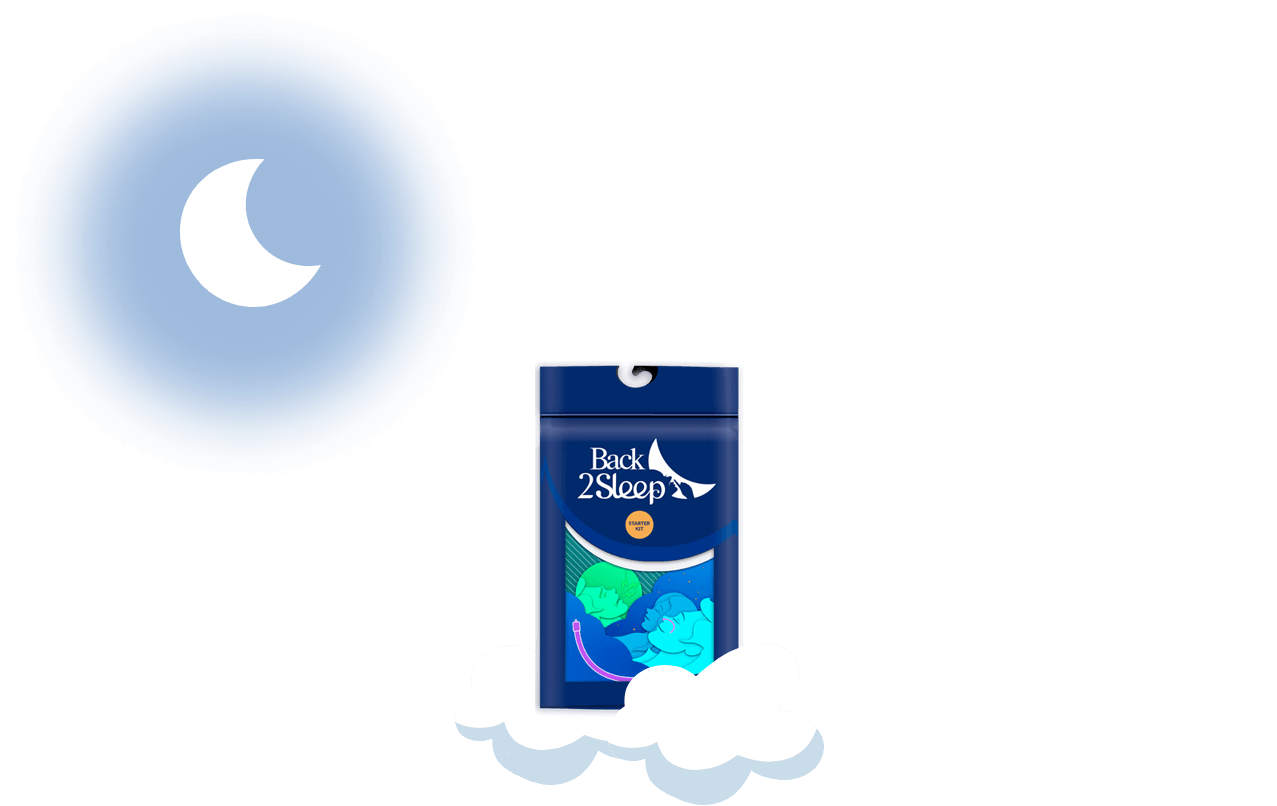
Research a few options before the conversation. When you present a concrete next step, the discussion feels productive rather than hopeless. The Back2Sleep starter kit includes four sizes for a 15-night trial, which makes it easy to suggest: "Let's just try this for two weeks and see what happens."
Step 5: Acknowledge the Snorer's Feelings
Snorers often feel embarrassed and helpless. A 2025 survey found that 52% of snorers apologise and actively research solutions once they understand the impact. Recognising their willingness to try goes a long way.
Anti-Snoring Solutions: What Works for Couples
Not every solution suits every couple. Some approaches require lifestyle changes that take weeks. Others deliver results the same night. Here is an honest comparison based on clinical evidence and real user feedback.
| Solution | Effectiveness | Comfort | Partner-Friendly | Speed |
|---|---|---|---|---|
| Internal Nasal Stent | High (92% satisfaction) | 3-5 day adaptation | Silent, invisible | Night 1 |
| CPAP Machine | Very High | Mask, noise, tubes | Disruptive for partner | Night 1 |
| Mandibular Advancement | Moderate-High | Jaw discomfort common | Mostly quiet | 1-2 weeks |
| External Nose Strips | Low-Moderate | Skin irritation risk | Visible on face | Night 1 |
| Positional Therapy | Moderate | Sleep disruption | No noise/device | 2-4 weeks |
| Weight Loss | Moderate-High | Lifestyle change | No device needed | 3-6 months |
| Surgery (UPPP) | Variable | Recovery pain | No ongoing device | 6-8 weeks recovery |
For couples specifically, the ideal solution has three qualities: it works fast (so the non-snoring partner gets relief quickly), it is quiet and unobtrusive (so it doesn't create a new disruption), and it is easy to maintain (so neither partner feels burdened).
This is exactly why internal nasal stents have become popular among couples. The Back2Sleep nasal stent is a soft silicone tube that fits inside one nostril, reaching the soft palate to keep the airway open. It is invisible during use, completely silent, and takes about 10 seconds to insert.
Try Back2Sleep TonightThe Couple Recovery Timeline: What to Expect
When one partner starts using an effective anti-snoring solution, the relationship often improves in a predictable pattern. Here is what couples typically report, based on user feedback and clinical adaptation timelines.
1 Night 1-3: Immediate Relief
The non-snoring partner notices a dramatic reduction in noise. Sleep quality improves almost immediately. The snorer may need 3-5 nights to fully adapt to the nasal stent sensation, similar to getting used to contact lenses.
2 Week 1-2: Energy Returns
Both partners start waking up more refreshed. Daytime irritability decreases. Couples report fewer morning arguments and more patience with each other during the day.
3 Month 1: Intimacy Rebuilds
Couples who had moved to separate rooms often return to a shared bed. The bedroom becomes a place of rest and connection again, not a battleground. One verified reviewer wrote: "Plus de ronflements depuis la premiere nuit." (No more snoring from the first night.)
4 Month 3+: A New Normal
The snoring problem fades into memory. Couples describe feeling like they are "back to how things were before." Sleep efficiency improvements of 74% to 87% (a 13-point jump) translate to roughly an extra hour of quality sleep per night for the partner.
7 Practical Strategies for Couples Dealing With Snoring Tonight
While finding a long-term solution is essential, these strategies can help both partners get better sleep starting tonight.
1. Elevate the Snorer's Head
Raising the head of the bed by 10-15 centimetres (or using a wedge pillow) helps gravity keep the airway more open. This alone can reduce mild snoring by 20-30% in some individuals.
2. Side-Sleeping Position
Snoring is almost always worse on the back. A tennis ball sewn into the back of a pyjama top is an old trick, but newer positional therapy devices are more comfortable. Side sleeping may reduce the apnoea-hypopnoea index significantly.
3. Avoid Alcohol 3-4 Hours Before Bed
Alcohol relaxes the throat muscles, making snoring louder and more frequent. Staff testing at one sleep lab documented measurably worse snoring on nights when alcohol was consumed, even in small amounts.
4. Address Nasal Congestion
Many snorers have what researchers call "hidden nasal congestion" meaning they breathe fine during the day but become congested at night. A saline rinse before bed, combined with an internal nasal stent, can address both issues simultaneously.
5. Maintain Consistent Sleep Schedules
Going to bed and waking up at the same time helps both partners fall asleep faster, which reduces the window where one person is awake listening to the other snore.
6. Use White Noise Strategically
A white noise machine or app can mask lighter snoring. However, it is a coping mechanism, not a solution. If snoring is loud enough to overpower white noise, that suggests a level of airway obstruction that deserves medical attention.
7. Try a Nasal Stent Together
Making it a joint project removes the stigma. The Back2Sleep starter kit comes with four sizes (S, M, L, XL) for a 15-night trial. Many couples approach it as an experiment: "Let's track the results together and see what the data shows."
Get the 15-Night Trial KitThe Gender Gap in Snoring & Relationships
Snoring is often stereotyped as a "male problem," but the reality is more nuanced. While habitual snoring affects about 50% of men and 40% of women, the way couples experience and discuss it differs dramatically by gender.
When He Snores
In heterosexual couples, the most common scenario involves a male snorer and a female partner losing sleep. Women report being more likely to endure the problem silently before raising it. The ResMed survey found 43% of women say their partner's snoring disrupts their sleep, versus 28% of men.
Women also carry a heavier emotional burden. They are more likely to feel guilt about being frustrated, worrying that asking their partner to seek help will seem "naggy" or unsupportive.
When She Snores
Female snoring is significantly under-reported. Women are more embarrassed to admit they snore, and male partners are less likely to bring it up. One user shared: "I was mortified when my boyfriend told me I snore. I'm a young woman! I thought only older men snored."
This stigma means women are less likely to seek treatment, even when their snoring is severe enough to indicate sleep apnoea. Encouraging open, non-judgmental conversations helps both genders get the help they need.
When Snoring Means Something More Serious
Not all snoring is created equal. Sometimes it signals obstructive sleep apnoea (OSA), a condition where the airway repeatedly collapses during sleep, causing breathing pauses that can last 10 seconds or more.
Red Flags to Watch For
- Gasping or choking sounds during sleep (the partner is usually the first to notice)
- Witnessed breathing pauses followed by a loud snort or gasp
- Excessive daytime sleepiness despite spending 7-8 hours in bed
- Morning headaches or a persistently dry mouth upon waking
- Difficulty concentrating or mood changes throughout the day
If your partner exhibits these signs, a sleep study can determine the severity. Back2Sleep clinical data shows the nasal stent reduced the apnoea-hypopnoea index (REI) from 22.4 to 15.7 (p<0.01) and improved lowest oxygen saturation from 81.9% to 86.6% (p<0.01) in a clinical study of participants with mild-to-moderate OSA.
Why Couples Choose Back2Sleep
There are dozens of anti-snoring products on the market. Here is why over 1 million nasal stents have been sold and why couples specifically prefer this approach.
Silent Operation
Unlike CPAP machines that produce humming, airflow noise, and occasional mask leaks, the nasal stent is completely silent. Your partner hears nothing.
Invisible During Use
The soft silicone tube sits entirely inside the nostril. No straps, no mask, no visible device. Couples report it preserves normal bedtime intimacy.
Works From Night One
92% user satisfaction. Most couples notice a dramatic snoring reduction on the very first night, with full adaptation taking 3-5 days.
Travel-Ready
No power outlet needed. No bulky equipment. Fits in a pocket. Perfect for holidays, business trips, or visiting family where snoring would be embarrassing.
Back2Sleep is a CE-certified medical device developed over seven years with professor-led research. The starter kit (EUR 44.90) includes four sizes so you can find the perfect fit during a 15-night trial period. Monthly refills start at EUR 35 with free delivery.
Order Your Starter KitFrequently Asked Questions
Can snoring actually cause a breakup or divorce?
Yes. Research consistently shows that couples dealing with chronic snoring have a higher divorce rate. The combination of sleep deprivation, reduced empathy, and growing resentment creates a cycle that, if left untreated, can erode even strong relationships over time.
What is a sleep divorce and how common is it?
A sleep divorce means sleeping in separate beds or rooms. The American Academy of Sleep Medicine reports over one-third of Americans engage in some form of sleep divorce. Millennials lead the trend at 43%. Snoring is the number one reason cited.
How does snoring affect the non-snoring partner's health?
Significantly. Studies show 44% feel tired daily, 33% become moody, 28% lack energy, and 17% experience anxiety or depression. Long-term, sleep fragmentation increases the risk of cardiovascular problems and cognitive decline.
Is sleeping in separate rooms bad for a relationship?
It can help short-term but risks long-term emotional distance. Therapists recommend treating the snoring rather than merely adapting to it. When couples solve the root cause, they often report improved intimacy and stronger bonds than before.
Can a nasal stent help couples sleep in the same bed again?
Many couples report exactly this outcome. Internal nasal stents like Back2Sleep are designed to reduce snoring from the first night by holding the airway open. This may eliminate the need for separate sleeping arrangements. Individual results may vary.
How do I talk to my partner about their snoring?
Choose a calm daytime moment. Frame it as a health concern. Use "we" language. Come with solutions, not just complaints. The article above includes a detailed 5-step framework that relationship counsellors recommend.
What solutions work best for couples dealing with snoring?
The best approach combines strategies: side-sleeping, avoiding alcohol before bed, maintaining healthy weight, and using an anti-snoring device. Internal nasal stents are popular with couples because they are silent, invisible, and work from night one.
Your Relationship Deserves Better Sleep
Snoring is not something you have to accept. It is not a personality trait or an unsolvable problem. It is a physical airway issue with real, proven solutions.
If snoring is creating tension in your relationship, the most important step is the first one: deciding to address it together. Whether you start with a conversation, a sleep study, or a simple 15-night trial of a nasal stent, taking action sends a powerful message to your partner: "Our sleep and our relationship matter to me."
Over 1 million people have already chosen Back2Sleep. Join them and find out what a quiet night can do for your relationship.
Start Your 15-Night TrialBrowse More Sleep Health Articles | Frequently Asked Questions | Contact Our Team