
Weighing GLP-1 Weight-Loss Therapy Against a Nightly Airway Device for Mild to Moderate Sleep Apnea

GLP-1 vs device for sleep apnea explained for mild to moderate cases in Europe
Your prescription needs about a year to move your AHI, your airway closes tonight, and below IAH 15 France funds no machine at all.
GLP-1 vs device for sleep apnea starts with one number
The GLP-1 vs device for sleep apnea decision is settled mainly by one number, your apnoea-hypopnoea index. The AHI, called IAH in France, counts breathing pauses and shallow breaths per hour of sleep. Mild obstructive sleep apnoea, known as SAHOS or SAOS in France and OSAHS in the UK, means an AHI of 5 to 14. Moderate to severe means 15 and above.
That cut-off decides almost everything that follows. The phase 3 SURMOUNT-OSA programme, which produced the sleep apnoea evidence for tirzepatide, a dual GIP/GLP-1 receptor agonist, required an AHI of at least 15 to enrol (American College of Cardiology trial summary, 2024). If your report reads AHI 5 to 14, you are being offered a medicine tested only in people with far more severe disease. Our companion piece on weight-loss injections and snoring walks through the same trial data.
The scale of the question is large. An estimated 936 million adults aged 30 to 69 worldwide have mild-to-severe obstructive sleep apnoea, and 425 million have moderate-to-severe disease (Benjafield et al., The Lancet Respiratory Medicine, 2019). The same analysis estimated 23.5 million adults aged 30 to 69 in France with an AHI of 5 or more, and 26.3 million in Germany.
- Mild OSA is AHI 5-14; moderate to severe is AHI 15 and above.
- The pivotal GLP-1 sleep apnoea trial excluded everyone below AHI 15.
- Ask for your exact AHI number before you compare any two treatments.

What the SURMOUNT-OSA trial actually measured
SURMOUNT-OSA was two parallel phase 3 trials in 469 adults, 234 and 235 per trial, who had moderate-to-severe OSA plus obesity. Entry required a BMI of at least 30 kg/m2, lowered to 27 in Japan, and mean baseline BMI was 38.8 kg/m2 (American College of Cardiology, 2024).
The results were real and large. At week 52, mean AHI change was -25.3 events per hour with tirzepatide versus -5.3 with placebo in the first trial, and -29.3 versus -5.5 in the second, from mean baselines of 51.5 and 49.5 events per hour (Malhotra et al., New England Journal of Medicine, 2024). Body weight fell 16.1% and 17.3%.
Now do the arithmetic the leaflet does not do for you. A participant starting near 50 events per hour and improving by around 25 still ends the year averaging well above the moderate threshold of 15. That is a genuine, meaningful improvement, but it is not the same as normal breathing, and normalisation was not the average outcome after twelve months. If you want the weight numbers in isolation, we cover how much weight loss actually moves the AHI separately.
- Average AHI fell by roughly half, not to zero, over a full year.
- The average endpoint stayed above the moderate threshold at week 52.
- No head-to-head trial against CPAP exists, and none at AHI 5-14.

The twelve-month gap nobody plans for
A GLP-1 receptor agonist does not change your airway tonight. The dose is escalated in steps over months, weight falls gradually afterwards, and the trial measured its AHI endpoint at week 52. Roughly a year therefore passes before a repeat sleep study can tell you anything useful.
Most articles describe this as "it takes months" and then stop. The practical question is what protects your nights, your partner's sleep and your daytime function during that year, especially if you were never offered a machine in the first place.
| Stage of the year | What the medicine is doing | What your airway is doing | What covers your nights |
|---|---|---|---|
| First months | Dose escalation in steps from a low starting dose | Essentially unchanged; weight loss has barely begun | Whatever airway therapy you already use, unchanged |
| Mid-year | Approaching maintenance dosing; appetite effects strongest | Weight falling; AHI may drift down but is unmeasured | Device therapy continues; a retest now is premature |
| Approaching week 52 | Maintenance dosing; trial weight loss reached 16.1-17.3% (NEJM, 2024) | Snoring and sleepiness may improve before the AHI does | Device therapy continues; start planning the retest |
| After week 52 | Weight typically plateaus | This is when the trial measured its AHI endpoint | Earliest sensible point to repeat a sleep study |
- Plan for about twelve months before a retest means anything.
- Habitual snoring and excessive daytime sleepiness may ease before the AHI moves.
- Nothing about the medicine protects your breathing in the meantime.
GLP-1 vs device for sleep apnea compared side by side
The two approaches do not compete for the same job. A GLP-1 targets body weight, a factor closely associated with OSA: over 80% of adults with the condition are overweight and over 50% have obesity (American Academy of Sleep Medicine, 2025). A nightly airway device acts on upper airway collapsibility directly, from the first night you use it.
| Question | GLP-1 receptor agonist therapy | Nightly airway device |
|---|---|---|
| What it targets | Body weight, including visceral and parapharyngeal fat | Pharyngeal patency and airway collapse, mechanically |
| Time to effect | Months to a year | The same night |
| Evidence at AHI 5-14 | None; mild OSA was excluded (Journal of Diabetes review, 2025) | ERS 2021 and NICE NG202 both address mild symptomatic disease |
| Evidence at AHI 15 and above | Mean AHI fell 25.3 events/hour at week 52 versus 5.3 on placebo (NEJM, 2024) | Positive airway pressure remains first choice (NICE NG202) |
| European status | No standalone EU sleep apnoea indication; the benefit sits inside the weight-management label | CE-marked devices; national reimbursement rules apply |
| Main drawbacks | Gastrointestinal effects, cost, weight regain after stopping | Comfort and adherence; a share of users abandon any device |
| If you stop | Significant weight regain; may require prolonged or indefinite therapy (Journal of Diabetes review, 2025) | The effect ends the first night you stop using it |
Read that table as a sequencing problem, not a contest. For moderate-to-severe disease, clinicians commonly run both: the device holds the airway open while the medicine slowly changes the anatomy around it.
- A GLP-1 is a slow upstream treatment; a device is an immediate mechanical one.
- Combining them is normal practice, not a compromise.
- Neither approach reliably normalises breathing on its own.
What you can breathe through while the weight changes
Europe has its own answer here, and it is not simply "stay on your machine". The European Respiratory Society guideline on non-CPAP therapies for obstructive sleep apnoea (European Respiratory Review, 2021), endorsed by the World Sleep Society, states that a mandibular advancement device is less effective than CPAP at reducing nocturnal events but may be preferable for people with mild to moderate OSA, where reducing every single event each night is less urgent.
1Positive airway pressure, if you already have it
PPC, or pression positive continue, stays the reference therapy for moderate and severe disease, and auto-titrating positive airway pressure (APAP) adjusts the pressure through the night. Keep using it across the weight-loss year, and never lower or stop the pressure yourself.
2A mandibular advancement device
NICE NG202 recommends customised or semi-customised mandibular advancement splints, the MAD in the UK and the OAM or orthèse d'avancée mandibulaire in France, for mild, moderate and severe symptomatic OSAHS where CPAP is declined or not tolerated, provided dental and periodontal health is adequate.
3Positional therapy
The ERS guideline recommends vibrating positional therapy devices for supine-predominant apnoea. If your sleep study shows most events happen on your back, this is a practical interim lever worth raising with your clinician.
4A nasal airway stent
A soft intranasal stent holds the nasal airway open during sleep, in the severity band the drug trials skipped. Among patients recruited at AHI 5 to 20, mean AHI fell from 12.7 to 8.6 events per hour at one month (Ohtsuka et al., Respiration, 2021).
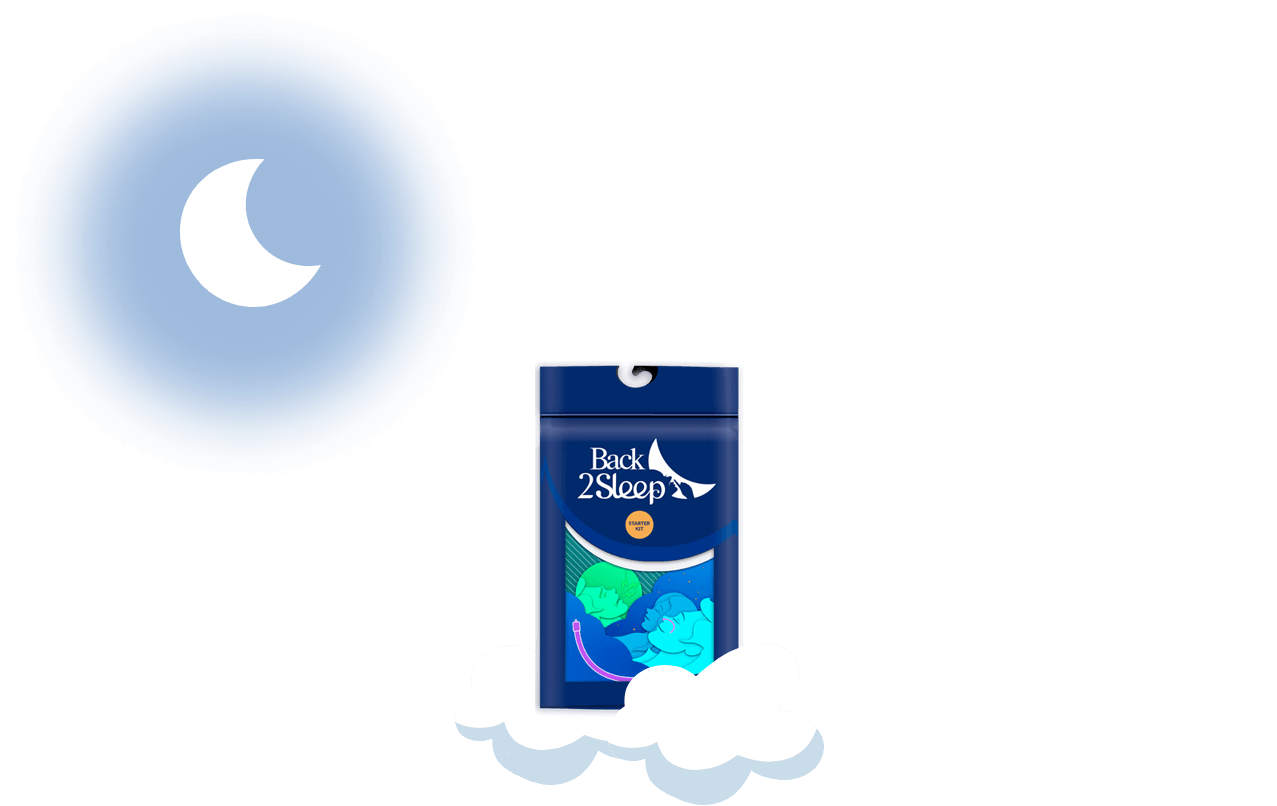
Back2Sleep is a CE-certified Class I soft silicone nasal stent in that same category, sold without a prescription, with four sizes in the starter kit so you can find a comfortable fit. It is a same-night mechanical option for snoring and mild-to-moderate OSA alongside your clinician's plan, never a substitute for CPAP in severe disease. The study above tested a nasal airway stent of this type rather than Back2Sleep itself, so read it as evidence for the device class, and read it honestly: a quarter of patients normalised, a further tenth partly improved, and about three in ten stopped because of discomfort or mucus.
- ERS and NICE both endorse non-CPAP devices for mild to moderate symptomatic OSA.
- A nasal airway stent has published data in the AHI 5-20 band the drug trials excluded.
- Every interim option has a real discontinuation rate, so expect to trial and adjust.
Europe is not the United States on this question
Most articles on this topic describe an American approval that does not exist in your country. In December 2024 the EMA's CHMP concluded that the sleep apnoea benefit of tirzepatide was already covered by the existing weight-management authorisation, and permitted a label update instead of creating a separate European OSA indication.
Payment reality differs even more sharply, and it decides what a patient with mild disease is actually offered.
| Country | Funding reality | What that means at AHI 5-14 |
|---|---|---|
| France | PPC is reimbursed from IAH 30 and above, or at IAH 15-30 with an added criterion such as at least 10 micro-arousals per hour or a serious cardiovascular condition including resistant hypertension, recurrent atrial fibrillation or severe heart failure. Both PPC and OAM require prior authorisation, the accord préalable. | No reimbursed machine at all below IAH 15 |
| Germany | GLP-1 receptor agonists prescribed for obesity are excluded from statutory GKV cover as Lifestyle-Arzneimittel under section 34 SGB V, which the G-BA has explicitly confirmed. | The medicine is paid entirely out of pocket |
| UK | NICE NG202 governs OSAHS care and recommends mandibular advancement splints for mild, moderate and severe symptomatic disease where CPAP is declined or not tolerated. | An appliance route exists even at mild severity |
France also tightened its observance rules in 2026. Reimbursement now requires roughly 112 hours of PPC use per month, about four hours a night, tracked automatically by nightly télésuivi data upload. Below roughly 56 hours a month the weekly payment falls to around EUR 3.65, against over EUR 14 at full adherence (HAS and Assurance Maladie rule change, 2026). The OAM, reimbursed since 2017, carries no télésuivi and no measured-adherence obligation, which makes it a genuinely different pathway for people who cannot meet the four-hour rule.
- There is no standalone EU sleep apnoea indication for this medicine class.
- A French patient below IAH 15 gets neither a funded drug nor a funded machine.
- German statutory insurance does not fund GLP-1s for obesity at any severity.
Retesting, stepping down and what happens if you stop
You cannot step down from a device on weight alone. French patients search this as "peut-on arreter la PPC après une perte de poids", and the answer is that it takes a measurement, not a scale reading. Repeat polysomnography or a home sleep apnoea test, called polygraphie ventilatoire in France, is what shows whether the AHI has genuinely fallen.
Time the retest for after your weight has plateaued, and agree in advance who orders it and who pays for it. Ask for the oxygen desaturation index (ODI) and nocturnal oxygen saturation (SpO2) alongside the AHI, and track symptoms with the Epworth Sleepiness Scale (ESS). If you have never been formally tested, a STOP-Bang questionnaire is a common first screening step before a sleep study.
If the retest is good, pressure settings need re-titration rather than simple discontinuation. A remission-style result usually means an AHI reduction of at least 50% plus a fall below the clinical threshold, judged by your sleep physician and not by how you feel during one good week.
If you lose the weight and the AHI barely moves
This happens, and it is not a failure on your part. Airway collapse is not driven by body weight alone: craniofacial anatomy, nasal obstruction and a strong positional component all contribute. That is when a mechanical option earns its place, and our comparison of mild to moderate treatment options lays the alternatives out side by side.
Side effects that collide with sleep
Gastrointestinal effects are the most common complaint with this drug class, including nausea, reflux and delayed gastric emptying. These can feel worse lying flat, and may make a mask or an oral appliance harder to tolerate during the titration months. Raise it early with your prescriber rather than quietly abandoning your device.
- Only a repeat sleep study justifies changing or stopping device therapy.
- Stopping the medicine is associated with significant weight regain, so plan long term.
- Nausea and reflux at night can quietly undermine device adherence during titration.
Questions to ask your clinician about GLP-1 vs device for sleep apnea
Walk into the appointment with the severity question first. Everything else follows from whether your AHI sits above or below 15, and from how well you tolerate what you already use.
A good answer names a device for the interim, a date for the retest, and a plan for life after the medicine. If the only offer is a prescription and a vague "come back in a year", that is a gap worth filling with something mechanical tonight.
- Severity first, then evidence, then the interim plan.
- Agree a retest date at the start, rather than improvising it later.
- Weight loss and airway support are complements, not rivals.

What Back2Sleep Users Say
Frequently Asked Questions
Can I stop using CPAP if I lose weight on a GLP-1?
Not on your own. Reduce or stop positive airway pressure only after a repeat sleep study confirms your AHI has fallen, and expect re-titration rather than discontinuation. In the pivotal trials mean AHI fell by roughly half from a baseline near 50 events per hour, leaving the average endpoint well above normal (New England Journal of Medicine, 2024).
How long does it take for a GLP-1 to actually improve sleep apnea?
Expect about a year. The dose is escalated in steps over months, and SURMOUNT-OSA measured its AHI endpoint at week 52, when body weight had fallen 16.1% and 17.3% in the two trials (New England Journal of Medicine, 2024). A repeat sleep study earlier than that usually measures noise, not progress.
Do GLP-1 drugs work for mild sleep apnea or only moderate to severe?
Only moderate to severe has been tested. SURMOUNT-OSA required an AHI of at least 15 and a BMI of at least 30, with a mean baseline AHI of 50.1 events per hour (American College of Cardiology, 2024). At AHI 5 to 14 no trial evidence exists, so any benefit is extrapolation.
Is tirzepatide approved for sleep apnea in Europe?
Not as a separate indication. In December 2024 the EMA CHMP concluded the sleep apnoea benefit was already covered by the existing weight-management authorisation, and allowed a label update instead of a distinct OSA indication. The standalone sleep apnoea approval European readers find online is a United States decision.
What can I use instead of CPAP for mild sleep apnea while I lose weight?
European Respiratory Society guidance on non-CPAP therapies (2021) covers mandibular advancement devices and vibrating positional therapy for supine-predominant apnoea. A nasal airway stent study recruiting at AHI 5 to 20 lowered mean AHI from 12.7 to 8.6 events per hour at one month (Respiration, 2021). Discuss the options with your clinician.
Do I need a home sleep apnoea test again after losing weight?
Yes, if any treatment decision depends on it. Weight loss can change your AHI, so repeat polysomnography or a home sleep apnoea test, the polygraphie ventilatoire in France, is how you find out. Wait until weight has plateaued, and confirm who orders and funds the retest beforehand.
Will my sleep apnea come back if I stop taking the medication?
Very possibly. A 2025 review of incretin therapies in obstructive sleep apnoea notes that discontinuation leads to significant weight regain, and that use for OSA may require prolonged or indefinite therapy (Journal of Diabetes, 2025). Plan a long-term airway strategy rather than assuming the medicine is a short course.
Can I take a GLP-1 and use a device at the same time?
Yes, and that is the usual approach. The medicine works on body weight over months, while the device works on your airway tonight. Clinicians commonly keep airway therapy running throughout the weight-loss year, then reassess. Report nausea or reflux early, since both make lying flat and tolerating a device harder.
Ready for quieter nights? Discover the Back2Sleep starter kit and find the right fit for you.
Not sure if you are at risk? Take our sleep risk screening to find out in just a few minutes.
Want to learn how it works? Explore the Back2Sleep nasal stent designed for comfortable, effective relief.