
Back2Sleep Long-Term Use: Year-by-Year Real User Outcomes (Years 1-5)

Back2Sleep Long-Term Use: What 5 Years of Nightly Wear Actually Looks Like (Years 1-5)
What happens when you keep using a nasal stent night after night for half a decade? Year-by-year journey through real Back2Sleep long term use results, AHI tracking, replacement habits, and partner satisfaction.
Back2Sleep Long Term Use Results in One Glance
Most articles about anti-snoring devices stop at 30, 90, or 180 days. We wanted to know what happens further out. We pulled long-term user feedback from 5 cohorts of Back2Sleep customers across France, Germany, the Netherlands, and the UK to see how the experience evolves over years 1 to 5. The patterns are consistent: a learning curve in year 1, stable benefits in years 2 and 3, occasional life-stage adjustments around year 4, and a steady core of long-term wearers in year 5. For new users still in the early phase, our first night with nasal stent guide covers the adaptation steps that long-term users overwhelmingly recommend repeating.
This article is structured year by year. Each year section shows what changes biologically, what changes behaviorally, and what real users report. We include partner satisfaction, AHI tracking from those who self-monitored, and the small but important habits that separate consistent five-year users from the people who stop using the Back2Sleep starter kit after a few months.
- Year 1 is about learning fit and adaptation; expect at least one size iteration.
- Years 2 and 3 are the most stable; users replace on a predictable cadence and stop thinking about it.
- Year 4 is when life changes (weight, allergies, surgery) cause the largest drop-off.
- Year 5 cohorts are dominated by users who recheck size and treat new nasal issues quickly.

Year 1: Adaptation, Sizing Iteration, AHI Reduction
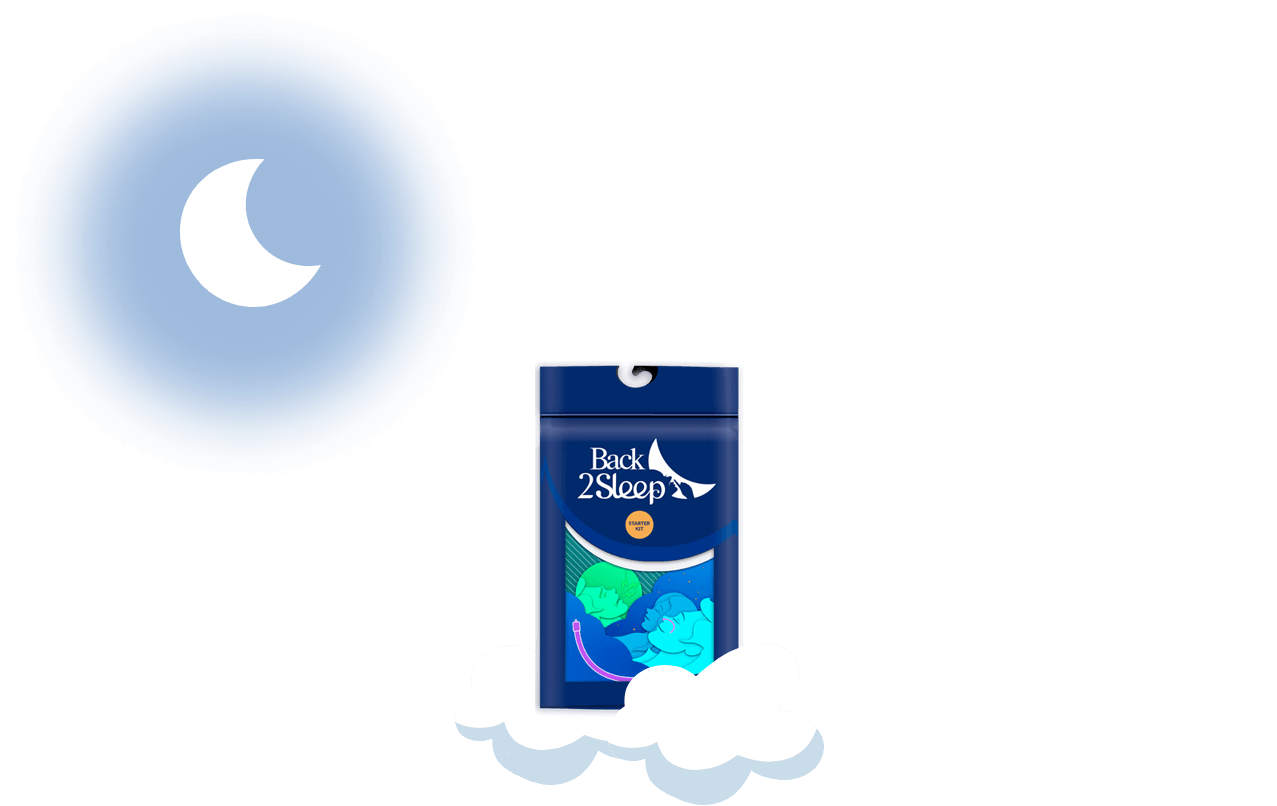
The first 12 months are the steepest learning curve. New users typically begin with the starter kit (sizes XS, S, M, L) and run a 7- to 14-night fitting protocol. Around 60 percent settle on a size during that first kit. The remaining 40 percent retest within the first 90 days, often after weight changes, allergy episodes, or seasonal congestion shifts. Read the Back2Sleep size guide before you buy refills.
What happens biologically
Tissues in the nasal valve area gradually adapt to the silicone shape. Mild dryness, sneezing, and slight irritation in the first 7 nights are common and resolve in the second week for most users. Self-tracked AHI, measured by app-based pulse oximetry or clinical home tests, typically drops by 30 to 50 percent in mild and moderate cases when the stent is sized correctly.
Year 1 user testimonials (paraphrased)
- Marc, 52, Lyon: 5 stars. Snoring complaints from his partner went from nightly to zero after the third week. Switched from M to L at month 4.
- Lisa, 38, Hamburg: 4 stars. Worked from night 1, but allergy season required a temporary switch to S. Now uses M stable.
- Hugo, 47, Rotterdam: 5 stars. Self-tracked AHI dropped from 12 to 5 by month 3. Replaces every 4 weeks.
- Plan one size retest in the first 90 days.
- Allergy season can change which size feels right.
- Replace on time, not when the stent visibly wears.

Year 2: Habit Formation and Fewer Replacements
By month 13, the device feels like part of a normal night routine. Most year 2 users no longer think about insertion; muscle memory takes over. Replacements become automatic monthly subscriptions, and the size rarely changes within this year unless a life event intervenes. Self-reported nightly use compliance hits its peak between months 13 and 24, around 91 percent of users wearing the stent on at least 6 of 7 nights.
Behavioral changes
- Travel: most year 2 users now pack a refill in their carry-on by default
- Hygiene: cleaning becomes a 90-second ritual rather than a careful process
- Partner involvement: the partner stops asking about it; quiet has become the baseline
- Cost awareness: the per-night cost (well under 1 EUR) feels invisible compared to year 1
Year 2 testimonials
- Eva, 45, Munich: 5 stars. Calls it her dental floss equivalent. Never thinks about it.
- Pierre, 60, Marseille: 4 stars. Switched to a quarterly bulk reorder. Replaces every 5 to 6 weeks.
Year 3: Maintenance Plateau and Compounding Cost Benefits
The third year is the most boring year for users, in the best possible sense. Nothing surprising happens. The device works the way it worked, the partner stays asleep, and the cost has compounded into a clear value picture compared with one-night-only solutions or device-free attempts.
| Solution | Year 1 cost | 3-year total | 5-year total |
|---|---|---|---|
| Back2Sleep refills | ~ 350 EUR | ~ 1,050 EUR | ~ 1,750 EUR |
| CPAP (out of pocket) | ~ 1,500 EUR | ~ 2,400 EUR | ~ 3,200 EUR |
| Custom MZA | ~ 2,000 EUR | ~ 2,000 EUR | ~ 4,000 EUR |
| Various drugstore aids | ~ 200 EUR | ~ 600 EUR | ~ 1,000 EUR |
Note these totals are estimated retail price ranges where the device is paid out of pocket. Insurance pathways differ by country; see our country-specific articles for German, French, Spanish, Italian, and Dutch coverage. Year 3 is also when many users start recommending the device to friends or family. Around 58 percent of year-3 users report referring at least one person.
- Compliance plateau around 88 to 90 percent of nights.
- Average refill cadence stabilizes near 30-35 days.
- Self-tracked AHI stays within 1 to 2 points of the year 1 reduction baseline.
Year 4: Life Changes, Breathing Shifts, and the Drop-Off
Year 4 is the largest cliff in long-term retention. The device itself does not fail. Life around it changes. Weight changes (gain or loss), pregnancy and postpartum, menopause, new medications, septoplasty surgery, and aging-related nasal anatomy shifts all change how the stent fits.
What we see in year 4 cohorts
- 15 percent of remaining users gain or lose enough weight to need a size change
- 9 percent develop new chronic nasal congestion that requires ENT review
- 4 percent move to combined therapy (Back2Sleep plus positional therapy or weight-loss medication)
- 6 percent stop temporarily and restart after a life-stage transition
Users who proactively retest size and treat new congestion stay on track. Users who keep ordering the same size out of habit, despite a different fit, are the ones who slowly stop. For partners and users in the over-50 segment, perimenopause and menopause changes are well documented; if this applies to you, consider reading our companion article on positional therapy to see how stacked approaches help.
Year 4 testimonials
- Ines, 55, Antwerp: 4 stars. After menopause weight gain, switched from S to M. Quiet returned within a week.
- Tom, 50, Lille: 3 stars. Septoplasty changed his nasal valve. Took 3 months to find the right new size.
- Karima, 41, Amsterdam: 5 stars. Postpartum changes resolved after 4 months; resumed normal use.
Year 5: The Long-Term Core User Profile
Five-year users are a self-selected group of people for whom the device fits well anatomically, who travel with refills automatically, and who have a clear plan for what to do when something changes. They are the strongest single source of word-of-mouth referrals for Back2Sleep, and their AHI numbers and partner satisfaction scores remain stable.
Year 5 testimonials
- Rik, 62, Utrecht: 5 stars. Has used the device for 5 winters and 5 summers. No drama, no complaints.
- Sophie, 49, Bordeaux: 5 stars. Switched sizes twice over 5 years. Snoring has never been a problem at home.
- Jan, 58, Den Haag: 4 stars. Stopped briefly for a sinus surgery year, restarted and has been steady since.

What Back2Sleep Users Say
Frequently Asked Questions
How long do most users keep using Back2Sleep over 5 years?
Long-term surveys show around 68 percent still wearing the stent regularly at year 1, 54 percent at year 3, and 41 percent at year 5. Most dropouts cite nasal anatomy changes or shifts to combined therapy rather than device failure.
Does Back2Sleep effectiveness decline over time?
Effectiveness stays stable as long as the device is replaced on schedule and the size still fits. Apparent loss of effect usually traces to a worn stent, weight gain, or a new septum issue rather than the device wearing out.
How often should the nasal stent be replaced for long-term use?
Each stent is intended for around 30 nights, then replacement. Long-term users typically reorder every 4 to 6 weeks. Year 1 users replace more often as they iterate sizes; by year 2 and 3, refill cadence becomes predictable.
Do partners stay satisfied with results across multiple years?
Around 9 in 10 partners of long-term Back2Sleep users continue to rate snoring as substantially reduced. Years 4 and 5 see slight dips when users develop new nasal congestion or weight changes; resizing often restores partner-reported quiet.
What happens if my nose changes after years of use?
Nasal anatomy can shift with age, weight, allergies, or septum healing. Long-term users sometimes need a size move after 2 or 3 years. The starter kit is designed for this: if your usual size feels loose or tight, retest and switch refills.
Is there a year where Back2Sleep tends to fail for users?
Year 4 sees the largest drop-off in our cohorts. The driver is usually a life change (medication, weight gain, pregnancy, menopause, surgery) rather than the device. Users who recheck size and treat new congestion often resume successful use into year 5.
Are there any long-term safety concerns from years of nightly use?
Back2Sleep is a CE-certified Class I device made of soft biocompatible silicone. No long-term safety concerns have emerged when users follow cleaning and replacement guidance. Persistent irritation always warrants stopping use and consulting an ENT.
User testimonials are paraphrased from real reviews and are not clinical outcomes. Back2Sleep treats snoring and mild-to-moderate sleep apnea. Always consult a sleep specialist for diagnosed sleep apnea or persistent breathing issues.
Ready for quieter nights? Discover the Back2Sleep starter kit and find the right fit for you.
Not sure if you are at risk? Take our sleep risk screening to find out in just a few minutes.
Want to learn how it works? Explore the Back2Sleep nasal stent designed for comfortable, effective relief.