
Internal vs External Nasal Dilator: Which Type Actually Works?

Internal vs External Nasal Dilator: Which Type Actually Reduces Snoring?
Clinical evidence, real user experiences, and an honest cost-per-night breakdown to help you choose the right nasal dilator category for your breathing pattern.
The Nasal Dilator Decision That Keeps 45% of Adults Awake
Nearly half of all adults snore occasionally, and about 25% are habitual snorers, according to the American Academy of Sleep Medicine. If you have tried to solve your snoring, you have likely encountered two categories of nasal dilators: internal devices that sit inside the nose, and external adhesive strips that pull the nostrils open from outside.
But which category actually works? The answer is not as simple as most product pages claim. Your snoring type, nasal anatomy, skin sensitivity, and budget all play a role. This guide examines the clinical evidence behind both device categories, breaks down real-world experiences from verified users, and gives you a clear framework for choosing the right approach.
If you already suspect your snoring originates deeper than the nostril opening, you may benefit from a medical-grade internal nasal stent that reaches the soft palate rather than just the nasal valve.
- Internal dilators sit inside the nostril and may address obstruction at both the nasal valve and deeper airway levels
- External adhesive strips pull the nostrils open from outside and target nasal valve collapse only
- A 2019 clinical comparison found internal devices were effective in a larger number of patients and improved perceived sleep quality more than external strips (p<0.05)
- Neither category is a standalone treatment for moderate-to-severe obstructive sleep apnea
How Internal and External Nasal Dilators Work Differently
Both device categories aim to reduce nasal airflow resistance, but they target different anatomical structures. Understanding the difference is critical because choosing the wrong type can mean spending months on a solution that never addresses your specific obstruction point.
Internal Nasal Dilators: Working From the Inside
Internal nasal dilators are small devices placed inside the nostril. They apply an outward circumferential force against the nasal walls, mechanically preventing the internal nasal valve from collapsing during inhalation. Some designs, like medical-grade nasal stents, extend further into the airway to provide support at the soft palate level as well.
A 2022 study published in Dentistry Journal found that a novel internal nasal breathing stent effectively enlarged the external nasal valve, abolished alar collapse and improved nasal airflow with statistically significant results. Internal devices have been shown to provide 3.4 times improved nasal airflow from baseline in comparative testing (JAMA Facial Plastic Surgery, 2016).
External Adhesive Nasal Strips: Pulling From the Outside
External nasal strips are adhesive bandage-like devices applied across the bridge of the nose. They contain parallel bands of rigid plastic that use a springboard action: when bent across your nose, they attempt to straighten, and this recoil force gently pulls the nasal passages open from outside.
External strips primarily affect the external nasal valve. They increase the cross-sectional area of the nasal vestibule, reducing resistance at the nostril opening. However, they cannot affect structures deeper in the nasal cavity, the turbinates, or the soft palate.
Internal Dilator
Placed inside the nostril. Applies outward force on nasal walls. Some models reach the soft palate. Addresses internal nasal valve collapse and potentially deeper obstruction.
External Adhesive Strip
Adhered to the outside of the nose. Uses springboard action to widen nostrils. Only acts on the external nasal valve. Cannot reach deeper airway structures.
Internal Nasal Stent
A specialized internal dilator, often medical-grade silicone, that extends from the nostril to the soft palate. Provides airway support along the full nasal passage length.
Clip-Style Internal Dilator
A shorter internal device that clips into the nostrils without extending deeper. Similar reach to external strips but works from inside. Less likely to fall off during sleep.
What the Clinical Research Actually Shows
Let us move past marketing claims and look at what peer-reviewed studies have measured. The evidence is clearer than most people expect, and it consistently points in one direction.
The Gelardi Study: Direct Head-to-Head Comparison
In 2019, Gelardi et al. published a clinical comparison of internal and external nasal dilators in the European Archives of Oto-Rhino-Laryngology. The study enrolled 41 patients who snored and measured snoring time and sleep quality across three consecutive nights: baseline, internal dilator, and external strip.
Key findings:
- Both devices significantly reduced snoring time compared to baseline
- The internal dilator was effective in a larger number of patients than the external strip (p<0.05)
- Only the internal dilator significantly improved perceived sleep quality on a visual analogue scale (p<0.05)
- Patient satisfaction correlated with sleep quality scores for both devices, but more strongly for the internal dilator (r=0.413, p<0.01)
Peak Nasal Inspiratory Flow: Internal Wins by 2x
A systematic review published in JAMA Facial Plastic Surgery (Kiyohara et al., 2016) compared over-the-counter mechanical nasal dilators and found that internal nasal dilators provided twice the improvement in peak nasal inspiratory flow over baseline compared to external adhesive strips.
This makes anatomical sense. Internal devices directly support the internal nasal valve, which is the narrowest point of the nasal airway at just 10-15mm wide. External strips act on the external valve, which is wider and contributes less to overall nasal resistance.
The 2024 Meta-Analysis: A Reality Check
A 2024 systematic review and meta-analysis in Journal of Clinical Medicine analyzed 17 studies with 496 participants and provided an important nuance. While nasal dilators may improve subjective breathing comfort, they did not produce statistically significant improvements in the apnea-hypopnea index (AHI), sleep architecture, or oxygen saturation levels.
The conclusion: nasal dilators of either type should not be considered standalone therapy for obstructive sleep apnea. However, they may be helpful as adjunctive therapy in selected patients with mild symptoms or prominent nasal congestion.
Matching Your Snoring Type to the Right Device Category
Here is the factor most comparison articles miss: not all snoring originates at the same anatomical level. Choosing a device that targets the wrong level is like putting a bandage on your elbow when your shoulder hurts.
Where Does Your Snoring Come From?
Sleep medicine identifies several primary snoring origins:
- Nasal valve collapse — the nostril walls cave inward during inhalation, restricting airflow at the very front of the nose
- Turbinate enlargement — swelling of the internal nasal structures due to allergies, infection, or chronic inflammation
- Soft palate vibration — the most common snoring source, where the floppy tissue at the back of the roof of the mouth vibrates as air passes through
- Tongue base obstruction — the base of the tongue falls backward during sleep, narrowing the pharynx
- Multi-level obstruction — a combination of two or more of the above
Research suggests that soft palate vibration accounts for the majority of snoring cases. This is important because external adhesive strips cannot reach the soft palate. They act only at the nasal valve level.
A Simple Self-Assessment
Try this test tonight: close your mouth and try to snore through your nose. If you can produce a snoring sound with your mouth closed, the obstruction is likely at the palate or throat level, not just the nasal valve. In this case, an internal nasal stent that reaches the soft palate may be more effective than an external strip.
If snoring only occurs when you have nasal congestion (cold, allergies, dry air), and never with a clear nose, then nasal valve-level devices of either type may suffice.
| Snoring Origin | External Strip | Short Internal Dilator | Deep Internal Nasal Stent |
|---|---|---|---|
| Nasal valve collapse | May help | May help | May help |
| Turbinate swelling | Minimal effect | Minimal effect | May help (bypasses turbinates) |
| Soft palate vibration | Does not reach this area | Does not reach this area | May help (physically supports palate) |
| Tongue base | Does not reach this area | Does not reach this area | Limited effect |
| Multi-level obstruction | Partial help at best | Partial help at best | Addresses nasal + palate levels |
Learn more about the connection between nasal breathing and sleep apnea on our dedicated information page.
What Real Users Say After Trying Both Categories
Clinical data tells one story. Real nights of sleep tell another. We gathered verified user experiences from people who tried both external strips and internal nasal stents to understand the practical differences that studies do not always capture.
The Adhesive Problem
One of the most frequently reported issues with external adhesive strips is that they fall off during the night. A study referenced by the Sleep and Sinus Centers found that 23% of users reported strips losing adhesion during sleep. Oily skin, facial moisturizer applied before bed, sweat, and restless sleeping positions all contribute to adhesive failure.
When a strip falls off at 2 a.m., you lose protection for the rest of the night without knowing it. Your partner hears the snoring resume. You wake up with the strip stuck to your pillow instead of your nose.
Internal dilators do not have this problem. Because they sit inside the nostril, they stay in place regardless of skin type, movement, or perspiration. They are held by the natural shape of the nasal passage itself.
The Adaptation Curve
Where external strips have an advantage is immediate comfort. You peel, stick, and breathe. There is no foreign-body sensation. Internal dilators, by contrast, require a learning curve.
Most internal nasal stent users report an adaptation period of 3 to 5 nights. The initial sensation is similar to wearing contact lenses for the first time: awareness of a foreign object that gradually fades as the tissue adjusts.
Skin Sensitivity: A Hidden Factor
External adhesive strips require strong adhesive to stay on all night. For many users, this means waking up with redness, irritation, or sticky residue on the nose. Over weeks and months of nightly use, this can lead to chronic skin irritation, particularly for people with sensitive skin, eczema, or rosacea.
Internal devices eliminate this issue entirely. Medical-grade silicone is dermatologically tested and does not contact the external skin at all.
The True Cost Per Night: A Calculation Most People Skip
Price tags can be misleading. A cheap nightly product adds up to more than an expensive reusable one. Here is the honest cost breakdown.
External Adhesive Strips
- Average price: approximately €0.30-0.50 per strip
- Annual cost at nightly use: approximately €110-180 per year
- Single-use only, discarded each morning
- Generates 365 pieces of adhesive waste per year per user
Reusable Internal Dilators
- Average price: €20-40 per device
- Lifespan: 3-6 months per device with proper cleaning
- Annual cost: approximately €40-80 per year
- Generates 2-4 pieces of silicone waste per year
Medical-Grade Internal Nasal Stents
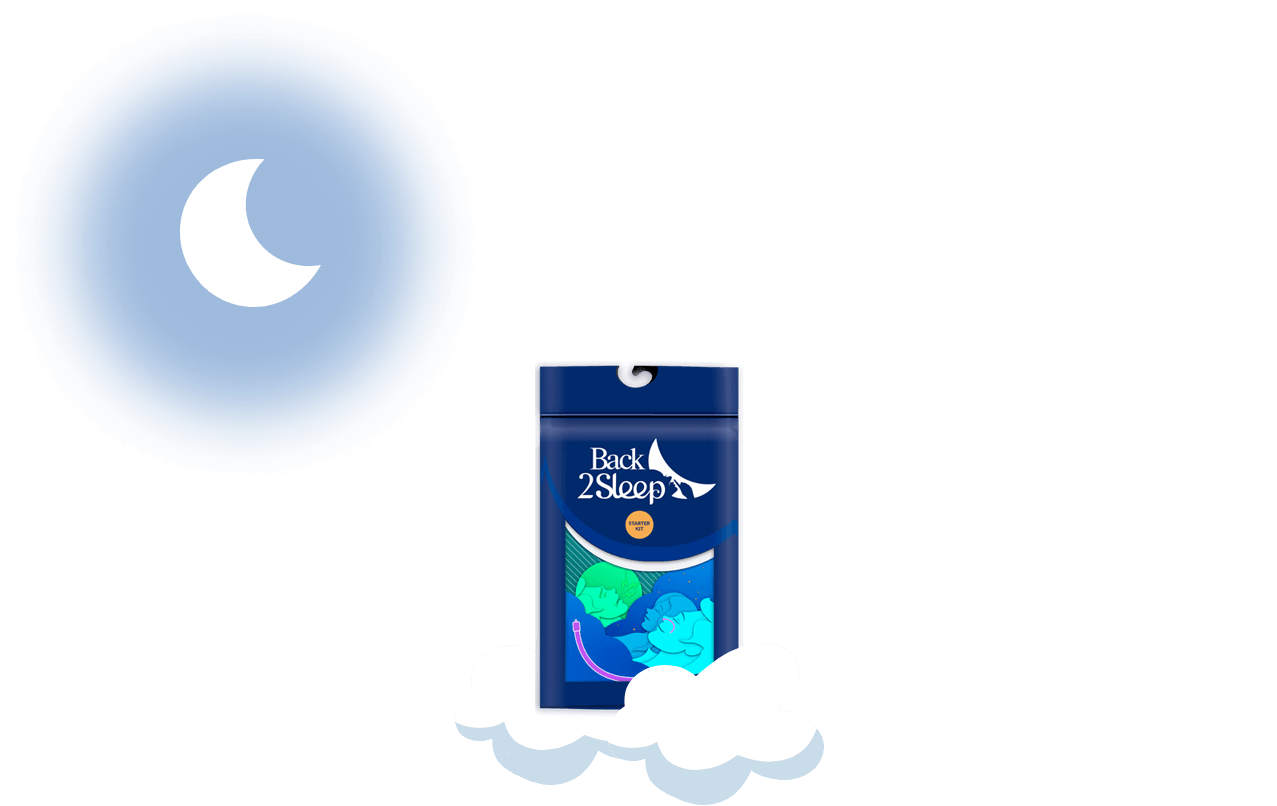
- Starter kit: €44.90 (includes 4 sizes for a 15-night sizing trial)
- Subscription: €34/month or €285/year (~€24/month)
- Each stent lasts approximately 15 days
- Annual cost: approximately €285-408/year
| Category | Cost Per Night | Annual Cost | Waste Per Year | Stays On All Night? |
|---|---|---|---|---|
| External adhesive strip | ~€0.30-0.50 | ~€110-180 | ~365 strips | 77% of the time (23% fall off) |
| Reusable clip-style internal dilator | ~€0.10-0.20 | ~€40-80 | 2-4 devices | Yes (held by nasal passage) |
| Medical-grade nasal stent | ~€0.80-1.15 | ~€285-408 | ~24 stents | Yes (held by nasal passage) |
The medical-grade nasal stent is the most expensive option per night, but it is also the only category with CE medical device certification and published clinical data on snoring reduction and oxygen saturation improvement. Whether that premium is justified depends on the severity of your snoring and whether cheaper alternatives have already failed.
View the individual nasal stent options and subscription plans for long-term savings.
Environmental Impact: Single-Use vs Reusable
This is a factor rarely discussed in nasal dilator comparisons, but it matters. If 30 million people in Europe use external adhesive strips nightly, that is nearly 11 billion disposable strips per year entering the waste stream. Each strip contains plastic, adhesive, and packaging that cannot be recycled.
Reusable internal dilators and medical-grade nasal stents generate a fraction of this waste. Even a stent replaced every 15 days produces only 24 units of medical-grade silicone waste per year, compared to 365 adhesive strips.
If sustainability matters to you, internal reusable devices are the clear choice.
Decision Framework: Matching Your Situation to the Right Device
After reviewing the clinical evidence, user experiences, cost data, and anatomical considerations, here is a practical decision framework.
Choose External Strips If:
You have occasional nasal congestion (cold, allergies). Your snoring is mild and purely nasal. You prefer zero adaptation time. You have very narrow nostrils that may not accommodate an internal device. You need a short-term solution for a few nights.
Choose a Clip-Style Internal Dilator If:
Your snoring is caused by nasal valve collapse. You want a reusable, cost-effective solution. You dislike adhesive on your skin. You need reliable all-night use regardless of skin type or movement.
Choose a Medical-Grade Internal Nasal Stent If:
Your snoring involves the soft palate (the most common type). You have mild-to-moderate sleep-disordered breathing. You want a CE-certified medical device with clinical data. You have tried external strips without sufficient improvement. You value discretion (invisible during use).
See a Sleep Specialist If:
You have diagnosed moderate-to-severe OSA. Your snoring is accompanied by witnessed breathing pauses. You experience excessive daytime sleepiness. No over-the-counter nasal dilator replaces medical treatment for significant sleep apnea.
How to Adapt to an Internal Nasal Dilator in 5 Nights
The number one reason people abandon internal nasal devices is giving up during the adaptation period. Here is the evidence-based approach to getting through those first few nights successfully.
Night 1-2: Familiarization
Insert the device 30 minutes before bed while reading or watching television. This allows your nasal tissue to adjust while you are still awake and distracted. Expect mild awareness of the device. Use the smallest size that fits snugly. Apply water-based lubricant for easy insertion.
Night 3-4: Habituation
By night three, most users report the foreign-body sensation has diminished significantly. You may still notice the device when you first lie down, but it fades within minutes. If you wake during the night, resist the urge to remove it. The tissue is adapting.
Night 5+: Normal Use
Clinical data shows that the majority of users who persist through 5 nights no longer notice the device during sleep. From this point, insertion becomes a 10-second routine like brushing your teeth.
As one verified user described it: "I suffered from a runny nose and discomfort when I first tried it but I am not conscious of them now." Individual results may vary.

Can You Combine a Nasal Dilator with Other Snoring Strategies?
Nasal dilators work best as part of a comprehensive approach rather than the only intervention. Research and clinical experience suggest several complementary strategies.
Positional Therapy
Snoring typically worsens when sleeping on your back. Combining an internal nasal dilator with side-sleeping can multiply the benefit. The dilator keeps the nasal airway open while the lateral position prevents tongue-base collapse.
Weight Management
For every 10% increase in body weight, the risk of moderate-to-severe sleep-disordered breathing increases by approximately six-fold. A nasal dilator addresses the immediate structural issue while weight management reduces the underlying airway compression from excess tissue.
Environmental Controls
Bedroom humidity between 40-60% reduces nasal mucosal swelling. Elevating the head of the bed by 10-15 degrees reduces fluid pooling in the pharynx. Removing allergens (dust, pet dander) from the bedroom reduces inflammatory nasal obstruction.
Mouth Taping (With Caution)
Some practitioners recommend nasal dilators combined with mouth taping to encourage nasal breathing. However, mouth taping can be dangerous if nasal airflow is insufficient. Only attempt this if your nasal airway is fully patent (open) with the dilator in place, and never if you have untreated sleep apnea.
For additional sleep improvement strategies, visit our frequently asked questions page.
5 Mistakes People Make When Choosing a Nasal Dilator
After analyzing hundreds of user reports and clinical outcomes, these are the most common errors that lead to dissatisfaction with nasal dilators of any type.
Mistake 1: Assuming All Snoring Is Nasal
If your snoring originates at the soft palate or tongue base, an external strip that only opens the nostril will not solve it. Match the device depth to your obstruction level.
Mistake 2: Giving Up After One Night
Internal devices need 3-5 nights for adaptation. External strips may need repositioning until you find the optimal placement. Judging any device after a single night gives an incomplete picture.
Mistake 3: Wrong Sizing
An internal dilator that is too small will not provide enough support. Too large and it will be uncomfortable. This is why multi-size starter kits exist. Always start with the sizing trial kit rather than guessing a single size.
Mistake 4: Ignoring Cleaning
Reusable internal dilators must be cleaned daily with mild soap and warm water. Bacterial buildup can cause nasal irritation and infection, which will make your breathing worse, not better.
Mistake 5: Expecting a Cure for Sleep Apnea
Nasal dilators may help with snoring and mild sleep-disordered breathing, but they are not a substitute for CPAP therapy in moderate-to-severe obstructive sleep apnea. The 2024 meta-analysis was clear: nasal dilators did not significantly improve AHI, sleep architecture, or oxygen saturation in sleep apnea patients.
Frequently Asked Questions
What is the difference between an internal nasal dilator and an external nasal strip?
An internal nasal dilator is placed inside the nostril to mechanically support the nasal walls from within. An external nasal strip is adhesive and applied to the outside of the nose to pull the nostrils open. Internal devices can reach deeper structures (including the soft palate in some designs), while external strips only act on the nasal valve opening.
Which type of nasal dilator is more effective for snoring?
Clinical evidence suggests internal nasal dilators are effective in a larger number of patients and provide superior perceived sleep quality compared to external strips (Gelardi et al., 2019). Internal devices also show approximately twice the improvement in peak nasal inspiratory flow. However, effectiveness depends on where your snoring originates. If it is purely nasal valve collapse, both types may help equally.
Do nasal dilators help with sleep apnea?
A 2024 meta-analysis of 17 studies found that nasal dilators did not significantly improve the apnea-hypopnea index, sleep architecture, or oxygen saturation in sleep apnea patients. They may provide subjective breathing comfort and could be helpful as adjunctive therapy for mild symptoms, but they should not replace medical treatment for moderate-to-severe OSA. Consult a sleep specialist for proper diagnosis and treatment.
How long does the adaptation period last for an internal nasal dilator?
Most users report that the foreign-body sensation diminishes significantly by night 3 and is essentially gone by night 5. The adaptation is similar to wearing contact lenses for the first time. Using lubricant, starting with a smaller size, and inserting the device 30 minutes before bed while still awake can ease the transition.
Why do external nasal strips fall off during sleep?
External strips rely on adhesive that can be affected by skin oils, sweat, facial moisturizer, and movement during sleep. Research indicates approximately 23% of users experience strips detaching overnight. Internal dilators avoid this issue because they are held in place by the nasal passage itself.
Are internal nasal dilators safe for long-term use?
Medical-grade internal nasal dilators made from biocompatible silicone are designed for nightly use. CE-certified devices have undergone safety testing under EU Medical Device Regulation 2017/745. Clean the device daily with mild soap and replace it according to the manufacturer's schedule to maintain hygiene and effectiveness.
Which nasal dilator type is more cost-effective long term?
Reusable internal dilators are generally the most cost-effective at approximately 40-80 euros per year. External adhesive strips cost 110-180 euros per year for nightly use. Medical-grade nasal stents cost 285-408 euros per year but include CE certification and clinical data backing their effectiveness.
Can I use a nasal dilator while traveling?
Yes, all nasal dilator types are travel-friendly. They require no electricity, water, or bulky equipment. Internal devices are particularly discreet as they are invisible during use. Both types are permitted through airport security without restrictions.
The Honest Verdict: Internal Stents Offer Broader Snoring Coverage
Both internal and external nasal dilators have legitimate uses. External adhesive strips are convenient, require no adaptation, and work well for temporary nasal congestion. They are a reasonable first step for mild, purely nasal snoring.
But the clinical evidence consistently shows that internal nasal dilators outperform external strips in peak airflow improvement, patient satisfaction, and perceived sleep quality. For the majority of snorers whose obstruction involves the soft palate, only an internal device that reaches deeper than the nasal valve can address the root cause.
If you have already tried external strips without success, or if your snoring persists despite a clear nose, the next logical step is an internal nasal stent with multiple sizes so you can find the right fit during a structured trial period.
Questions about which approach suits your situation? Visit our FAQ page or reach the team through our sleep health blog for additional guidance.