
How Back2Sleep is Manufactured: From Medical Silicone to Sterile Packaging

How Back2Sleep is Manufactured: Inside the French Medical Silicone Production Process
Behind every Back2Sleep nasal stent is a controlled French medical-device manufacturing process. Here is the full Back2Sleep manufacturing process, from raw silicone to ISO Class 7 cleanroom packaging.
Why the Back2Sleep Manufacturing Process Matters
A nasal stent is a soft device that you insert into your airway every single night. The material it is made of, the precision of its shape, the cleanliness of its packaging, and the regulatory file behind it all matter for your safety and comfort. Cheap visual copies are widely available online; very few of them can show a CE-certified medical-device file. This article walks through how the genuine Back2Sleep nasal stent is actually made, step by step.
We focus on the things buyers can verify and understand: medical-grade platinum-cured silicone, ISO 10993 biocompatibility, controlled molding, validated sterilization, ISO Class 7 cleanroom packaging, and per-batch quality control. For readers who want to compare the device against alternatives in the market, our anti-snoring device comparison covers the broader landscape, and our how nasal stents work article explains why the geometry matters as much as the material.
- Made in France from medical-grade platinum-cured silicone.
- Biocompatibility tested per ISO 10993 standards.
- Sterilized and sealed in cleanroom-grade packaging.
- Each batch logged for traceability under EU MDR rules.

Step 1: Selecting Medical-Grade Platinum-Cured Silicone
The Back2Sleep stent starts as raw silicone elastomer. Two production routes exist for silicone: peroxide-cured (older, with potential residual byproducts) and platinum-cured (newer, cleaner, used for long-term implants). Back2Sleep uses platinum-cured silicone exclusively.
Why platinum-cured silicone
- Lower extractables and leachables (cleaner long-term contact)
- Excellent biocompatibility profile under ISO 10993-5 (cytotoxicity) and 10993-10 (sensitization)
- Hypoallergenic for the vast majority of users
- High tear strength and elasticity for repeated insertion across 30 nights
- Stable shelf life when packaged correctly
The silicone supplier provides certificates of analysis with each batch (lot number, polymer composition, mechanical properties). These certificates are archived as part of the medical-device technical file required under the EU Medical Device Regulation.

Step 2: Precision Molding and Shape Control
Back2Sleep stents are produced by liquid silicone rubber (LSR) injection molding. Two-part platinum-cured silicone is mixed in a precise 1:1 ratio and injected into stainless-steel molds shaped for sizes XS, S, M, and L. The mold cavities are machined to micrometer-level tolerances; the same molds are reused for thousands of cycles before requalification.
The molding cycle in plain language
- Material preparation: silicone components mixed in a temperature-controlled feeder
- Injection: under pressure into the mold, filling every micro-feature of the cavity
- Curing: heat-cured for a controlled time at controlled temperature
- De-molding: each piece released, inspected for shape and surface quality
- Trimming: any flash (thin excess) trimmed by precision tooling
Dimensional sampling occurs throughout the run. Each size has a target nominal dimension (length, internal diameter, ring diameter), with tight tolerance bands. Pieces outside tolerance are scrapped on the spot.
| Process step | Controlled parameter | Why it matters |
|---|---|---|
| Mixing | 1:1 ratio, temperature | Cure consistency |
| Injection | Pressure, fill time | Complete shape, no voids |
| Curing | Time, temperature | Mechanical strength |
| Trimming | Edge cleanliness | Comfort and safety |
| Dimensional check | Length, diameter | Sizing accuracy |
Step 3: Validated Sterilization
Once molded and inspected, stents move to sterilization. Two validated methods are used in medical-device sterilization for silicone products: gamma irradiation and ethylene oxide (EtO). Both are accepted under ISO 11135 (EtO) and ISO 11137 (radiation). The choice depends on batch size, materials, and packaging configuration.
Gamma irradiation
Gamma sterilization passes high-energy photons through sealed packaging at controlled doses, killing microorganisms without heat or chemical residue. It is fast, well-suited to silicone, and leaves no by-products. Validated dose ranges ensure sterility while keeping the silicone mechanically intact.
Ethylene oxide
EtO sterilization uses a controlled gas-phase chemical reaction. After sterilization, products are aerated to remove residual EtO to levels well below ISO limits. This method is sometimes preferred for specific packaging or material combinations.
Whichever method is used, the sterilization parameters are documented per batch. Sterility is verified by indicators and by sample testing post-sterilization. Failed indicators block the batch from release.
Step 4: ISO Class 7 Cleanroom Packaging
Sterilized stents are packaged in an ISO Class 7 (or equivalent ISO 14644-1 grade) cleanroom environment. ISO 7 limits airborne particle counts: at most 352,000 particles of 0.5 micrometers per cubic meter. This is roughly 1,000 times cleaner than typical office air, ensuring that packaging stays free from contamination during sealing.
What happens in the cleanroom
- Operators wear gowns, gloves, hair covers, and shoe covers
- Airflow is HEPA-filtered and pressure-controlled
- Each stent is placed in primary packaging, sealed, and labeled with batch and date
- Boxes and pouches are checked for seal integrity
- Outer packaging adds usage instructions, warnings, and CE-marking information
- Particle contamination on sterile devices can compromise tolerability.
- Seal integrity ensures sterility holds until first use.
- Traceable packaging lets you (and the manufacturer) identify a batch in seconds.
Step 5: Batch Testing and Quality Control
Before release, each batch passes through a documented quality-control gate. The gate includes dimensional checks on a representative sample, mechanical tests on the cured silicone (tensile, elongation, hardness), visual inspection for surface defects, and sterility verification.
What gets archived for each batch
- Raw material certificates of analysis
- Molding parameter logs
- Sterilization cycle records and indicator results
- Cleanroom environmental monitoring data
- Final QC test results and operator signatures
- Packaging seal integrity data
This archive is retained for the period required by EU MDR rules and is available to regulatory inspectors and notified bodies on demand. It is also why Back2Sleep can answer specific questions about a specific lot number if a customer ever asks.
How This Differs From Cheap Asian Copies
Visually similar nasal stents are widely sold on online marketplaces at very low prices. Most of them are not CE-certified medical devices. Most of them do not have a documented ISO 10993 biocompatibility evaluation. Most of them do not show a sterile-packaging declaration or cleanroom packaging environment. The shape may look the same; the safety profile is not.
| Attribute | Back2Sleep | Typical low-cost copy |
|---|---|---|
| Material | Medical platinum-cured silicone | Often unspecified |
| Biocompatibility | ISO 10993 evaluated | Rarely documented |
| Regulatory status | CE Class I medical device | Often consumer goods only |
| Sterilization | Validated gamma or EtO | Often not sterile |
| Packaging | ISO 7 cleanroom | Standard factory line |
| Traceability | Batch and lot logged | Frequently absent |
For a deeper comparison of approved devices and their evidence, see our internal vs external dilator review.

What Back2Sleep Users Say
Frequently Asked Questions
What material is Back2Sleep made of?
Back2Sleep is made of medical-grade platinum-cured silicone, the same family of polymers used in long-term implanted medical devices. The formulation meets ISO 10993 biological evaluation standards required for soft-tissue contact devices in the EU.
Where is Back2Sleep manufactured?
Back2Sleep is manufactured in France. Headquarters is in Paris, with production handled by qualified French medical-device contract manufacturers. Production stays in Europe for traceability, regulatory oversight, and sterile-packaging quality control.
How is Back2Sleep different from cheap copies on Amazon?
Cheap copies are often produced from non-medical silicone or PVC, lack ISO 10993 biocompatibility data, and are not CE-certified. They are typically packaged outside cleanroom environments. Back2Sleep is a CE Class I device with documented biocompatibility and full traceability.
Is Back2Sleep sterilized before packaging?
Yes. Each stent is sterilized using validated medical-device methods (typically gamma irradiation or ethylene oxide) before packaging. Packaging is sealed in an ISO Class 7 cleanroom-equivalent environment. Each batch is logged with manufacturing date and lot number.
What quality controls are run on each batch?
Each batch undergoes dimensional inspection, tensile and elasticity testing, visual inspection for defects, and sterility verification. Batches that fail any test are quarantined and not released. Documentation is retained for the regulatory archive period.
Is the silicone safe for sensitive noses and allergies?
Medical-grade platinum-cured silicone is among the most biocompatible polymers available and is widely used in long-term implants. It is hypoallergenic for most users. Patients with known silicone sensitivities should consult a doctor before starting.
Why is the manufacturing process important for buyers to know?
A nasal stent sits in your airway every night. Material quality, sterility, and dimensional precision directly affect comfort, safety, and effectiveness. Knowing how a device is made helps you choose between a CE-certified product and an unregulated copy.
Back2Sleep is a CE-certified Class I medical device for snoring and mild-to-moderate obstructive sleep apnea. It does not replace CPAP for severe OSA. Always consult a healthcare professional for any persistent breathing or sleep concerns.
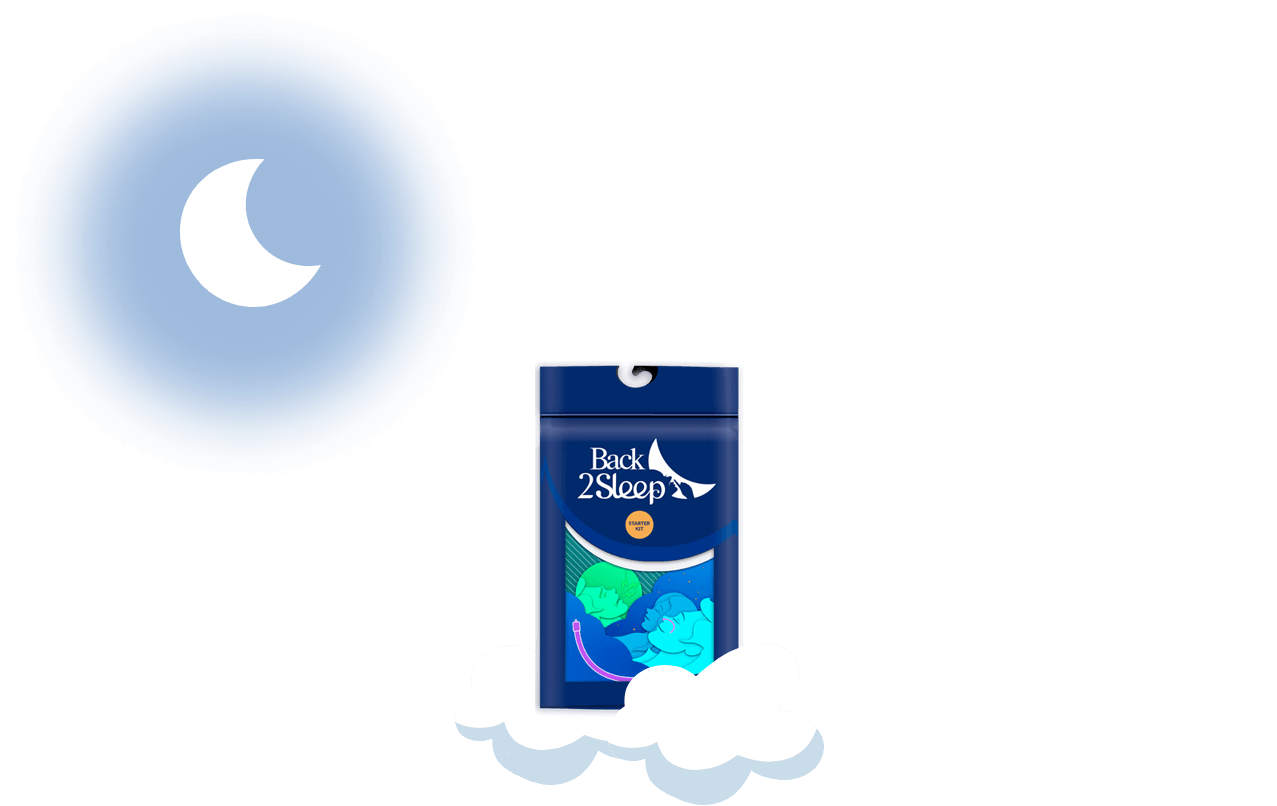
Ready for quieter nights? Discover the Back2Sleep starter kit and find the right fit for you.
Not sure if you are at risk? Take our sleep risk screening to find out in just a few minutes.
Want to learn how it works? Explore the Back2Sleep nasal stent designed for comfortable, effective relief.