
How to Insert and Remove a Nasal Stent: A Step-by-Step Technique Guide

How to Insert a Nasal Stent Safely: The Complete Step-by-Step Method
A calm, expert walkthrough for placing and removing a soft nasal stent at night — with sizing, lubrication, and what to do if it sticks.
How to Insert a Nasal Stent: The Short Answer First
Learning how to insert a nasal stent takes only a few calm minutes once you know the technique. You lubricate the soft silicone tube with water or a water-based gel, then guide it gently into one nostril, aiming slightly toward the central wall of your nose and downward along the floor of the nasal cavity. The stent slides toward the back of the throat and holds the airway open while you sleep. In the morning, you remove it, rinse it, and store it.
This guide is written for European readers using a soft, single-use nasal stent for snoring and mild-to-moderate sleep apnea. We cover sizing, lubrication, the exact insertion angle, removal, and what to do if it sticks. If this is your very first attempt, our companion piece on the first night using a nasal stent explains what sensations are normal. To choose the correct length and diameter before you begin, see our nasal stent sizing guide.
- Insertion is simple: lubricate, aim toward the septum and slightly down, and glide gently.
- The soft silicone tube reaches the back of the throat to hold the airway open.
- Remove and rinse each morning; a graduated routine builds comfort fast.

Before You Start: Sizing, Hygiene, and Candidacy
Correct sizing prevents most insertion problems. A stent that is too long can trigger your gag reflex, while one that is too short may not reach far enough to keep the airway open. Soft nasal stents are measured in millimetres for both length and diameter, so picking your fit is precise rather than guesswork.
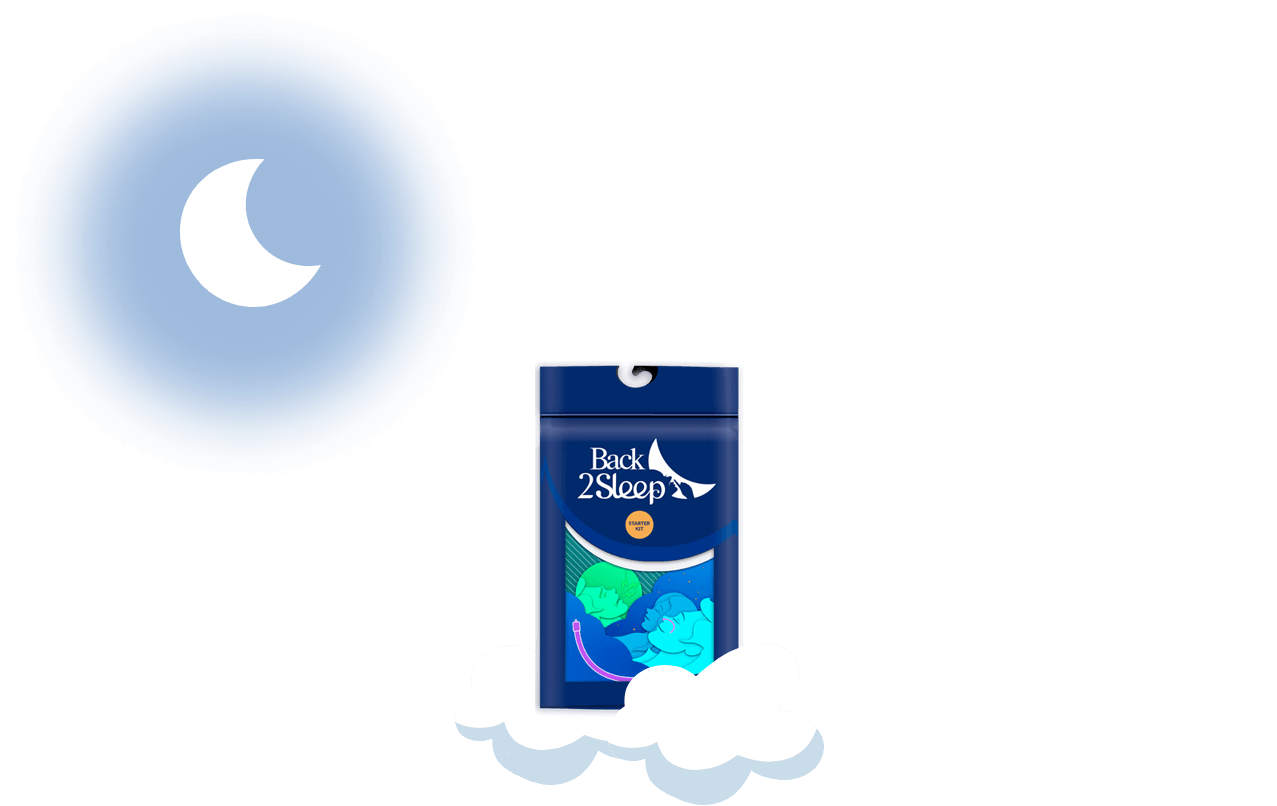
The Back2Sleep starter kit includes four sizes so you can test which length and diameter feel right before committing. Our detailed starter kit sizing guide walks through measuring and matching each size. Start with a shorter, narrower size and move up only if airflow feels incomplete.
Who a nasal stent suits — and who should see a clinician
A nasal stent is appropriate for habitual snoring and mild-to-moderate obstructive sleep apnea, where the apnea-hypopnea index (AHI) — the number of breathing interruptions per hour — sits roughly between 5 and 20. It is not a treatment for severe sleep apnea, central apnea, or complex multilevel obstruction. If you have very loud gasping, daytime exhaustion, or a high AHI, get a sleep assessment first.
| Situation | Nasal stent suitable? | What to do |
|---|---|---|
| Habitual snoring | Yes | Try sizing and the insertion method below |
| Mild-to-moderate OSA (AHI 5–20) | Yes, as a non-surgical option | Consider after a diagnosis; monitor symptoms |
| Severe OSA (AHI over 30) | No | Seek CPAP or specialist care |
| Central or complex apnea | No | See a sleep clinician |
| Active nasal infection or recent surgery | Pause | Wait until healed; ask your doctor |
- Sizing in millimetres prevents gagging and weak airflow.
- Suitable for snoring and mild-to-moderate OSA (AHI 5–20).
- Severe or central apnea needs a clinician, not a stent.
How to Insert a Nasal Stent: 5 Calm Steps
Inserting a nasal stent correctly is a smooth, deliberate motion rather than a quick push. Wash your hands first, sit upright near a mirror, and breathe normally. Follow these five steps each night.
1Lubricate the tube
Coat the soft end and the first few centimetres with water or a water-based lubricant. Lubrication is the single biggest factor in easy, comfortable insertion. Avoid oil-based products, which can degrade silicone.
2Choose the clearer nostril
Breathe through each nostril and pick the one that feels more open. Tilt your head slightly forward, not back, so the tube follows the natural floor of the nasal passage.
3Aim toward the septum and slightly down
Insert the tip and angle it gently toward the septum — the central wall between your nostrils — and downward. This follows your anatomy. Do not push straight up toward your eyes.
4Glide gently; re-aim if you hit resistance
Advance slowly. If you meet a blockage, pull back a few millimetres and re-aim in-and-down rather than forcing it. The tube should slide along the floor of the cavity toward the throat.
5Seat and secure
Stop when the outer flange or marker rests comfortably at the nostril. The far end should sit in the upper throat, above the uvula. Swallow once to confirm it feels secure, not gagging.
- Lubricate generously with water or a water-based gel.
- Aim toward the septum and slightly down — never straight up.
- Re-aim, don't force, if you hit resistance.
How to Insert a Nasal Stent Without Gagging
The gag reflex is the most common worry, and it is manageable. Gagging usually happens when the stent is too long, advanced too fast, or angled too steeply. Slowing down and choosing the right size solves it for most people.
Practical anti-gag techniques
Breathe slowly through your mouth during insertion to relax the throat. Pause if you feel the urge to gag, let it settle, then continue. Some users find that humming or pressing the thumb of the opposite hand helps distract the reflex. If the urge persists, switch to a shorter size from your kit.
Discomfort the first few nights is normal and well documented. In a 2019 case report on the nasal airway stent for snoring, 71% of subjects reported difficulty inserting on the first night, but by the next day 66% reported no difficulty at all — the learning curve resolves within about 24 to 48 hours. Graduated wearing time helps: start with an hour or two, then build to a full night.
- Gagging usually means the size is too long or you moved too fast.
- Breathe through the mouth, pause, and re-advance slowly.
- Day-1 difficulty (71%) drops to no difficulty for 66% by day 2.
How to Remove a Nasal Stent — and What to Do If It Sticks
Removing a nasal stent is even simpler than inserting it. Each morning, grasp the outer end and pull steadily along the same downward path it entered. The motion should be smooth and slow, never a sudden yank.
If the stent feels stuck or dried to the lining
Overnight, mucus can dry and make the tube cling to the nasal lining. Never pull hard against resistance. Instead, moisten the area first: sniff a little water, breathe in humid air from a warm shower, or apply a saline spray. Wait a few seconds for the tube to loosen, then withdraw it gently. This protects the delicate tissue inside your nose.
1Relax and exhale
Breathe out slowly through your nose to release any suction before you pull.
2Pull steadily, not sharply
Draw the tube out along its natural downward curve in one smooth motion.
3Moisten if it resists
Use water, humid air, or saline, wait, then remove gently — never force a dried stent.
4Rinse and store
Rinse the stent under clean water, let it air-dry, and store it as directed for single-use or short-term reuse.
- Pull steadily along the downward path — never yank.
- If it sticks, moisten with water, humid air, or saline first.
- Rinse, dry, and store; replace on the recommended schedule.
Wear Time, Replacement, and Hygiene
A nasal stent is worn through the night and removed each morning. Most soft silicone stents follow a single-use or short-interval replacement model for hygiene, with many users changing them about every 15 days depending on the product and condition. Always follow your specific device instructions.
| Routine | What to do | Why it matters |
|---|---|---|
| Each night | Lubricate and insert before sleep | Keeps the airway open and reduces snoring |
| Each morning | Remove and rinse | Clears mucus, protects nasal tissue |
| ~Every 15 days | Replace the stent | Maintains hygiene and soft-tube integrity |
| Adaptation week | Use graduated wear time | Builds tolerance, lowers early dropout |
Adaptation matters because tolerance is real but not universal. In a 2021 Respiration (Karger) study of 71 patients with mild-to-moderate OSA, nasal airway stent therapy significantly improved AHI, supine AHI, oxygen desaturation, and snore volume, with gains maintained at one month. In the same cohort, roughly 30% did not tolerate the stent due to side effects — which is exactly why correct sizing, gentle technique, and a gradual ramp-up are worth the effort.
- Wear overnight, remove and rinse each morning.
- Replace roughly every 15 days for hygiene.
- Graduated wear time counters the documented ~30% early intolerance.
How a Nasal Stent Compares With Other Snoring Options
A nasal stent occupies a useful middle ground: more targeted than a strip, less burdensome than a machine, and non-surgical. The table below compares common approaches for snoring and mild-to-moderate OSA so you can see where the stent fits.
| Option | How it works | Prescription? | Best for |
|---|---|---|---|
| Back2Sleep nasal stent | Soft silicone tube holds the airway open at the throat level | No | Snoring + mild-to-moderate OSA |
| Nasal strips | Widen the outer nostril only | No | Mild nasal-valve snoring |
| Mandibular device | Pulls the jaw forward | Often yes (fitted) | Some mild-to-moderate OSA |
| CPAP machine | Pressurised air via mask and tubing | Yes | Moderate-to-severe OSA |
| Surgery | Reshapes airway tissue | Yes | Selected structural cases |
The evidence for nasopharyngeal stents is encouraging within their indication. A 2019 Nastent study reported the apnea-hypopnea index falling from 22.4 to 15.7 and lowest oxygen saturation rising from 81.9% to 86.6%, while a meta-analysis of nasopharyngeal airway stents found roughly a 50% reduction in AHI and a 72% reduction in apnea index. These benefits apply to snoring and mild-to-moderate cases — not severe disease.
The scale of the need is large. The Lancet Respiratory Medicine estimated in 2019 that 936 million adults aged 30–69 have mild-to-severe OSA worldwide. In a 2023 European Respiratory Journal Open Research French cohort, frequent or heavy snoring affected roughly 30–37% of adults, yet OSA remains widely underdiagnosed across Europe. Many habitual snorers never get a sleep assessment — so an accessible, CE-marked, no-prescription option fills a genuine gap.
- The stent sits between nasal strips and CPAP: targeted, non-surgical, no prescription.
- Meta-analysis data show roughly a 50% AHI reduction within indication.
- With OSA widely underdiagnosed in Europe, accessible options matter.

What Back2Sleep Users Say
Frequently Asked Questions
How do you insert a nasal stent without gagging?
Choose the right length, lubricate the tube well, and advance slowly. Aim toward the septum and slightly downward, never straight up. Breathe through your mouth to relax the throat, and pause if you feel a gag urge. If gagging persists, switch to a shorter size from your kit.
Does inserting a nasal stent hurt the first few nights?
Mild discomfort is normal and usually fades fast. A 2019 case report found 71% of users had insertion difficulty on night one, but 66% reported none by day two. Expect a cool, full sensation at the back of the throat. Sharp pain or bleeding is not normal and means you should stop and reassess sizing.
How far should a nasal stent go into your nose and throat?
A soft nasal stent travels along the floor of the nasal cavity to the upper throat, with the far end resting just above the uvula. The outer flange or marker should sit comfortably at the nostril. Correct sizing in millimetres ensures it reaches far enough without triggering the gag reflex.
How do you remove a nasal stent if it feels stuck?
Never yank a stent that resists. Dried mucus can make it cling to the nasal lining. Moisten the area first by sniffing water, breathing humid air from a warm shower, or using saline spray. Wait a few seconds, then pull steadily along the downward path. Persistent sticking warrants medical advice.
How long can you wear a nasal stent and how often should you replace it?
Wear a nasal stent overnight and remove it each morning to rinse. Most soft silicone stents follow a single-use or short-interval model, with many users replacing them about every 15 days for hygiene. Always follow your specific device instructions, and replace sooner if the tube shows wear or damage.
Do you need a prescription to use a nasal stent for snoring?
No prescription is required in Europe. A CE-certified Class I nasal stent is sold direct to consumers without a doctor's order. However, if you have very loud gasping, severe daytime sleepiness, or suspected severe sleep apnea, get a sleep assessment first, because a stent only suits snoring and mild-to-moderate OSA.
Who should not use a nasal stent for sleep apnea?
Nasal stents are not for severe obstructive sleep apnea, central apnea, or complex multilevel airway obstruction. Avoid use during an active nasal infection or soon after nasal surgery until healed. If your apnea-hypopnea index is high or symptoms are severe, see a clinician for CPAP or specialist care instead.
Ready for quieter nights? Discover the Back2Sleep starter kit and find the right fit for you.
Not sure if you are at risk? Take our sleep risk screening to find out in just a few minutes.
Want to learn how it works? Explore the Back2Sleep nasal stent designed for comfortable, effective relief.