
How to Stop Snoring Immediately Tonight: 12 Proven Methods

How to Stop Snoring Immediately Tonight: 12 Proven Fixes, From Quick Wins to Lasting Solutions
Quick fixes that work the first night, plus long-term solutions backed by clinical research
Yes, you can stop snoring tonight. The fastest method is an internal nasal stent. It holds your airway open while you sleep. Other same-night fixes include side sleeping, raising your head, and skipping alcohol before bed. For lasting results, mouth exercises, weight loss, and medical devices also help.
- Internal nasal stents can stop snoring from the very first night
- Side sleeping cuts snoring by 50% or more in positional snorers
- Alcohol makes snoring worse — avoid it 3–4 hours before bed
- Loud snoring plus daytime fatigue may signal sleep apnea
- Most solutions work best when combined together
Why Do You Snore?
Snoring happens when air can't flow freely through your nose and throat. During sleep, your muscles relax. This narrows your airway. As air pushes through the tight space, your tissues vibrate. That vibration is the snoring sound.
Several things make snoring more likely:
- Age — muscle tone decreases over time
- Weight — extra tissue around the neck squeezes the airway
- Alcohol — relaxes throat muscles more than normal
- Nasal problems — a deviated septum, allergies, or congestion
- Sleep position — lying on your back is the worst
- Anatomy — a thick soft palate, large tonsils, or long uvula
4 Types of Snoring
Not all snoring is the same. Knowing your type helps you pick the right solution.
Nose Snoring
Caused by blocked or narrow nasal passages. Allergies, a cold, or a deviated septum are common triggers. Best fix: nasal stent or decongestant.
Mouth Snoring
Your mouth falls open during sleep. Air flows over the soft palate and causes vibration. Best fix: chin strap or mouth tape.
Tongue Snoring
Your tongue falls backward and blocks the airway. Common in back sleepers. Best fix: side sleeping or tongue-retaining device.
Throat Snoring
The loudest and most serious type. Often linked to sleep apnea. Best fix: CPAP or medical treatment.
5 Ways to Stop Snoring Tonight
Works the first night1 Use an Internal Nasal Stent
An internal nasal stent is a small, soft tube you place into your nostril. It sits inside your nasal passage and keeps it open from the inside. Air flows freely, so your tissues don't vibrate.
This is different from nasal strips that stick to the outside of your nose. Research shows internal stents help more people and improve sleep quality better than external strips.
The Back2Sleep nasal stent is a CE-certified medical device. It extends from the nostril to the soft palate. Made from soft medical-grade silicone, it takes about 10 seconds to insert. Clinical studies show it reduces the respiratory event index (REI) from 22.4 to 15.7, a significant improvement.
2 Sleep on Your Side
Back sleeping is the worst position for snoring. Gravity pulls your tongue and soft tissues backward. This narrows your airway.
Side sleeping can cut snoring by 50% or more in positional snorers. Try a body pillow to keep yourself on your side. Some people sew a tennis ball into the back of their shirt to prevent rolling over.
3 Raise Your Head
Elevate the head of your bed by 10–15 cm (4–6 inches). This keeps your airway more open and reduces tongue fallback.
Use a wedge pillow or place blocks under the headboard legs. Don't just stack pillows — that can bend your neck and make snoring worse.
4 Clear Your Nose Before Bed
A stuffy nose forces mouth breathing. Mouth breathing almost always leads to snoring.
Try a warm shower before bed. Use a saline nasal spray or neti pot. Run a humidifier in your bedroom to keep air moist. If allergies are the cause, take an antihistamine before sleep.
5 Skip Alcohol Before Bedtime
Alcohol relaxes your throat muscles more than normal sleep does. This makes your airway more likely to collapse and vibrate.
Avoid alcohol for at least 3–4 hours before bed. Even moderate evening drinking can make snoring noticeably louder.
Solutions That Work in 1–4 Weeks
Results in days to weeks6 Do Mouth and Throat Exercises
These exercises strengthen the muscles around your airway. Stronger muscles are less likely to collapse during sleep.
Try these daily for 10–15 minutes:
- Push your tongue tip against the roof of your mouth. Slide it backward 20 times.
- Open your mouth wide. Say "aah" for 20 seconds. Repeat 3 times.
- Close your mouth and purse your lips tightly. Hold for 30 seconds.
- Sing loudly for 20 minutes — studies show singing reduces snoring.
Research shows these exercises reduce snoring frequency by 36% and intensity by 59% after about 3 months of daily practice.
7 Treat Allergies and Congestion
Chronic nasal congestion is a major snoring trigger. Untreated allergies keep your nasal passages swollen and narrow.
Ask your doctor about daily nasal steroid sprays (like fluticasone). Get allergy testing to find your triggers. Wash bedding weekly in hot water to reduce dust mites. Keep pets out of the bedroom if pet dander is a trigger.
8 Fix Your Sleep Routine
Poor sleep habits make snoring worse. When you're overtired, you sleep more deeply. Deep sleep relaxes muscles more, which increases snoring.
Go to bed at the same time each night. Aim for 7–9 hours. Keep your bedroom cool (18–20°C), dark, and quiet. Avoid screens 30 minutes before sleep.
Long-Term Ways to Stop Snoring for Good
Weeks to months for full results9 Lose Extra Weight
Extra weight around your neck squeezes your airway. Even a small amount of weight loss helps.
Losing 10% of your body weight can reduce snoring significantly. Studies show weight loss improves snoring in up to 70% of overweight snorers. Every kilogram matters.
10 Quit Smoking
Smoking irritates and inflames your nasal passages and throat. This swelling narrows your airway.
Smokers are twice as likely to snore as non-smokers. After quitting, snoring decreases over time as your tissues heal and inflammation goes down.
11 Try an Anti-Snoring Mouthpiece
A mandibular advancement device (MAD) holds your lower jaw slightly forward. This prevents your tongue from falling back and blocking your airway.
Custom-fitted devices from a dentist work best. Over-the-counter options are cheaper but less comfortable. Most people need 1–2 weeks to adjust. Read our full treatment comparison guide.
12 Talk to Your Doctor About CPAP or Surgery
For snoring caused by sleep apnea, a CPAP machine may be needed. It delivers gentle air pressure to keep your airway open all night.
Surgery options include removing excess throat tissue (UPPP), shrinking tissue with heat (radiofrequency ablation), or stiffening the soft palate with implants. These are typically last-resort options when other treatments haven't worked.
Anti-Snoring Solutions Compared
Here's how the most common snoring treatments stack up against each other:
| Solution | Works First Night? | Evidence Level | Comfort | Monthly Cost |
|---|---|---|---|---|
| Internal Nasal Stent | Yes | Moderate–High | High | €35–39 |
| External Nasal Strips | Sometimes | Low–Moderate | Moderate | €15–25 |
| Anti-Snoring Mouthpiece | After 1–2 weeks | High | Low–Moderate | €40–80 |
| CPAP Machine | Yes | Very High | Low initially | €80–150 |
| Side Sleeping | Yes | Moderate | Varies | Free |
| Mouth Exercises | No (3 months) | Moderate | N/A | Free |
| Weight Loss | No (months) | High | N/A | Varies |
Clinical Evidence: Do Nasal Stents Actually Work?
Internal nasal stents have been studied in clinical settings with measurable results. Here's what the research shows:
- REI reduction: The respiratory event index dropped from 22.4 to 15.7 per hour (p<0.01) in clinical testing
- Oxygen levels improved: Lowest SpO2 rose from 81.9% to 86.6% (p<0.01)
- Internal vs. external: A study published in the Annals of Otology, Rhinology & Laryngology found internal dilators helped more patients and improved sleep quality better than external nasal strips
Back2Sleep is a CE-certified Class I medical device. It was developed over 7 years with sleep medicine specialists and biomedical engineers. The soft silicone stent is dermatologically tested. It's available in 4 sizes (S, M, L, XL) to fit different nasal anatomies. Learn more about the clinical data.
When Snoring Means Something More Serious
Not all snoring is harmless. Loud, frequent snoring can be a sign of obstructive sleep apnea (OSA). This is a condition where your airway completely closes during sleep, causing you to stop breathing briefly.
Snoring vs. Sleep Apnea: How to Tell
Simple snoring is steady and doesn't affect your breathing. Sleep apnea causes pauses in breathing, gasping, and choking sounds. The key differences:
- Simple snoring: Steady sound, no breathing interruptions, you feel rested
- Sleep apnea: Gasping or choking, breathing pauses, extreme daytime fatigue
- Gasping or choking during sleep
- Breathing pauses noticed by your partner
- Extreme tiredness during the day despite sleeping enough
- Morning headaches
- Difficulty concentrating or memory problems
- Snoring loud enough to be heard through walls
Sleep apnea affects about 5% of adults. Untreated, it raises the risk of high blood pressure, heart disease, stroke, and type 2 diabetes. A sleep study can diagnose it. Not sure about your risk? Try our free sleep risk screening.
When Snoring Affects Your Relationship
Snoring doesn't only affect the snorer. Partners of snorers lose about one hour of sleep every night. Over months and years, this leads to exhaustion, resentment, and sometimes separate bedrooms.
If snoring is causing tension in your relationship:
- Talk openly. Frame it as a health issue, not a complaint. "I'm worried about your breathing" works better than "You kept me up again."
- Work as a team. Try solutions together. Support each other through the process.
- Start with a quick fix. A nasal stent or positional change gives immediate relief while you work on longer-term solutions.
- See a specialist together. If nothing works, a sleep doctor can help both of you.
Read more about snoring and relationships.
Getting Started with Back2Sleep
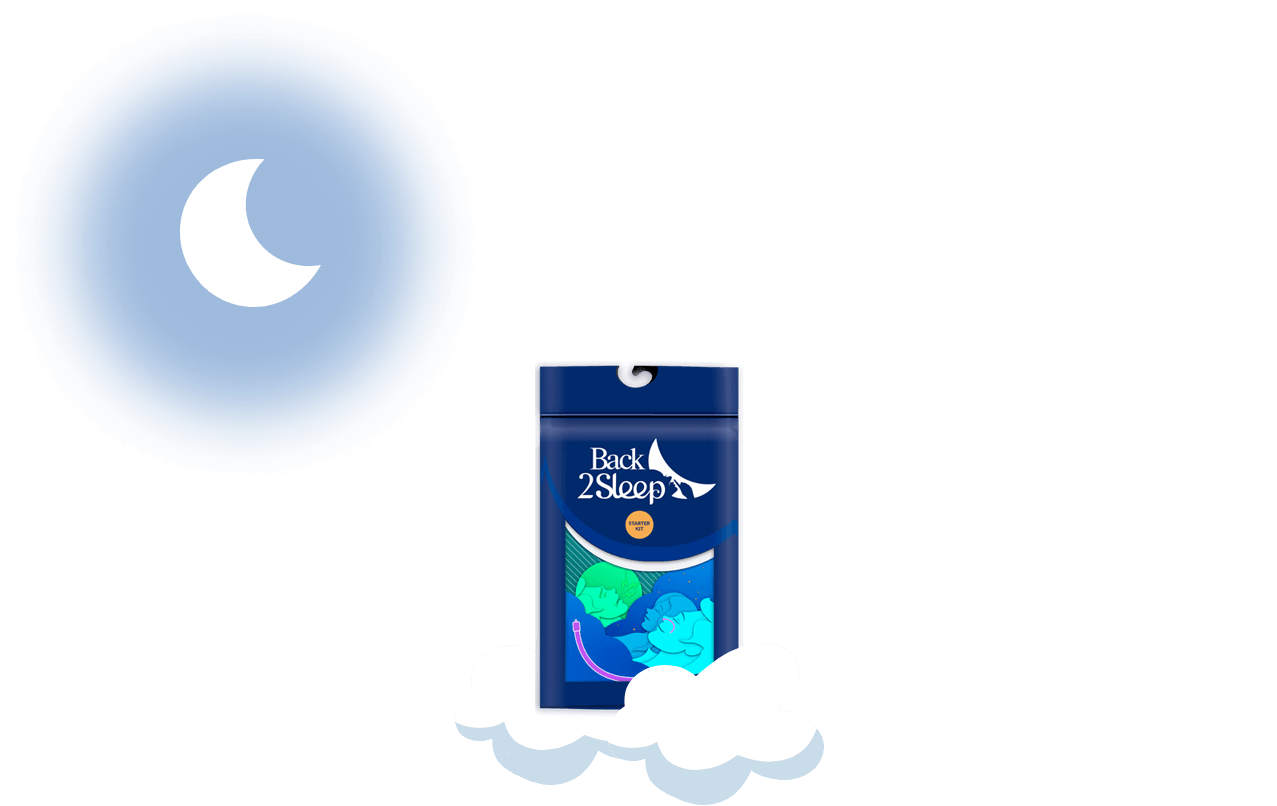
The Back2Sleep Starter Kit includes all 4 sizes (S, M, L, XL) so you can find your perfect fit. It also comes with medical-grade nasal lubricant and clear instructions.

Here's how it works:
- Apply lubricant to the stent and your nostril
- Insert gently into one nostril until it reaches the soft palate
- Sleep. The stent keeps your airway open all night
- Remove in the morning. Each stent lasts about 15 days
Try Back2Sleep risk-free. If you don't notice a clear improvement in your snoring, return the kit within 15 days for a full refund. The Starter Kit costs €39 and includes everything you need.
Need help choosing? Read our size guide or check out the first night guide.
Get Your Starter Kit — €39Frequently Asked Questions
What is the fastest way to stop snoring?
An internal nasal stent works from the very first night. It keeps your nasal airway open so air flows freely without vibration. Side sleeping and avoiding alcohol before bed also give quick results the same night.
Can you stop snoring permanently?
Yes, many people stop snoring permanently through weight loss, quitting smoking, or treating the underlying cause such as allergies or a deviated septum. Some people use an ongoing nasal stent or mouthpiece for consistent results.
Do nasal strips actually work for snoring?
External nasal strips have limited clinical evidence. Internal nasal dilators and stents are more effective. Research found that internal nasal dilators helped more patients and improved sleep quality better than external strips.
What sleeping position stops snoring?
Side sleeping is the best position to reduce snoring. It prevents your tongue and soft tissues from falling backward into your throat. Avoid sleeping on your back, which is the worst position for snoring.
Does snoring get worse with age?
Yes, snoring tends to get worse with age. Muscle tone decreases over time, making your airway narrower. Weight gain that often comes with aging also increases snoring. Mouth and throat exercises can help counteract this.
When should I see a doctor about snoring?
See a doctor if you snore loudly most nights, feel extremely tired during the day, gasp or choke during sleep, or if your partner notices pauses in your breathing. These symptoms may indicate obstructive sleep apnea, which needs medical treatment.
This article is for informational purposes only and does not replace professional medical advice. Snoring can be a symptom of obstructive sleep apnea, a serious medical condition. If you suspect sleep apnea, consult a healthcare professional. Back2Sleep is a CE-certified Class I medical device intended for the treatment of snoring and mild to moderate sleep apnea. Always read the instructions before use.
Ready for quieter nights? Discover the Back2Sleep starter kit and find the right fit for you.
Not sure if you are at risk? Take our sleep risk screening to find out in just a few minutes.
Want to learn how it works? Explore the Back2Sleep nasal stent designed for comfortable, effective relief.