
Nasal EPAP (Provent, Bongo) vs Nasal Stent: Which Stops Apnea Better?

Nasal EPAP vs Nasal Stent: A Mechanism-First Guide to Stopping Apnea
Two mask-free devices, two opposite mechanisms. Here is how nasal EPAP valves and silicone nasal stents actually compare for snoring and mild-to-moderate sleep apnea.
Nasal EPAP vs Nasal Stent: The Core Difference
The choice between nasal EPAP vs nasal stent comes down to one fact most guides blur: the two devices solve airway collapse by opposite mechanisms. Nasal EPAP (expiratory positive airway pressure) uses small valves in your nostrils to create back-pressure when you breathe out, splinting the airway from inside the lungs. A nasal stent is a soft silicone channel that physically holds the nasal and throat airway open, like a tiny tunnel.
This difference decides who each device suits. EPAP needs clear nasal passages to build pressure, so it struggles when your nose is blocked. The stent works mechanically regardless of muscle tone, sleep position, or congestion. If you are still mapping your options, our evidence-based ranking of 9 CPAP alternatives gives the wider landscape, while this guide goes deep on these two mask-free contenders. To understand how the channel design works, see our explainer on the nasal stent for sleep apnea.
Both target the same severity band: habitual snoring and mild-to-moderate obstructive sleep apnea (OSA). OSA means the throat repeatedly collapses during sleep, briefly cutting off breathing. Neither device replaces CPAP for severe cases. Below, we compare them honestly on evidence, tolerability, cost, and the "blocked nose" question.
- Nasal EPAP works by exhalation back-pressure; the nasal stent works by physically opening the airway.
- EPAP needs a clear nose; the stent tolerates congestion better.
- Both suit snoring and mild-to-moderate OSA only, not severe apnea.

How Nasal EPAP Devices Like Provent and Bongo Work
Nasal EPAP is a tiny one-way valve that fits over or inside each nostril. When you inhale, air flows freely. When you exhale, the valve restricts airflow, building pressure that pushes back into your airway and keeps it from collapsing. Provent is a disposable adhesive patch worn one night each; Bongo Rx is a reusable nasal-pillow style valve.
The clinical evidence is moderate but real. A 2015 systematic review and meta-analysis by Riaz and colleagues in Sleep Disorders, pooling 920 patients across 18 studies, found nasal EPAP cut the apnea-hypopnea index (AHI, the count of breathing pauses per hour) by 53.2%, from 27.32 to 12.78 events per hour. Oxygen desaturation dropped 41.5%, and daytime sleepiness improved by 2.52 points on the Epworth scale. Crucially, patients without nasal obstruction responded best.
That last point is the catch. A 2016 study by Friedman and colleagues in The Laryngoscope confirmed patients without nasal obstruction improved more on Provent than those with a blocked nose. EPAP literally needs airflow resistance to work, so a stuffy nose undermines it.
- EPAP cut AHI by about 53% in pooled data (Riaz et al., 2015).
- It works best for people with clear nasal passages.
- Congestion, sinusitis, or infection make EPAP a poor fit.
How the Nasal Stent Works Differently
A nasal stent is a flexible silicone tube inserted into one nostril and extending toward the back of the throat. Instead of relying on pressure, it acts as a physical scaffold that mechanically keeps the nasal and nasopharyngeal airway open all night. Muscle relaxation, sleep position, and body weight do not collapse a channel that is already propped open.
Evidence comes from a 2021 study in Respiration (PubMed 33370725) of 71 patients with mild-to-moderate OSA (AHI 5 to 20). Nasal airway stent therapy produced a complete response in 25% and a partial response in 10%. About 30% did not tolerate the device because of side effects, an honest figure worth weighing. The mechanism makes the stent the logical choice for nasal and palatal snorers, and for congestion-prone sleepers whose noses are too blocked for an EPAP valve to build pressure.
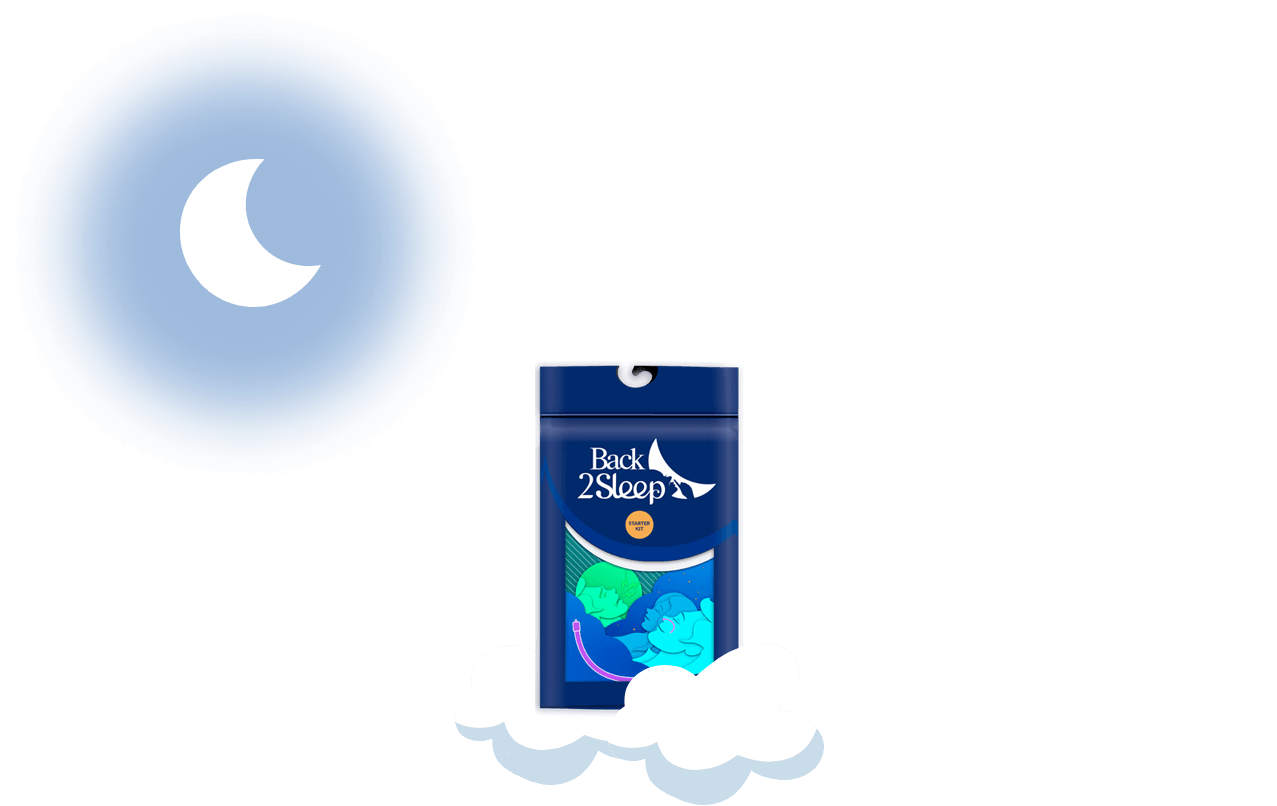
The Back2Sleep nasal stent is a CE-certified Class I silicone device sold across Europe without a prescription. Its starter kit includes four sizes so you can find a comfortable fit. There is no electricity, no noise, and no tubing. For a direct severity comparison, our guide on the nasal stent vs CPAP for mild sleep apnea explains where each belongs.
- The stent is a physical channel, not a pressure device.
- It produced full or partial response in 35% of mild-to-moderate OSA patients (Respiration, 2021).
- It suits nasal and palatal snorers and congestion-prone sleepers.
Head-to-Head: Nasal EPAP vs Nasal Stent Comparison Table
The table below puts both devices side by side on the factors that decide real-world results. Note that AHI reduction figures come from different study populations and are not a direct trial comparison, so read them as indicative, not definitive.
| Factor | Nasal EPAP (Provent, Bongo) | Nasal Stent (e.g. Back2Sleep) |
|---|---|---|
| Mechanism | Back-pressure on exhalation splints airway | Physical silicone channel holds airway open |
| AHI reduction | ~53% pooled (Riaz, 2015) | 25% full + 10% partial response (Respiration, 2021) |
| Works with a blocked nose? | No, contraindicated in nasal obstruction | Yes, mechanically opens the airway |
| Best for | Clear-nosed mild-to-moderate OSA | Nasal/palatal snorers, congestion-prone sleepers |
| Tolerability issue | Difficulty exhaling, dryness, congestion | ~30% adaptation/discomfort, 2-3 night adjustment |
| Power, noise, tubing | None | None |
| Prescription in EU | Often required, poorly available | No prescription, CE-certified, EU shipping |
| Reusability | Provent disposable; Bongo reusable | Single-use per stent, multiple sizes |
- EPAP edges AHI reduction in clear-nosed patients; the stent wins when the nose is congested.
- Both avoid power, noise, and tubing.
- The stent is easier to obtain in Europe without a prescription.
Tolerability and Adherence: The Real Deciding Factor
Effectiveness only matters if you keep using a device. Reported nasal EPAP adherence looked strong at 80 to 94% in trials, but objective long-term use was lower. A 2011 study (PMC3190843) found only about two-thirds of eligible patients were still using their EPAP device at 12 months. Common complaints include difficulty exhaling against resistance, dry mouth, and nasal congestion.
The nasal stent has its own adaptation curve. Roughly 30% of users feel mild initial discomfort, and most need a 2-to-3-night adjustment period before insertion feels natural. The four-size starter kit exists precisely to reduce that drop-off by matching anatomy. Neither device is effortless, so honest expectations beat marketing promises.
This adherence problem is exactly why mask-free options matter in Europe. CPAP remains the gold standard for moderate-to-severe OSA, yet a 2016 review by Rotenberg and colleagues in the Journal of Otolaryngology - Head & Neck Surgery found CPAP non-adherence has held near 34% for two decades. Many people abandon the mask and then go untreated entirely, which is the worst outcome.
- EPAP long-term use fell to about 67% at one year (2011 study).
- The stent needs 2-3 nights and a correct size to settle in.
- Persistent CPAP non-adherence makes tolerable alternatives valuable.
Which Device Should You Choose?
Your nose decides more than your AHI number does. The numbered guide below maps common situations to the better-fit device, assuming a clinician has already confirmed your severity.
1You snore but your nose is often congested
Choose the nasal stent. It opens the airway mechanically, while EPAP is contraindicated when the nose is obstructed.
2You have clear nasal passages and mild OSA
Either can help. EPAP showed strong pooled AHI reduction in clear-nosed patients, so it is a reasonable trial if available.
3You tolerated EPAP poorly or found exhaling hard
Switch to the stent. It does not force you to breathe out against resistance.
4You live in the EU and want easy access
The stent ships across Europe without a prescription, while Provent and Bongo are scarce and unreimbursed in most EU markets.
5You have moderate-to-severe or severe OSA
Choose neither as a primary therapy. Return to CPAP or specialist care; these devices are not a substitute.
- Congested nose, EPAP intolerance, or EU access all point to the stent.
- Clear-nosed mild OSA can trial either device.
- Severe OSA needs CPAP or specialist care, not these alternatives.

What Back2Sleep Users Say
Frequently Asked Questions
Does nasal EPAP like Provent or Bongo actually work for sleep apnea?
Yes, for many people with mild-to-moderate OSA. A 2015 meta-analysis by Riaz and colleagues pooling 920 patients found nasal EPAP reduced the apnea-hypopnea index by 53.2%, from 27.32 to 12.78 events per hour. Results were strongest in patients without nasal obstruction, and weaker when the nose was blocked.
What is the difference between a nasal EPAP valve and a nasal stent?
They work by opposite mechanisms. Nasal EPAP valves create back-pressure when you exhale, splinting the airway from inside the lungs. A nasal stent is a soft silicone channel that physically holds the nasal and throat airway open all night, regardless of congestion, sleep position, or muscle tone.
Can nasal EPAP or a nasal stent replace a CPAP machine?
No, not for severe sleep apnea. Both nasal EPAP and nasal stents are positioned only for snoring and mild-to-moderate OSA. CPAP remains the gold standard for moderate-to-severe cases. Get a sleep study and AHI diagnosis first, and stay with CPAP or specialist care if your OSA is severe.
Do nasal EPAP devices work if you have a blocked or congested nose?
Generally no. Nasal EPAP needs clear nasal passages to build exhalation pressure, and it is contraindicated in significant nasal obstruction, sinusitis, or acute infection. A 2016 Laryngoscope study found patients without obstruction improved more. A nasal stent is the better mechanical option for congestion-prone sleepers.
Are Provent and Bongo nasal EPAP devices available and reimbursed in Europe?
Poorly, in most cases. Provent and Bongo are largely US-focused, scarce across EU markets, and not reimbursed by payers like Securite Sociale, GKV, or the NHS. A CE-certified nasal stent ships across Europe without a prescription, though it is also an out-of-pocket purchase.
How long does it take to get used to a nasal stent or nasal EPAP device?
A nasal stent typically needs a 2-to-3-night adaptation period, and about 30% of users feel mild initial discomfort. Nasal EPAP can take similar time to tolerate the exhalation resistance, with some users reporting dryness or difficulty breathing out. Correct sizing improves comfort with both devices.
Ready for quieter nights? Discover the Back2Sleep starter kit and find the right fit for you.
Not sure if you are at risk? Take our sleep risk screening to find out in just a few minutes.
Want to learn how it works? Explore the Back2Sleep nasal stent designed for comfortable, effective relief.