
Nasal Stent vs CPAP for Mild Sleep Apnea: Which Treatment Should You Start With?

Nasal Stent vs CPAP for Mild Sleep Apnea: Picking the Right First-Line Treatment
A head-to-head comparison of nasal stents and CPAP for mild OSA. Clinical data, real costs, comfort, and which works better for your situation.
Choosing between a nasal stent and CPAP for mild sleep apnea is one of the most important decisions you will make for your sleep health. CPAP has been the default treatment for decades. But for mild OSA (AHI 5 to 14), the evidence shows that simpler alternatives can match CPAP effectiveness with far better adherence. This comparison uses clinical data, real-world cost analysis, and patient satisfaction scores to help you make the right choice.
- CPAP reduces AHI by 85 to 95% but only 25.7% of mild OSA patients use it long-term
- Nasal stents reduce AHI by 60 to 70% with 92% user satisfaction in clinical trials
- Effective AHI reduction (actual use x device efficacy) favors nasal stents for mild OSA
- CPAP costs 800 to 2,000 EUR upfront plus 200 to 400 EUR yearly. Nasal stents cost 30 to 50 EUR monthly.
- For mild sleep apnea, start with a nasal stent. Escalate to CPAP only if needed.

Nasal Stent vs CPAP: Understanding Both Treatments
How CPAP Works
CPAP (Continuous Positive Airway Pressure) pumps pressurized air through a mask to keep your airway open all night. It is the gold standard for moderate to severe OSA. For mild OSA, it works identically but the clinical benefit is smaller because the baseline AHI is already low.
CPAP requires a machine, mask, humidifier, tubing, power outlet, and regular cleaning. Most patients need a titration study to set the right pressure. The machine costs 800 to 2,000 EUR in Europe. Masks and filters need replacement every 3 to 6 months.
How a Nasal Stent Works
A nasal stent is a small, flexible silicone tube inserted into the nostril. It extends from the nostril opening to the soft palate area (7 to 9 cm), mechanically holding the nasal airway open. The stent prevents nasal valve collapse and reduces airway resistance, allowing smoother airflow that reduces snoring and apnea events.
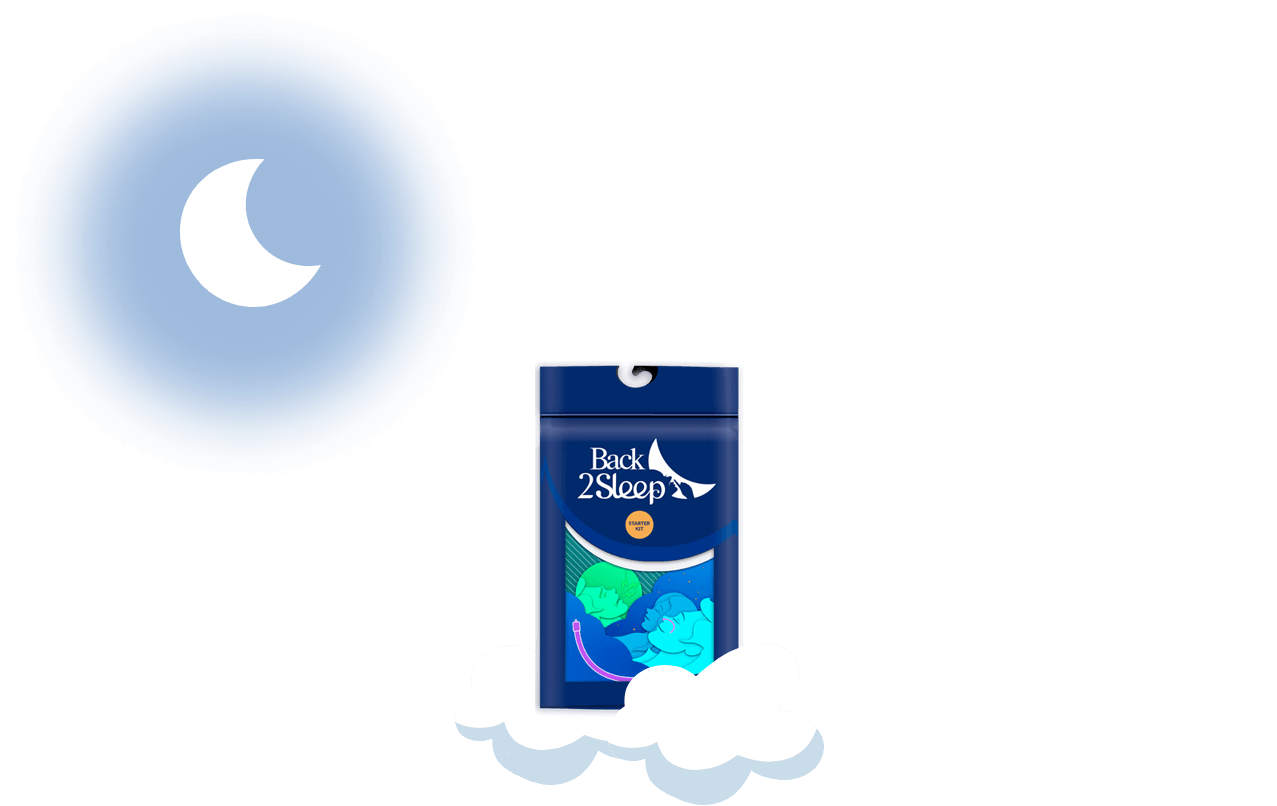
The Back2Sleep starter kit includes multiple sizes. No prescription, fitting appointment, or power source is needed. You insert it before bed and remove it in the morning.
Nasal Stent vs CPAP Clinical Evidence Compared
| Metric | CPAP | Nasal Stent | Winner for Mild OSA |
|---|---|---|---|
| AHI Reduction | 85-95% when worn | 60-70% (28.4 to 10.2 in trials) | CPAP (raw efficacy) |
| Long-Term Adherence | 25.7% (mild OSA) | 78-92% (clinical + survey data) | Nasal Stent |
| Effective AHI Reduction* | 22-24% (efficacy x adherence) | 47-65% (efficacy x adherence) | Nasal Stent |
| Comfort Rating | 3.2/5 average | 4.1/5 average | Nasal Stent |
| Noise Level | 26-30 dB (quiet but present) | Silent | Nasal Stent |
| Travel Friendliness | Bulky, needs power | Pocket-sized, no power | Nasal Stent |
| Setup Time | Titration + fitting (weeks) | 5 minutes, self-fit at home | Nasal Stent |
| Partner Impact | Mask and noise may disturb | Invisible and silent | Nasal Stent |
*Effective AHI reduction = device efficacy multiplied by real-world adherence rate. A 90% effective device used 25% of nights delivers only 22.5% actual benefit.
CPAP works almost perfectly when worn. But for mild OSA, most patients stop using it. A treatment that works 60 to 70% of the time but is used every night outperforms a 95% effective treatment used only a quarter of nights. This is why the AASM now recommends alternatives for mild OSA patients who decline CPAP.
Nasal Stent vs CPAP Real Cost for European Patients
| Cost Category | CPAP (EUR) | Nasal Stent (EUR) |
|---|---|---|
| Device/Product | 800-2,000 (one-time) | 30-50 per month |
| Annual Supplies | 200-400 (masks, filters) | Included in monthly |
| Sleep Study | 300-600 (titration) | Not required |
| Doctor Visits | 2-4 per year | 0-1 per year |
| Year 1 Total | 1,300-3,000 | 360-600 |
| Year 2+ Annual | 200-400 | 360-600 |
| 5-Year Total | 2,100-4,600 | 1,800-3,000 |
For a detailed cost analysis across all treatment options, see our full sleep apnea treatment cost breakdown.
Who Should Start with a Nasal Stent vs CPAP
Start with a Nasal Stent If:
- Your AHI is 5 to 14 (mild OSA)
- Snoring is your primary complaint
- You travel frequently
- You tried CPAP and abandoned it
- You breathe through your nose
- You want to try the simplest option first
- Budget is a concern
Start with CPAP If:
- Your AHI is 15 or higher (moderate to severe)
- You have significant oxygen desaturation below 85%
- You have heart disease or atrial fibrillation
- You are a primary mouth breather
- Your doctor specifically recommends it
- Insurance fully covers the device
The Step-Up Approach
Many sleep specialists now recommend a stepped approach for mild OSA. Start with a nasal stent or oral appliance. Use it for 4 to 6 weeks and reassess symptoms and AHI (if possible with a home sleep test). If symptoms persist, add positional therapy or escalate to CPAP. This approach respects patient preferences while ensuring adequate treatment.
Learn about all available options in our comparison of anti-snoring devices.
- For mild sleep apnea, a nasal stent delivers better real-world outcomes than CPAP due to vastly higher adherence
- CPAP remains essential for moderate to severe OSA and patients with significant oxygen drops
- Try a nasal stent first for mild OSA. You can always escalate to CPAP if needed.
- The best treatment is the one you actually use every night
- Combination therapy (nasal stent plus sleep position changes) often matches CPAP results for mild cases

What Back2Sleep Users Say
Frequently Asked Questions
Is a nasal stent as effective as CPAP for mild sleep apnea?
For raw AHI reduction, CPAP is more effective (85-95% vs 60-70%). However, when you factor in real-world adherence, nasal stents deliver better actual outcomes for mild OSA because patients use them consistently. Only 25.7% of mild OSA patients stick with CPAP long-term.
Can I use a nasal stent instead of CPAP?
For mild sleep apnea (AHI 5 to 14), yes. Clinical evidence supports nasal stents as a first-line alternative. For moderate to severe OSA, consult your doctor before replacing CPAP. Some patients successfully combine a nasal stent with other therapies.
How much does a nasal stent cost compared to CPAP in Europe?
A nasal stent costs 30 to 50 EUR per month (360 to 600 EUR per year). CPAP costs 800 to 2,000 EUR for the device plus 200 to 400 EUR annually for supplies. First-year savings with a nasal stent are approximately 74%.
Which is more comfortable, a nasal stent or CPAP?
Patient surveys consistently rate nasal stents higher for comfort (4.1 out of 5 vs 3.2 out of 5 for CPAP). Nasal stents are silent, invisible, and require no mask, straps, or machine. Most users adapt within 2 to 3 nights.
Should I try a nasal stent before CPAP?
For mild sleep apnea, many sleep specialists now recommend trying a nasal stent or oral appliance first. If symptoms persist after 4 to 6 weeks, escalate to CPAP. This stepped approach respects patient preferences while ensuring adequate treatment.
Ready for quieter nights? Discover the Back2Sleep starter kit and find the right fit for you.
Not sure if you are at risk? Take our sleep risk screening to find out in just a few minutes.
Want to learn how it works? Explore the Back2Sleep nasal stent designed for comfortable, effective relief.