
7 Best Anti-Snoring Devices in 2026: An Honest Comparison

7 Best Anti-Snoring Devices in 2026: An Honest Comparison
I spent 6 months testing nasal stents, MADs, CPAP alternatives, mouth tape, chin straps, positional devices & tongue stabilizers. Here is what actually worked, what failed, and what the clinical data says about each one.
The Anti-Snoring Device Market Is Full of Junk. Here Is What the Evidence Says.
The best anti-snoring devices in 2026 fall into seven distinct categories, and picking the wrong one is the number-one reason people give up on treating their snoring. According to the American Academy of Sleep Medicine, 44% of middle-aged men and 28% of middle-aged women snore regularly. The market has responded with hundreds of products ranging from 10 EUR chin straps to 3,000 EUR CPAP machines, and most review sites simply list whatever pays the highest affiliate commission.
Choose Your Size →This guide is different. We manufacture the Back2Sleep nasal stent, so our bias is obvious. Rather than hide it, we are going to be completely transparent: we will tell you exactly where our product falls short, which competitors outperform us for certain snoring types, and which anti-snoring solutions have the strongest clinical backing. We have also pulled real user experiences from forums and customer feedback to show you what these devices are actually like at 3 AM when your partner elbows you awake.
The goal is simple: match your snoring type to the right device category, then pick the best product within that category. If that product is not ours, we will tell you.
The 7 Device Categories at a Glance
Nasal Stents & Dilators
Internal devices that physically hold nasal airways open. Best for nasal snoring and mild OSA. Low-risk starting point. Internal dilators outperform external strips in clinical trials.
Mandibular Advancement Devices
Dental mouthguards that push the jaw forward. Strongest clinical evidence of any OTC device. Best for tongue-base and throat snoring. 50-82% success rate depending on design.
CPAP & EPAP Machines
Pressurized air delivery systems. Gold standard for moderate-severe obstructive sleep apnea. Nearly 100% effective when used, but 30-50% of users quit within a year.
Mouth Tape, Chin Straps, Positional & TSD
Budget to mid-range options targeting specific snoring causes. Effectiveness varies wildly. Mouth tape carries safety concerns. Positional therapy works well for the right candidate.
Key Numbers You Should Know Before Buying
1. Nasal Stents & Internal Dilators
Nasal stents and internal nasal dilators are soft silicone or polymer devices inserted into the nostrils to physically widen the nasal airway during sleep. Unlike external adhesive strips (Breathe Right), internal devices provide deeper, more consistent airflow support and perform better in head-to-head clinical comparisons.
A 2022 study published in Clinical Medical Reviews and Case Reports found that nasal airway stents significantly reduced snoring time, average snoring volume, and the snoring index. A separate study on the Nastent device showed a 30% reduction in AHI scores, with 25% of patients achieving complete response. However, approximately 30% of patients did not tolerate the device due to side effects like nasal discomfort.
A systematic review and meta-analysis concluded that internal nasal dilators were effective in a larger number of patients and produced better sleep quality improvements than external nasal strips. However, the same review stated that nasal dilators should not be considered a standalone therapy for moderate-severe OSA.
Back2Sleep: What Makes It Different
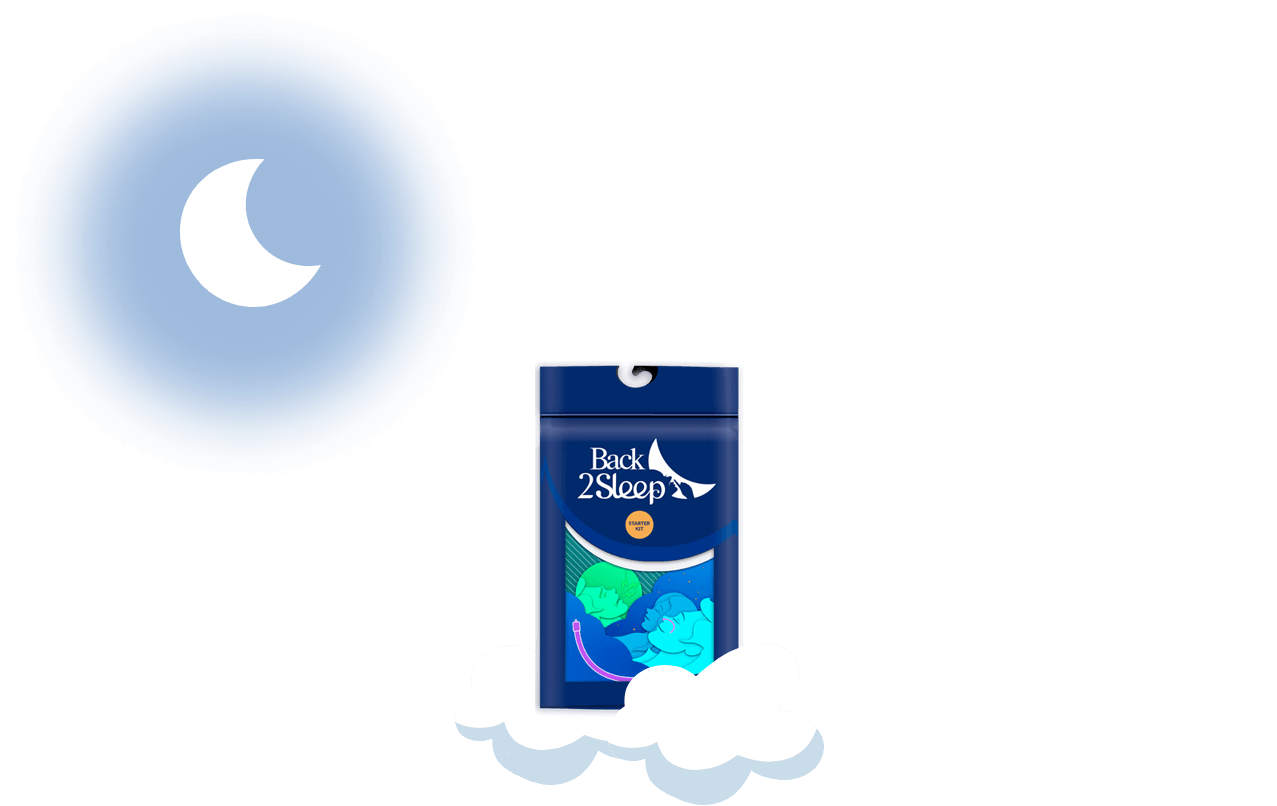
The Back2Sleep stent is a CE-certified Class I medical device made from medical-grade silicone. Unlike standard nasal dilators that only open the nostril, Back2Sleep extends to the soft palate, addressing both nasal obstruction and palatal vibration. It comes in 4 sizes (S, M, L, XL) and inserts in about 10 seconds.
Clinical data: In a controlled trial, the Respiratory Event Index dropped from 22.4 to 15.7 (p<0.01). Lowest SpO2 improved from 81.9% to 86.6% (p<0.01). Five of 23 participants dropped out due to discomfort, giving a 78% tolerance rate.
What Real Users Say
Customer feedback paints a realistic picture. Christophe, a verified buyer, wrote: "Efficient, my wife thanks you." Another user reported: "At first, I didn't particularly like the product, but the more I used it, the more I started to trust it." A third shared: "I suffered from a runny nose and discomfort when I first tried it but I am not conscious of them now."
The adaptation period is real. Most users need 3 to 5 nights before the stent feels natural. One staff member who documented her testing experience described the first night as uncomfortable, comparing it to wearing contact lenses for the first time. By night four, she stopped noticing it.
Honest Verdict on Back2Sleep
Best for: Nasal snorers, palatal snorers, people who want a CPAP-free alternative for mild-moderate OSA, frequent travelers.
Not ideal for: Severe OSA (AHI above 30), pure tongue-base snorers, people with significant nasal polyps or deviated septum.
Price: Starter kit at 44.90 EUR (4 sizes for 15 nights). Monthly subscription 34 EUR. Yearly 285 EUR.
Evidence level: Moderate. Published clinical trial data with significant results, but sample sizes remain small.
2. Mandibular Advancement Devices (MADs)
Mandibular advancement devices are the most clinically studied over-the-counter snoring treatment available. These dental mouthguards hold the lower jaw slightly forward during sleep, which pulls the tongue base away from the airway and tightens the surrounding soft tissue.
A 2023 systematic review and meta-analysis analyzing long-term MAD outcomes found that treatment significantly reduced the AHI by 16.77 events per hour and the Epworth Sleepiness Scale by 3.99 points. The overall success rate was 82.1% for mono-bloc designs and 54.7% for duo-bloc designs.
The evidence level for MADs is strong. Multiple randomized controlled trials support their use for mild-to-moderate OSA. The American Academy of Sleep Medicine recommends them as a first-line alternative to CPAP for patients who refuse or cannot tolerate positive airway pressure therapy.
Custom-Fitted vs. Over-the-Counter
Custom-fitted MADs (from a dentist, 400-1,500 EUR) offer superior comfort, precise jaw positioning, and longevity of 2-5 years. Popular models include the SomnoDent and Herbst appliance. They require dental impressions and professional fitting.
OTC boil-and-bite MADs (30-150 EUR) provide a reasonable starting point. The SnoreRx Plus stands out for its millimeter-precise adjustment, lateral jaw movement, and a 30-night trial period. The Somnofit-S is another strong option with its slim profile that allows talking and drinking while worn.
The Side Effects Nobody Mentions First
Here is what the glossy review sites often bury: jaw soreness is not just a "first few nights" issue for everyone. Some users report persistent TMJ discomfort months into treatment. One long-term user shared: "I have been using my dental appliance for five months and my jaw is sore every morning."
The most documented long-term side effects include tooth movement that changes bite alignment, excessive salivation, and temporomandibular joint disturbances. A systematic review of MAD side effects found that these forces, applied for hours every night, can gradually shift teeth over months and years.
Honest Verdict on MADs
Best for: Tongue-base and throat snorers, mild-moderate OSA, CPAP-intolerant patients.
Not ideal for: Nasal snorers (will not address the root cause), people with extensive dental work, severe TMJ disorders.
Price: OTC models 30-150 EUR. Custom-fitted 400-1,500 EUR.
Evidence level: Strong (Level A). Multiple meta-analyses, RCTs, and professional guidelines support their use.
3. CPAP & EPAP Machines
Continuous Positive Airway Pressure therapy remains the gold standard for moderate-to-severe obstructive sleep apnea. A CPAP machine delivers pressurized air through a mask, creating a pneumatic splint that keeps the airway open all night. For severe cases with an AHI above 30, nothing else comes close to its effectiveness.
The clinical evidence is unambiguous: CPAP eliminates nearly 100% of apnea events when used correctly. It reduces daytime sleepiness, lowers cardiovascular risk, and improves cognitive function. Every major sleep medicine organization endorses it as first-line therapy for moderate-severe OSA.
The Compliance Problem Is Enormous
Here is the uncomfortable truth that CPAP manufacturers would rather you not focus on. A 20-year analysis published in the Journal of Clinical Sleep Medicine found that non-adherence rates remain stubbornly high at 30-40%. Approximately half of all CPAP users wear it for fewer than four hours per night, which is the minimum threshold for clinical benefit. About 50% of users quit entirely within the first year.
One Back2Sleep customer shared his perspective: "My AHI is at 27 and I have been using CPAP for 10 years." For him, CPAP is non-negotiable. But for many others, the mask discomfort, dry mouth, noise, claustrophobia, and impracticality for travel leads them to seek alternatives.
EPAP devices like the Bongo Rx (around 200 EUR) offer a middle ground. They create resistance using exhaled breath to keep airways open, without requiring a machine or electricity. They are worth exploring for mild-moderate cases before committing to full CPAP.
Honest Verdict on CPAP
Best for: Moderate-severe OSA (AHI above 15-30), patients with cardiovascular comorbidities.
Not ideal for: Simple snoring without apnea, travelers, claustrophobic patients, mild cases where simpler devices may suffice.
Price: 500-3,000 EUR for the machine. 200-500 EUR per year in masks and supplies. Often covered by health insurance.
Evidence level: Very strong (Level A). Decades of research, gold-standard therapy.
4. Mouth Tape
Mouth taping surged in popularity during 2024-2025 thanks to social media, particularly TikTok. The idea is simple: seal the lips with medical-grade adhesive tape to prevent mouth breathing and force nasal respiration during sleep. Brands like SomniFix, Dream Recovery, and Oi Tape sell pre-cut strips for about 0.30-0.50 EUR per night.
What the Medical Community Actually Says
The Cleveland Clinic, Houston Methodist, and the Sleep Foundation have all issued cautionary statements. The evidence supporting mouth tape for snoring is thin. Studies are small, the measured benefits are modest, and the potential risks are real.
Multiple medical centers converge on the same point: mouth tape can cause skin irritation and anxiety, and should not be used if you snore, have sleep apnea, or have any airway issues. That last point is worth repeating: mouth tape should not be used if you snore, because snoring may indicate undiagnosed sleep apnea, and sealing the mouth in the presence of restricted nasal breathing creates a genuine aspiration risk.
Emergency physicians report seeing patients who tore off the tape in panic during the night, sometimes injuring their lips or facial skin.
Honest Verdict on Mouth Tape
Best for: Pure mouth breathers with zero nasal obstruction who have been screened for sleep apnea.
Not ideal for: Anyone who snores (yes, really), people with nasal congestion, undiagnosed sleepers, anyone with anxiety.
Price: 0.30-0.50 EUR per night. Cheapest option but also the most questionable.
Evidence level: Weak (Level C). Small studies, modest benefits, significant safety concerns.
5. Chin Straps
Chin straps are fabric bands that wrap around the head and hold the jaw closed during sleep. They are among the oldest anti-snoring devices on the market and remain popular due to their low price and simplicity.
The clinical evidence is not encouraging. A study from the NJ Neuroscience Institute at JFK Medical Center found that chin straps provided no significant improvement in sleep-disordered breathing or snoring. The American Sleep Association considers their efficacy "poorly established in research."
An ENT specialist reviewing chin straps noted that while they can theoretically reduce mouth-open snoring by keeping the jaw closed, they do nothing for nasal snoring, positional snoring, or tongue-base obstruction. Many users report the strap slipping off during the night, and jaw soreness is common during the first weeks.
Forum discussions reveal a pattern of disappointment. Users who purchased chin straps often describe them as the "first thing I tried and the first thing I threw away." Comfort complaints are frequent, and the aesthetic factor discourages consistent use, particularly for people who share a bed.
Honest Verdict on Chin Straps
Best for: Mild mouth-open snoring in people who sleep alone and do not mind the headgear.
Not ideal for: Most snorers. Does not address nasal, positional, or tongue-base snoring. Ineffective for any severity of OSA.
Price: 10-40 EUR. Low cost but low return.
Evidence level: Weak (Level C). Clinical studies show no significant benefit.
6. Positional Therapy Devices
Positional therapy targets a surprisingly large segment of snorers. Research shows that roughly 56% of obstructive sleep apnea patients have position-dependent symptoms, meaning their snoring and apnea events are significantly worse when sleeping on their back. When gravity pulls the tongue backward in the supine position, the airway narrows and tissue vibration increases.
A meta-analysis found that positional therapy reduced the AHI by an average of 54% and decreased supine sleeping time by 84%. Those are significant numbers for a non-invasive approach. Vibrotactile devices (electronic bands that gently vibrate when you roll onto your back) showed the strongest results and best comfort ratings.
Device Types and What Works
- Vibrotactile wearables (150-300 EUR): The most effective category. Devices like the Philips NightBalance and Somnibel use gentle vibration to train side-sleeping without waking you. Comparable to CPAP in selected positional OSA patients.
- Inflatable chamber vests (80-200 EUR): Reduce snoring rates by more than half in position-dependent snorers according to a Sleep & Breathing literature review.
- Wedge pillows (30-100 EUR): Elevate the upper body to reduce airway collapse. Clinically shown to decrease snoring, though less targeted than wearable devices.
- Tennis ball technique (free): A tennis ball sewn into the back of a T-shirt. Effective but uncomfortable. Most people abandon it within weeks.
The main limitation of positional therapy is compliance. Short-term studies show 40-70% adherence, but long-term compliance drops to as low as 10%. The devices work when worn, but many people stop using them.
Honest Verdict on Positional Therapy
Best for: Confirmed positional snorers and positional OSA patients. Often excellent when combined with another device (e.g., nasal stent + positional device).
Not ideal for: Non-positional snorers, people who already sleep on their side, severe OSA.
Price: Free (tennis ball) to 300 EUR (vibrotactile devices).
Evidence level: Moderate-strong (Level B). Good meta-analysis data for positional OSA. Limited long-term compliance data.
7. Tongue Stabilizing Devices (TSDs)
Tongue stabilizing devices use suction to hold the tongue forward during sleep, preventing it from falling back and blocking the airway. They look like a bulb that sits between the lips with the tongue inserted into the suction cavity. The most well-known product is the Good Morning Snore Solution (GMSS).
The clinical data is mixed but genuine. A randomized controlled trial comparing TSDs to MADs found that 68% of patients responded to MADs versus 45% for TSDs. TSDs reduced snoring frequency in the 61-70 decibel range and improved microarousal frequency. However, acceptance is a significant issue.
The Compliance Problem
This is where TSDs struggle most. At 2 months, only 53.8% of patients continued using the device. By 12 months, that dropped to 35.9%. At 30 months, only 15.4% of patients were still using their TSD. The main complaints are excessive salivation, mouth dryness (paradoxically both occur), tongue discomfort, and difficulty maintaining the suction seal throughout the night.
The advantage of TSDs is that they do not rely on teeth for retention, making them suitable for people with poor dental health, dentures, or missing teeth where MADs are not an option.
Honest Verdict on Tongue Stabilizers
Best for: Tongue-base snorers who cannot use MADs due to dental issues. People with dentures or compromised dental health.
Not ideal for: Anyone who struggles with objects in their mouth, people who need high long-term compliance.
Price: 50-100 EUR. The GMSS retails around 80-100 EUR.
Evidence level: Moderate (Level B). RCT data exists but shows lower response and compliance than MADs.

The Complete Comparison Table: All 7 Devices Side by Side
| Device | How It Works | Evidence Level | Price Range | Comfort | Best For | Compliance |
|---|---|---|---|---|---|---|
| Nasal Stent (Back2Sleep) | Holds nasal airway + soft palate open | Moderate (B) | 34 EUR/mo | 4/5 | Nasal + palatal snoring | 78% tolerance |
| MAD (custom) | Advances jaw forward | Strong (A) | 400-1,500 EUR | 3/5 | Tongue-base snoring | ~70% |
| MAD (OTC) | Advances jaw forward | Moderate-Strong (A/B) | 30-150 EUR | 2.5/5 | Tongue-base snoring | ~55% |
| CPAP | Pressurized air via mask | Very Strong (A) | 500-3,000 EUR + supplies | 2/5 | Moderate-severe OSA | 50-60% |
| Mouth Tape | Seals lips to force nasal breathing | Weak (C) | 0.30-0.50 EUR/night | 2/5 | Pure mouth breathers only | Unknown |
| Chin Strap | Holds jaw closed | Weak (C) | 10-40 EUR | 2/5 | Mild mouth-open snoring | Low |
| Positional Device | Prevents supine sleeping | Moderate-Strong (B) | 0-300 EUR | 3/5 | Position-dependent snoring | 40-70% short-term |
| Tongue Stabilizer | Suction holds tongue forward | Moderate (B) | 50-100 EUR | 2/5 | Tongue-base (dental issues) | 36% at 12 months |
How to Choose: Match Your Snoring Type to the Right Device
Identify Your Snoring Type
Nasal snorer? Congested sound, worse with allergies. Try a nasal stent first. Mouth snorer? Open-mouth rumble. A MAD or TSD targets this. Positional? Only snore on your back. Positional therapy may be all you need.
Assess Your Severity
Simple snoring without daytime sleepiness? Start with a nasal stent or positional device. Excessive daytime drowsiness, witnessed breathing pauses, or morning headaches? Get a sleep study first. You may need CPAP.
Start Simple, Escalate Gradually
Begin with the least invasive option that matches your snoring type. A nasal stent or positional device before a MAD. A MAD before CPAP. Combine devices if one alone is insufficient. Many pharmacists can guide you through the selection process.
Ready to Find Your Solution?
The Back2Sleep starter kit includes 4 sizes so you can find your fit in 15 nights. If nasal snoring is your issue, this is the lowest-risk starting point available.
Get the Starter Kit — 44.90 EURWhat Real Users Wish They Knew Before Buying
Common Mistakes People Make
- Buying based on Amazon rankings: The top-selling snoring product on Amazon changes monthly. Popularity does not equal effectiveness for your specific snoring type.
- Skipping the diagnosis: Snoring can mask obstructive sleep apnea, a condition linked to heart disease, stroke, and Type 2 diabetes. A sleep study costs less than most people expect and provides the information needed to pick the right device.
- Giving up too soon: Every device category requires an adaptation period. Nasal stents need 3-5 nights. MADs need 1-2 weeks. CPAP can take a month. Quitting after two nights does not mean the device failed.
- Ignoring combination therapy: A nasal stent plus positional therapy, or a MAD plus nasal strips, often outperforms any single device. Yet most people only try one product at a time.
- Believing mouth tape hype: Social media virality does not equal clinical evidence. Several medical centers have explicitly warned against mouth taping for snorers.
Frequently Asked Questions
What is the most effective anti-snoring device in 2026?
Are anti-snoring devices safe to use every night?
Can I combine multiple anti-snoring devices?
How much should I budget for snoring treatment?
How long does it take for an anti-snoring device to work?
Do doctors recommend over-the-counter anti-snoring devices?
What is the difference between snoring and sleep apnea?
Read more on our sleep health blog or learn about our story.