
Understanding Your AHI Score: What the Numbers Actually Mean

Understanding Your AHI Score: What the Numbers Actually Mean
Your AHI score is a single number that reveals how many times per hour your breathing stops or slows during sleep. Learn the severity ranges, what your doctor looks at beyond the number, and when treatment may help.
What Is the Apnea-Hypopnea Index?
The apnea-hypopnea index (AHI) is the standard measurement sleep specialists use to diagnose and classify obstructive sleep apnea (OSA). It counts two types of breathing disruptions per hour of sleep:
- Apnea — your airflow drops below 10% of normal for at least 10 seconds. This is a near-complete breathing pause.
- Hypopnea — your airflow decreases by 30% or more for at least 10 seconds, usually accompanied by a drop in blood oxygen.
Your sleep study report adds all apneas and hypopneas together, then divides by total hours of sleep. The result is a single number: your AHI score. A person who has 90 breathing events during 6 hours of sleep, for instance, would have an AHI of 15.
Because AHI captures both complete and partial breathing interruptions, it gives clinicians a broad picture of how often your airway collapses at night. The American Academy of Sleep Medicine considers the AHI the primary metric for diagnosing obstructive sleep apnea.
AHI Severity Ranges: Where Do You Fall?
The AASM divides adult AHI scores into four categories. Each range carries different health implications, different treatment urgency, and different insurance eligibility rules.
Normal
Fewer than 5 events per hour. No sleep apnea diagnosis. Occasional pauses are normal.
Mild OSA
5 to 14 events per hour. You may snore heavily and feel tired. Positional therapy or an oral device may help.
Moderate OSA
15 to 29 events per hour. Cardiovascular risk rises. CPAP is commonly prescribed at this level.
Severe OSA
30 or more events per hour. Breathing stops every two minutes on average. Prompt treatment is strongly recommended.
- An AHI of 30 means your breathing is disrupted at least 240 times during 8 hours of sleep.
- Children use different thresholds: mild starts at just 1 event per hour, and severe begins at 10+.
- Your insurance company may require an AHI of 5+ with symptoms, or 15+ without symptoms, to cover treatment.
AHI Score Breakdown: Symptoms, Risks & Treatment Options
The number alone does not tell the full story. Below is a detailed comparison of what each AHI range typically involves.
| AHI Range | Severity | Common Symptoms | Health Risks | Typical Treatment |
|---|---|---|---|---|
| < 5 | Normal | None or light snoring | Minimal | No treatment needed |
| 5 – 14 | Mild | Snoring, mild daytime fatigue, dry mouth | Slight cardiovascular risk increase | Positional therapy, oral appliance, nasal stent, weight management |
| 15 – 29 | Moderate | Loud snoring, notable fatigue, morning headaches, poor concentration | Hypertension risk, metabolic changes | CPAP, oral appliance, combination therapy, weight loss |
| 30+ | Severe | Gasping during sleep, extreme daytime sleepiness, cognitive impairment | Heart disease, stroke, type 2 diabetes, accidents | CPAP (first line), surgery in select cases, combination approaches |
Notice that mild sleep apnea often responds well to simpler interventions. A nasal stent, for example, can keep the airway open without the noise or bulk of a CPAP machine. Research published in Respiration found that nasal airway stent therapy reduced AHI from 12.7 to 7.9 events per hour in patients with mild-to-moderate OSA (p<0.01).
Try the Back2Sleep Starter KitHow Your Sleep Study Calculates AHI
Whether you undergo a full in-lab polysomnography or use a portable home sleep test, your AHI emerges from a straightforward formula:
In-Lab Polysomnography (PSG)
A certified sleep technologist monitors you overnight using sensors that track brain waves (EEG), eye movement, chin muscle activity, chest effort, airflow, blood oxygen (SpO2), heart rate, and leg movement. Because brain wave data confirms when you are actually asleep, the AHI calculation is precise.
Home Sleep Apnea Test (HSAT)
Home tests typically measure airflow, respiratory effort, and oxygen saturation. They lack EEG sensors, so they cannot tell when you are truly sleeping. Instead, they use recording time as the denominator. If you lay awake for an hour before falling asleep, that waking hour dilutes your AHI. Research suggests home tests underestimate AHI by approximately 15% compared to in-lab studies.
What your doctor actually reviews
Beyond the AHI number, your sleep specialist examines several related metrics:
- Oxygen desaturation index (ODI) — how often your blood oxygen drops by 3% or 4%
- Lowest SpO2 — the lowest oxygen level recorded during the night
- Time below 90% SpO2 — total minutes spent at dangerously low oxygen
- RDI (Respiratory Disturbance Index) — includes RERAs (respiratory effort-related arousals) that do not meet apnea or hypopnea criteria
- Sleep architecture — the distribution of REM, light, and deep sleep stages
Two patients can have the same AHI yet very different clinical pictures. One might have brief, self-correcting hypopneas with minimal oxygen drops. The other might experience prolonged apneas with oxygen falling below 80%. The AHI treats both patients identically, which is one of its major limitations.
AHI by the Numbers: Sleep Apnea Statistics
Obstructive sleep apnea is far more common than most people realize. An estimated 936 million adults globally have mild-to-severe OSA, yet fewer than 20% have been diagnosed, according to a 2019 study in The Lancet Respiratory Medicine. The gap between prevalence and diagnosis is enormous, and the AHI from a sleep study is the gateway to treatment.
What Your AHI Score Does Not Tell You
Despite being the gold standard for diagnosing sleep apnea, the AHI has well-documented blind spots. A 2022 review in the European Respiratory Journal called the AHI an "imperfect metric," and here is why:
Event Duration Ignored
A 10-second apnea and a 60-second apnea each count as one event. The longer episode is far more dangerous, but the AHI treats them equally.
Oxygen Impact Missing
AHI does not show how far your blood oxygen drops. Some events cause mild dips; others send SpO2 below 80%. The cardiovascular consequences differ dramatically.
Position Not Differentiated
Many patients have a much higher AHI while sleeping on their back (supine) than on their side. The overall AHI averages everything together.
Symptoms Disconnected
Research shows fewer than half of patients with moderate-to-severe OSA (AHI 15+) report excessive daytime sleepiness. Your number may not match how you feel.
Why two identical AHI scores can mean very different things
Consider two patients, both with an AHI of 20:
- Patient A has mostly short hypopneas in REM sleep, with oxygen dipping to 88% briefly. They feel somewhat tired but function normally.
- Patient B has prolonged obstructive apneas throughout the night, with oxygen falling to 72% repeatedly. They struggle to stay awake driving.
Both receive the same "moderate" label. But Patient B faces significantly higher cardiovascular risk. A landmark study by Kendzerska et al. found that predictors of cardiovascular outcomes were OSA-related factors other than AHI, including total time with oxygen below 90%, sleep fragmentation, and heart rate patterns.
9 Factors That Can Change Your AHI Score
Many patients are surprised when their AHI varies between tests or even between nights. Here are the most common reasons:
- Sleep position — Sleeping on your back can double or triple your AHI compared to side sleeping. About 56% of OSA patients have position-dependent apnea.
- Body weight — A 10% increase in body weight can increase AHI by approximately 32%, according to the Wisconsin Sleep Cohort Study.
- Alcohol consumption — Alcohol relaxes the upper airway muscles and can raise AHI by 25–50% for that night.
- Sleep stage — REM sleep produces the most severe breathing events because muscle tone drops to its lowest point.
- Nasal congestion — Seasonal allergies, a cold, or chronic rhinitis can worsen airway resistance and increase events.
- Medications — Sedatives, opioids, and certain muscle relaxants suppress breathing drive and can significantly raise AHI.
- Age — AHI tends to increase with age as tissues lose tone and structural support.
- Altitude — Higher elevations reduce oxygen availability and can trigger central apneas even in people without OSA.
- Study type — Lab vs. home tests use different measurement methods. A home test may underestimate your true AHI.
Because of this night-to-night variability, a single sleep study is sometimes not enough. If your symptoms and AHI seem mismatched, ask your doctor about repeating the test or using a longer monitoring period.
Explore the Back2Sleep Nasal StentReal People, Real AHI Experiences
Understanding the numbers is one thing. Living with them is another. These anonymized accounts from sleep apnea patient communities reflect the confusion, relief, and surprises people experience when they get their AHI results.
These experiences highlight a common theme: the AHI number is meaningful, but it does not exist in isolation. Your symptoms, your oxygen data, your sleep position, and your daily energy all matter just as much. Individual results may vary.

Beyond AHI: New Metrics Sleep Medicine Is Exploring
Sleep researchers increasingly argue that the AHI alone is too blunt. Several promising alternatives and complementary measurements are gaining attention:
| Metric | What It Measures | Why It Matters |
|---|---|---|
| Hypoxic Burden | Total area under the oxygen desaturation curve | Captures both frequency and severity of oxygen drops. Better predicts cardiovascular risk than AHI alone. |
| Arousal Intensity | How strongly the brain wakes during each event | Predicts daytime sleepiness better than AHI. Some events barely disturb sleep; others fully wake you. |
| Odds Ratio Product (ORP) | Real-time measure of sleep depth using EEG | Reveals how sleep apnea fragments actual sleep quality, not just breathing events. |
| Cardiopulmonary Coupling | Interaction between heart rate and breathing patterns | Can identify unstable breathing during sleep using just a heart rate signal. |
| Sleep Heart Rate Variability | Variation in time between heartbeats during sleep | Achieved 75.3% accuracy in predicting cardiovascular outcomes when combined with standard risk factors (Zhang et al.). |
The Baveno classification, proposed by a group of European sleep researchers, recommends treatment decisions based on the severity of symptoms rather than AHI thresholds alone. This approach recognizes that a patient with an AHI of 12 and crushing fatigue may need treatment more urgently than a patient with an AHI of 18 who feels fine.
For now, AHI remains the standard. But the field is moving toward a more personalized, multi-metric approach. When you discuss your sleep study with your doctor, ask about your ODI, your lowest oxygen levels, and your sleep architecture — not just the headline AHI number.
How AHI Guides Treatment Decisions
Your AHI score plays a central role in determining which treatments your doctor recommends and which your insurance will cover.
Mild OSA (AHI 5–14): Conservative options first
At this level, many physicians recommend lifestyle modifications before prescribing devices. Common approaches include:
- Weight management — a 10% weight loss can reduce AHI by roughly a third
- Positional therapy — avoiding supine sleep using a tennis ball or position trainer
- Nasal devices — an intranasal stent can keep the airway open and reduce snoring without external equipment
- Oral appliances — mandibular advancement devices that reposition the jaw
A clinical study published in Respiration found that nasal airway stent therapy reduced the respiratory event index from 22.4 to 15.7 (p<0.01) and raised the lowest SpO2 from 81.9% to 86.6% (p<0.01) in patients with mild-to-moderate sleep apnea. These results suggest that non-CPAP solutions can meaningfully improve breathing during sleep for this severity range.
Discover the Back2Sleep Starter Kit — €44.90Moderate OSA (AHI 15–29): CPAP becomes standard
Most insurance providers and medical guidelines recommend CPAP as first-line therapy at this level. The cardiovascular risk at AHI 15+ is well established across multiple large cohort studies. CPAP therapy can reduce AHI by an average of 73% when used consistently for 6+ hours per night.
Severe OSA (AHI 30+): Urgent treatment
Severe sleep apnea requires prompt intervention. CPAP is the standard, though some patients may be candidates for surgical options such as uvulopalatopharyngoplasty (UPPP), maxillomandibular advancement, or hypoglossal nerve stimulation. Combination therapy — using CPAP alongside positional training or weight loss — often produces the best long-term results.
AHI in Children: Different Numbers, Different Rules
Pediatric sleep apnea uses significantly lower AHI thresholds because children's airways are smaller and more vulnerable to disruption.
| Severity | Adult AHI | Pediatric AHI |
|---|---|---|
| Normal | < 5 | < 1 |
| Mild | 5 – 14 | 1 – 5 |
| Moderate | 15 – 29 | 5 – 10 |
| Severe | 30+ | 10+ |
In children, even an AHI of 2 warrants attention. The most common cause of pediatric OSA is enlarged adenoids or tonsils, and adenotonsillectomy resolves the condition in approximately 80% of uncomplicated cases. If your child snores regularly, breathes through the mouth, or shows behavioral issues like hyperactivity, discuss a sleep evaluation with your pediatrician.
6 Evidence-Based Ways to Lower Your AHI
Reducing your AHI is possible through a combination of medical treatment and lifestyle adjustments. Here are strategies supported by clinical evidence:
1. Use CPAP Consistently
CPAP remains the most effective single intervention. Using it 6+ hours nightly can bring even severe AHI scores into the normal range.
2. Lose Excess Weight
The Wisconsin Sleep Cohort Study found a 10% weight loss predicted a 26% decrease in AHI. Fat deposits around the airway narrow the breathing passage.
3. Sleep on Your Side
Roughly 56% of OSA patients are position-dependent. Side sleeping alone can reduce AHI by 50% or more in these patients.
4. Try a Nasal Airway Stent
For mild-to-moderate OSA, a soft intranasal stent prevents airway collapse without external devices. Studies show significant AHI reduction.
- 5. Avoid alcohol before bed — Alcohol relaxes upper airway muscles and can increase AHI by 25–50% for that night. Stop drinking at least 3–4 hours before sleep.
- 6. Treat nasal congestion — Chronic nasal obstruction from allergies or a deviated septum increases airway resistance. Nasal corticosteroid sprays or allergy management can help.
- Start with the easiest change first. Switching to side sleeping and avoiding alcohol are free, immediate interventions.
- If your AHI is in the mild range (5–14), a nasal stent may be all you need to reach the normal range.
- Track progress with a follow-up sleep study after 3–6 months of consistent effort.
AHI vs. RDI vs. ODI: Understanding Related Sleep Metrics
Your sleep study report likely includes several indices beyond AHI. Here is how they differ and why each matters.
| Index | Full Name | What It Counts | When It's Used |
|---|---|---|---|
| AHI | Apnea-Hypopnea Index | Apneas + hypopneas per hour | Primary diagnostic metric; used for severity grading |
| RDI | Respiratory Disturbance Index | Apneas + hypopneas + RERAs per hour | More inclusive; may result in higher number than AHI; used by some insurers |
| ODI | Oxygen Desaturation Index | Oxygen drops ≥3% or ≥4% per hour | Measures oxygen impact specifically; reveals cardiovascular risk |
Two patients with the same AHI of 20 could have very different RDI and ODI scores. If your ODI is significantly higher than your AHI, it means your breathing events are causing substantial oxygen drops — a red flag for cardiovascular health. Always ask your sleep specialist to review all three metrics together.
Frequently Asked Questions About AHI Scores
What is a good AHI score?
An AHI below 5 events per hour is considered normal. This means you experience fewer than 5 breathing disruptions per hour during sleep, which is within the healthy range. Occasional pauses are normal for everyone.
Can my AHI score change from night to night?
Yes, AHI can vary significantly. Sleep position, alcohol intake, nasal congestion, medications, and sleep stage all affect your score. Your AHI may be higher on nights when you sleep on your back, drink alcohol, or have a stuffy nose. A single sleep study captures one snapshot, not your long-term average.
Why do I feel tired even though my AHI is low?
AHI measures only the frequency of breathing events, not their severity. You may have long apnea episodes with significant oxygen drops that the AHI number does not reflect. Alternatively, your fatigue could stem from other sleep disorders (insomnia, restless leg syndrome), poor sleep hygiene, or medical conditions unrelated to breathing. Discuss your full sleep study data with your doctor.
What is the difference between AHI and RDI?
AHI counts apneas and hypopneas per hour. RDI (Respiratory Disturbance Index) includes those same events plus RERAs (respiratory effort-related arousals) — brief awakenings caused by breathing effort that do not quite meet apnea or hypopnea criteria. Your RDI will always be equal to or higher than your AHI.
Can I lower my AHI without CPAP?
For mild-to-moderate sleep apnea, yes. Weight loss, side sleeping, avoiding alcohol before bed, and using a nasal airway device may reduce your AHI significantly. A clinical study found nasal stent therapy reduced the respiratory event index from 22.4 to 15.7 events per hour. However, severe OSA typically requires CPAP or surgical intervention. Consult your sleep specialist before making changes to your treatment plan.
Does a home sleep test give an accurate AHI?
Home tests provide a reasonable estimate but may underestimate your AHI by approximately 15%. They measure recording time rather than actual sleep time, so periods of wakefulness dilute the score. If your home test shows borderline results or your symptoms are severe, your doctor may recommend an in-lab polysomnography for greater accuracy.
What AHI level requires treatment?
Treatment is generally recommended for an AHI of 5 or higher when accompanied by symptoms such as daytime sleepiness, morning headaches, or witnessed breathing pauses. An AHI of 15 or higher typically warrants treatment regardless of symptoms because cardiovascular risk increases at this threshold. Your doctor will consider your full clinical picture, not just the number.
Take the First Step Toward Better Sleep
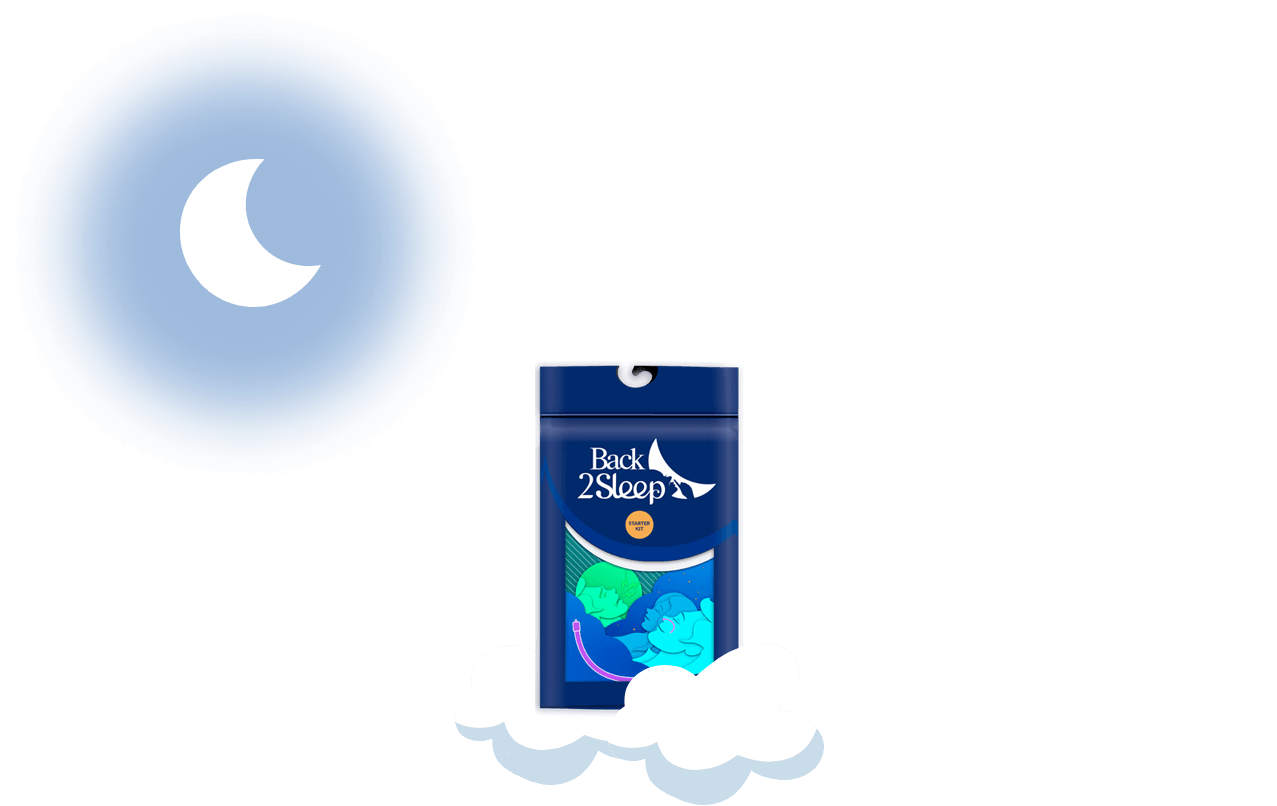
If your AHI falls in the mild-to-moderate range, a simple nasal stent may help reduce your breathing events without the complexity of CPAP. The Back2Sleep Starter Kit includes four sizes so you can find your perfect fit, with results often noticed from the very first night. Over 1 million devices sold, with 92% user satisfaction.
Order Your Starter Kit — €44.90Free 15-day trial • 48h express delivery available • Questions? Visit our FAQ