
Upper Airway Resistance Syndrome (UARS): The Sleep Disorder Doctors Keep Missing

Upper Airway Resistance Syndrome (UARS): Why a 'Normal' Sleep Study Still Leaves You Exhausted
Why your sleep study came back 'normal' but you still feel exhausted — and what UARS means for your health
You wake up exhausted every day. Your sleep study says you are fine. If this sounds familiar, you may have Upper Airway Resistance Syndrome (UARS). This condition causes your airway to narrow during sleep without fully closing. It does not meet the diagnostic criteria for obstructive sleep apnea, but it disrupts your sleep just as severely.
UARS affects an estimated 10–15% of people who visit sleep clinics with fatigue complaints. It is more common in young, thin women who do not fit the typical sleep apnea profile. Because standard sleep tests often miss it, UARS patients average 5 to 10 years of misdiagnosis. The condition raises the risk of cardiovascular problems if left untreated.
- UARS is a sleep breathing disorder between snoring and obstructive sleep apnea on the severity spectrum
- The airway narrows but does not fully close. Standard AHI criteria may show "normal" results.
- Key symptoms: chronic fatigue, insomnia, low blood pressure, cold hands/feet, brain fog
- Diagnosis requires a sleep study that measures RERAs (Respiratory Effort-Related Arousals)
- Treatments include nasal stents, oral appliances, and positional therapy

What Is UARS and How It Differs from Sleep Apnea
Think of a spectrum of sleep breathing disorders. On one end is simple snoring. On the other end is severe obstructive sleep apnea. UARS sits in the middle.
In sleep apnea, the airway closes completely (apnea) or partially with a significant oxygen drop (hypopnea). In UARS, the airway narrows enough to increase breathing effort. This triggers a micro-arousal in the brain. Your brain wakes up just enough to restore muscle tone and reopen the airway. You never become fully conscious, but your sleep is fragmented.
| Feature | Simple Snoring | UARS | Obstructive Sleep Apnea |
|---|---|---|---|
| Airway | Vibrates but stays open | Narrows; increased resistance | Partially or fully closes |
| Oxygen drops | None | Minimal or none | Significant (3–4%+ drops) |
| AHI score | <5 | <5 (appears normal) | ≥5 |
| RERAs | Few or none | Many (≥10/hour) | Variable |
| Daytime symptoms | Mild or none | Severe fatigue, brain fog | Severe fatigue, sleepiness |
| Typical patient | Any demographic | Young, thin, often female | Older, overweight, often male |
Most home sleep tests and even some lab studies do not measure RERAs. Without RERA scoring, UARS patients get a "normal" AHI result. They are told nothing is wrong. If you have chronic fatigue with a normal AHI, specifically ask for a study that includes RERA analysis or esophageal pressure monitoring.

UARS Symptoms: Why It Gets Misdiagnosed
UARS symptoms overlap with many other conditions. Patients are commonly misdiagnosed with chronic fatigue syndrome, fibromyalgia, depression, or functional somatic syndrome.
Primary Symptoms
- Chronic fatigue: Unrefreshing sleep despite spending 7–9 hours in bed
- Insomnia: Difficulty falling asleep or staying asleep (unlike OSA patients who fall asleep easily)
- Brain fog: Difficulty concentrating, poor short-term memory
- Morning headaches: Dull, pressure-type headaches that fade by midday
- Anxiety: Generalized anxiety, often worse in the evening
Autonomic Symptoms (The Key Differentiator)
UARS uniquely affects the autonomic nervous system. These symptoms are rare in simple snoring or mild sleep apnea:
- Low blood pressure: Systolic below 110 mmHg, dizziness when standing
- Cold hands and feet: Poor peripheral circulation
- Irritable bowel syndrome (IBS): UARS patients have 2.5x higher rates of IBS
- Frequent urination at night: 2+ bathroom trips per night
- Temperature sensitivity: Always feeling cold or overheating easily
How UARS Is Diagnosed
Getting a correct UARS diagnosis requires specific testing that goes beyond standard sleep metrics.
In-Lab Polysomnography with RERA Scoring
The gold standard. A full overnight sleep study in a lab that specifically scores RERAs (Respiratory Effort-Related Arousals). A RERA is a breathing event where airflow limitation increases breathing effort enough to cause a brain arousal, but without the oxygen drops that define apneas or hypopneas. An RDI (Respiratory Disturbance Index) of 10 or more per hour, even with a normal AHI, suggests UARS.
Esophageal Pressure Monitoring
A thin catheter measures pressure changes in the esophagus during sleep. Increasingly negative pressure swings indicate that the body is working harder to breathe. This is the most sensitive test for UARS but is uncomfortable and not widely available.
Nasal Pressure Transducer (Flow Limitation)
A modern alternative to esophageal monitoring. It detects the characteristic "flattened" shape of airflow that indicates increased airway resistance. Many updated sleep labs now use this technique.
Treatment Options for UARS
Because UARS involves partial airway narrowing rather than full collapse, many treatments are effective:
Nasal Stents
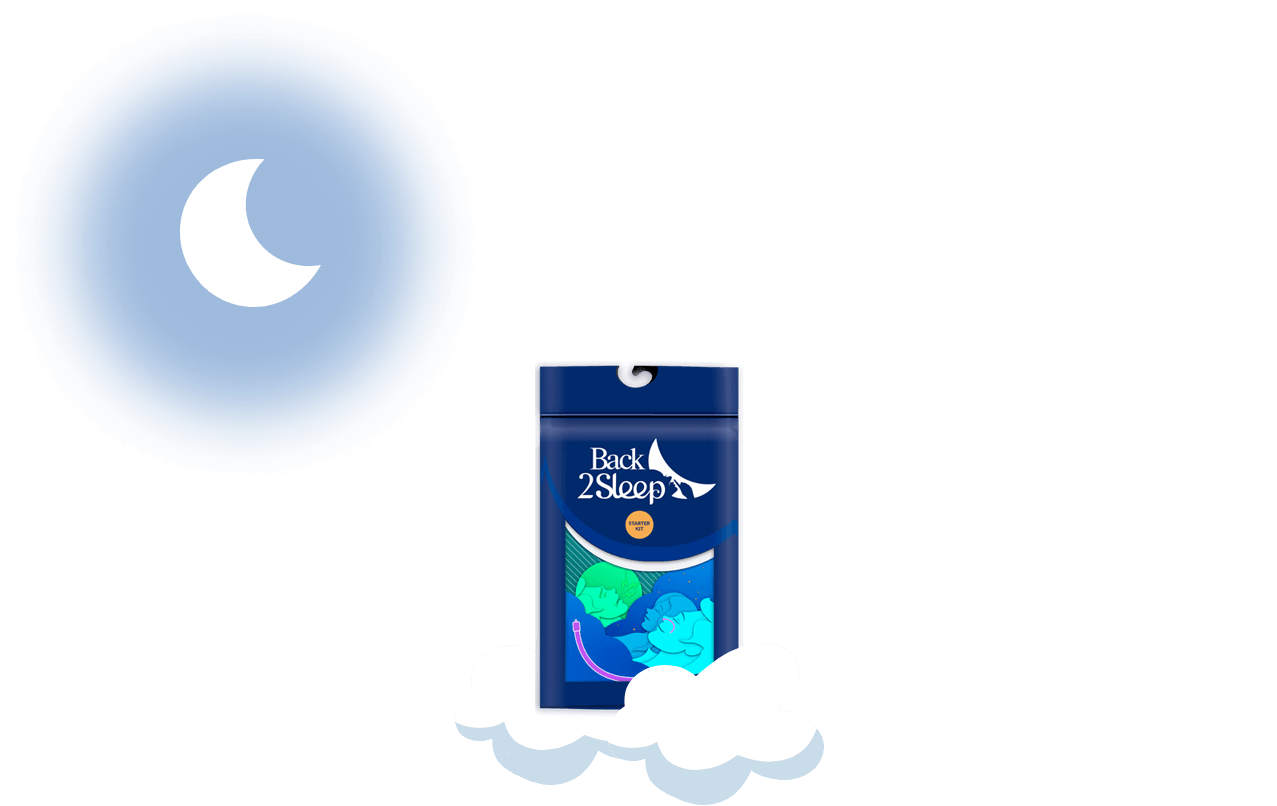
An intranasal stent like the Back2Sleep nasal stent holds the nasal passage open from the inside. By reducing nasal resistance, the stent decreases the effort needed to breathe during sleep. This prevents the RERAs that cause micro-arousals. Nasal stents are particularly effective for UARS because the airway narrowing is less severe than in OSA.
Oral Appliances (MADs)
Mandibular advancement devices hold the jaw forward to enlarge the airway. They work well for UARS patients and are often the first-line treatment recommended by sleep specialists familiar with the condition.
Positional Therapy
UARS events are often worse on the back. Side sleeping reduces airway narrowing. Special pillows or wearable devices can train you to stay off your back.
CPAP Therapy
CPAP works for UARS but is often poorly tolerated because the pressures needed are low and the mask feels disproportionate to the condition. Many UARS patients prefer less invasive options. See our guide to CPAP alternatives for a full comparison.
Nasal Surgery
If nasal obstruction (deviated septum, turbinate hypertrophy, nasal valve collapse) is the primary cause of increased resistance, surgical correction can be curative. A detailed ENT evaluation can identify structural issues.
| Treatment | Effectiveness for UARS | Comfort/Adherence | Best For |
|---|---|---|---|
| Nasal Stent | High | High (minimal, non-invasive) | Nasal resistance as primary cause |
| Oral Appliance | High | Moderate (jaw discomfort possible) | Pharyngeal narrowing |
| Positional Therapy | Moderate–High | High | Supine-dominant UARS |
| CPAP | Very High | Low (often overtreated feeling) | Severe or refractory cases |
| Nasal Surgery | High (if structural cause) | N/A (one-time) | Deviated septum, turbinate hypertrophy |

What Back2Sleep Users Say
Frequently Asked Questions
What is UARS?
Upper Airway Resistance Syndrome (UARS) is a sleep breathing disorder where the airway narrows during sleep without fully closing. It causes micro-arousals that fragment sleep and lead to chronic fatigue, brain fog, and insomnia. Standard sleep tests often miss it because the AHI score appears normal.
How is UARS different from sleep apnea?
In sleep apnea, the airway closes fully or partially with significant oxygen drops. In UARS, the airway narrows and increases breathing effort without major oxygen desaturation. UARS patients typically have a normal AHI but an elevated RDI (Respiratory Disturbance Index) of 10 or more per hour.
Can UARS turn into sleep apnea?
Yes. UARS is considered a precursor to obstructive sleep apnea on the sleep-disordered breathing spectrum. Over time, chronic airway inflammation and weight gain can cause UARS to progress to OSA. Treating UARS early may prevent this progression.
How is UARS diagnosed?
UARS requires an in-lab sleep study that specifically scores RERAs (Respiratory Effort-Related Arousals). Standard home sleep tests typically do not detect UARS. Ask your sleep specialist for a study that includes RERA analysis or nasal pressure flow limitation scoring.
What is the best treatment for UARS?
Treatment depends on the cause of airway narrowing. Nasal stents are effective when nasal resistance is the primary issue. Oral appliances work well for pharyngeal narrowing. Positional therapy helps if events are worse on the back. Many patients benefit from combining two or more approaches.
Why do doctors miss UARS?
UARS was only described in 1993 and is not universally recognized. Many sleep labs do not score RERAs. Home sleep tests cannot detect it. UARS patients often do not fit the typical sleep apnea profile (they tend to be younger, thinner, and more often female), so clinicians may not suspect a breathing disorder.
Ready for quieter nights? Discover the Back2Sleep starter kit and find the right fit for you.
Not sure if you are at risk? Take our sleep risk screening to find out in just a few minutes.
Want to learn how it works? Explore the Back2Sleep nasal stent designed for comfortable, effective relief.