
CPAP Alternatives in 2026: Every Option Ranked by Evidence

CPAP Alternatives in 2026: Every Option Ranked by Scientific Evidence
Half of all CPAP users stop within a year. You are not weak for hating the mask. Here are 9 proven alternatives — ranked by clinical data, real cost, and what actually works for each severity level.
The CPAP Problem Nobody Talks About Honestly
CPAP machines work. That is not the debate. The debate is whether a treatment works if you cannot stand using it. And the numbers tell a brutal story.
A 20-year analysis published in the Journal of Clinical Sleep Medicine (Weaver & Grunstein, 2008) found that 30-60% of CPAP users fail to meet the minimum 4-hours-per-night threshold. A separate study tracking long-term outcomes found that roughly half of patients drop out within three years (Kohler et al., 2010). Among younger patients aged 18-30, adherence drops as low as 51%.
The reasons are the same ones you already know: the mask makes you feel claustrophobic, your mouth dries out, air leaks wake you up, the noise bothers your partner, or you just cannot fall asleep while strapped to a machine. One CPAP user described the experience bluntly: "My AHI is at 27 and I have been using CPAP for 10 years." Ten years of fighting a device every night.
But here is the part that matters: untreated sleep apnea is dangerous. It raises your risk of heart attack, stroke, car accidents, and early death. A study of CPAP users vs. non-users found that sticking with CPAP was linked to a 39% lower risk of dying over three years. You cannot just quit and do nothing.
The good news? In 2026, you have more evidence-backed alternatives than at any point in medical history. This guide ranks every single one by the strength of clinical evidence so you can have a real conversation with your sleep specialist.
The Master Comparison: Every CPAP Alternative Ranked
This table covers every CPAP alternative with clinical evidence behind it. Evidence levels follow the AASM grading system: Level A means strong data from multiple randomized controlled trials. Level B means solid data from fewer or smaller studies.
| Treatment | Evidence | Best For | AHI Reduction | Device Cost | Yearly Cost | Insurance? |
|---|---|---|---|---|---|---|
| Oral Appliances (MAD) | Level A | Mild-moderate OSA | 40-60% | €400-€2,000 | €100-€300 (replacements) | Often covered |
| Weight Loss (diet/exercise) | Level A | Overweight patients | 30-60% | Free | Free | N/A |
| GLP-1 Drugs (Zepbound) | Level A | Obese OSA patients | 55% (SURMOUNT-OSA) | N/A | ~€10,800-€18,000 | Expanding |
| Inspire Implant | Level A | Severe, CPAP-intolerant | 68-79% | €30,000-€40,000 | ~€0 (11-yr battery) | Yes, with criteria |
| Genio System (Nyxoah) | Level A | Moderate-severe OSA | 71% median | €35,000-€45,000 | ~€0 (no battery) | Pending |
| Nasal Stents / Dilators | Level B | Snoring, mild-moderate | 30-50% | €44.90 starter kit | €285-€408 | Varies |
| Positional Therapy | Level B | Position-dependent OSA | 50-80% supine AHI | €50-€400 | €0-€50 | Rarely |
| Myofunctional Therapy | Level B | Adjunct, mild OSA | 25-50% | €200-€800 (sessions) | €0 after training | Rarely |
| eXciteOSA (tongue trainer) | Level B | Mild OSA, snoring | 48% (in study) | ~€1,000 | €0 | Rarely |
| UPPP Surgery | Level B | Anatomical obstruction | 40-60% | €3,000-€8,000 | €0 | Often covered |
| MMA Surgery | Level B | Severe, craniofacial | 80-90% | €15,000-€30,000 | €0 | Case by case |
| AD109 Oral Pill | Phase 3 trials | All severities (pending) | 47-56% | TBD (FDA filing 2026) | TBD | TBD |
Evidence levels: Level A = strong evidence from multiple RCTs. Level B = moderate evidence. Phase 3 = not yet FDA-approved.

Level A Alternatives: The Strongest Clinical Evidence
1. Oral Appliances (Mandibular Advancement Devices)
Mandibular advancement devices are custom-fitted dental appliances that push your lower jaw forward, widening the airway behind the tongue. They are the single most-studied CPAP alternative, with dozens of randomized controlled trials backing them.
Here is what most articles get wrong about MADs: they focus only on AHI reduction, where CPAP wins. But a landmark study published in JACC (2024) found that MADs were noninferior to CPAP for reducing 24-hour blood pressure in patients with hypertension and moderate-to-severe OSA. Why? Because people actually wear them. Long-term studies show 91% of MAD users still use their device for 6+ hours per night after several years. Compare that to CPAP's 50% dropout rate.
Among patients who tried both MAD and CPAP, 81% preferred the oral appliance.
- AHI reduction: 40-60% average. About one-third achieve full normalization (AHI below 5)
- Best for: Mild-to-moderate OSA, or severe OSA patients who refuse CPAP
- Downsides: Jaw soreness, possible tooth shifting over years, TMJ issues in some users
- Cost: €400-€2,000 for custom-fitted; over-the-counter boil-and-bite versions are cheaper but far less effective
2. Weight Loss (Including GLP-1 Medications)
Weight loss is the only CPAP alternative that can potentially cure sleep apnea rather than just manage it. For every 10% of body weight lost, AHI drops by roughly 26%. In some mild cases, the apnea resolves completely.
The game-changer in 2026 is Zepbound (tirzepatide), which the FDA approved in December 2024 as the first prescription medication specifically for moderate-to-severe OSA in adults with obesity. The SURMOUNT-OSA trial results were staggering:
- Patients not on CPAP: 25 fewer breathing events per hour vs. 5 with placebo
- Patients on CPAP: 29 fewer events per hour vs. 6 with placebo
- 42-50% of patients achieved remission or mild non-symptomatic OSA
- Average weight loss: 18-20% of body weight
The catch: Zepbound costs roughly €900-€1,500 per month, insurance coverage is inconsistent, and you likely need to stay on it long-term to maintain results. Weight regain after stopping GLP-1 drugs is common.
3. Inspire Implant (Hypoglossal Nerve Stimulation)
For patients with severe sleep apnea who have genuinely failed CPAP, the Inspire implant is the gold-standard surgical alternative. It is a pacemaker-sized device implanted under the skin that stimulates the hypoglossal nerve — the nerve controlling your tongue — in sync with your breathing. Your tongue moves forward with each breath, keeping the airway open.
The STAR clinical trial showed a 68% median AHI reduction at 12 months, with 85% patient satisfaction at 5 years. Over 60,000 patients have been implanted worldwide.
- Eligibility: AHI 15-65, BMI under 35, documented CPAP failure, no complete concentric palatal collapse
- Surgery: Outpatient, 2-3 hour procedure. Device activated 1 month post-surgery
- Battery life: ~11 years
- Cost: €30,000-€40,000. Most major insurers (including Medicare in the US) cover it for eligible patients
4. Genio System (Nyxoah) — FDA-Approved August 2025
Genio is the newest hypoglossal nerve stimulator, FDA-approved in August 2025. Its key difference from Inspire: no implanted battery. Instead, a tiny implant sits under the chin, and a disposable external patch worn during sleep powers it wirelessly.
The DREAM trial showed a 70.8% median AHI reduction with a 63.5% responder rate. Unlike Inspire, Genio uses bilateral stimulation (both sides of the tongue), and the external component can be upgraded without additional surgery.
- Cost: €35,000-€45,000 (slightly higher than Inspire)
- Advantage: MRI-compatible at 1.5T and 3T, no battery replacement surgery
- Limitation: Newer, less long-term data than Inspire
Level B Alternatives: Well-Supported Options
5. Nasal Stents and Nasal Dilators
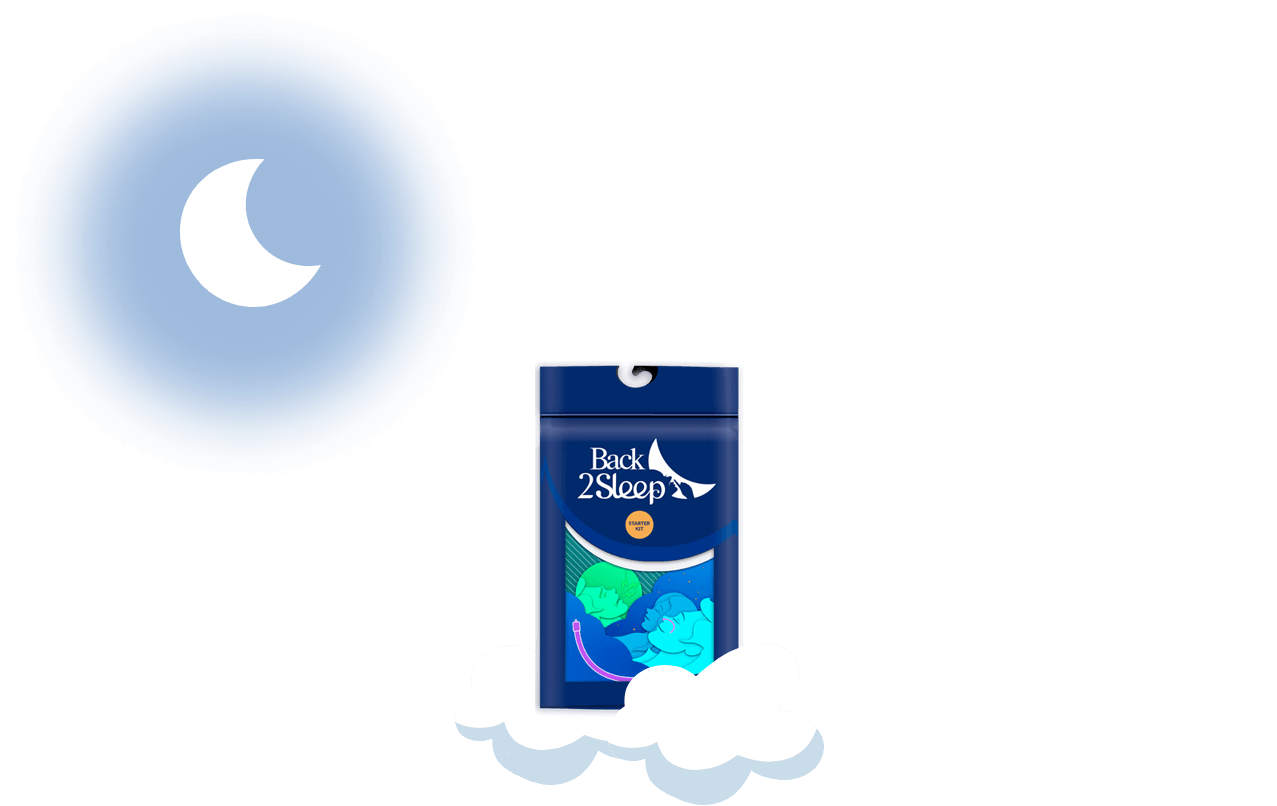
Nasal stents like Back2Sleep work by physically holding the nasal airway open and extending to the soft palate. They address one of the root causes of snoring and mild-moderate OSA: nasal airway resistance that forces mouth breathing and worsens airway collapse.
Clinical data shows significant improvement: respiratory event index dropped from 22.4 to 15.7 (p<0.01) and lowest oxygen saturation improved from 81.9% to 86.6% (p<0.01). The adaptation takes 3-5 days — similar to getting used to contact lenses.
Results From Night One
92% user satisfaction with noticeable snoring reduction on the first night. Over 1 million units sold across Europe. No break-in beyond 3-5 days of nasal adaptation.
10-Second Setup
Insert, sleep, done. No electricity, no tubing, no mask, no noise. Fits in your pocket. The travel advantage alone makes it worth trying for frequent flyers.
Lowest Cost of Any Device
€44.90 starter kit includes 4 sizes (S, M, L, XL). Monthly refill: €34. Yearly plan: €285. Compare that to €30,000+ for Inspire.
CE-Certified Medical Device
This is not a drugstore nasal strip. It is a Class I medical device with published clinical data, soft biocompatible silicone, and dermatological testing. Used by sleep clinics across France.
6. Positional Therapy
If your sleep study shows that your AHI is at least twice as high on your back compared to your side, you have positional sleep apnea — and positional therapy may be all you need. Modern devices include vibrating chest sensors (like NightBalance or Philips NightOwl) that gently buzz when you roll onto your back, prompting a side-sleeping position without fully waking you.
A 2025 meta-analysis in Frontiers in Medicine showed positional therapy reduced supine AHI by a mean of 7.5 events per hour compared to placebo. In one study, overall AHI dropped from 14.5 to 5.9. The trade-off: CPAP still outperforms positional therapy by about 6.4 AHI points, but patients use positional devices 2.5 hours more per night on average because they are more tolerable.
- Best for: Positional OSA (supine AHI at least 2x non-supine)
- Effectiveness: 50-80% reduction in supine AHI, 65-67% success rate in mild-moderate cases
- Cost: €50-€400 depending on device type
7. Myofunctional Therapy (Oropharyngeal Exercises)
Think of it as physical therapy for your throat. Myofunctional therapy involves a series of exercises that strengthen the tongue, soft palate, lateral pharyngeal wall, and facial muscles. A 2015 meta-analysis in the journal Sleep (Camacho et al.) showed AHI dropped from 24.5 to 12.3 events per hour — roughly a 50% reduction — after 3+ months of daily practice.
The catch: it takes discipline. You need to do 20-30 minutes of exercises daily for at least 3 months before seeing results. Most people use it as an adjunct to another treatment rather than a standalone solution. The FDA-cleared eXciteOSA device automates this process with electrical tongue stimulation — 20 minutes per day during the day, achieving a 48% AHI reduction in clinical trials for mild OSA.
8. Surgery: UPPP, MMA, and Others
Surgery is the most invasive option and usually the last resort. The two most common procedures:
- UPPP (uvulopalatopharyngoplasty): Removes excess tissue from the throat. 40-60% AHI reduction. Painful 2-week recovery. Results can degrade over time as tissue loosens again
- MMA (maxillomandibular advancement): Moves both jaw bones forward permanently. 80-90% AHI reduction — the highest of any surgery. But it requires 4-6 weeks recovery, wired jaw, and changes facial appearance slightly
MMA is sometimes called the "nuclear option" because of its effectiveness, but it is major surgery with real risks. It is typically reserved for severe cases where everything else has failed and the patient's anatomy is a major contributing factor.
Coming Soon: The Future of CPAP Alternatives
9. AD109 — The First Oral Pill for Sleep Apnea
This could change everything. AD109 from Apnimed is a once-daily pill combining aroxybutynin (a novel antimuscarinic) and atomoxetine (a norepinephrine reuptake inhibitor). It works by increasing upper airway muscle tone during sleep.
Two Phase 3 trials delivered strong results:
- SynAIRgy trial: 55.6% AHI reduction from baseline (p=0.001)
- LunAIRo trial: 46.8% AHI reduction at 26 weeks (p<0.001), maintained at 51 weeks
- Well-tolerated with no serious drug-related adverse events
Apnimed plans to file for FDA approval by early 2026. If approved, this would be the first pill you can take at bedtime to treat obstructive sleep apnea — no device, no mask, no surgery. That said, it is not yet available, and long-term safety data beyond 51 weeks is still limited.
Smart Combinations That Outperform Single Treatments
Sleep medicine is moving away from "pick one treatment" toward combination approaches that attack sleep apnea from multiple angles. Here are the most effective pairings:
Nasal Stent + Positional Therapy
For mild-moderate positional OSA. The nasal stent keeps the airway open while side-sleeping prevents gravitational tongue collapse. Combined effect often exceeds either treatment alone.
Weight Loss + Oral Appliance
Weight loss shrinks the tissue volume around the airway. The MAD prevents remaining tissue from collapsing. As weight drops, many patients can discontinue the appliance.
Myofunctional Therapy + Any Device
Strengthening throat muscles raises the baseline tone of your airway. This makes every other treatment work better and may reduce your OSA severity over time.
Nasal Stent + Weight Management
Start with Back2Sleep for immediate relief while working on gradual weight loss. You get instant benefit tonight and a path toward long-term resolution.
Real Stories: What Life Looks Like After Quitting CPAP
Done Fighting Your CPAP Every Night?
The Back2Sleep starter kit includes 4 sizes for €44.90. Over 1 million sold. 92% satisfaction rate. CE-certified medical device.
Order Your Starter KitDecision Framework: Which Alternative Fits Your Situation?
Stop searching randomly. Use your AHI score and personal situation to narrow your options:
| Your Situation | Best Starting Point | Why This Works |
|---|---|---|
| Mild OSA (AHI 5-15) | Nasal stent + lifestyle changes | Least invasive, most affordable, often sufficient alone. Start here before spending thousands. |
| Moderate OSA (AHI 15-30) | Oral appliance or nasal stent + positional therapy | Strong evidence for MADs. Try least invasive first; escalate if needed. |
| Severe OSA (AHI 30+), CPAP-intolerant | Inspire or Genio implant | Level A evidence for severe cases. Insurance often covers after documented CPAP failure. |
| Overweight with any severity OSA | Weight loss (consider GLP-1) + bridge device | Only approach that can cure OSA. Use a nasal stent or MAD while losing weight. |
| Position-dependent apnea | Positional therapy + nasal stent | Treats both gravity and nasal resistance. 65-67% success rate in clinical studies. |
| Frequent travelers | Nasal stent | Fits in your pocket. No electricity, no noise, no airline carry-on hassle. |
| Young patient, mild OSA | Myofunctional therapy + nasal stent | Build long-term airway strength while treating symptoms now. May resolve with consistent exercise. |
What Your Sleep Doctor Wants You to Know
Get a Sleep Study First
You cannot choose the right alternative without knowing your AHI, oxygen desaturation levels, and whether your apnea is positional. A home sleep test costs €100-€300.
Match Severity to Treatment
Mild OSA has different options than severe. Do not get Inspire surgery for an AHI of 8. Do not rely solely on a nasal strip for an AHI of 45.
Start Least Invasive
Try the simplest option first and escalate only if needed. A €44.90 nasal stent trial costs you almost nothing compared to a €30,000 surgery.
Follow Up With Data
After switching treatments, get a follow-up sleep study in 3-6 months. Numbers do not lie. If your AHI is not improving, try the next option up.