
What the Evidence Shows When Comparing Acupressure Rings and Nasal Stents for Snoring

The acupressure ring vs nasal stent evidence gap explains why one relies on tradition and the other on published trial data
Before you buy either device, see what peer-reviewed studies and regulators actually say about acupressure rings and nasal stents for snoring and mild-to-moderate sleep apnea.
The Acupressure Ring vs Nasal Stent Evidence at a Glance
The acupressure ring vs nasal stent evidence gap is stark once you set marketing copy aside and look at what has actually been published in peer-reviewed journals. Acupressure rings rely on a pressure-point theory that has never been tested in a controlled clinical trial, while intranasal stents and dilators have been studied in multiple published trials, with mixed but measurable results. If you have seen a viral acupressure anti-snoring ring online and want to know whether the science backs it up before you spend money, this comparison walks through the actual data rather than the ad copy.
Both product categories target the same problem: nightly snoring caused by a partially blocked airway, sometimes linked to obstructive sleep apnea (OSA), a condition in which the airway repeatedly narrows or collapses during sleep. But the two devices work on completely different theories of what is actually happening in the body, and only one of those theories has been put through a controlled trial. That difference matters more than price or convenience when you are deciding what to try first.
- Acupressure rings and nasal stents both target snoring, but their evidence bases are not comparable.
- No controlled clinical trial has tested finger-pressure acupressure for snoring.
- Nasal dilators and stents have been studied in real trials, with results that vary by device design.

How Acupressure Rings Claim to Work
Acupressure rings are small metal or silicone bands worn on a finger, usually positioned to press on points labelled SI2 or HT9 in traditional Chinese medicine. The theory is that applying pressure to these points on the little finger somehow relaxes throat muscles or "unblocks energy channels" that reduce snoring. This idea comes from acupuncture theory, not from respiratory or ENT (ear, nose, and throat) research.
The problem is that this specific claim, finger acupressure reducing snoring, has never been tested in a peer-reviewed, controlled clinical trial. Manufacturers commonly advertise effectiveness rates around 80 to 85 percent, but these figures typically come from uncontrolled in-house customer surveys rather than independent research, a gap repeatedly noted in consumer health reviews from 2024 to 2026. A survey where a company asks its own buyers if they feel better is not the same as a study that compares device users against a control group.
This gap is not just an academic footnote. Australia's consumer regulator, the Australian Competition and Consumer Commission (ACCC), took formal enforcement action in 2010 against an acupressure ring manufacturer after more than 200,000 units were sold worldwide on the strength of claims that the ring was a "proven, drug-free treatment" endorsed by physicians. The company gave court-enforceable undertakings to remove those claims. That case remains the primary regulatory precedent cited whenever acupressure rings resurface in viral marketing, and it is a useful reminder that popularity and sales volume are not evidence of effectiveness.
Another claim worth addressing directly: some listings for copper acupressure rings suggest the metal "releases toxins" or otherwise detoxifies the body overnight. There is no physiological mechanism by which wearing a metal band on a finger removes toxins from the bloodstream, and no published research supports that specific claim either. It is worth flagging because it often travels alongside the pressure-point theory in the same product description, and neither half of the pitch has clinical backing.
- Acupressure rings are based on traditional Chinese medicine pressure points, not respiratory science.
- No independent, controlled trial has validated finger acupressure for snoring.
- A 2010 regulatory enforcement action forced one major manufacturer to drop unsupported effectiveness claims.
What Published Trials Actually Say About Nasal Dilators and Stents
Nasal dilators and nasal stents are physically different devices with different published outcomes, and conflating them is one of the most common mistakes in device comparisons. A nasal dilator typically holds the outer nostril or nasal valve open, either from outside the nose (an adhesive strip) or just inside it. A nasal stent is a soft, flexible tube inserted further into the nasal passage to keep a longer stretch of the airway open through the night.
A 2026 systematic review and meta-analysis published in Cureus, covering 17 studies and 496 participants, looked at nasal dilators as a category and found no statistically meaningful difference between users and a control group on the apnea-hypopnea index (AHI), a standard measure of how many breathing pauses occur per hour of sleep, blood oxygen levels, sleep structure, or snoring intensity. The review's authors concluded that nasal dilators cannot be recommended as a stand-alone treatment for sleep-disordered breathing (Cureus, 2026).
An earlier 2016 systematic review in Pulmonary Medicine, covering 14 studies and 294 patients, reached a similar conclusion: AHI barely moved with nasal dilator use, from roughly 28.7 events per hour before treatment to 27.4 after. Within that null result, however, internal dilators worn just inside the nostril modestly outperformed external adhesive strips on the apnea index specifically, suggesting device design inside this category is not interchangeable (Pulmonary Medicine, 2016).
Separately, a 2019 clinical study published in the Journal of Oral Rehabilitation tested a deeper intranasal airway stent, a different mechanism than a surface-level dilator, in patients with diagnosed OSA. Researchers recorded the respiratory event index (REI), a home-testing equivalent of AHI, dropping from an average of 22.4 to 15.7 events per hour, alongside a statistically significant rise in the lowest recorded blood oxygen saturation (SpO2) overnight (Okuno et al., Journal of Oral Rehabilitation, 2019). That is a meaningfully different result profile than the dilator meta-analyses above, because the device and the depth of airway support are not the same thing.
- Nasal dilators as a broad category show no significant AHI improvement across two independent meta-analyses.
- Internal dilators modestly outperformed external strips within that same null-result data.
- A deeper intranasal stent, studied separately, showed a significant REI and SpO2 improvement in a dedicated 2019 trial.
- Dilators and stents are not interchangeable terms, and lumping them together misreads the evidence.
Weighing the Acupressure Ring vs Nasal Stent Evidence Side by Side
Laid out next to each other, the acupressure ring vs nasal stent evidence divide covers mechanism, trial data, regulatory status, and realistic cost. The table below summarizes what is verifiable for each category, using the studies and sources referenced above.
| Factor | Acupressure ring | External nasal strip / dilator | Intranasal stent |
|---|---|---|---|
| Claimed mechanism | Pressure-point stimulation (TCM theory) | Mechanically widens the outer nostril or nasal valve | Physically props open a longer stretch of the nasal airway |
| Peer-reviewed trial evidence | None published | 2 meta-analyses, no significant AHI change | Dedicated 2019 trial showed significant REI and SpO2 improvement |
| Regulatory status in the EU | Unregulated wellness accessory | Varies; often unregulated consumer accessory | Can be CE-marked as a Class I medical device |
| Regulatory scrutiny record | 2010 ACCC enforcement over unsupported claims | No major enforcement action identified | Subject to EU MDR conformity requirements when CE-marked |
| Typical price | Low, roughly the cost of a piece of jewelry | Low, sold in multi-strip packs | Moderate; a starter kit with multiple sizes runs around EUR 44.90 |
| Best suited for | No verified use case | Occasional, positional or nasal-congestion snoring | Regular snoring and mild-to-moderate OSA, without a prescription |
- Only the intranasal stent category has a dedicated trial showing a measurable respiratory outcome.
- Acupressure rings sit outside any medical device regulatory framework, with no trial data behind them.
- Cost differences are modest; evidence differences are not.
Where a CE-Certified Nasal Stent Actually Fits
A CE-certified Class I nasal stent is appropriate for snoring and mild-to-moderate OSA, not as a cure for severe OSA and not as a replacement for CPAP therapy. The CE mark itself signals that a device has met defined EU safety and performance requirements, which is a different bar than an unregulated wellness accessory clears. If you want to understand exactly what that classification does and does not guarantee, the site's own breakdown of what CE Class I certification actually means for you covers the regulatory detail in full.
Positioned correctly, a soft silicone intranasal stent is a reasonable option for people who snore regularly, have been assessed as mild-to-moderate rather than severe, and are not currently CPAP-eligible or find a CPAP machine hard to tolerate. It requires no prescription, no electricity, no tubing, and no noise, which is part of why it appeals to people who want to try something before committing to a formal sleep clinic pathway. With EU-wide shipping, this category is also a lower-risk out-of-pocket option than unregulated accessories that offer no such evidence trail.
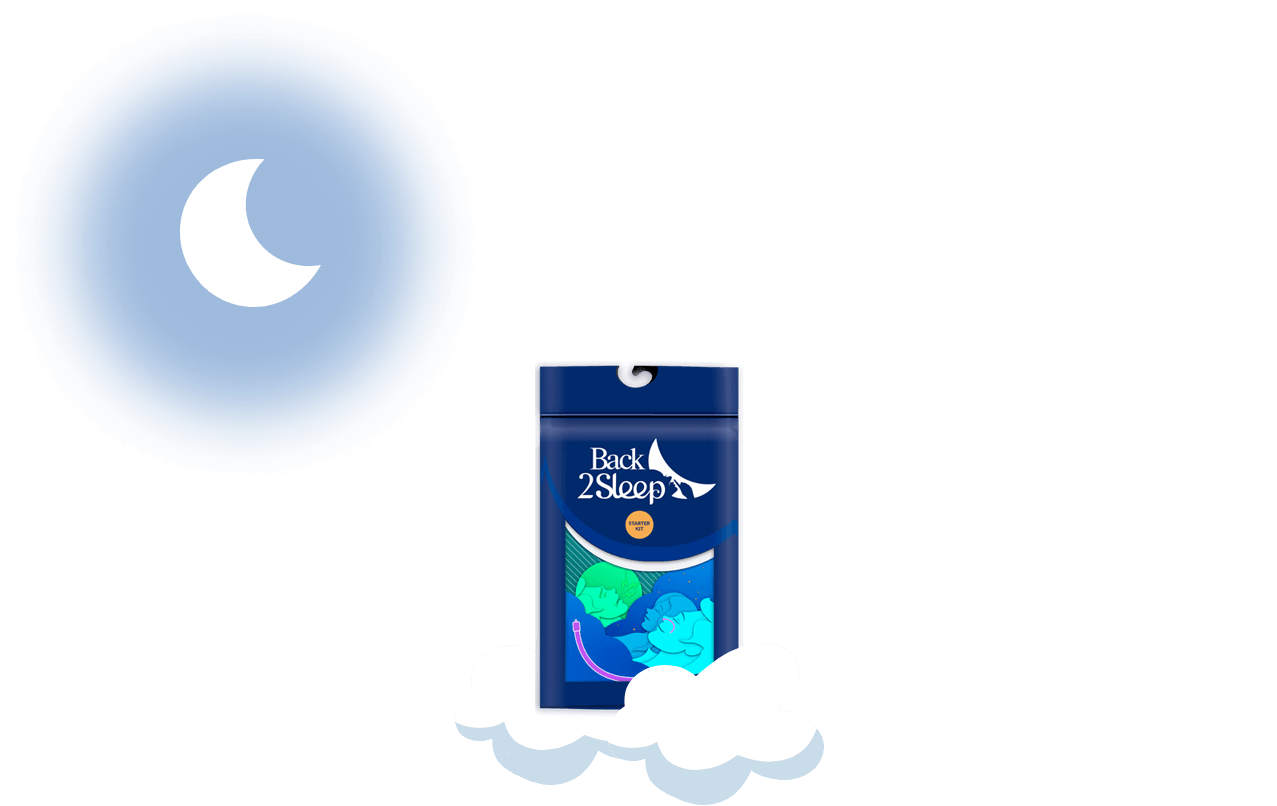
Back2Sleep, designed by a French company based in Paris, is one example of a CE-certified Class I intranasal stent built specifically for this lane: snoring and mild-to-moderate OSA, sold as a starter kit with four sizes so users can find a comfortable fit without a clinic visit. That scope is deliberate. It is not marketed as a fix for severe OSA, and anyone with confirmed severe OSA should be working with a sleep clinic on CPAP or another medically supervised therapy rather than substituting a nasal device for that care.
It is still one option among several, and it will not suit everyone. For a broader side-by-side of what else is on the market, including mouthpieces, positional trainers, and other nasal devices, the honest comparison of the best anti-snoring devices in 2026 is a useful next read before deciding.
- A CE Class I nasal stent is scoped to snoring and mild-to-moderate OSA, never to severe OSA or as a CPAP replacement.
- No prescription is required, and starter kits typically include multiple sizes to find a comfortable fit.
When Snoring Might Signal Something More Serious
Loud, regular snoring is sometimes just snoring, and sometimes it is an early sign of OSA that needs a proper diagnosis before any device, acupressure ring or otherwise, can be expected to help. The Berlin Questionnaire is a widely used screening tool that asks about snoring frequency, witnessed breathing pauses, daytime tiredness, and weight or blood pressure history to flag who should be assessed further. It is a screening step, not a diagnosis on its own.
A formal diagnosis usually comes from either an in-lab polysomnography (an overnight, sensor-monitored sleep study) or a home sleep apnea test that estimates the respiratory event index from a smaller set of sensors used overnight in your own bed. Both approaches measure how often breathing is disrupted and how severely, which determines whether the right next step is a nasal device, a mandibular device, CPAP therapy, or something else entirely. Excessive daytime fatigue, morning headaches, and witnessed breathing pauses during sleep are commonly associated with more significant OSA and are reasons to seek an assessment rather than self-treat indefinitely.
None of this means every snorer needs a sleep lab. It means the honest answer to "which device should I buy" depends partly on severity, and severity is a clinical question, not a marketing one. Starting with a validated screening questionnaire, then a home or in-lab test if indicated, gives you a far more reliable basis for choosing between an unregulated ring, an external strip, or a CE-marked nasal stent than any product review can.
- The Berlin Questionnaire is a common first screening step for suspected OSA, not a diagnosis.
- Polysomnography and home sleep apnea tests both measure how often and how severely breathing is disrupted.
- Severity should guide device choice; severe OSA needs a diagnosis and medical therapy, not a self-selected accessory.

What Back2Sleep Users Say
Frequently Asked Questions
Do anti-snoring acupressure rings actually work?
There is no published, controlled clinical trial testing acupressure rings for snoring. Manufacturer claims of 80-85% effectiveness typically come from uncontrolled in-house surveys, not independent research. A 2010 regulatory enforcement action by Australia's consumer watchdog forced one manufacturer to withdraw unsupported "proven treatment" claims, so approach these products with caution.
What is the science behind anti-snoring rings?
Acupressure rings are based on traditional Chinese medicine, claiming pressure on finger points such as SI2 or HT9 relaxes throat muscles and improves airflow. This theory comes from acupuncture practice, not respiratory or ENT research, and has never been validated in a peer-reviewed trial for snoring specifically.
Can an acupressure ring help with sleep apnea?
No published clinical evidence supports acupressure rings for obstructive sleep apnea (OSA). OSA involves repeated airway collapse and requires diagnosis through a sleep study. Treatments with actual trial data, like CPAP or certain nasal devices, address the physical airway directly, making an acupressure ring an unproven choice for a medical condition like OSA.
What's the difference between a nasal stent and a nasal dilator?
A nasal dilator holds the outer nostril or nasal valve open, either with an external adhesive strip or a small device just inside the nostril. A nasal stent is a soft tube inserted further into the nasal passage to support a longer stretch of the airway. Published trial data differs between the two categories.
Is there any clinical evidence for finger acupressure and snoring?
No controlled clinical trial has tested finger acupressure specifically for snoring. Existing effectiveness claims come from manufacturer surveys rather than independent, peer-reviewed research. By contrast, nasal dilator and stent devices have been studied in published systematic reviews and clinical trials, giving buyers an actual evidence trail to compare against acupressure claims.
How do I know if my snoring is actually sleep apnea and not just simple snoring?
Simple snoring rarely comes with witnessed breathing pauses, gasping, or heavy daytime fatigue, while these signs suggest OSA. A screening tool like the Berlin Questionnaire can flag risk, but a home sleep apnea test or in-lab polysomnography is needed to confirm severity and guide treatment, whether that is a nasal device, CPAP, or another therapy.
Ready for quieter nights? Discover the Back2Sleep starter kit and find the right fit for you.
Not sure if you are at risk? Take our sleep risk screening to find out in just a few minutes.
Want to learn how it works? Explore the Back2Sleep nasal stent designed for comfortable, effective relief.