
AI in Sleep Medicine: How Technology Is Changing Diagnosis in 2026

AI in Sleep Medicine: How Technology Is Changing Diagnosis in 2026
From smartwatches that flag sleep apnea to AI models predicting 130+ diseases from one night of sleep data, artificial intelligence is reshaping how we detect, diagnose, and manage sleep disorders. Here is what the science says right now.
Why AI Is Transforming Sleep Diagnosis
More than 85% of people with obstructive sleep apnea remain undiagnosed, according to research published in The Lancet Respiratory Medicine. The traditional path to diagnosis, an overnight stay in a sleep laboratory hooked up to dozens of sensors, is expensive, uncomfortable, and inaccessible for millions of patients worldwide.
Artificial intelligence is solving this bottleneck. Machine learning algorithms now analyze oxygen saturation, heart rate variability, respiratory effort, and even wrist movement to screen for sleep-disordered breathing from your own bed. The accuracy of these systems, often exceeding 89% for obstructive sleep apnea classification, is closing the gap between laboratory polysomnography and home-based testing.
In January 2026, Stanford Medicine published a landmark study in Nature Medicine revealing that a single night of sleep data can predict over 130 health conditions, including cancer, heart disease, and dementia. This article explores the latest AI breakthroughs, what they mean for patients, and how accessible solutions like the Back2Sleep nasal stent fit into this evolving landscape.
- 85%+ of sleep apnea cases remain undiagnosed globally
- AI-powered home tests now match or exceed laboratory accuracy for many metrics
- Stanford's SleepFM model predicts 130+ diseases from one night of data
- FDA-cleared smartwatch features and wearable AI are making screening accessible
AI Sleep Medicine by the Numbers
Stanford's SleepFM: Predicting Disease While You Sleep
The biggest AI breakthrough of early 2026 came from Stanford Medicine. Researchers led by Dr. Emmanuel Mignot, the Craig Reynolds Professor in Sleep Medicine, and Dr. James Zou, Associate Professor of Biomedical Data Science, trained a foundation model called SleepFM on an extraordinary dataset:
- 585,000 hours of polysomnography recordings
- 65,000 participants from Stanford Sleep Medicine Center (1999–2024)
- Health records spanning up to 25 years of follow-up
SleepFM processes five-second increments of sleep data, much like large language models process text tokens. Using a novel technique called leave-one-out contrastive learning, it integrates brain activity (EEG), heart signals (ECG), muscle activity (EMG), pulse readings, and respiratory patterns into a unified predictive model.
What Can SleepFM Predict?
The model identified 130 health conditions it could predict with a C-index of at least 0.75 (where 1.0 is perfect prediction). The strongest results include:
| Condition | C-Index Score | Interpretation |
|---|---|---|
| Parkinson's disease | 0.89 | Very strong prediction |
| Prostate cancer | 0.89 | Very strong prediction |
| Breast cancer | 0.87 | Strong prediction |
| Dementia | 0.85 | Strong prediction |
| Hypertensive heart disease | 0.84 | Strong prediction |
| All-cause mortality | 0.84 | Strong prediction |
| Heart attack (MI) | 0.81 | Strong prediction |
As Dr. Mignot noted: "We record an amazing number of signals when we study sleep. It's very data rich." The research suggests that sleep contains physiological signatures of developing diseases that appear years before symptoms become visible.
FDA-Cleared Smartwatches: Sleep Apnea Detection on Your Wrist
While SleepFM represents cutting-edge research, consumer AI for sleep apnea is already here. In 2024, both Samsung and Apple received FDA clearance for smartwatch-based sleep apnea screening features, bringing AI-powered detection to hundreds of millions of devices.
How Smartwatch Detection Works
These features use the watch's built-in accelerometer and optical heart rate sensor to detect subtle changes in blood oxygen patterns and breathing disruptions during sleep. The AI algorithms process multiple nights of data to identify signs consistent with moderate-to-severe obstructive sleep apnea.
| Feature | Samsung Galaxy Watch | Apple Watch |
|---|---|---|
| FDA clearance date | February 2024 | September 2024 |
| Sensitivity | 82.7% | 66.3% |
| Specificity | 91.1% | 98.5% |
| How it runs | On-demand (2 nights) | Automatic background |
| Compatible devices | Galaxy Watch Ultra & newer | Series 9, 10, Ultra 2 |
| Can diagnose OSA? | No (screening only) | No (screening only) |
An important distinction: these smartwatch features cannot diagnose sleep apnea. They screen for signs and suggest you consult a physician. Samsung's higher sensitivity (82.7%) means it catches more true cases, while Apple's superior specificity (98.5%) means fewer false alarms. Neither replaces a clinical sleep study, but both serve as early warning systems for the 85% of people who remain undiagnosed.
Learn About Sleep ApneaAI-Powered Home Sleep Testing: Lab Accuracy at Home
The most practical AI advancement for patients is the evolution of home sleep apnea testing (HSAT). These devices have grown at a 45% annual rate and are gaining broader insurance coverage as cost-effective alternatives to in-laboratory polysomnography.
How Modern AI Home Tests Work
Today's AI-enhanced home tests are far more sophisticated than early versions. Rather than simply counting breathing pauses, machine learning algorithms analyze raw sensor data to perform automated sleep staging, respiratory event classification, and severity grading in a single report.
SleepAI System
Uses raw oximetry and photoplethysmography data. Achieved 89% overall accuracy for OSA severity classification (non-OSA, mild, moderate, severe) with F1-scores of 0.88–1.0 per category.
DormoVision X
FDA-cleared wireless, self-applied device configurable for Type I, II, and III sleep studies. Uses AI scoring with sleep time analysis for precise AHI calculation.
Onera Sleep Test
Patch-based portable system applied in under 5 minutes. Monitors full respiratory data at home with cloud-based AI analysis that generates physician-ready reports.
Pulse Oximetry AI
An FDA-cleared algorithm analyzes consumer pulse oximetry recordings for sleep apnea screening via cloud analysis, turning a simple wearable sensor into a diagnostic aid.
The deep learning algorithm agreement with manually scored polysomnography data is remarkably close. A 2024 study found a mean AHI difference of just 1.66 events per hour between AI scoring and expert human technologists. For context, that margin is often smaller than the variability between two human scorers analyzing the same recording.

Timeline: AI Milestones in Sleep Medicine
The integration of artificial intelligence into sleep diagnostics has accelerated dramatically. Here are the key moments that brought us to where we are today:
First Deep Learning Sleep Scoring
Stanford researchers publish early neural network models for automated sleep stage classification, matching human inter-scorer agreement rates.
AASM Position Statement
The American Academy of Sleep Medicine publishes its first official position statement on AI in sleep medicine, acknowledging its diagnostic potential while calling for clinical validation standards.
Multiple FDA Clearances
Several AI-powered scoring and analysis platforms receive FDA clearance for clinical use in sleep laboratories and home testing environments.
Consumer Wearable Breakthrough
Samsung (Feb) and Apple (Sep) both receive FDA clearance for smartwatch-based sleep apnea detection, making AI screening available to hundreds of millions of users.
Wearable AI Expansion
Vanderbilt and Northwestern develop skin-interfaced wireless sleep monitors using explainable AI. HSAT devices grow at 45% annual rate. Digital CBT platforms match face-to-face therapy outcomes.
SleepFM Published
Stanford's SleepFM foundation model, trained on 585,000 hours of sleep data from 65,000 participants, predicts 130+ health conditions from a single night's recording. Published in Nature Medicine.
What AI Can and Cannot Do for Sleep Disorders
Understanding the current limitations of sleep AI is just as important as knowing its strengths. Here is an honest assessment based on published research through early 2026.
Where AI Excels
- Automated sleep staging: AI matches or exceeds human inter-scorer agreement (Cohen's kappa 0.80–0.85) for classifying sleep stages from EEG data
- OSA severity screening: Accuracy rates of 85–99% in controlled research settings, with real-world home testing consistently above 89%
- Pattern recognition: Detecting subtle breathing disruptions, periodic limb movements, and cardiac arrhythmias that human scorers may miss during long recordings
- Predicting treatment adherence: Machine learning models can identify which OSA patients are most likely to adhere to CPAP therapy, enabling targeted interventions
- Scale and speed: Processing a full-night polysomnography recording in minutes rather than the 2–4 hours required for manual scoring
Current Limitations
- Generalizability: Many AI models are trained on data from specific populations and may perform differently across ethnicities, age groups, and comorbidity profiles
- Rare disorders: AI performs poorly for uncommon conditions like narcolepsy type 2 or REM sleep behavior disorder, where training data is scarce
- Clinical context: AI cannot assess patient history, medication effects, or lifestyle factors that human clinicians integrate into diagnosis
- Regulatory gaps: Not all AI tools have undergone the rigorous clinical validation required for regulatory clearance in every market
- Data privacy: Continuous physiological monitoring raises significant concerns about the storage and use of sensitive health data
Real Patients, Real Experiences with AI Sleep Testing
Online sleep health communities are buzzing with discussions about AI-powered diagnostics. Here is what people are saying about their experiences with new technology:
These experiences reflect a growing pattern: consumer AI tools are serving as the first line of awareness that prompts millions of people to seek formal diagnosis. For many, a smartwatch notification is the nudge that leads to life-changing treatment. Individual results may vary.
Beyond Diagnosis: AI in Sleep Treatment and Monitoring
Artificial intelligence is not limited to detecting sleep problems. It is increasingly used to optimize treatment and monitor outcomes in ways that were impossible just a few years ago.
Personalized CPAP Optimization
Machine learning algorithms analyze nightly CPAP usage data to predict adherence patterns. Patients who are flagged as high risk for abandoning therapy can receive targeted coaching and follow-up before they stop treatment. Studies suggest this approach may improve long-term CPAP adherence by 15–20%.
Digital Cognitive Behavioral Therapy for Insomnia
AI-powered digital CBT-I (cognitive behavioral therapy for insomnia) platforms have been validated in clinical trials. Research indicates these digital programs may be as effective as traditional face-to-face CBT-I, which is considered the gold standard first-line treatment for chronic insomnia. The AI component personalizes session timing, content difficulty, and homework assignments based on patient progress data.
Continuous Sleep Quality Monitoring
For patients with diagnosed sleep apnea, wearable AI provides ongoing monitoring that catches changes in severity. This is particularly valuable because OSA severity can fluctuate with weight changes, alcohol consumption, seasonal allergies, and aging. Rather than waiting for an annual follow-up, continuous AI monitoring flags clinically relevant shifts in real time.
Simple Solutions Still Matter
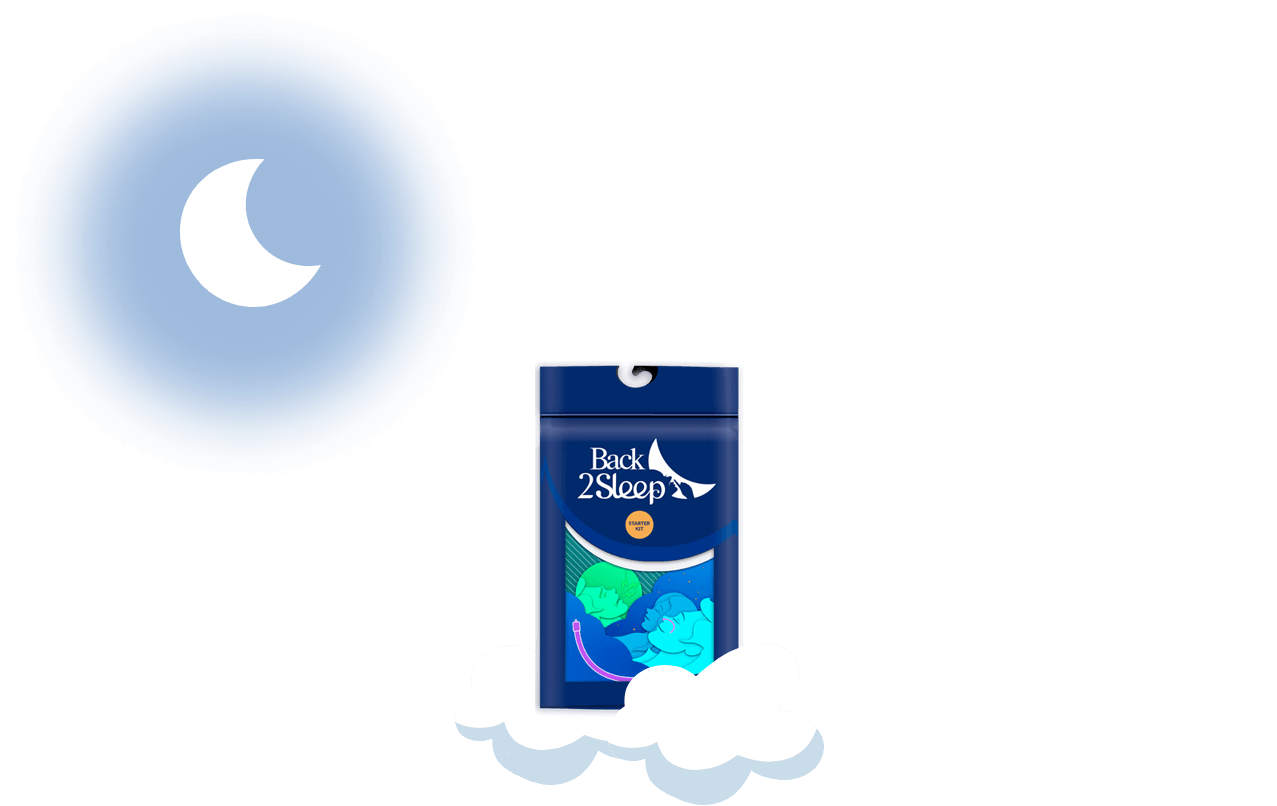
While AI technology advances rapidly, effective treatment does not always require complex devices. For mild-to-moderate obstructive sleep apnea and snoring, mechanical airway support remains a proven approach. The Back2Sleep intranasal stent works by gently holding the airway open during sleep, a straightforward biomechanical solution with over 90% user satisfaction and clinically documented results:
- REI (Respiratory Event Index) reduced from 22.4 to 15.7 per hour (p<0.01)
- Lowest SpO2 improved from 81.9% to 86.6% (p<0.01)
- Results from the first night of use
AI can identify that you have a sleep breathing problem. A well-designed nasal stent can help you do something about it, starting tonight. Individual results may vary. Consult your healthcare professional.
Get Your Starter Kit – 4 Sizes IncludedAI Sleep Diagnostic Tools Compared
With so many options emerging, it helps to see how the main categories of AI sleep tools compare in terms of accuracy, accessibility, and use case.
| Tool Category | Accuracy (OSA) | Cost Range | Requires Prescription? | Best For |
|---|---|---|---|---|
| In-lab polysomnography | Gold standard | $1,000–$3,000 | Yes | Complex or rare disorders |
| AI-scored home sleep test | 85–89% | $150–$500 | Usually yes | Suspected moderate-severe OSA |
| Smartwatch screening (Apple/Samsung) | 66–83% sensitivity | $250–$800 (device) | No | Initial awareness and screening |
| Ring-based trackers (Oura, etc.) | Varies (not FDA-cleared for OSA) | $200–$400 | No | Sleep quality trends |
| AI pulse oximetry (cloud-analyzed) | ~89% (FDA-cleared) | $30–$100 | No | Affordable screening |
Note: Accuracy figures are drawn from published validation studies. Real-world performance may vary based on individual factors. Individual results may vary.
Inside the Algorithms: How AI Reads Your Sleep
A 2025 systematic review of 249 studies on wearable AI for sleep apnea detection revealed the dominant technical approaches. Understanding these helps explain why some tools are more accurate than others.
Most Popular AI Approaches
- Convolutional Neural Networks (CNNs): Used by 37% of studies. Excel at recognizing spatial patterns in physiological signals, similar to how image recognition works.
- Random Forest: Used by 30%. Combines hundreds of decision trees for robust classification. Less prone to overfitting than single neural networks.
- Support Vector Machines (SVMs): Used by 26%. Effective for binary classification tasks like apnea/no-apnea decisions.
- Foundation models (newest): Like SleepFM, these large pre-trained models can adapt to multiple tasks. Represent the future direction of sleep AI.
What Data Do They Use?
- Respiratory signals: 54% of studies use breathing data as primary input
- Heart rate data: 48% rely on cardiac signals (easily captured by wearables)
- Body movement: 37% incorporate accelerometer data
- Blood oxygen (SpO2): Increasingly important as it correlates directly with apnea events
The trend is clear: future AI sleep tools will combine multiple data streams. The more physiological signals fed into the algorithm, the more accurate the output. This is exactly the principle behind SleepFM's multimodal approach, and why even simple devices that measure just oxygen saturation can achieve meaningful screening accuracy when paired with sophisticated AI analysis.
Your Smartwatch Flagged Sleep Apnea: What To Do Next
If your wearable device has alerted you to possible sleep apnea, here is a clear action plan based on current clinical guidelines:
- Do not panic, but do not ignore it. A smartwatch flag is a screening result, not a diagnosis. It means further investigation is warranted.
- Schedule a physician consultation. Your primary care doctor or a sleep specialist can evaluate your symptoms, medical history, and risk factors.
- Request a formal sleep study. Depending on your profile, this may be an AI-scored home sleep test (increasingly common) or an in-laboratory polysomnography for complex cases.
- Explore treatment options. If diagnosed with mild-to-moderate OSA, options range from positional therapy and intranasal stents to CPAP machines for more severe cases.
- Monitor and follow up. Use your wearable to track improvements after starting treatment. Share the data with your sleep specialist at follow-up appointments.
- Smartwatch flag = screening, not diagnosis. See a physician.
- AI home sleep tests are faster and cheaper than lab studies
- Mild-moderate OSA may respond well to non-CPAP solutions
- Continue using wearables to monitor treatment effectiveness
The Future: What AI Sleep Medicine Looks Like by 2030
Based on the trajectory of current research and technology adoption, here is what sleep medicine experts anticipate in the coming years:
Predictive Health Screening
Sleep studies may become routine health screenings, like annual blood work. One night of data could flag cardiovascular risk, neurodegenerative disease markers, and metabolic disorders years before symptoms appear.
AI-Driven Personalized Treatment
Algorithms that match patients to their optimal treatment (CPAP, oral appliance, nasal stent, positional therapy, or surgery) based on their specific airway anatomy, severity profile, and lifestyle factors.
Continuous Adaptive Devices
CPAP machines that automatically adjust pressure settings nightly using AI analysis of breathing patterns, rather than relying on static pressure prescriptions from a single sleep study.
Ambient Monitoring
Contactless sleep monitoring using radar, sound analysis, and infrared sensors built into bedside devices. No wearables needed. AI interprets breathing sounds and movement to detect disorders passively.
These advances will not eliminate the need for effective mechanical solutions. Even in a world of sophisticated AI diagnostics, the treatment for obstructive airway collapse during sleep remains physical: keeping the airway open. Whether through CPAP, an oral appliance, or a nasal stent designed for comfort, the fundamental solution is biomechanical.
Frequently Asked Questions About AI in Sleep Medicine
Continue Your Sleep Health Journey
Whether you are exploring AI-powered diagnostics or looking for an immediate solution to snoring, these resources can help:
- Understanding Sleep Apnea: Causes, Symptoms & Solutions
- Back2Sleep Starter Kit: Find Your Perfect Fit
- Individual Nasal Stent: Choose Your Size
- Frequently Asked Questions About Back2Sleep
- Browse All Sleep Health Articles