
Allergies and Snoring: How Seasonal Congestion Ruins Your Sleep

Allergies & Snoring: Why Seasonal Congestion Wrecks Your Sleep (And How to Fix It)
Allergic rhinitis affects 400 million people worldwide and doubles the risk of snoring. Here is how nasal congestion disrupts your breathing at night, plus practical solutions that work from the very first night.
The Hidden Link Between Allergies and Snoring
If your snoring gets noticeably worse every spring or autumn, your allergies are almost certainly to blame. Allergic rhinitis is one of the most common yet overlooked causes of nighttime breathing problems. It inflames your nasal passages, forces you to breathe through your mouth, and creates the turbulent airflow that produces loud, disruptive snoring.
This is not a minor inconvenience. A landmark meta-analysis of 240 million patients found that people with allergic rhinitis are 2.34 times more likely to snore habitually compared to those without nasal allergies (PLOS ONE, 2020). The same study showed a 2.09 times higher risk of obstructive sleep apnea in allergy sufferers.
The good news? Once you understand the mechanism, you can address the root cause. This guide walks you through the science, the seasonal patterns, and the practical solutions that restore quiet, restful sleep regardless of pollen counts or dust mite levels.
- Allergic rhinitis doubles your risk of habitual snoring and sleep apnea
- Nasal congestion forces mouth breathing, which increases airway resistance by 2.5x
- Seasonal allergy snoring follows predictable patterns you can prepare for
- A nasal stent can bypass congestion and keep the airway open from night one

Allergy-Related Snoring: The Numbers You Should Know
Allergic rhinitis is far more than a stuffy nose. Research consistently shows it creates a cascade of sleep disruptions that affect your energy, mood, and long-term health. Here are the figures from peer-reviewed studies.
These are not isolated findings. The 2018 meta-analysis published in Medicine (Baltimore) reviewed 44 studies with 6,086 participants and found that 35.2% of adults with obstructive sleep apnea also had allergic rhinitis. In children, that figure climbed to 45.2%.
The daytime consequences are equally striking. Allergy sufferers report 2.58 times greater difficulty waking up, 1.85 times more daytime sleepiness, and significantly higher use of sleep medication compared to people without nasal allergies.
How Allergies Physically Cause Snoring
Understanding the mechanism helps you choose the right solution. Allergic snoring is not random. It follows a clear chain of events inside your airway every single night during allergy season.
Step 1: Allergen Exposure Triggers Inflammation
When you inhale pollen, dust mites, pet dander, or mold spores, your immune system overreacts. It releases histamine and other inflammatory chemicals that cause your nasal lining to swell. Blood vessels in the nose dilate, mucus production increases, and your nasal passages narrow dramatically.
Step 2: Nasal Obstruction Forces Mouth Breathing
In healthy sleepers, only about 4% of inhaled air enters through the mouth during sleep. But when allergic congestion blocks the nose, that ratio flips. You become a mouth breather by necessity, not by choice. Research from the European Respiratory Journal found that upper airway resistance during oral breathing is 2.5 times higher than during nasal breathing.
Step 3: Increased Resistance Causes Tissue Vibration
Mouth breathing repositions the jaw downward and backward. This narrows the pharyngeal space behind your tongue. Air rushing through this tighter passage creates turbulence that vibrates the soft palate, uvula, and surrounding tissues. The result is snoring, which can range from a gentle whisper to a window-rattling rumble.
Step 4: The Feedback Loop
Here is where it gets worse. Mouth breathing dries out throat tissues, making them even more prone to vibration. Meanwhile, histamine does not just affect your nose. Researchers have found it can directly alter sleep architecture through the central nervous system, reducing sleep quality even beyond the mechanical obstruction.
Seasonal Allergen Calendar: When Your Snoring Risk Peaks
Allergy-related snoring follows predictable seasonal patterns across Europe. Knowing your highest-risk months lets you prepare in advance rather than react after sleepless nights have already begun.
Spring (March - May)
Tree pollen peaks. Birch, oak, ash, and plane trees release massive pollen loads. Highest congestion reported. 52% of allergy sufferers report worst symptoms in spring.
Summer (June - August)
Grass pollen dominates. Warm, humid nights also encourage dust mite breeding. Heat increases indoor allergen concentration when windows are open.
Autumn (September - November)
Ragweed and mold spores spike. Damp leaf litter creates ideal mold conditions. 29% of sufferers report peak symptoms during autumn.
Winter (December - February)
Indoor allergens take over. Dust mites thrive in heated rooms. Pet dander concentrates with reduced ventilation. Dry air irritates nasal membranes.
For people allergic to multiple triggers, there may be no safe season at all. Perennial allergic rhinitis, driven by dust mites, mold, and pet dander, creates year-round nasal congestion that makes snoring a nightly problem regardless of the calendar.
Common Allergens That Trigger Nighttime Snoring
Not all allergens affect your sleep equally. Some cause mild daytime symptoms but severe nighttime congestion. Others attack your nasal passages while you sleep, creating symptoms you may not even notice while awake.
Dust Mites
Live in mattresses, pillows, and bedding. Peak exposure happens during sleep. The most common cause of perennial allergic rhinitis. Thrive in humidity above 50%.
Pollen (Tree, Grass, Weed)
Enters bedrooms through open windows. Settles on hair and clothing, transferring to pillows. Counts often peak in early morning hours, right when you are sleeping.
Pet Dander
Microscopic skin flakes from cats and dogs. Stays airborne for hours. Accumulates in carpets and upholstery. Pets sleeping in the bedroom dramatically increase exposure.
Mold Spores
Thrive in damp bathrooms, basements, and old buildings. Invisible to the naked eye. Can trigger reactions year-round. Worse in poorly ventilated bedrooms.
The "Hidden Congestion" Phenomenon
Many allergy sufferers experience what sleep specialists call hidden nasal congestion. You breathe normally during the day thanks to physical activity and upright posture. But once you lie down at night, gravity redistributes fluid, nasal tissues swell further, and congestion that was barely noticeable becomes a full blockage.
This explains why some people insist they "don't have allergies" yet snore heavily every night. If you wake with a dry mouth, sore throat, or morning headache, hidden congestion may be the cause.
Real Experiences: Living With Allergy-Related Snoring
The numbers tell part of the story. But behind every statistic is someone lying awake at 3 AM, elbowing their partner, or waking up exhausted despite eight hours in bed. These are the patterns sleep communities and allergy forums describe repeatedly.
These stories highlight a common thread: allergy-related snoring is predictable and solvable. The pattern of seasonal worsening, daytime normalcy followed by nighttime obstruction, and partner complaints repeating each year is a clear signal that nasal inflammation is driving the problem.
Individual results may vary. These experiences reflect personal accounts and should not replace professional medical advice.
Try the Back2Sleep Starter KitAllergy Snoring Solutions Compared
Not every solution works for every type of congestion. Some remedies address the allergic inflammation itself. Others bypass the obstruction mechanically. The most effective approach often combines both strategies.
| Solution | How It Works | Speed of Relief | Best For | Limitations |
|---|---|---|---|---|
| Internal nasal stent | Physically holds airway open from nostril to soft palate | Immediate (night 1) | All types of nasal congestion | Requires 3-5 day adaptation period |
| Nasal corticosteroid spray | Reduces nasal inflammation over time | 2-4 weeks for full effect | Moderate to severe allergic rhinitis | Not instant; requires daily use |
| Oral antihistamine | Blocks histamine to reduce symptoms | 30-60 minutes | Mild seasonal allergies | Older types cause drowsiness; may dry membranes |
| External nasal strips | Pulls nostrils open from outside | Immediate | Mild nasal congestion | Cannot reach internal obstruction; falls off during sleep |
| HEPA air purifier | Removes airborne allergens from bedroom | Hours to days | Dust mites, pet dander, mold | Does not help if allergens are in bedding |
| Allergen-proof bedding | Blocks dust mite exposure during sleep | 1-2 weeks | Dust mite allergy specifically | Does not address pollen or pet dander |
Harvard Health experts recommend combining a nasal steroid spray with a non-sedating antihistamine for allergy management. For immediate snoring relief while waiting for medications to take effect, a mechanical device like an internal nasal stent can bridge the gap from night one.
Why a Nasal Stent Works When Allergies Block Your Airway
Medications address the cause of allergic congestion. A nasal stent addresses the consequence. And for snoring, it is the consequence, the physical narrowing of the airway, that produces the noise your partner hears every night.
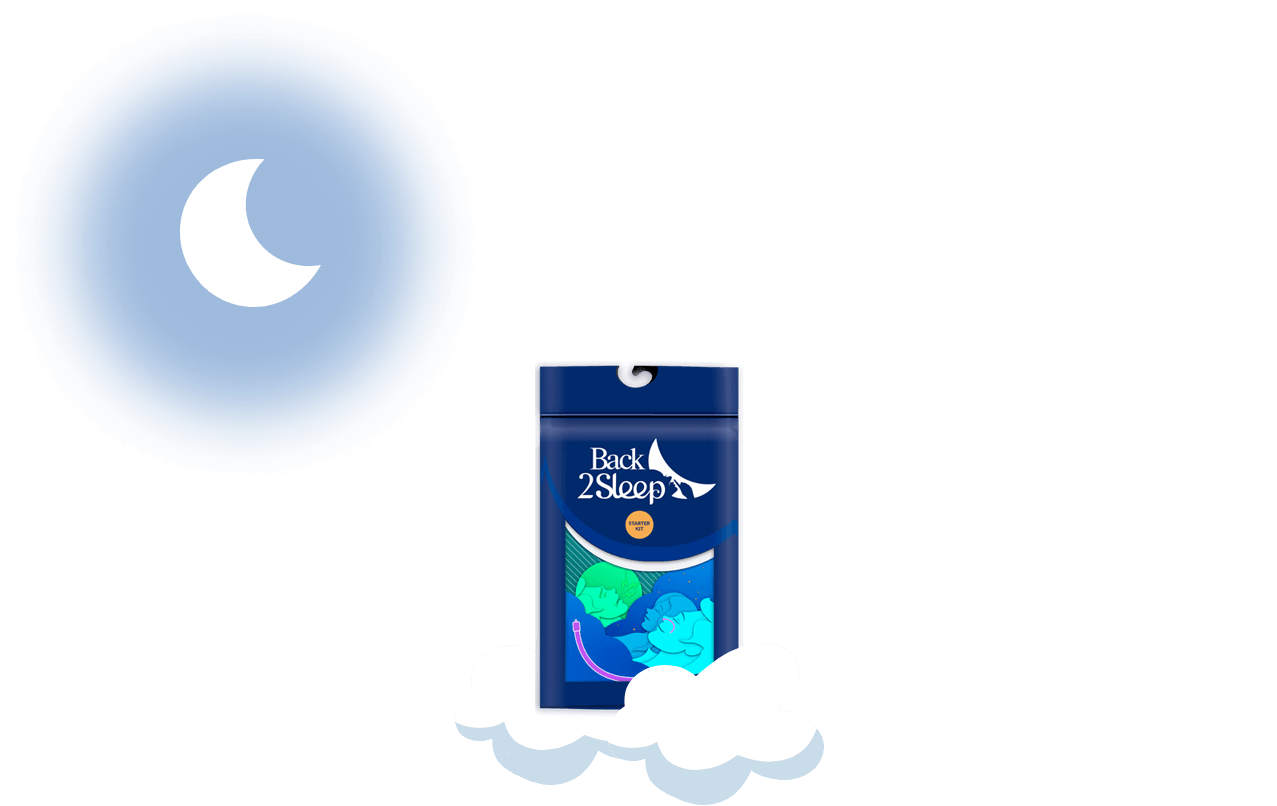
The Back2Sleep nasal stent is a CE-certified Class I medical device. It is a soft silicone tube that sits in one nostril and reaches to the soft palate, creating a clear channel for airflow that bypasses swollen nasal tissues entirely.
How the Back2Sleep Stent Addresses Allergy Congestion
1 Bypasses Swollen Tissue
Unlike nasal strips that try to pull open congested passages from outside, an internal stent creates a channel through the obstruction. Even when nasal mucosa is severely inflamed during peak allergy season, air flows through the stent tube directly to the soft palate area.
2 Prevents Mouth Breathing
By maintaining nasal airflow, the stent eliminates the need to switch to mouth breathing. This keeps airway resistance low (nasal breathing = 2.5x less resistance than oral) and prevents the jaw-dropping posture that narrows the pharynx.
3 Works Regardless of Allergen Type
Whether your congestion comes from spring pollen, autumn mold, winter dust mites, or year-round pet dander, the stent provides the same mechanical benefit. It does not interact with antihistamines or nasal sprays, so you can use it alongside your allergy medication.
4 Provides Immediate Results
Nasal corticosteroid sprays take 2 to 4 weeks for full effectiveness. Allergy immunotherapy takes months. The Back2Sleep stent works from the first night of use. Over 92% of users report satisfaction, and the Starter Kit with four sizes (S, M, L, XL) helps you find your optimal fit within the first week.
 Get Your Starter Kit - 4 Sizes Included
Allergy-Proof Your Bedroom in 9 Steps
A nasal device handles the airway. But reducing allergen exposure in your sleep environment attacks the problem at its source. Combining both strategies gives you the strongest possible defense against allergy-related snoring.
- Encase mattress and pillows in dust-mite-proof covers. Wash covers every 2 weeks at 60 degrees Celsius or higher.
- Wash bedding weekly in hot water. Standard cold-water cycles do not kill dust mites.
- Keep windows closed during high pollen hours (typically 5 AM to 10 AM). Use air conditioning instead of open windows during allergy season.
- Shower before bed to remove pollen from hair and skin. This prevents transferring allergens to your pillow.
- Run a HEPA air purifier in the bedroom. Position it within 2 metres of the bed for maximum benefit. Replace filters per manufacturer guidelines.
- Maintain humidity between 30% and 50%. Below 30% dries nasal membranes. Above 50% encourages dust mite and mold growth.
- Remove carpeting if possible. Hard floors accumulate 100 times less dust mite allergen than carpet. If carpet cannot be removed, vacuum twice weekly with a HEPA-filter vacuum.
- Keep pets out of the bedroom. Pet dander remains airborne for hours and embeds in soft furnishings. Even if you are not allergic to your pet, dander carries pollen indoors.
- Elevate your head 10 to 15 degrees. A slight incline reduces nasal blood pooling and decreases congestion severity. Use a wedge pillow rather than stacking regular pillows.
When Allergy Snoring Signals Something More Serious
Not all snoring is harmless. Allergic rhinitis increases the risk of obstructive sleep apnea (OSA), a condition where the airway completely closes during sleep, cutting off oxygen for 10 seconds or longer, sometimes hundreds of times per night.
Warning Signs That Require Medical Evaluation
- Witnessed breathing pauses during sleep (your partner sees you stop breathing)
- Gasping or choking that wakes you from sleep
- Excessive daytime sleepiness despite 7 to 8 hours of sleep
- Morning headaches that occur regularly (allergy sufferers have 6.16x higher risk)
- Difficulty concentrating or memory problems during the day
- Snoring louder than normal speech that can be heard through closed doors
- Unrefreshing sleep even when you technically slept enough hours
A sleep study (polysomnography) can measure your Apnea-Hypopnea Index (AHI) and determine whether your allergy-related snoring has progressed to sleep apnea. For mild to moderate cases, a nasal stent designed for sleep apnea may be an appropriate non-invasive option to discuss with your healthcare provider.
Allergy Medications and Their Effect on Snoring
Treating the underlying allergy is a long-term strategy. But not all allergy medications are equally helpful for nighttime symptoms. Some can actually make snoring worse.
| Medication Type | Effect on Nighttime Congestion | Effect on Snoring | Notes |
|---|---|---|---|
| Nasal corticosteroid spray (fluticasone, mometasone) | Strong reduction over 2-4 weeks | Significant improvement | Gold standard for allergic rhinitis. Safe for long-term use. |
| Second-gen antihistamine (cetirizine, loratadine) | Moderate reduction | Moderate improvement | Non-drowsy. Works best combined with nasal spray. |
| First-gen antihistamine (diphenhydramine) | Moderate reduction | Mixed results | Causes drowsiness. May relax throat muscles excessively, worsening apnea. |
| Oral decongestant (pseudoephedrine) | Strong short-term reduction | May worsen sleep quality | Harvard Health warns it disrupts sleep even at low doses. |
| Nasal decongestant spray (oxymetazoline) | Very strong, very short-term | Temporary improvement only | Rebound congestion after 3 days. Not for regular use. |
| Montelukast (leukotriene inhibitor) | Moderate reduction | Mild improvement | Useful add-on for patients with both allergies and asthma. |
The most effective pharmacological approach for allergy-related snoring, according to Harvard Medical School, is combining a nasal corticosteroid spray with a non-sedating second-generation antihistamine. This addresses both the inflammatory and histamine-mediated components of allergic rhinitis.
For those who need immediate relief tonight while waiting for medications to reach full effectiveness, a mechanical solution like a nasal stent fills the gap. You can use both approaches simultaneously without interaction concerns.
Read Our Frequently Asked QuestionsLong-Term Strategies for Allergy Sufferers Who Snore
Managing one bad allergy season is achievable. But if you snore every spring, every autumn, or year-round due to perennial allergies, you need a sustainable system rather than a temporary fix.
The Three-Layer Defense
1 Layer One: Allergen Avoidance
Reduce exposure through bedroom hygiene, HEPA filtration, and allergen-proof bedding. This is the foundation. Even the best medications work better when allergen load is minimized.
2 Layer Two: Medical Treatment
Work with your doctor to optimize your allergy medication regimen. Start nasal corticosteroid sprays two weeks before your known allergy season begins. Consider allergy immunotherapy (desensitization) for long-term reduction in sensitivity.
3 Layer Three: Mechanical Airway Support
Even well-managed allergies can cause breakthrough congestion on high-pollen days. A Back2Sleep nasal stent acts as your safety net, maintaining nasal airflow regardless of how congested you become. It is especially valuable during the 2-to-4-week ramp-up period when starting new allergy medication.
Lifestyle Factors That Compound Allergy Snoring
Several controllable factors multiply the effect of allergic congestion on snoring:
- Alcohol before bed relaxes throat muscles and increases nasal congestion simultaneously. Even 1 to 2 glasses of wine within 3 hours of sleep can double snoring severity during allergy season.
- Excess body weight narrows the airway independently. Combined with allergic nasal obstruction, even a modest weight gain of 5 to 10 kg can push mild snoring into the moderate-severe range.
- Sleeping on your back allows gravity to pull the tongue backward, further narrowing an already compromised airway. Side sleeping reduces snoring episodes in most people.
- Smoking or vaping irritates nasal and throat tissues, creating chronic inflammation that overlaps with and amplifies allergic inflammation.
- Late-night eating can trigger acid reflux, which irritates the throat and compounds the swelling caused by allergies.
Frequently Asked Questions: Allergies & Snoring
Can seasonal allergies really cause snoring in someone who normally does not snore?
Yes. Research shows that people with allergic rhinitis are 2.34 times more likely to snore habitually. When allergens cause nasal congestion, you switch from nasal to mouth breathing during sleep. Mouth breathing increases upper airway resistance by 2.5 times, causing tissue vibration and snoring even in people who are silent sleepers the rest of the year.
How can I tell if my snoring is caused by allergies or something else?
Allergy-related snoring follows a seasonal or environmental pattern. If your snoring worsens during specific months (spring, autumn), after exposure to pets, or in dusty environments, allergies are likely the trigger. Other clues include nasal congestion upon waking, clear nasal discharge, sneezing, and itchy eyes. If snoring is constant year-round with no pattern, other causes such as anatomy or weight may be involved.
Will antihistamines stop allergy-related snoring?
Antihistamines can help reduce snoring by decreasing nasal inflammation, but they are rarely sufficient on their own. Second-generation antihistamines like cetirizine or loratadine are preferred because they do not cause drowsiness. First-generation antihistamines like diphenhydramine may actually worsen sleep-disordered breathing by over-relaxing throat muscles. The most effective medical approach combines a nasal corticosteroid spray with a non-sedating antihistamine.
Can a nasal stent help with congestion-related snoring?
A nasal stent works by creating a physical channel for airflow through congested nasal passages. Unlike nasal strips that only open the external nostril, an internal stent reaches deeper into the airway. This makes it particularly effective for allergy-related congestion, which often occurs deeper in the nasal cavity. The Back2Sleep stent is designed to work from the first night, even during peak allergy season.
Is it safe to use a nasal stent together with allergy medication?
Yes. The Back2Sleep nasal stent is a mechanical device made of medical-grade silicone. It does not interact with antihistamines, nasal corticosteroid sprays, or any other allergy medication. Many users combine the stent with their regular allergy treatment for the best results, using medication to reduce inflammation and the stent to ensure clear airflow during sleep.
How do I know if my allergy snoring has become sleep apnea?
Warning signs include witnessed breathing pauses during sleep, gasping or choking upon waking, excessive daytime sleepiness despite adequate sleep hours, and regular morning headaches. Allergy sufferers with nasal congestion are 1.8 times more likely to develop moderate-to-severe sleep-disordered breathing. A polysomnography (sleep study) is the definitive diagnostic test. Consult your doctor if you experience any of these symptoms.
What is the single best thing I can do tonight to reduce allergy-related snoring?
For immediate relief tonight, the most effective step is to mechanically open your nasal airway with an internal nasal stent or dilator. This works even with active congestion. For a longer-term approach, start by encasing your pillow in a dust-mite-proof cover (reduces mite allergen exposure by up to 99%), showering before bed to remove pollen from hair and skin, and running a HEPA air purifier in your bedroom.
Stop Letting Allergies Steal Your Sleep
Allergic rhinitis is not something you simply endure season after season. The science is clear: nasal congestion doubles your snoring risk, disrupts your sleep architecture, and leaves you exhausted during the day. But it is also one of the most treatable causes of snoring.
Whether you choose allergy medication, environmental controls, a mechanical airway device, or a combination of all three, the important thing is to take action. Your sleep quality, your energy levels, and your partner's patience all depend on it.
The Back2Sleep Starter Kit includes four sizes to help you find the right fit. With over 1 million units sold and a 92% satisfaction rate, it is designed to deliver relief from the very first night, even during the worst allergy season of the year.
Order Your Starter Kit TodayExplore more sleep health articles | Learn about Back2Sleep | View all FAQs