
Back2Sleep Safety for Sensitive Skin and Allergies Explained

The Medical-Grade Silicone in the Back2Sleep Nasal Stent and What It Means for Sensitive Skin and Allergies
A closer look at the material science, EU biocompatibility testing, and regulatory certification behind Back2Sleep, for anyone who wants proof before trusting a device in their nose overnight.
What Back2Sleep Is Actually Made Of
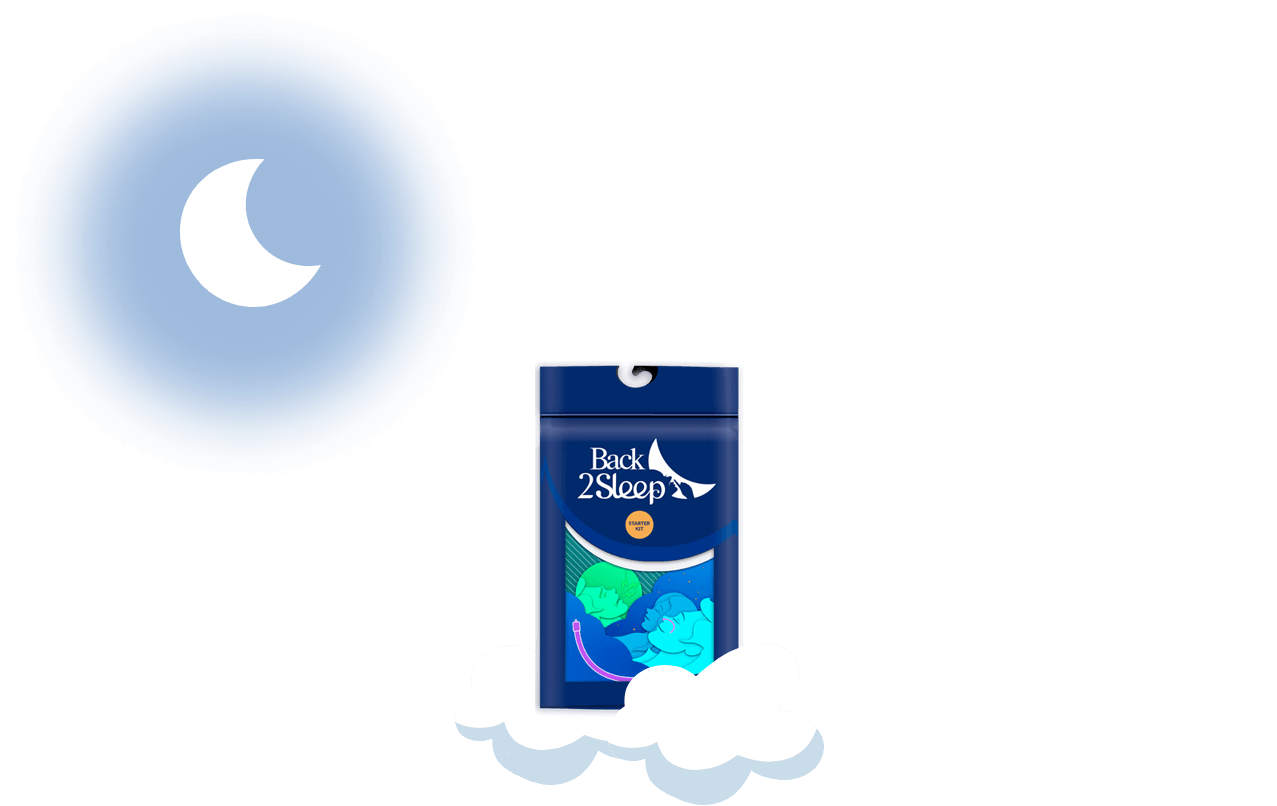
If you deal with sensitive skin or seasonal allergies, putting a device inside your nose every night raises a fair question: is a nasal stent safe for sensitive skin and allergies, or could it be linked to a reaction? Back2Sleep is a soft, medical-grade silicone tube that sits just inside each nostril overnight, gently holding the nasal airway open so air moves more freely. Before looking at the allergy question, it helps to understand how nasal stents work inside the nose, because the way the device sits changes what it can and cannot expose you to.
The stent itself contains no latex, no metal, and no added fragrance or preservative. Those four ingredients are responsible for the large majority of contact allergies linked to skin- and nasal-contact products, so removing them from the material list is the first and most practical layer of protection for allergy-prone users. The silicone used is medical-grade, meaning it is formulated and tested specifically for prolonged contact with human tissue rather than general industrial or cosmetic use.
Not all silicone is equal in this respect. Food-grade or general consumer silicone (the kind used in kitchen tools or phone cases) is not held to the same testing standard as medical-grade silicone used in a device that contacts mucosal tissue for hours every night. Medical-grade silicone goes through a documented purification and testing process specifically because it will sit against living tissue repeatedly over an extended period, which is a materially different exposure than a one-off touch against outer skin.
The starter kit also comes in four sizes, which matters for sensitive users in a practical way: a stent that fits too tightly can lead to pressure-related irritation that has nothing to do with the material itself, so getting the right size reduces mechanical friction alongside the chemical safety profile already built into the silicone.
- Medical-grade silicone is purified and tested to a higher standard than everyday consumer silicone.
- It is specifically evaluated for repeated, prolonged tissue contact.
- Correct sizing reduces mechanical irritation separately from any material-related risk.

Everyday Care Habits That Lower Irritation Risk for Anyone
Good hygiene habits reduce irritation risk regardless of how allergy-conscious the material itself is. A clean device and clean hands remove an entirely separate source of nightly nasal irritation: bacteria, residue, and environmental allergens that have nothing to do with the silicone.
Washing your hands before inserting the stent, rinsing the device each morning with mild soap and water, and letting it air-dry fully before the next use are simple habits that prevent buildup. For allergy-prone users specifically, avoiding scented soaps or alcohol-based wipes on the device is worth noting, since fragranced cleaning products can themselves introduce the very irritants the silicone was chosen to avoid in the first place.
- Clean hands and a clean device prevent irritation unrelated to the silicone material.
- Air-drying fully between uses avoids residue buildup.
- Fragranced or alcohol-based cleaning products can undo the benefit of a fragrance-free device.

Nasal Stent Safety for Sensitive Skin and Allergies Starts With Placement
The single biggest difference between Back2Sleep and many other snoring aids is where it touches the body. Back2Sleep is a mucosal-contact device: it rests against the moist lining just inside the nostril, not against dry outer skin. It uses no adhesive, no tape, and no glue of any kind, which removes the factor most often linked to reactions from external snoring products altogether.
External nasal strips and adhesive patches, by contrast, are skin-contact products. They rely on a sticky layer to hold their shape across the bridge of the nose, and that adhesive layer is where most reported irritation, redness, and mild allergic contact dermatitis is typically linked — not to the strip's backing material itself. Because Back2Sleep has no adhesive component, this specific risk pathway does not apply to it in the same way.
| Product type | Contact surface | Main allergen risk | Adhesive involved |
|---|---|---|---|
| Back2Sleep nasal stent | Internal nasal mucosa | Rare silicone sensitivity | No |
| External adhesive nasal strips | Outer skin, nose bridge | Adhesive contact dermatitis | Yes |
| Chin straps and headgear | Face, jaw, ears | Fabric, elastic, buckle metal | No, but friction and metal contact |
| Metal-containing dilator clips | Outer nostril skin | Nickel release on contact | No |
- Back2Sleep sits against internal nasal mucosa, not outer skin.
- It uses no adhesive, removing the factor most often linked to allergic reactions in external strips.
- Adhesive-based products carry a fundamentally different allergy risk profile.
The CE Certification and ISO Testing Behind the Safety Claim
Back2Sleep is not just described as hypoallergenic on a marketing page — that claim has to be backed by a regulatory file. Back2Sleep is a CE-certified Class I medical device under EU Medical Device Regulation 2017/745, and you can read the full detail of what CE-certified Class I actually means for you. Part of that certification file includes biocompatibility testing on the exact silicone used in the finished device, not a generic material sample.
Specifically, manufacturers of skin- and mucosa-contact medical devices in the EU must satisfy ISO 10993-10 (skin sensitization) and ISO 10993-5 (cytotoxicity) as part of the biological evaluation required for CE marking. In plain terms, this means the silicone has been laboratory-tested to confirm it does not provoke a sensitization response or damage living cells on contact — this is a formal, auditable standard, not a self-declared label.
Metal content matters too. Under the EU's nickel restriction, now folded into REACH Annex XVII, articles intended for prolonged skin contact must release less than 0.5 micrograms of nickel per square centimetre per week, with an even stricter 0.2 microgram limit that applies specifically to jewellery posts inserted through piercings. Back2Sleep contains no metal at all, so neither limit represents a real exposure pathway for the device.
- CE Class I certification requires documented biocompatibility testing, not a marketing claim.
- ISO 10993-10 and 10993-5 test specifically for skin sensitization and cytotoxicity.
- Zero metal content means the EU nickel release limits are a non-issue for this device.
How Common Are Skin and Contact Allergies Across Europe
Contact allergies are more common than most people assume, which is exactly why material choice matters so much for a device worn every night. Roughly a quarter of the general European population reacts to at least one substance on the standard patch-test panel used by dermatologists (Diepgen et al., British Journal of Dermatology, 2016).
Nickel is the single most common allergen on that panel at roughly 14.5% prevalence, which is one reason the absence of any metal in Back2Sleep is a meaningful design choice rather than a footnote (Diepgen et al., 2016). Separately, self-reported sensitive skin affects an estimated 44% of the European population, with a noticeably higher rate among women than men (Chen et al., Journal of the European Academy of Dermatology and Venereology, 2020). Latex allergy, by comparison, sits far lower at around 4.3% on average across the general population (Wu et al., Journal of Occupational Health, 2016), but it remains one of the two allergens most frequently flagged on medical device safety data sheets — alongside nickel — which is why both are explicitly addressed in Back2Sleep's material composition.
- Around 1 in 4 Europeans reacts to at least one common contact allergen.
- Nickel and latex are the two allergens most relevant to medical device safety.
- Back2Sleep is formulated without either, addressing the two most statistically likely allergens.
Is Silicone Hypoallergenic, and What Are the Limits
Medical-grade silicone is widely regarded as one of the least reactive materials used in devices worn on or in the body, which is why it appears in everything from catheters to cochlear implant components. "Hypoallergenic" means a substance is formulated to minimize the likelihood of an allergic reaction — it is a statistical reduction in risk, not a guarantee of zero risk for every single person.
True silicone hypersensitivity is genuinely rare, but it does exist, and a small number of people react to silicone-based products even after passing standard biocompatibility testing. This is an important distinction: hypoallergenic materials lower the odds dramatically compared with latex, metal, or fragranced adhesives, but they cannot claim to be risk-free for every individual nose.
- Hypoallergenic silicone reduces risk substantially but does not eliminate it entirely.
- Genuine silicone hypersensitivity is rare but real.
- People with a known device allergy, active nasal flare-ups, or recent surgery should consult a specialist first.
What to Do if a Nasal Stent Irritates Your Nose
Mild, temporary adjustment sensations in the first few nights are common with any new intranasal device and are not the same thing as an allergic reaction. Genuine irritation from material sensitivity tends to involve persistent redness, itching, or swelling of the nasal lining that does not settle after the first week of use.
1Remove and inspect
Take the stent out and check the nostril for redness, swelling, or soreness rather than pushing through discomfort.
2Try a different size
Back2Sleep's starter kit includes four sizes; discomfort is often a fit issue rather than a material reaction, so a smaller or larger size may resolve it entirely.
3Keep it clean and dry
Rinse the stent with mild soap and water and let it dry fully between uses, since residue buildup can mimic irritation that has nothing to do with the silicone itself.
4Stop and seek advice if it persists
If redness, itching, or swelling continues beyond a few nights, stop using the device and speak with a pharmacist, GP, or ENT specialist, and consider the 30-day money-back option if it is simply not the right fit for you.
- Brief adjustment discomfort is normal; persistent redness or swelling is not.
- Sizing issues are far more often linked to discomfort than material sensitivity.
- Stop use and consult a professional if symptoms persist beyond the first week.
The Bottom Line on Nasal Stents for Sensitive Skin and Allergies
For most people with sensitive skin or common allergies, Back2Sleep's material profile addresses the specific allergens most often linked to a reaction: no latex, no nickel or other metal, no fragrance, no adhesive, and a CE-certified biocompatibility file behind the finished device. That combination is a meaningfully more cautious approach than a generic "hypoallergenic" label with no regulatory backing.
Back2Sleep, made by a French company based in Paris, is intended for primary snoring and mild-to-moderate obstructive sleep apnoea, not as a treatment for allergies or allergic rhinitis themselves, and not as a substitute for CPAP therapy in severe sleep apnoea. If you have a known silicone allergy, an active nasal flare-up, or you have had recent nasal surgery, a short conversation with a doctor before your first night is the safest way to start.

What Back2Sleep Users Say
Frequently Asked Questions
Is a nasal stent safe if I have sensitive skin?
For most sensitive-skin users, yes. Back2Sleep uses latex-free, nickel-free, fragrance-free medical-grade silicone that has passed ISO 10993 biocompatibility testing under its CE Class I file. It sits against internal nasal mucosa rather than outer skin, avoiding adhesive contact dermatitis entirely. Anyone with a known device allergy should still check with a doctor first.
Can nasal dilators cause an allergic reaction?
Any device worn on or in the body can be linked to a reaction in rare cases, and nasal dilators are no exception. Internal stents avoid adhesive-related dermatitis, the factor most often linked to reactions with external strips, but genuine silicone hypersensitivity, though uncommon, does exist. Persistent redness or swelling after the first week warrants a pause and medical advice.
Are nasal stents made of latex?
No. Back2Sleep is made entirely from medical-grade silicone with no latex content anywhere in the device. Latex allergy affects an estimated 4.3% of the general population on average (Wu et al., 2016), making latex-free construction a meaningful safety feature for sensitive users rather than a minor marketing detail.
Is silicone hypoallergenic?
Medical-grade silicone is widely considered hypoallergenic, meaning it significantly lowers the statistical likelihood of a reaction compared with latex, metal, or fragranced adhesives. It is not risk-free for every person, however; genuine silicone hypersensitivity is rare but documented, so hypoallergenic should be read as low-risk, not zero-risk.
What should I do if a nasal stent irritates my nose?
Remove the stent and check for redness or swelling first, since a sizing issue is more often linked to the problem than a material reaction. Try Back2Sleep's other included sizes, keep the device clean and dry, and stop use to consult a pharmacist, GP, or ENT specialist if irritation persists beyond a week.
Is Back2Sleep a CE-certified medical device?
Yes. Back2Sleep is a CE-certified Class I medical device under EU Medical Device Regulation 2017/745, made by a French company based in Paris. Its certification file includes ISO 10993 biocompatibility testing on the exact silicone used in the finished product, for primary snoring and mild-to-moderate sleep apnoea.
Are nasal dilators safe for people with eczema or rhinitis?
People with active eczema inside the nostril or a current allergic rhinitis flare should speak with a doctor before starting any intranasal device, including Back2Sleep. Once mucosal tissue is calm, the fragrance-free, latex-free, nickel-free silicone carries a lower irritation profile than adhesive-based alternatives, but individual flare-ups should settle first.
Ready for quieter nights? Discover the Back2Sleep starter kit and find the right fit for you.
Not sure if you are at risk? Take our sleep risk screening to find out in just a few minutes.
Want to learn how it works? Explore the Back2Sleep nasal stent designed for comfortable, effective relief.