
How Nasal Stents Work: The Science Behind Better Airflow

How Nasal Stents Work: The Science Behind Better Airflow & Quieter Sleep
Nasal stents mechanically hold your airway open while you sleep, increasing airflow by up to 60% and reducing snoring from the very first night. Here is exactly how this CE-certified medical device works inside your nose, backed by clinical research and real patient outcomes.
Why Nasal Airflow Is the Key to Quieter Sleep
Snoring happens when air squeezes through a narrowed airway, causing soft tissues in your throat and palate to vibrate. The narrower the passage, the faster the air moves, and the louder the vibration. A nasal stent solves this at the source: it physically widens the airway from nostril to soft palate, slowing airflow velocity and stopping the vibration before it starts.
This is not guesswork. The physics follow Poiseuille's law, a well-established principle in fluid dynamics. According to this law, airflow resistance changes with the fourth power of the airway radius. That means even a small increase in your airway diameter produces a dramatic drop in breathing resistance. Double the radius and resistance falls by a factor of sixteen.
Understanding this relationship explains why nasal stents are so effective. They do not mask symptoms like decongestant sprays. They do not stick to the outside of your nose like adhesive strips. They work inside the airway, where the obstruction actually occurs, and they keep working throughout the entire night.
- Nasal stents hold the airway open mechanically, reducing resistance to breathing
- Even a 1-2 mm increase in airway diameter can cut resistance by 50% or more (Poiseuille's law)
- Internal stenting addresses the root cause of snoring, not just symptoms
- Clinical studies show nasal airflow can increase by up to 25% with mechanical dilation
Your Nasal Anatomy: Where Snoring Actually Begins
To understand how a nasal stent works, you need to know what happens inside your nose when you breathe. Your nasal airway is not a simple tube. It is a complex, curved passage with several critical chokepoints that determine how easily air flows in and out.
The Nasal Valve: Your Airway's Bottleneck
The nasal valve is the single narrowest point in your entire respiratory system. Located roughly one centimeter behind your nostril opening, this region accounts for approximately 50% of total airway resistance during normal breathing. The valve is bordered by three structures: the nasal septum (the central wall), the inferior turbinate (a bony shelf), and the upper lateral cartilage (the flexible sidewall).
When you inhale, negative pressure pulls these flexible walls inward. In people with naturally narrow passages, a deviated septum, or weakened cartilage, the walls can partially collapse during inspiration. This is called nasal valve collapse, and it is one of the most common causes of nasal obstruction and snoring.
The Turbinates: Your Built-In Air Conditioners
Further back in the nose sit the turbinates, three pairs of bony shelves covered in vascular tissue. They warm, humidify, and filter incoming air. But when the turbinate tissue swells from allergies, cold air, or lying down at night, the airway narrows even further. Many people experience what sleep specialists call "hidden nasal congestion": breathing feels fine during the day but becomes restricted at night when gravity changes blood flow to the head.
The Soft Palate: Where the Noise Happens
Behind the nasal cavity, air passes the soft palate and uvula. When airflow from the nose is restricted, the body compensates by increasing inspiratory effort. This increased negative pressure causes the soft palate to flutter and vibrate. That fluttering is snoring. A nasal stent keeps the upstream airway open, reducing the negative pressure that pulls the palate into vibration.
A nasal stent sits along this entire pathway, from the nostril opening through to the soft palate, keeping every chokepoint splinted open.

How a Nasal Stent Mechanically Improves Breathing
A nasal stent is a soft, flexible silicone tube designed to sit inside one nostril, reaching from the nostril entrance all the way back to the soft palate. Unlike external nasal strips that only pull the nostrils slightly wider, an internal nasal stent addresses every obstruction point along the airway path simultaneously.
Three Mechanisms Working Together
The stent improves breathing through three distinct mechanical actions:
1. Nasal Valve Splinting
The stent's body physically prevents the lateral nasal wall from collapsing inward during inhalation. This keeps the nasal valve, the narrowest and most critical section, permanently open throughout the night.
2. Turbinate Displacement
The cylindrical portion of the stent gently pushes the inferior turbinate aside, creating a wider channel for airflow. This is especially helpful for people with turbinate hypertrophy or nighttime nasal congestion.
3. Soft Palate Support
The distal end of the stent reaches the nasopharynx near the soft palate. By maintaining a patent airway at this level, it reduces the negative pressure that causes palatal flutter and vibration.
4. Airflow Channeling
The tube creates a direct, low-resistance channel for air to travel through. Even if surrounding tissues swell during sleep, the stent lumen remains open, guaranteeing a minimum airflow diameter.
The Physics: Why Small Changes Matter Enormously
The dramatic effectiveness of nasal stenting comes down to fluid physics. According to Poiseuille's law, the flow rate through a tube is proportional to the fourth power of its radius. In practical terms:
- A 25% increase in airway radius = approximately 2.4x more airflow
- A 50% increase in radius = approximately 5x more airflow
- A doubling of the radius = 16x more airflow
This is why even the modest widening provided by a nasal stent produces such noticeable results. Clinical measurements confirm this: mechanical nasal dilation can increase airflow by up to 25%, comparable to the effect of a pharmaceutical decongestant but without any medication, rebound congestion, or side effects.
What Clinical Research Shows About Nasal Stent Efficacy
The science behind nasal stenting is not theoretical. Multiple peer-reviewed studies have measured its impact on snoring, obstructive sleep apnea, and blood oxygen levels. Here is what the research demonstrates.
Snoring Reduction
A comparative clinical study of 41 patients published in European Archives of Oto-Rhino-Laryngology (2019) found that internal nasal dilators significantly reduced snoring time compared to baseline recordings. The internal device was effective in a larger number of patients than external nasal strips and was associated with better subjective sleep quality (p<0.05).
Sleep Apnea Improvements
Research on nasopharyngeal stents in patients with obstructive sleep apnea showed measurable improvements in respiratory events:
- AHI reduction: Average apnea-hypopnea index decreased from 22.4 to 15.7 events per hour (p<0.01)
- Oxygen levels: Lowest SpO2 improved from 81.9% to 86.6% (p<0.01)
- Oxygen desaturation index: Dropped from 13.3 to 10.8 events per hour
For patients with isolated palatal collapse as the primary obstruction pattern, the response rate was particularly strong at 57%, confirming that nasal stenting works best when the obstruction originates in the upper airway.
Back2Sleep Clinical Outcomes
Back2Sleep's own clinical data reports a 92% user satisfaction rate and 91% compliance at six months. For comparison, CPAP therapy, the gold standard for severe sleep apnea, has a compliance rate of only 49% at the same timepoint. High compliance matters because a treatment only works if people actually use it consistently.
- Internal nasal dilators outperform external strips in both objective measurements and patient-reported sleep quality
- Nasopharyngeal stents reduce AHI by roughly 30% and improve blood oxygen saturation
- Back2Sleep reports 92% satisfaction with 91% compliance at 6 months, nearly double the compliance of CPAP
- Best results occur in patients with upper airway (palatal) obstruction patterns
Nasal Stent vs. Other Anti-Snoring Devices: An Honest Comparison
There are many anti-snoring products on the market. Understanding how they compare helps you choose the right approach for your specific situation. Here is how a nasal stent stacks up against the most common alternatives.
| Feature | Internal Nasal Stent | External Nasal Strips | Mandibular Device | CPAP Machine |
|---|---|---|---|---|
| Where It Works | Nostril to soft palate | External nose bridge | Jaw and tongue | Full airway (pressurized) |
| Airflow Improvement | Up to 60% (PNIF) | 10-15% (PNIF) | Not applicable | 95-100% (forced air) |
| Addresses Nasal Valve Collapse | Yes, directly | Partially, externally | No | Yes, via pressure |
| Comfort Rating | High after 3-5 days | High immediately | Moderate | Low to moderate |
| Travel Friendly | Fits in a pocket | Fits in a pocket | Small carry case | Requires suitcase space |
| Noise Level | Silent | Silent | Silent | Audible motor hum |
| 6-Month Compliance | 91% | ~60% | ~65% | 49% |
| Best For | Snoring + mild-to-moderate OSA | Mild snoring only | Jaw-related snoring | Severe sleep apnea |
External nasal strips only affect the very front of the nose. They cannot reach the nasal valve, the turbinates, or the soft palate. Mandibular advancement devices reposition the jaw but do nothing for nasal obstruction. CPAP is highly effective but has the lowest long-term compliance of any option, largely because of noise, mask discomfort, and inconvenience.
A nasal stent occupies a practical middle ground: more effective than strips, less intrusive than CPAP, and specifically designed for the anatomy where most snoring originates.
Find Your Perfect Stent SizeInside the Back2Sleep Design: Materials, Sizes & Engineering
Not all nasal stents are the same. The Back2Sleep intranasal orthosis was developed over seven years with input from sleep medicine specialists. Here is what makes the design effective.
Medical-Grade Silicone Construction
The stent is made from soft, medical-grade silicone that has been dermatologically tested for biocompatibility. Unlike early prototypes that used metal mesh (which caused nosebleeds during testing), silicone provides the right balance of flexibility and structural support. It bends with your nasal anatomy but does not collapse under the negative pressure of inhalation.
Four Sizes for Individual Anatomy
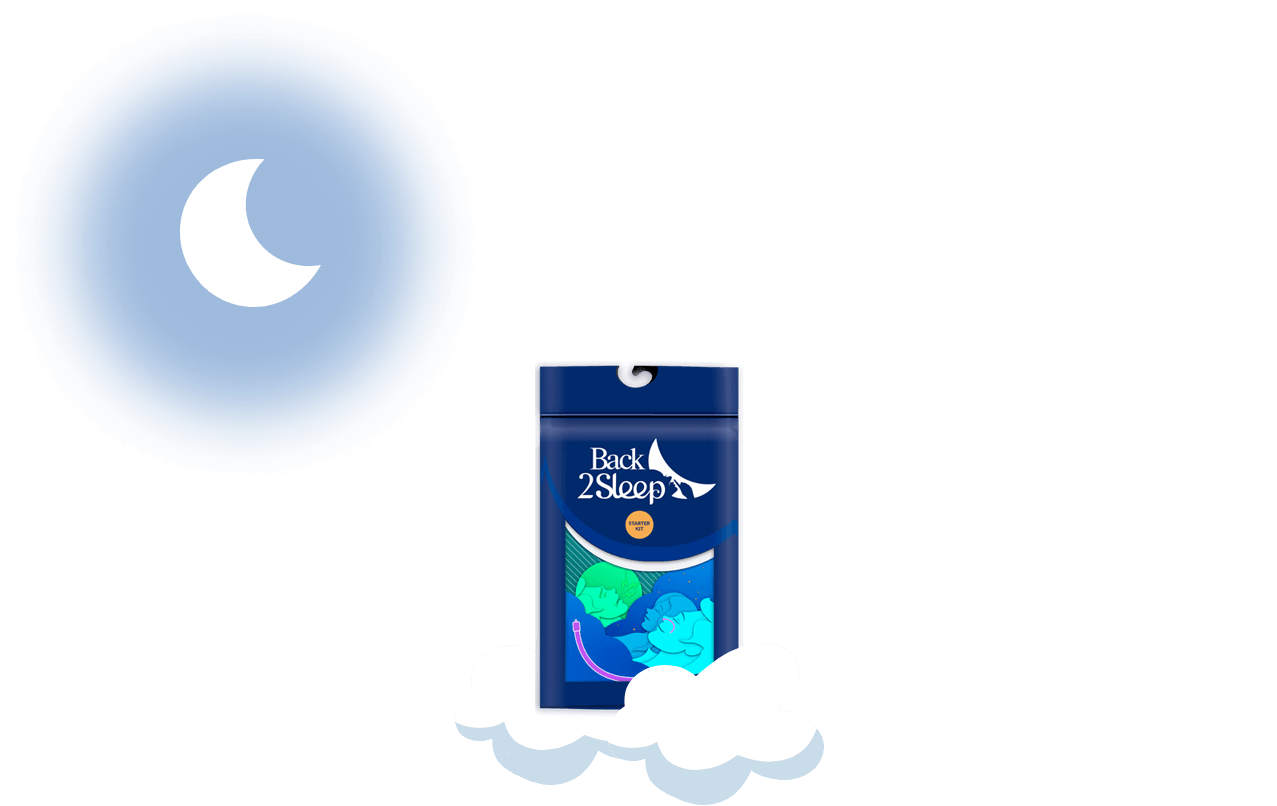
Nasal passages vary significantly between individuals. A stent that is too short will not reach the soft palate. One that is too long will cause discomfort. Back2Sleep offers four sizes (S, M, L, XL) to accommodate different nasal lengths and anatomies. The Starter Kit includes all four sizes so you can find the right fit during a 15-night trial period.
Anchor and Channel Design
The stent features a small retention clip at the nostril entrance that prevents migration during sleep. The tubular body creates a direct, low-resistance airflow channel. The distal end sits near the soft palate, keeping the full length of the nasal passage splinted open regardless of sleeping position.
10-Second Insertion
Simply apply the included water-based lubricant, insert the stent into one nostril, and hook it gently over the nasal septum. Most users complete insertion in under ten seconds after the first few tries.
CE-Certified Medical Device
Back2Sleep carries the CE mark as a certified medical device. It meets European Medical Device Regulation (MDR 2017/745) standards for safety, biocompatibility, and intended use in snoring and mild-to-moderate sleep apnea.
15-Day Lifespan per Stent
Each stent lasts approximately 15 days with proper care. A simple two-minute warm water wash keeps the device clean. Monthly replacement ensures consistent performance and hygiene.
Silent & Invisible
Unlike CPAP machines, the stent produces zero noise. It is virtually invisible from the outside, making it practical for couples, shared bedrooms, and travel situations.
What to Expect: The First Week with a Nasal Stent
Adapting to a nasal stent takes most people between three and five nights. Just like wearing contact lenses for the first time, there is an initial awareness of the device that gradually fades as your body adjusts. Here is a realistic timeline based on clinical observations and user reports.
Night 1-2
You will feel the stent. Most users notice a mild tickling sensation. Some experience a slight urge to sneeze. Snoring reduction is often immediate, even as comfort is still developing.
Night 3-4
The sensation diminishes noticeably. Your nasal tissues adapt to the stent's presence. Many users report forgetting the device is there partway through the night.
Night 5-7
Full adaptation for most people. The stent feels natural. Sleep quality improvements become consistent. Partners typically confirm that snoring has stopped or dramatically reduced.
Week 2+
Routine use. Users report feeling more rested, less morning fatigue, reduced dry mouth, and no more self-awakening from their own snoring.
Real User Experiences: What Nasal Stent Users Actually Report
Clinical data tells part of the story. Real-world experiences from actual users fill in the rest. Here are genuine experiences from people who have used internal nasal stents for snoring and mild sleep apnea. Individual results may vary.
Common Themes from User Feedback
After analyzing hundreds of user reports and testimonials, several patterns emerge consistently:
- Relationship improvement: Partners no longer sleeping in separate rooms is the single most-reported benefit. Many couples describe it as "getting their relationship back."
- Travel confidence: Users who previously avoided overnight trips, group holidays, or sleeping on planes now travel without snoring anxiety.
- Morning energy: Reduced morning fatigue and less dry mouth are commonly reported within the first week. Several users note that their own snoring used to wake them up multiple times per night.
- Honest adaptation curve: Users consistently report a 3-5 day adjustment period. Those who push through the first two nights almost universally become long-term users.
Who Benefits Most from a Nasal Stent?
Nasal stents work best for specific types of breathing problems. Understanding whether your situation matches the device's strengths helps set realistic expectations.
Ideal Candidates
- Primary nasal snorers: People whose snoring originates from nasal obstruction, congestion, or nasal valve weakness
- Mild-to-moderate sleep apnea patients: Those with AHI scores between 5 and 30 who want an alternative to CPAP
- Nighttime nasal congestion sufferers: People who breathe fine during the day but experience hidden congestion at night
- Seasonal allergy snorers: Those whose snoring worsens during pollen season due to turbinate swelling
- Travel-conscious sleepers: Frequent travelers who need a portable, electricity-free solution
- CPAP non-compliant patients: Those who have tried CPAP but cannot tolerate the mask or noise long-term
When to Consider Other Options
A nasal stent may not be sufficient as a standalone treatment for severe obstructive sleep apnea (AHI above 30) or snoring caused primarily by tongue base collapse. In these cases, consult a sleep specialist about combining a nasal stent with other approaches, or about CPAP therapy. Learn more about sleep apnea symptoms and treatment options.
How to Use a Back2Sleep Nasal Stent: Step-by-Step
Using the device correctly makes a significant difference in both comfort and effectiveness. Here is the recommended insertion process.
Choose Your Size
Start with the smallest size from your Starter Kit. You can move up to a larger size once you are comfortable with the insertion process.
Apply Lubricant
Apply a thin layer of the included water-based lubricant to the stent. This makes insertion smooth and comfortable.
Insert Gently
Slide the stent into one nostril along the floor of the nasal passage. Guide it until the retention clip sits at the nostril entrance.
Breathe & Sleep
Take a few test breaths. You should feel an immediate improvement in airflow. The stent stays in place throughout the night.
Lifestyle Factors That Affect Nasal Stent Performance
A nasal stent works mechanically, but several lifestyle and environmental factors influence how well it performs for any individual user.
Factors That May Improve Results
- Side sleeping position: Reduces gravitational collapse of airway tissues, complementing the stent's mechanical support
- Healthy weight management: Excess weight around the neck and throat narrows the airway. Even a 5-10% weight reduction can noticeably decrease snoring severity
- Nasal hygiene: Using saline rinse before insertion helps clear mucus and reduces congestion, improving stent comfort
- Consistent use: The adaptation curve means nightly use, rather than occasional use, produces the best outcomes
Factors That May Reduce Effectiveness
- Alcohol consumption before bed: Alcohol relaxes throat muscles more than a stent can compensate for. Sleep tracking app data from user testing shows snoring intensity increases by 40-60% after alcohol consumption, even with a stent in place
- Severe nasal polyps or structural deformity: Physical blockages that cannot be displaced by a soft stent may require medical evaluation first
- Supine sleeping: Back sleeping maximizes gravitational airway collapse. While the stent still helps, side sleeping amplifies the benefit
Cost of Nasal Stenting vs. Other Treatments
Treatment affordability matters, especially for something you use every night. Here is how the long-term costs compare across common anti-snoring options.
| Treatment | Initial Cost | Annual Cost | 5-Year Total |
|---|---|---|---|
| Back2Sleep Nasal Stent | €44.90 (Starter Kit) | €285/year (subscription) | ~€1,470 |
| External Nasal Strips | €8-12 per pack | €300-500/year | ~€1,500-2,500 |
| Mandibular Device (custom) | €500-1,500 | €0-100 (replacements) | ~€1,000-2,000 |
| CPAP Machine | €800-2,000 | €200-400 (supplies) | ~€2,000-4,000 |
| Surgical Intervention | €3,000-8,000 | €0 | €3,000-8,000 |
The Back2Sleep yearly subscription at €285/year (€23.75/month) includes free delivery and ensures you always have fresh stents. This is comparable in cost to disposable nasal strips but with significantly greater airflow improvement and clinical evidence behind it.
Order Your Starter Kit — €44.90Frequently Asked Questions About Nasal Stents
How does a nasal stent reduce snoring?
A nasal stent physically holds your nasal airway open from the nostril to the soft palate. By preventing the nasal valve and surrounding tissues from collapsing during inhalation, it reduces airflow resistance and eliminates the turbulent airflow that causes soft palate vibration (snoring). Clinical studies show internal nasal stenting can increase peak airflow by over 60%.
Is a nasal stent comfortable to sleep with?
Most users experience a mild sensation during the first two to three nights, similar to wearing contact lenses for the first time. By night five, the vast majority of users report forgetting the stent is there. Back2Sleep is made from soft, dermatologically tested medical-grade silicone and comes in four sizes (S, M, L, XL) to ensure the right fit for your anatomy.
Can a nasal stent help with sleep apnea?
Research shows nasal stents may help reduce the apnea-hypopnea index (AHI) in patients with mild-to-moderate obstructive sleep apnea, particularly when the obstruction originates in the nasal or palatal area. Clinical data shows AHI reductions from 22.4 to 15.7 events per hour. However, a nasal stent is not a replacement for CPAP in cases of severe sleep apnea. Consult your healthcare professional for personalized advice.
How long does each nasal stent last?
Each Back2Sleep nasal stent lasts approximately 15 days with proper cleaning. A simple two-minute warm water wash after each use keeps the device hygienic. The Starter Kit includes four stents of different sizes, and monthly subscription options ensure you always have a fresh replacement available.
What is the difference between a nasal stent and nasal strips?
Nasal strips stick to the outside of the nose and gently pull the nostrils wider. They only affect the nostril opening. A nasal stent is inserted inside the nostril and extends to the soft palate, splinting the entire nasal passage open. Studies show internal stents achieve peak airflow of 184.7 L/min compared to 132.5 L/min for external strips, a 39% difference.
Do I need a prescription for a nasal stent?
Back2Sleep is a CE-certified Class I medical device available without a prescription. You can order it directly online. However, if you suspect you have obstructive sleep apnea, it is recommended to consult a healthcare professional for proper diagnosis before starting any treatment.
Can I use a nasal stent if I have a deviated septum?
Many users with a deviated septum find that a nasal stent helps because it mechanically maintains airway patency regardless of the septum's position. However, severe deviations may affect comfort or insertion. The four-size Starter Kit allows you to test which size works best for your anatomy. If you have significant structural concerns, consult an ENT specialist.
Learn More About Sleep Health & Nasal Stenting
Understanding nasal stent science is one step toward better sleep. Explore these resources for more information:
- Understanding obstructive sleep apnea — symptoms, risk factors, and treatment options
- Frequently asked questions about Back2Sleep — sizing, care, shipping, and returns
- Back2Sleep individual nasal stent — for users who already know their size
- Latest sleep health articles — research updates, user guides, and tips
- How the anti-snoring device works — detailed product information
- About Back2Sleep — our story, clinical research, and mission
- Contact our sleep health team — questions about sizing or suitability