
Nasal Stent vs Mouth Taping: Safety, Comfort, and Effectiveness Compared

Nasal Stent vs Mouth Taping: How They Compare on Safety, Comfort & Effectiveness
Mouth taping went viral on TikTok. A 2025 PLOS ONE systematic review found the evidence behind it is weak and the risks are real. Here is what actually works instead.
Why Millions Started Taping Their Mouths Shut at Night
A nasal stent opens your airway from the inside. Mouth taping seals your lips shut and hopes for the best. That single difference decides whether you sleep safely or spend the night fighting your own body for air.
Between 2023 and 2025, mouth taping exploded across TikTok, Instagram, and Reddit. Influencers claimed it could stop snoring, sharpen your jawline, and even clear your skin. Some videos racked up tens of millions of views. Brands rushed to sell specialty tapes at premium prices. The trend became so widespread that pulmonologists, ENT surgeons, and sleep medicine doctors started publishing urgent warnings.
The core promise sounds logical on the surface: tape your mouth closed, breathe through your nose, and snoring disappears. But the human airway does not work that simply. Your nose can become partially blocked from allergies, dry air, or a mild cold while you sleep. When that happens with tape over your mouth, your body has no backup plan. A nasal stent like the Back2Sleep intranasal device takes the opposite approach. It gently holds the nasal passage open from the inside, making nose breathing easier without sealing off your mouth.

How Each Method Actually Works on Your Airway
Mouth Tape: Blocks the Exit
Adhesive strips seal the lips. All air must pass through the nose, regardless of whether the nasal passages are clear. Does nothing to widen the airway itself.
Nasal Stent: Opens the Entrance
A soft silicone tube sits inside one nostril and reaches the soft palate. It physically widens the nasal valve, the narrowest point in your airway, and reduces turbulence that causes vibration.
The Fundamental Difference
Tape restricts one breathing pathway. A stent expands the other. One removes your safety net. The other makes your primary airway work better.
What Happens at 3 AM
Allergies flare. Air dries out your passages. A cold develops. With tape, you gasp and panic. With a stent, the widened airway compensates and you keep breathing.
What the 2025 PLOS ONE Systematic Review Actually Found
In May 2025, researchers published the most comprehensive review of mouth taping evidence to date in PLOS ONE. They analysed 10 studies covering 213 patients using PRISMA guidelines. The conclusions were damning for mouth taping advocates.
Here is what the numbers actually showed:
- AHI reduction in mild OSA only: Lee et al. found AHI dropped from 8.3 to 4.7 per hour (p=0.0002), but only in patients with mild sleep apnea and zero nasal obstruction
- Dangerous for moderate-severe OSA: Three studies (Bhat, Labarca, Osman) showed no significant AHI changes in patients with more severe conditions
- Oxygen levels worsened in one study: Jau et al. found ODI increased from 16.3 to 30.5 events per hour (p=0.037), meaning blood oxygen dropped more often with tape
- Asphyxiation risk documented: Four of ten studies explicitly discussed “serious risk of asphyxiation in the presence of nasal obstruction”
- Sample sizes were tiny: Studies ranged from 9 to 71 participants, with most under 30
The four most positive studies excluded anyone with nasal obstruction, which eliminates the majority of real-world snorers. When you exclude people with stuffy noses from a breathing study, the results tell you very little about typical snorers.
Five Documented Risks of Taping Your Mouth at Night
Dr. Brian Chen, a sleep medicine specialist at Cleveland Clinic, warns: “Having your mouth taped closed forces you to rely on only your nose for air, potentially leading to severe respiratory distress, significant drops in oxygen levels and exacerbation of underlying health issues during sleep.”
Dr. Faisal Zahiruddin, a pulmonologist at Houston Methodist, adds: “Mouth taping may lead to asphyxiation in individuals with nasal obstruction, sleep apnea, regurgitation or acid reflux.”
These are not hypothetical concerns. Here are the four most documented risks:
1. Aspiration During Reflux
If stomach acid rises while your lips are sealed, you cannot expel it. This creates a direct aspiration pathway into the lungs. People with GERD face this risk every night.
2. Panic and Sleep Disruption
Cleveland Clinic and Houston Methodist both report patients waking in panic, ripping tape off, and injuring facial skin. The sealed-mouth sensation triggers fight-or-flight responses that spike heart rate and blood pressure.
3. Worsened Apnea Events
If you have undiagnosed obstructive sleep apnea and partial nasal blockage, taping the mouth forces all breathing through an already compromised pathway. The 2025 review confirmed this with objective data.
4. Adhesive Skin Damage
Nightly adhesive application causes contact dermatitis, perioral rashes, and lip cracking. People with facial hair report the tape pulling out hair and leaving raw patches that worsen over weeks.
The fifth risk is the most insidious: delayed diagnosis. If mouth taping reduces your snoring volume slightly, you might assume the problem is solved. But quieter snoring does not mean safer breathing. The PLOS ONE review noted that reducing the snoring sound while oxygen desaturation episodes increase gives a dangerous false sense of security.
A nasal stent avoids every one of these risks. It adds an airflow channel without removing your backup. You can still open your mouth. You can still cough, swallow, or breathe orally if your nose becomes congested.
Full Comparison: Nasal Stent vs Mouth Tape
| Criteria | Mouth Taping | Nasal Stent |
|---|---|---|
| Mechanism | Seals lips shut; forces nasal breathing | Opens nasal valve internally; reduces airway resistance |
| Medical status | Not approved by any sleep medicine body | CE-certified Class I medical device |
| Evidence base | 10 poor-quality studies, 213 total patients | Clinical trial: REI 22.4 to 15.7 (p<0.01) |
| Addresses root cause | No: does not widen nasal airway | Yes: physically opens nasal passage at valve |
| Backup breathing | Eliminated: mouth is sealed | Preserved: mouth remains free |
| Aspiration risk | Yes: documented in medical literature | None: oral pathway stays open |
| Comfort after adaptation | Low: adhesive pull, claustrophobia reported | High: soft silicone, unnoticeable after 3-5 nights |
| Works with congestion | Dangerous: blocks only remaining airway | Helpful: stent holds passage open despite mild swelling |
| Skin irritation | Common: adhesive rashes, lip peeling | None: medical-grade silicone, no adhesive |
| Reusable | No: single-use disposable | Yes: each stent lasts approximately 15 days |
| Environmental impact | 365 adhesive strips per year in landfill | 24 small silicone stents per year |
| Cost per night | Approximately 0.30 to 0.50 EUR | Approximately 1.16 EUR on monthly plan |
Who Should Never Try Mouth Taping
The Sleep Foundation, Cleveland Clinic, and Houston Methodist all publish nearly identical contraindication lists. If any of the following apply to you, mouth taping is not just ineffective. It is genuinely dangerous:
- Nasal congestion, chronic rhinitis, or deviated septum — your nose cannot handle 100% of your breathing load
- Undiagnosed or untreated obstructive sleep apnea — taping masks symptoms while oxygen levels drop
- Gastroesophageal reflux disease (GERD) — sealed lips plus acid reflux creates aspiration risk
- Asthma or COPD — any additional breathing restriction is medically contraindicated
- Anxiety or panic disorder — the sealed-mouth sensation triggers panic episodes that worsen sleep quality
- Facial skin conditions or sensitivities — nightly adhesive application aggravates dermatitis
- Children — no medical body recommends mouth taping for any child, ever
None of these conditions prevent someone from using a nasal stent. The stent is suitable for adults with nasal or palatal snoring and for those with mild to moderate sleep apnea, with clinical data showing a Respiratory Event Index reduction from 22.4 to 15.7 (p<0.01) and lowest SpO2 improving from 81.9% to 86.6% (p<0.01).
Skip the Tape. Open Your Airway Instead.
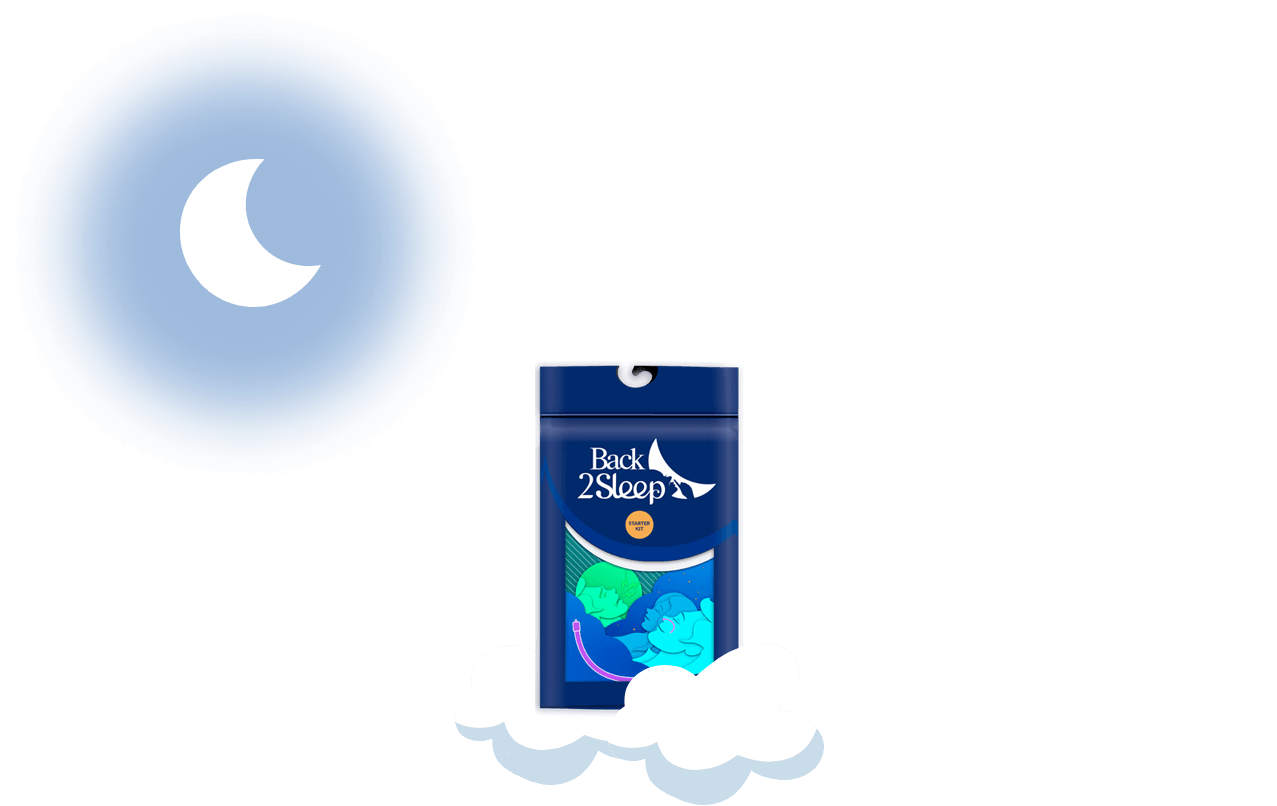
The starter kit includes 4 sizes (S, M, L, XL) for a 15-night trial. No adhesive. No restrictions. No panic at 3 AM.
Get the Starter Kit — 44.90 EURWhat People Actually Experience with Each Method
Online forums are full of mouth taping stories that follow a predictable pattern. The first night feels strange. The second night feels slightly better. Then sometime around night three or four, something goes wrong.
A sleep product editor described it bluntly: “Even when I drifted off breathing comfortably through my nose, after a few hours I inevitably woke up feeling anxious, panicked, and, on one terrible occasion, stuck in a thwarted coughing fit.” Another writer reported: “I didn’t experience any anxiety initially, but I did when I woke up in the middle of the night. It sent my heart racing and I sat bolt upright to rip the tape off my mouth.”
Emergency physicians report seeing patients who tear off tape in panic during the night, sometimes pulling skin and irritating their lips in the process. A 2022 study with 10 participants found that people continued attempting to breathe through their mouths despite the tape, meaning the body actively fought the restriction rather than adapting to it.
The adaptation curve for a nasal stent runs about 3 to 5 nights, similar to mouth tape. The difference is what you are adapting to. With tape, you adapt to restriction and the constant temptation to rip it off. With a stent, you adapt to a small silicone tube that most people stop noticing entirely after the first week. One user compared it to wearing contact lenses for the first time: “strange for two days, invisible after that.”
The Numbers Behind Each Approach
The contrast is stark. Mouth taping relies on a handful of tiny, methodologically weak studies that excluded the very patients who need help most. The nasal stent approach has measurable, peer-reviewed clinical outcomes: REI dropped from 22.4 to 15.7, and the lowest blood oxygen saturation improved from 81.9% to 86.6%. These are objective numbers from monitored sleep studies, not self-reported TikTok testimonials.
Can You Combine Mouth Tape with a Nasal Stent?
Some biohacking forums suggest using both simultaneously. While physically possible, it defeats the safety advantage of a stent. The entire point of expanding the nasal airway is that your body naturally shifts to nose breathing without losing the option of mouth breathing. Once nasal airflow improves, the mouth tends to stay closed on its own. Your jaw relaxes. The vibration that causes snoring decreases.
Adding tape to a stent reintroduces every risk of mouth taping — aspiration danger, panic episodes, skin damage — with zero additional snoring benefit. If the stent alone is not reducing snoring enough, the answer is not more restriction. It is sizing up, consulting a sleep specialist, or investigating whether you have a condition that requires a different treatment entirely.
Explore more about how intranasal devices address snoring at its source.
How to Get Started with a Nasal Stent Instead of Tape
Order the Starter Kit
The starter kit includes four sizes (S, M, L, XL), lubricant, and a usage guide. It gives you 15 nights to find your fit.
Insert in 10 Seconds
Apply a drop of water-based lubricant, insert the stent into one nostril, and position the tip near the soft palate. The entire process takes less time than unwrapping a piece of tape.
Adapt Over 3-5 Nights
Most people notice the stent less and less each night. By night five, it feels natural. Your partner will likely notice the silence before you notice the comfort.
Need the stent available at a pharmacy near you? Check our location finder. Have questions? Visit our sleep health blog for guides on sizing, cleaning, and getting the best results.
The Verdict: Expansion Beats Restriction
Mouth taping is a social media trend built on weak evidence and real danger. The 2025 PLOS ONE systematic review rated every study as poor quality. Four of ten studies flagged asphyxiation risk. The best results came only from patients with mild OSA and clear nasal passages — a population that represents a fraction of the people actually buying mouth tape online.
A nasal stent is a CE-certified medical device with published clinical outcomes, over a million units sold, and a safety profile that does not require you to gamble on whether your nose stays clear all night. It opens your airway instead of closing your mouth. It preserves your backup breathing pathway instead of eliminating it.
The adaptation period is similar for both methods, about 3 to 5 nights. But with a stent, you adapt to something that makes breathing easier. With tape, you adapt to something that makes breathing more restricted. That is not a philosophical difference. It is a medical one.
Breathe Better Tonight Without Taping Your Mouth Shut
Over one million people have already chosen the nasal stent. Four sizes included. 15-night trial. Free shipping on subscriptions.
Order Your Starter Kit NowFrequently Asked Questions
Is mouth taping safe for people with sleep apnea?
What does a nasal stent do differently than mouth tape?
Can I still breathe through my mouth while wearing a nasal stent?
How long does it take to get used to a nasal stent?
Is mouth taping cheaper than a nasal stent?
What if I have nasal congestion, can I still use a nasal stent?
What evidence exists for mouth taping reducing snoring?
Read more in our sleep health library or learn about our story.