
Nasal Stent vs Mouth Tape for Snoring: Two Approaches Compared

Nasal Stent vs Mouth Tape for Snoring: Two Approaches Compared
An internal nasal device keeps your airway physically open. Mouth tape forces your lips shut. Which one actually stops snoring—and which one carries hidden risks? Here is what the clinical data and real-world experience tell us.
Why People Snore—and Why the Fix Matters
Snoring happens when soft tissue in the throat and nasal passages vibrates during sleep. The narrower the airway, the louder the rumble. About 45% of adults snore occasionally, and roughly 25% snore every single night. If you are reading this page, chances are you fall into that second group—or you sleep next to someone who does.
Choose Your Size →Two popular over-the-counter fixes dominate the conversation: internal nasal stents (also called nasal dilators) that hold the nasal valve open from the inside, and mouth tape that forces the lips closed so you breathe through your nose. They work through completely different mechanisms, target different root causes, and carry very different safety profiles. Understanding those differences is the first step toward quieter, safer sleep.
If you already know you want to try a clinically supported anti-snoring nasal device, you can skip ahead. Otherwise, read on for a thorough breakdown of each approach.
How Each Device Works: Mechanisms Explained
Internal Nasal Stent
A nasal stent is a small, flexible silicone tube inserted into one or both nostrils. It physically widens the narrowest part of the nasal airway—the nasal valve—which is responsible for up to 70% of total nasal airflow resistance. Some stents extend deeper, reaching the soft palate to gently splint the airway open and reduce the tissue vibration that causes snoring.
Think of it this way: the stent acts like a scaffold inside your nose. Air flows freely, tissue stays in place, and snoring drops. A 2019 study in Acta Biomedica found that internal nasal dilators significantly increased minimum cross-sectional area of the nasal valve and reduced snoring time, with patients reporting better sleep quality than those using external nasal strips.
Mouth Tape
Mouth tape is a strip of adhesive placed over the lips before sleep. The idea is straightforward: if your mouth stays shut, you will breathe through your nose. Nasal breathing is naturally quieter, filters air, and helps maintain better oxygen-CO2 balance. Some tapes include a small breathing vent as a safety backup.
But here is the catch—mouth tape does not actually open your airway. It simply closes one exit. If your nasal passages are even partially blocked, taping your mouth shut forces you to pull air through a restricted channel. That can mean more turbulence, not less.

Four Key Differences at a Glance
Airway Action
A nasal stent physically opens the airway from the inside. Mouth tape does nothing to the airway itself—it only redirects airflow by closing the mouth.
Safety Profile
Nasal stents carry no asphyxiation risk. A 2025 systematic review of 10 studies found that 4 warned mouth tape may cause asphyxiation if nasal passages are blocked.
Reusability
Most nasal stents last up to 15 days per unit. Mouth tape is single-use—one strip per night, adding up to 365 strips per year.
Compatibility
Nasal stents work regardless of facial hair, skin sensitivity, or sleeping position. Mouth tape fails to adhere on beards and can irritate sensitive skin.
Nasal Stent vs Mouth Tape: Full Comparison
| Criteria | Internal Nasal Stent | Mouth Tape |
|---|---|---|
| Mechanism | Physically widens nasal valve & splints airway | Adhesive holds lips closed to force nasal breathing |
| Clinical evidence | Multiple peer-reviewed studies; significant snoring-index reduction (p=0.02) | Limited; only 2 of 10 studies show AHI improvement (mild OSA only) |
| Snoring reduction | 82% of subjects showed reduced max volume; 29.9% average snoring-index drop | 47% snoring-index drop in one small study (n=20, mild OSA mouth-breathers only) |
| Safety risks | Mild nasal irritation in adaptation phase; no breathing obstruction risk | Asphyxiation risk if nasal blockage present; choking risk with vomiting |
| Adaptation time | 3–5 nights (similar to contact lenses) | About 1 week; tape may detach during the night |
| Works with facial hair | Yes | No—adhesive fails on beards and stubble |
| Works with nasal congestion | Yes—stent holds passages open even when swollen | No—forces breathing through a blocked nose |
| Reusable | Yes, up to 15 days per stent | No—single use only |
| Sleep apnea suitability | Supported for mild-to-moderate OSA (REI reduction p<0.01) | Not recommended for moderate/severe OSA |
| Monthly cost (approx.) | €35–€39 | €18–€25 (but no airway opening) |
What the Clinical Research Actually Says
Nasal Stent Data
A clinical trial published in Clinical Medical Reviews and Case Reports tested a nasal airway stent on 23 subjects. Results showed a statistically significant 29.9% decrease in the snoring index (p=0.02) and 82% of participants experienced reduced maximum snoring loudness. Discomfort scores dropped significantly from the first night to the final measurement (p<0.001), confirming that users adapt quickly.
A separate study on the nastent device in Sleep and Breathing (2018) found REI dropped from 22.4 to 15.7 (p<0.01) and lowest blood oxygen levels improved from 81.9% to 86.6% (p<0.01). That is a meaningful improvement for people with obstructive sleep apnea.
In a 2019 head-to-head comparison (Acta Biomedica, 41 patients), internal nasal dilators outperformed external nasal strips: they were effective in a larger number of patients and produced significantly better sleep quality scores.
Mouth Tape Data
A 2025 systematic review in PLOS ONE analyzed every published mouth-taping study—all 10 of them, totaling just 213 patients. The authors rated every single study as poor quality on the Newcastle-Ottawa Scale. Their conclusion: "The existing data does not support mouth taping as a sound clinical intervention for the general population with sleep-disordered breathing."
The most-cited positive study (Lee et al., 2022) tested 20 mild-OSA mouth-breathers and found a 47% AHI reduction. But that study excluded anyone with nasal obstruction—which describes a large portion of real-world snorers. Four of the ten reviewed studies explicitly warned about serious asphyxiation risks.
Real-World Experiences: What Actual Users Report
Nasal Stent Users
Online forums and product reviews reveal a consistent pattern. People who try internal nasal stents report that the first two or three nights feel unfamiliar—like wearing a new pair of contact lenses. By night four or five, most barely notice the device. The payoff is immediate: bed partners report dramatic snoring reduction from the very first night.
One recurring theme in verified buyer reviews: "My wife can finally sleep." Another frequent comment: people who travel for work say the portability is a game-changer. No power source, no tubing, no mask—just a small silicone device that fits in a pocket.
Users who previously tried CPAP often mention the relief of switching to something silent and invisible. As one long-term user put it: "I have been using CPAP for 10 years. This is the first thing that let me sleep without feeling like I am in a hospital."
Mouth Tape Users
The mouth tape community is enthusiastic on social media, but dig into the details and the picture gets more complicated. Many users report waking up with the tape peeled off and stuck somewhere on their pillow or body. Men with any amount of facial hair consistently report adhesion problems.
Several people on sleep forums describe an initial "panic feeling" when they first tape their mouth shut. Most get used to it within a week, but a meaningful percentage simply cannot tolerate the sensation of having their mouth sealed, especially during allergy season or when dealing with a cold.
The biggest complaint: mouth tape does nothing when your nose is stuffy. One user summed it up well: "I taped my mouth shut and spent the whole night trying to breathe through a clogged nose. I would have been better off doing nothing."
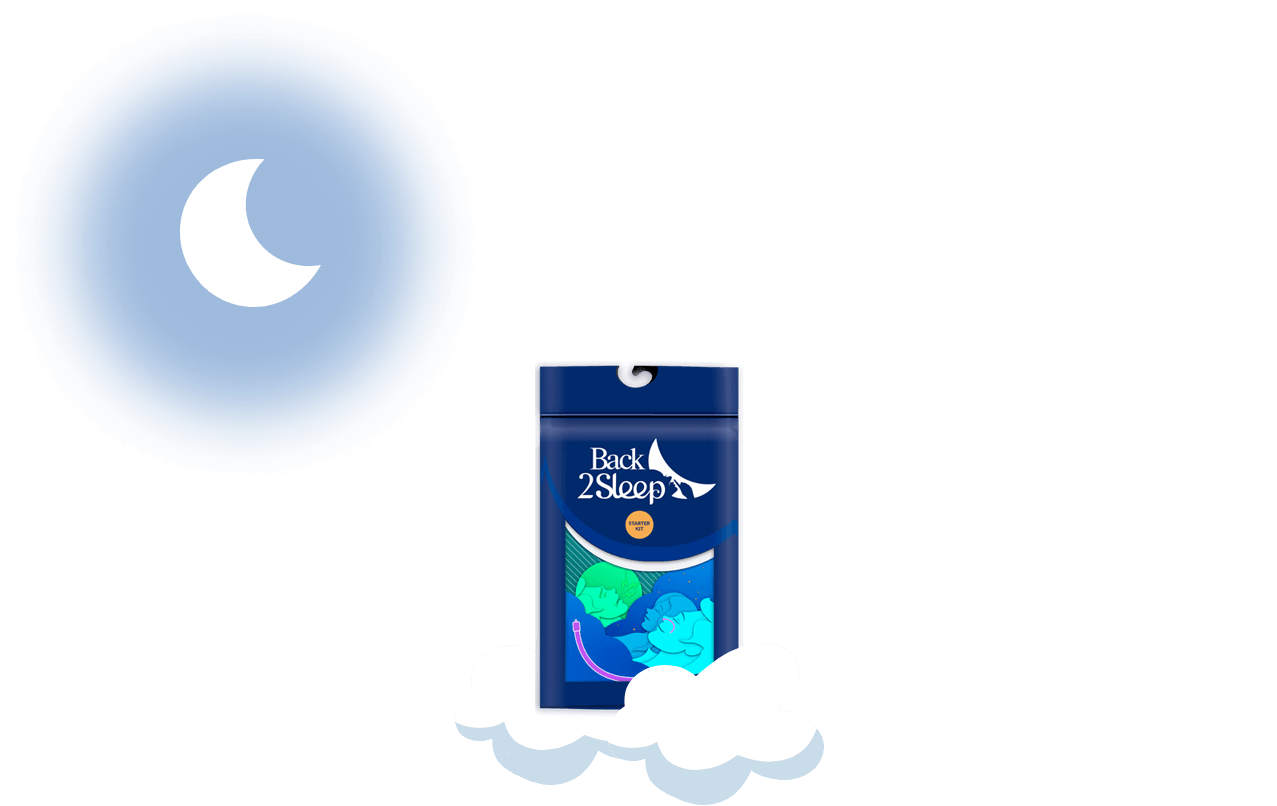
Ready to Breathe Freely Tonight?
The starter kit includes four sizes so you can find your perfect fit. Most users notice quieter sleep from night one.
Get Your Nasal StentSafety: The Factor That Should Drive Your Decision
This is where the two approaches diverge most sharply. A nasal stent sits inside your nose, keeping the airway open. If you need to breathe through your mouth for any reason—a cold, allergies, a sudden cough—you simply can. Nothing is blocking your mouth.
Mouth tape physically seals your lips. If your nasal passages become congested during the night, you are now breathing through a restricted channel with no easy backup. The 2025 PLOS ONE systematic review put it bluntly: four of ten studies warned of serious asphyxiation risk. The Cleveland Clinic, Harvard Health, and WebMD all advise against mouth taping for people with sleep apnea, nasal congestion, or respiratory conditions.
The nasal stent carries no such contraindications. The main side effect is mild nasal irritation during the first few days of use, which resolves as the tissue adapts. Clinical trials report that discomfort scores drop significantly within 5 days (p<0.001).
What Doctors Say
Houston Methodist sleep specialists note: "Mouth tape can be dangerous, especially if you have restricted nasal breathing, as it blocks your only viable airway." The Cleveland Clinic states mouth taping "shouldn't be used if you snore, have sleep apnea or other airway issues."
Internal nasal dilators, by contrast, are recommended by ENT specialists as a first-line non-invasive option. They appear in clinical guidelines as adjunctive therapy for mild-to-moderate sleep-disordered breathing.
Who Should Choose a Nasal Stent vs Mouth Tape
A Nasal Stent Is the Better Choice If You:
- Snore because of nasal congestion, a deviated septum, or nasal valve collapse
- Have mild-to-moderate obstructive sleep apnea
- Have facial hair (beard or stubble)
- Want a reusable device rather than single-use disposables
- Travel frequently and need something silent, portable, and electricity-free
- Have tried CPAP and found it uncomfortable or impractical
- Want a device backed by peer-reviewed clinical trials
Mouth Tape May Work If You:
- Have confirmed mild sleep apnea with zero nasal obstruction
- Are a pure mouth-breather with completely clear nasal passages
- Have no facial hair and no skin sensitivity to adhesives
- Have consulted a doctor who specifically approved mouth taping for your case
Notice how narrow that second list is. The reality is that most snorers have at least some degree of nasal resistance, which makes mouth tape either ineffective or potentially dangerous.
Find Your Perfect Stent SizeCan You Use Both Together? The Combination Question
Some snoring blogs suggest using a nasal dilator and mouth tape simultaneously—the dilator opens your nose while the tape keeps your mouth shut. In theory, this targets two causes at once.
In practice, the combination is unnecessary if the nasal stent is doing its job properly. When the nasal airway is fully open, airflow resistance drops so low that your body naturally defaults to nasal breathing. You do not need tape to keep your mouth closed because there is no airflow pressure forcing it open.
A well-fitted nasal stent that extends to the soft palate addresses both the nasal valve restriction and the pharyngeal collapse that causes snoring. Mouth tape only adds complexity, cost, and risk without a proven additional benefit.
If you feel you need both devices to stop snoring, that is actually a sign you should see a sleep specialist—you may have a more significant airway issue that requires proper diagnosis. Browse our sleep health articles for guidance on when to seek professional evaluation.
Annual Cost Breakdown: Stent vs Tape vs CPAP
| Solution | Monthly Cost | Annual Cost | Notes |
|---|---|---|---|
| Internal nasal stent | €34 | €285–€408 | Reusable; subscription discounts available |
| Mouth tape (branded) | €18–€25 | €216–€300 | Single-use; 365 strips per year |
| CPAP machine | €50–€80 (rental) | €600–€960+ | Plus mask replacements, maintenance, electricity |
Mouth tape looks cheaper on paper. But you are paying for a product with no airway-opening mechanism, limited clinical support, and a safety profile that excludes many snorers. The nasal stent costs more per month but delivers a clinically measurable improvement in airway patency, oxygen levels, and snoring volume.
For travelers and CPAP users looking for an alternative, the stent also eliminates equipment costs, replacement mask expenses, and the hassle of traveling with powered medical equipment. Check pharmacy availability near you for convenient pickup options.
The Long-Term Perspective: Sustainability and Compliance
Any snoring solution only works if you actually use it every night. Compliance is the hidden factor that separates products that work in theory from products that work in practice.
Mouth tape has a compliance problem. Studies show that adhesive strips frequently detach during the night. Users with any nasal congestion abandon the product quickly. The "novelty" factor fades, and the nightly ritual of peeling off tape residue becomes tedious.
Nasal stents have a clear adaptation curve—usually 3 to 5 nights—after which most users report they barely feel the device. Because it is reusable, there is no daily unwrapping or adhesive cleanup. You insert it in 10 seconds, sleep, remove it in the morning, and rinse it off.
Long-term compliance data from nasal stent clinical trials shows that nighttime awakenings progressively decreased across the study period. By the final measurement day, all remaining participants reported waking 0–1 times per night. That kind of sleep continuity translates to better daytime energy, sharper concentration, and reduced cardiovascular strain.
Frequently Asked Questions
Is mouth tape safe to use every night?
Does a nasal stent hurt to insert?
Can mouth tape replace a CPAP machine?
Which option works better for people with allergies?
How long does a nasal stent last?
Can I use a nasal stent if I have a deviated septum?
Does mouth tape work for everyone who mouth-breathes?
Is a nasal stent visible while sleeping?
Stop Snoring Without Taping Your Mouth Shut
Open your airway from the inside with a CE-certified medical nasal stent. Four sizes included—find your fit and sleep quietly from night one.
Order the Starter Kit