
Comparing Boil and Bite and Custom Fit Mandibular Advancement Devices and Whether the Extra Cost Is Justified

Boil and Bite vs Custom-Fit Mandibular Advancement Device Pricing, Fit, and Value for European Snorers
A euro-by-euro look at fit, comfort, longevity, and reimbursement rules across the UK, France, and Germany to see whether a dentist-made device really earns its higher price.
Boil and Bite vs Custom-Fit Mandibular Advancement Device: How They Actually Differ
Boil and bite vs custom-fit mandibular advancement device is the choice most snorers eventually face once a cheap moldable mouthpiece stops feeling like enough. A boil and bite mandibular advancement device is a moldable plastic mouthpiece that you soften in hot water and bite into at home to create a rough impression of your teeth. A custom-fit mandibular advancement device (MAD) is built by a dentist or sleep clinic from a physical mould or digital scan of your jaw, then manufactured to hold your lower jaw in a precise, slightly forward position while you sleep. Both device types work on the same basic mechanism: moving the lower jaw forward to open the airway behind the tongue and reduce vibration in the soft palate. If you have not yet compared specific products, our roundup of mandibular advancement device brands available to European buyers is a useful starting point before you decide between a shop-bought and a dentist-made option.
The real question for most shoppers is not which mechanism works, but whether the extra precision of a custom mould translates into meaningfully better sleep, and whether that improvement is worth several hundred extra euros. Fit accuracy, jaw-position control, and material quality all differ between the two categories, and those differences show up in comfort, adherence, and how long the device actually lasts. Some snorers considering an oral appliance also weigh it against a tongue-retaining device as an alternative oral appliance that does not touch the teeth at all.
| Device type | How it is made | Fit accuracy | Typical EU price | Typical lifespan |
|---|---|---|---|---|
| Boil and bite MAD | Self-moulded at home in hot water | Approximate, prone to loosening | €30-150 | 6-12 months |
| Semi-custom (mailed impression kit) | Impression taken at home, device manufactured off-site | Better than boil and bite, some prefabricated parts | €150-400 | 18-24 months |
| Fully custom, dentist-made | Digital scan or dental impression, titrated in clinic | Highest, built to individual jaw measurements | €500-2,000+ | Around 3 years (36.7 months average) |
| Back2Sleep nasal stent | Soft silicone stent, four sizes, no impression needed | Not applicable, sized rather than moulded | Starter kit around €44.90 | Replaced per pack as needed |
- A boil and bite MAD is self-moulded and cheap; a custom-fit MAD is professionally made from your own jaw measurements.
- Both move the lower jaw forward to open the airway, but fit precision and durability differ sharply between categories.
- A nasal stent works on a different problem (nasal airflow) and is not a substitute for a MAD in diagnosed OSA.

Does a Custom-Fit Mandibular Advancement Device Work Better? What the Research Shows
The honest answer is that custom devices tend to fit better and are tolerated better, but the short-term efficacy gap is smaller than marketing pages often suggest. NICE Guideline NG202, the UK's national clinical guidance on obstructive sleep apnea (OSA), recommends customised or semi-customised mandibular advancement splints over simple ready-made devices, citing better adherence and comfort as the main advantage rather than a dramatic difference in raw breathing scores. A separate review of custom MAD studies since 2005 reported mean reductions in AHI (apnoea-hypopnoea index, a measure of breathing interruptions per hour of sleep) ranging from 30% to 72%, underlining how much outcomes vary between individuals and device designs.
A 2022 randomised controlled trial published in the Journal of Clinical Sleep Medicine compared a noncustom and a custom MAD directly and reached a more nuanced conclusion. It found the two device types were statistically similar in reducing AHI over a 12-week trial period, which complicates the assumption that custom is automatically superior on efficacy alone. Taken together, this evidence suggests a custom device's advantage is less about raw short-term AHI reduction and more about comfort, retention, and whether people keep wearing it for years rather than months.
- NICE Guideline NG202 recommends custom or semi-custom devices over simple ready-made splints, mainly for adherence and comfort.
- A 2022 randomised trial found similar short-term efficacy between custom and noncustom MADs over 12 weeks.
- The real differentiator is long-term comfort and retention, not a dramatic short-term efficacy gap.
Why Most "Custom" Devices in Europe Are Not Fully Custom
Many products marketed as "custom" in Europe are only partly custom, and that distinction matters more than the label suggests. NICE Guideline NG202 itself separates "customised" splints, built entirely from an individual dental impression or digital scan, from "semi-customised" splints that pair a moulded tray with prefabricated parts such as a standard hinge. A device can legally be sold as "custom" while still containing off-the-shelf components, so the label alone does not tell you how bespoke the build really is.
Before paying a premium for a "custom" device, it is worth asking a clinic or supplier a few direct questions to confirm what you are actually buying.
1Ask how the mould is taken
A physical dental impression or a 3D digital scan taken by a trained clinician indicates a genuinely custom process; a mailed self-impression kit is semi-custom at best.
2Ask whether the hinge or advancement mechanism is prefabricated
Many "custom" devices use a standard, off-the-shelf hinge attached to custom trays. That is not necessarily bad, but it is not the same as a fully bespoke appliance.
3Ask if the jaw advancement is titratable
A device that can be adjusted in small increments over follow-up visits allows a dentist to fine-tune your fit, which matters more for effectiveness than the mould method alone.
4Ask for the total cost including follow-up visits
Some clinics quote the device price alone and add titration or review appointments separately, which can add several hundred euros to the figure you were first shown.
- NICE distinguishes "customised" devices from "semi-customised" devices that use prefabricated parts, though both are often marketed simply as "custom".
- A fully bespoke build and a semi-custom build can differ in fit and durability, even under the same marketing label.
- Ask about mould method, hinge type, titration, and total cost before assuming "custom" means fully bespoke.
Boil and Bite vs Custom-Fit Mandibular Advancement Device Costs Across the UK, France, and Germany
Out-of-pocket cost is the single biggest reason snorers default to a boil and bite device, and the gap in Europe is large but varies significantly by country and by whether you have a diagnosed condition. In the UK, a boil and bite or pharmacy MAD typically costs roughly £30-150, while a private custom-fit device made by a dentist commonly runs close to £1,000; the NHS generally only funds a custom device once obstructive sleep apnea has been formally diagnosed, and access varies by local trust.
In France, pricing follows a fixed national reimbursement structure. A custom mandibular advancement device typically costs €300 to €800 out of pocket, and for diagnosed OSA, Assurance Maladie reimburses 60% of a fixed €150 base rate (about €90), a cover that is renewable every two years and requires prior authorisation. A device bought purely for snoring, with no OSA diagnosis, is not reimbursed at all. Germany takes the strictest approach: since 1 January 2022, the statutory health insurance system (GKV) has covered custom-made mandibular protrusion splints in full, with no patient co-payment, for adults with mild-to-moderate OSA when CPAP therapy has failed or is not tolerated, but it excludes industrially manufactured boil and bite splints from any reimbursement.
| Country | Boil and bite (snoring only) | Custom-fit MAD, private | Reimbursement for diagnosed OSA |
|---|---|---|---|
| UK | £30-150 | ~£1,000 | NHS may fund a custom device after formal OSA diagnosis |
| France | Not reimbursed | €300-800 typical price | Assurance Maladie covers 60% of a €150 LPP base rate (~€90), renewable every 2 years |
| Germany | Not reimbursed under any circumstance | Full GKV cost cover for confirmed OSA | 100% covered when CPAP has failed or is not tolerated |
- Reimbursement for a custom MAD almost always requires a formal OSA diagnosis, not just habitual snoring.
- Germany covers custom devices fully for confirmed OSA but excludes boil and bite devices entirely.
- France reimburses 60% of a fixed base rate for OSA, renewable every two years, but nothing for snoring-only devices.
The Real Cost Per Year, Not Just the Sticker Price
Sticker price alone overstates the gap between the two device types, because boil and bite devices need replacing far more often. Mandibular repositioning appliances have a mean replacement rate of 36.7 months, according to a 2019 British Dental Journal analysis, roughly three years for a well-made custom device. A boil and bite device, by contrast, softens, loosens, and typically needs replacing every 6 to 12 months with regular use, since the moulded plastic degrades and the fit becomes less secure over time.
Run the numbers over three years and the picture changes. A €100 boil and bite device replaced every nine months costs roughly €400 across three years, before factoring in the discomfort and lower adherence linked to a poorer fit. A €1,200 custom device that lasts the full 36.7-month average works out to close to the same annual cost, while typically delivering better retention, fewer dropped nights of use, and less jaw soreness from a poorly distributed bite force. The "extra cost" of a custom device narrows considerably once you price it per year of actual use rather than per purchase.
- Custom devices last roughly three times longer on average than boil and bite devices (36.7 vs about 9-12 months).
- Priced per year of use rather than per purchase, the cost gap between the two categories narrows substantially.
- A cheaper device that needs replacing twice a year is not automatically the lower total-cost option.
Where a Nasal Stent Fits Into the Decision
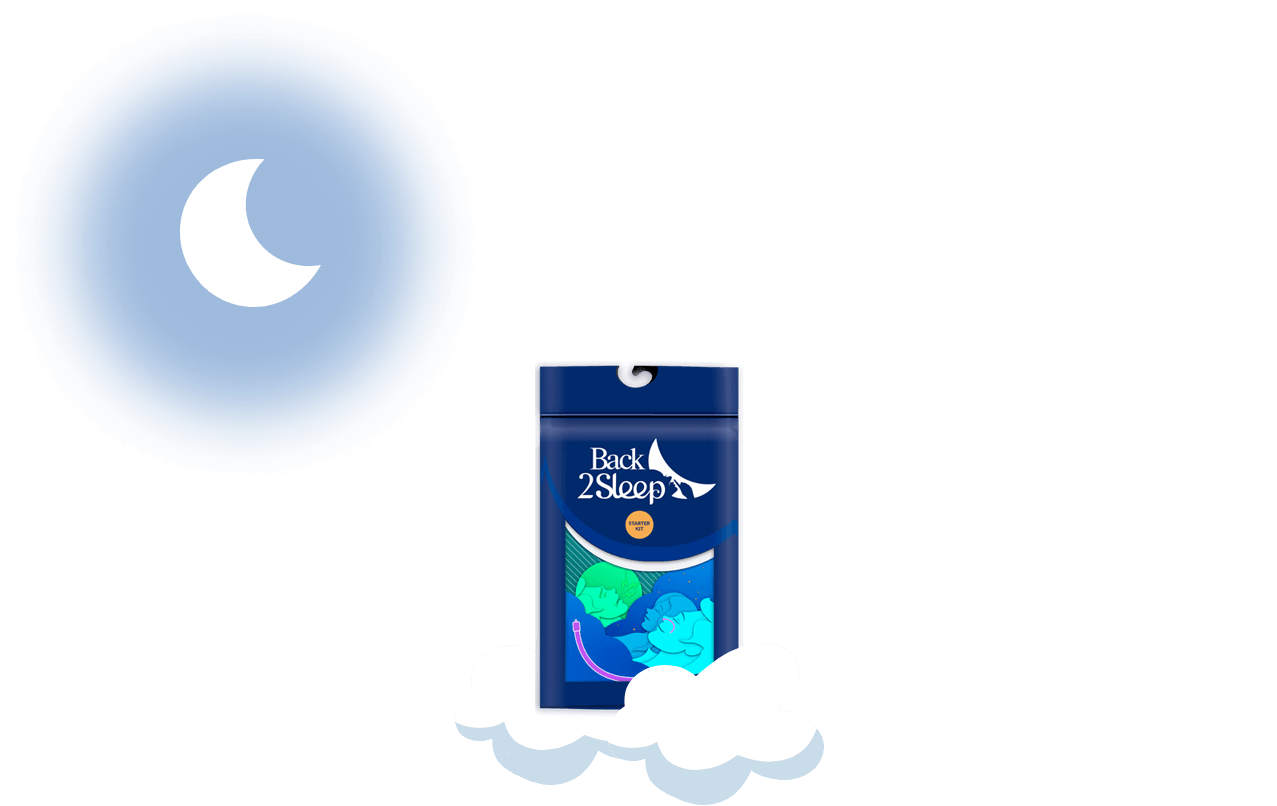
A nasal airway problem is not the same issue a mandibular advancement device treats, and it is worth ruling out before committing to either a boil and bite or a custom-fit MAD. A soft, CE-certified Class I nasal stent, like the one made by the French company Back2Sleep, sits inside the nostril to keep the nasal airway open during sleep, without electricity, tubing, or noise. It is intended for snoring and mild-to-moderate OSA, is available without a prescription, and comes as a starter kit with four sizes for around €44.90, which makes it a lower-commitment step to try before moving on to a dental appliance.
For some snorers, nasal resistance is a meaningful part of the problem, and easier nasal breathing can also improve how well a MAD is tolerated, since chronic mouth breathing is linked to dry mouth and jaw strain that may contribute to people abandoning a MAD partway through the night. Trying a nasal stent first, or alongside a MAD, follows a stepped-care approach consistent with NICE's guidance of ruling out simpler causes before recommending a more involved dental appliance. That said, a nasal stent addresses nasal airway resistance and mild snoring at most; it is not designed for moderate-to-severe OSA. Anyone with a sleep study confirming moderate or severe OSA needs a MAD, CPAP, or another therapy directed by a sleep physician, and should not rely on a nasal device alone. For a wider view of how these categories stack up on price, see our CPAP vs oral appliance vs nasal stent cost breakdown for European patients.
- A nasal stent addresses nasal airflow, not jaw position, and works for simple snoring and mild-to-moderate OSA only.
- Some people combine a nasal stent with a MAD to reduce mouth breathing and improve MAD comfort.
- Moderate-to-severe OSA confirmed by a sleep study requires a MAD, CPAP, or physician-directed therapy, not a nasal device alone.
How to Choose Between a Boil and Bite and a Custom-Fit Device
The right choice depends mainly on whether you have a diagnosed condition, how much your snoring is disrupting sleep, and what your local reimbursement rules allow. If you have simple snoring with no diagnosed OSA, a boil and bite device or a nasal stent is a reasonable, low-cost way to test whether jaw or nasal support helps at all, since neither is reimbursed for snoring alone in the UK, France, or Germany. If a sleep study has confirmed mild OSA, the NICE guidance suggests a custom or semi-custom device is likely to fit better and be tolerated for longer, even if the short-term AHI improvement over 12 weeks looks similar to a noncustom device in trial conditions.
If OSA is moderate or severe, a MAD of any kind is typically a second-line option behind CPAP, and the choice between boil and bite and custom becomes secondary to getting an accurate diagnosis and following your sleep physician's guidance. Whichever route you choose, treat the first few weeks as a trial: a device you cannot tolerate for more than an hour a night, custom or not, will not reduce snoring or improve your sleep, regardless of what it cost.
- Start with the cheapest reasonable option (nasal stent or boil and bite) if you have not been diagnosed with OSA.
- Move to a custom or semi-custom MAD once mild OSA is confirmed, prioritising fit and long-term adherence over sticker price.
- Moderate-to-severe OSA needs a physician-guided plan; device choice should follow diagnosis, not the reverse.

What Back2Sleep Users Say
Frequently Asked Questions
Are custom-fit mandibular advancement devices worth the extra cost compared to over-the-counter ones?
Often yes for diagnosed mild OSA, where custom devices show better fit, adherence, and quality-of-life scores (NICE NG202, 2021). For simple snoring with no diagnosis, a cheaper boil and bite or nasal stent is a reasonable first step before paying for a custom device.
Is a boil and bite mouthguard as good as a custom one for snoring?
For snoring alone, a boil and bite device can reduce symptoms for many users, though it fits less precisely and wears out faster than a custom device. A 2022 randomised trial even found similar short-term AHI results between the two types over 12 weeks.
Do boil and bite MADs actually work for sleep apnea, or only for snoring?
Boil and bite devices can reduce mild OSA symptoms for some users, but NICE Guideline NG202 recommends custom or semi-custom devices over ready-made ones for better adherence and comfort. A 2022 randomised trial found similar short-term AHI results between custom and noncustom devices over 12 weeks. Anyone with diagnosed OSA should discuss device type with a sleep clinician.
How much does a custom mandibular advancement device cost in the UK, France, or Germany?
Private custom devices run close to £1,000 in the UK, though prices vary by clinic. In France, out-of-pocket prices are typically €300 to €800, and Assurance Maladie reimburses 60% of a fixed €150 base rate once OSA is diagnosed. Germany's statutory insurance covers custom devices fully when CPAP has failed.
Is a mandibular advancement device covered by the NHS, Assurance Maladie, or a Krankenkasse?
Coverage generally requires a formal OSA diagnosis, not snoring alone. The NHS may fund a device after diagnosis, Assurance Maladie reimburses 60% of a €150 base rate every two years, and Germany's GKV has covered custom splints in full since 2022.
How long do mandibular advancement devices last before they need replacing?
Custom devices last about 36.7 months on average, roughly three years, according to a 2019 British Dental Journal analysis. Boil and bite devices typically need replacing every 6 to 12 months as the moulded plastic softens and the fit loosens.
Can a badly fitted boil-and-bite device make snoring worse?
A loose or poorly moulded device can shift out of position overnight, reducing its jaw-advancement effect and sometimes causing mouth breathing or jaw discomfort that disrupts sleep further. A better mould, or moving to a custom device, usually resolves this.
What is the difference between a mandibular advancement device and a nasal dilator or nasal stent?
A mandibular advancement device repositions the lower jaw to open the throat airway, while a nasal stent, such as Back2Sleep's CE-certified Class I device, holds the nasal airway open from inside the nostril. They target different obstruction points and can sometimes be used together.
Ready for quieter nights? Discover the Back2Sleep starter kit and find the right fit for you.
Not sure if you are at risk? Take our sleep risk screening to find out in just a few minutes.
Want to learn how it works? Explore the Back2Sleep nasal stent designed for comfortable, effective relief.