
Tongue-Retaining Device vs Mandibular Advancement Device: Which Oral Appliance Wins?

Tongue-Retaining Device vs Mandibular Advancement Device: The Evidence-Based Verdict
A clinician-grade, Europe-focused comparison of two oral appliances for snoring and mild-to-moderate sleep apnea, using real randomized-trial data instead of marketing claims.
Tongue-Retaining Device vs Mandibular Advancement Device: The Quick Answer
In the tongue-retaining device vs mandibular advancement device debate, the mandibular advancement device usually wins for most people. A mandibular advancement device (MAD) is a custom or boil-and-bite mouthpiece that holds your lower jaw forward during sleep. A tongue-retaining device (TRD) uses a soft suction bulb to hold the tongue forward instead. Randomized trials show the MAD produces a higher treatment response and far stronger patient preference, while delivering similar reductions in measured sleep apnea severity.
That said, the "winner" depends on your anatomy. The TRD remains a useful niche option, and neither device addresses obstruction at the nose. If your snoring starts in the nasal airway, you may need a different tool entirely, as we explain in our guide on how to choose the right anti-snoring device for your snoring type. For a focused nose-versus-jaw breakdown, our comparison of the nasal stent vs mandibular advancement device covers where each one truly fits.
- The MAD generally beats the TRD on treatment response and comfort.
- The TRD is best for denture wearers, missing teeth, or a large tongue.
- Neither device treats nasal-level blockage; that needs its own solution.

How Each Oral Appliance Works
Both devices fight the same problem: soft tissue collapsing into your throat during sleep. They simply target different anatomy. Understanding the mechanism explains why one may suit you and the other will not.
Mandibular Advancement Device (MAD)
A MAD grips your upper and lower teeth and gently pulls the lower jaw forward by a few millimetres. This forward shift drags the tongue and soft palate with it, widening the space behind your tongue. The airway stays more open, so airflow improves and snoring vibration drops. Most modern MADs are adjustable, letting you fine-tune the advancement. Our explainer on how the anti-snoring mandibular advancement brace works walks through the fitting process step by step.
Tongue-Retaining Device (TRD)
A TRD, sometimes called a tongue-stabilizing device (TSD), skips the teeth entirely. It is a soft silicone bulb that creates gentle negative suction to hold the tongue forward during sleep. Because it does not clamp the jaw, it can suit people with dental problems, dentures, or no teeth. The trade-off is comfort: holding the tongue forward all night can cause dryness, drooling, and tongue soreness.
- A MAD advances the jaw, indirectly moving the tongue forward.
- A TRD holds the tongue directly using a suction bulb, no teeth required.
- Both work at the same throat level, not at the nose.
Tongue-Retaining Device vs Mandibular Advancement Device: What the Trials Show
The strongest data comparing these two devices comes from a randomized controlled trial published in the journal SLEEP. In that study, both appliances cut the apnea-hypopnea index (AHI) by a similar amount, but the response and preference rates diverged sharply.
The apnea-hypopnea index counts how many times per hour your breathing stops or shrinks during sleep. A higher number means more severe apnea. In the trial, both devices dropped the AHI from a baseline near 27 down to roughly 12 to 13, a comparable objective result. Yet patients responded and felt better far more often with the jaw device.
In that randomized trial, 68% of sleep apnea patients achieved a complete or partial response with the mandibular advancement splint, versus 45% with the tongue-stabilizing device, and 91% of patients preferred the jaw device (Deshpande, Chan et al., SLEEP, 2009). Tongue-retaining devices can reduce apnea and snoring, but studies suggest their lower comfort tends to limit long-term use compared with jaw devices (Chan et al., SLEEP, 2009).
- Both devices reduce AHI by a broadly similar amount in trials.
- The MAD wins on response rate (68% vs 45%) and preference (91%).
- Comfort and tolerance drive whether you keep using the device long term.
Side-by-Side Comparison: TRD vs MAD vs Nasal Airway
The table below compares the two oral appliances and adds the option both leave out: an upstream nasal-airway device. For snoring and mild-to-moderate obstructive sleep apnea, knowing where each fits prevents wasted money and frustration.
| Feature | Tongue-Retaining Device | Mandibular Advancement Device | Nasal Stent (Back2Sleep) |
|---|---|---|---|
| Obstruction level targeted | Tongue base / throat | Jaw and tongue / throat | Nasal airway (upstream) |
| Needs teeth? | No | Yes | No |
| Trial response rate | ~45% | ~68% | For simple snoring and mild-to-moderate OSA |
| Common side effects | Dryness, drooling, tongue soreness | Jaw soreness, possible bite change | Mild nasal sensation initially |
| Best candidate | Denture wearers, large tongue | Most jaw-and-tongue collapse cases | Nasal-component snoring or MAD/TRD intolerance |
| Prescription needed? | Usually, after sleep study | Usually, after sleep study | No prescription; CE-certified Class I device |
- TRD and MAD both work at the throat, not the nose.
- If your nose is the bottleneck, an oral appliance alone may fall short.
- A nasal stent can serve as a complement or a different starting point.
The European Treatment Pathway: Diagnosis First
In European practice, no oral appliance should be chosen blind. The European Respiratory Society (ERS) Task Force on non-CPAP therapies concluded that custom mandibular advancement devices significantly reduce AHI and daytime sleepiness compared with placebo. Symptom and cardiovascular outcomes were comparable to CPAP, and patients frequently preferred the MAD, with the best candidates being people with mild-to-moderate OSA (European Respiratory Journal, ERS Task Force, 2011).
That guidance carries a condition: you need a diagnosis first. A sleep study confirms whether you have simple snoring, mild, moderate, or severe apnea. Severe OSA generally calls for CPAP, not an oral appliance. Skipping the assessment risks treating the wrong problem with the wrong device.
Globally, an estimated 936 million adults aged 30 to 69 have mild-to-severe obstructive sleep apnea, and 425 million have moderate-to-severe disease (Benjafield et al., The Lancet Respiratory Medicine, 2019). Studies suggest a large share of these cases across Europe remain undiagnosed, which is why a sleep evaluation should come before any device choice.
- ERS guidance favours custom MADs for mild-to-moderate OSA.
- A sleep study should precede any device choice.
- Severe OSA needs CPAP, not an oral appliance.
Choosing Your Device: A Practical Decision Guide
Once you have a diagnosis, matching the device to your anatomy is straightforward. Use these numbered profiles to see where you fit.
1You have healthy teeth and jaw-level snoring
A mandibular advancement device is usually the first choice. It has the strongest evidence, the highest response rate, and the best long-term comfort for most people. A custom-fitted version supervised by a dentist outperforms generic boil-and-bite models.
2You wear dentures, lack teeth, or have a large tongue
A tongue-retaining device may be your better oral option, since it needs no teeth to anchor. Accept that dryness and drooling are common, and monitor whether you actually keep using it past the first few weeks.
3You cannot tolerate jaw soreness, bite change, or tongue suction
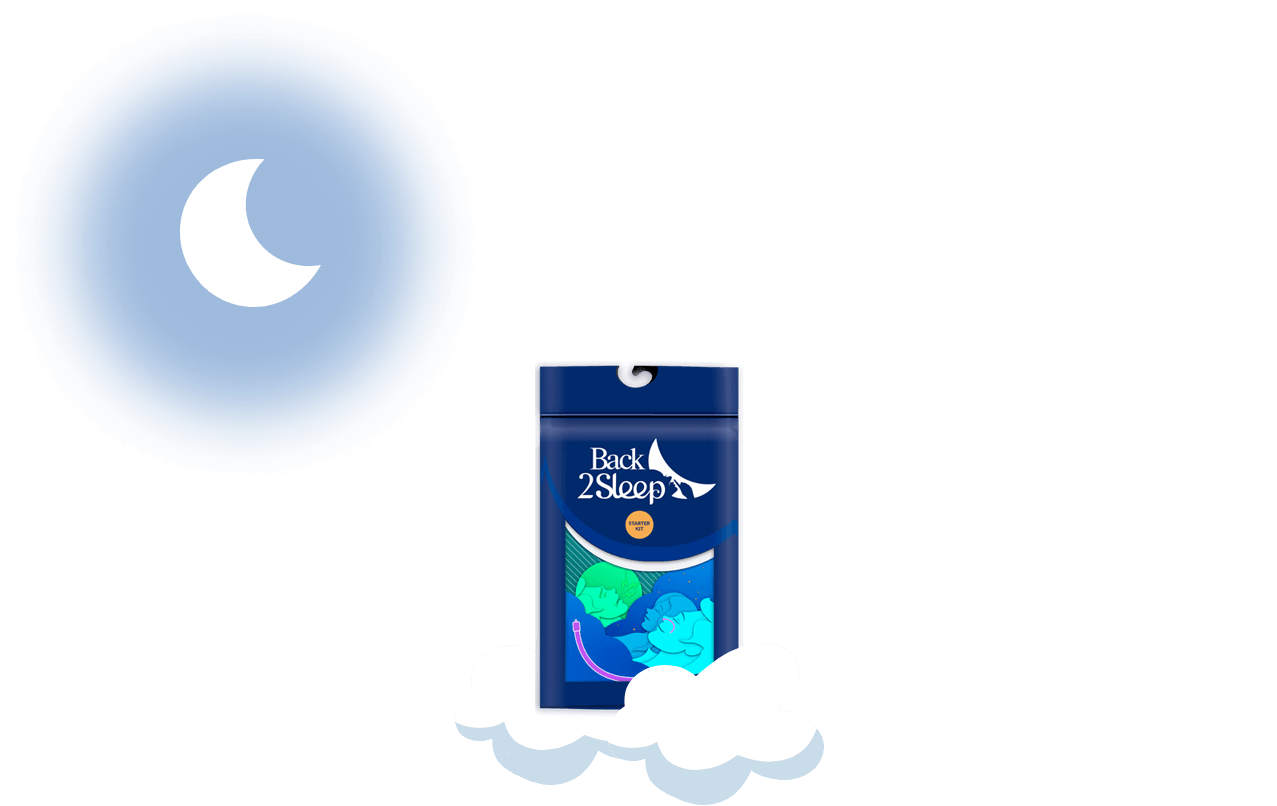
If both oral appliances cause problems, a device that sits outside the mouth entirely is worth trialing. A soft silicone intranasal stent like Back2Sleep keeps the nasal airway open during sleep without touching your teeth, jaw, or tongue.
4Your nose feels blocked or you breathe through your mouth
Nasal congestion can stop any oral appliance from working, because mouth breathing bypasses the corrected airway. Here, an upstream nasal solution can be the missing piece, used alongside or instead of an oral device under medical guidance.
- MAD for healthy teeth and jaw-level collapse.
- TRD for denture, edentulous, or large-tongue cases.
- Nasal stent when oral appliances fail or nasal blockage drives the snoring.

What Back2Sleep Users Say
Frequently Asked Questions
Are tongue-retaining devices as effective as mandibular advancement devices for sleep apnea?
They lower the apnea-hypopnea index by a similar amount, but a 2009 randomized trial in SLEEP found 68% of patients responded to a mandibular advancement device versus 45% to a tongue-retaining device, and 91% preferred the jaw device. The MAD generally performs better for most people.
Which is more comfortable to sleep with, a TRD or a MAD?
Most patients find the mandibular advancement device more comfortable. In the 2009 SLEEP trial, 91% preferred it over the tongue-retaining device. Tongue-retaining devices commonly cause dryness, drooling, and tongue soreness, which is why studies suggest many users find them harder to tolerate over the long term.
Can I use a tongue-retaining device if I have dentures or no teeth?
Yes. A tongue-retaining device needs no teeth because it holds the tongue forward with a soft suction bulb instead of gripping the jaw. This makes it a practical oral option for denture wearers or people missing teeth, who usually cannot use a mandibular advancement device.
Do mandibular advancement devices change your bite over time?
They can. Holding the jaw forward nightly may cause minor tooth movement or bite changes in some long-term users. Regular check-ups with a dentist help catch and manage this early. People wanting to avoid any dental impact sometimes prefer a device that sits outside the mouth entirely.
Do you need a prescription or a sleep study before using an oral appliance?
In European practice, a sleep study should come first to confirm whether you have simple snoring or mild, moderate, or severe apnea. Custom mandibular and tongue devices are usually fitted under medical supervision. A diagnosis ensures you treat the right problem with the right device.
Are oral appliances as good as a CPAP machine for sleep apnea?
For mild-to-moderate OSA, the European Respiratory Society found custom mandibular devices give symptom and cardiovascular outcomes comparable to CPAP, though CPAP lowers AHI more. For severe apnea, CPAP remains the standard. Oral appliances are not a replacement for CPAP in severe cases.
Can nasal congestion stop an oral appliance from working?
Yes. A blocked nose pushes you toward mouth breathing, which bypasses the airway an oral appliance corrects, reducing its benefit. If your obstruction is partly nasal, a tongue or jaw device alone may not be enough, and an upstream nasal-airway solution can help under medical guidance.
Ready for quieter nights? Discover the Back2Sleep starter kit and find the right fit for you.
Not sure if you are at risk? Take our sleep risk screening to find out in just a few minutes.
Want to learn how it works? Explore the Back2Sleep nasal stent designed for comfortable, effective relief.