
Comparing Positional Therapy Devices and Nasal Stents for Stopping Positional Snoring

Positional Therapy Device vs Nasal Stent Matched to Your Actual Snoring Pattern
A clear, evidence-based comparison of wearable positional trainers and nasal stents, so you treat the actual cause of your snoring instead of guessing.
Positional Therapy Device vs Nasal Stent: What Each One Actually Treats
Choosing between a positional therapy device vs nasal stent starts with one simple question: does your airway narrow because of your sleep position, or because of your nasal anatomy? Getting this wrong is the single biggest reason people buy the wrong anti-snoring device first. A large share of snorers have position-dependent airway collapse, according to research on how sleeping position affects breathing, while the rest snore in every position because the narrowing sits higher up, in the nose or soft palate.
A positional therapy device is a wearable trainer, worn on the chest, neck, or wrist, that vibrates or nudges you when you roll onto your back. A nasal stent is a small soft silicone tube inserted into the nostril each night to hold the nasal airway open from the inside. They solve two different mechanical problems, which is why comparing them head to head only makes sense once you know which one applies to you.

How Positional Therapy Devices Work
Positional therapy devices work by making the supine, or back-sleeping, position uncomfortable enough that you shift onto your side without fully waking up. Most modern versions are small vibrating pods strapped to the chest or the back of the neck, rather than the old tennis-ball-in-a-t-shirt trick.
The clinical case for positional therapy is real, but position-specific. A 2020 meta-analysis of four randomized controlled trials involving 251 patients, published in American Family Physician, found positional therapy reduced the apnea-hypopnea index (AHI, the number of breathing pauses per hour) by a mean of 7.38 events per hour compared with an inactive control. The same review noted patients tolerated positional therapy for roughly 2.5 hours per night longer than they tolerated CPAP, suggesting comfort plays a large role in why people choose it.
The catch is durability. A 2019 study in the Journal of Clinical Sleep Medicine found only 41.6% of patients were still using their positional device regularly at six months, with adherence dropping off faster in more severe cases. If your snoring only happens on your back, a positional trainer can be genuinely effective, but only if you keep wearing it.
- Positional therapy devices only address supine-related snoring, not nasal or palatal narrowing.
- Trials show a meaningful AHI reduction, but real-world adherence falls to roughly 41.6% by six months.
- They do little for snorers who make noise in every sleep position.
How Nasal Stents Work
A nasal stent works by mechanically propping open the nasal passage from the inside, so air keeps moving through the nose regardless of which way you are facing. Unlike a positional device, it treats the airway itself rather than trying to change your sleep position.
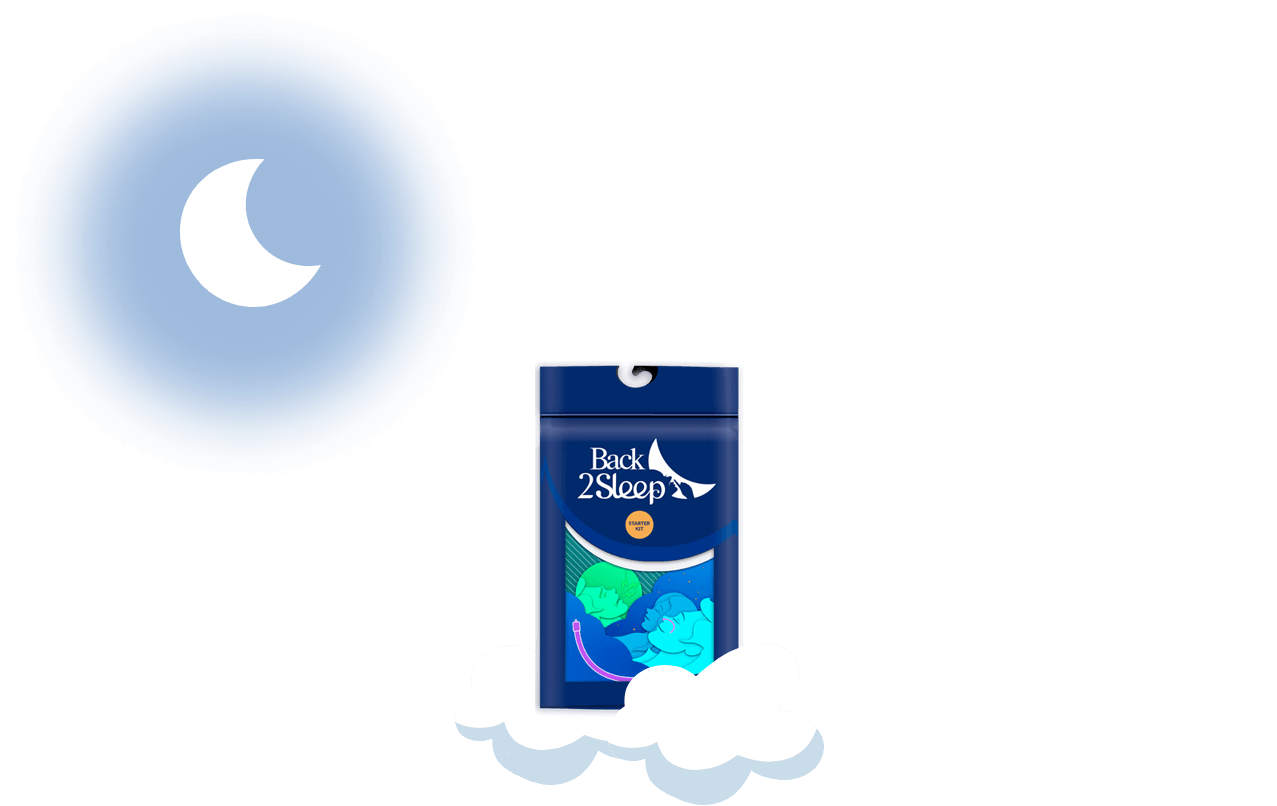
Back2Sleep is one example: a CE-certified Class I medical device, it is a soft silicone intranasal stent sold as a starter kit with four sizes, designed for snoring and mild-to-moderate obstructive sleep apnea (OSA), and used without a prescription or any electricity, noise, or tubing.
The peer-reviewed evidence on nasal stents comes from two notable trials. A 2022 study in the Journal of International Medical Research followed 101 patients fitted with a nasopharyngeal stent and recorded mean AHI falling from 24.6 to 18.5 events per hour, roughly a 25% reduction, with an overall Sher-criteria responder rate of 25.7%. A 2021 study in Respiration followed 71 patients with mild-to-moderate OSA and found 25% were complete responders and 10% partial responders on AHI, though about 30% did not tolerate the stent well enough to continue.
That 30% figure matters. Most people who do not adapt notice it in the first few nights, which is why clinicians generally recommend a 3-5 night acclimation window before deciding whether a nasal stent is right for you.
EU Regulatory Status and Where Each Device Is Available
In the EU, medical devices are classed under the Medical Device Regulation (MDR) according to how invasive they are and what risk they carry. A soft silicone nasal stent, worn briefly overnight and not implanted or powered, typically sits in the lowest-risk category, Class I, which is why it can carry a CE mark and be sold without a prescription across EU member states.
Positional therapy devices are regulated more inconsistently. Some are classed as wellness or lifestyle wearables rather than medical devices, which means the clinical claims behind them are not always independently reviewed the same way. Before buying either type of device, it is worth checking that the listing actually states CE certification and a device class, rather than relying on marketing language alone.
How Common Snoring and Positional Apnea Really Are
Snoring and undiagnosed sleep apnea are far more common than treatment rates suggest. A 2023 population-based analysis of 20,151 adults in the CONSTANCES cohort, published in ERJ Open Research (European Respiratory Society), found 37.2% reported severe snoring and a weighted 20.9% had OSA or a high risk of it, yet only 3.5% were receiving any treatment.
Positional obstructive sleep apnea, often shortened to POSA, is where breathing events happen mainly or only while lying on the back. It is common but hard to pin down precisely. A 2023 Saudi population-based cohort published in the Journal of Epidemiology and Global Health found POSA prevalence swung from 54% down to 8.3% in the very same patients, depending on which diagnostic definition was applied. That range is exactly why a home sleep study or a validated screening tool, such as the Berlin Questionnaire clinicians use to flag OSA risk, matters more than guessing from symptoms alone.
Positional Therapy Device vs Nasal Stent Head-to-Head Comparison
Laid side by side, a positional therapy device vs nasal stent comparison comes down to mechanism, evidence base, and what each one is realistically indicated for. The table below summarizes the key differences.
| Feature | Positional Therapy Device | Nasal Stent |
|---|---|---|
| What it targets | Back-sleeping (supine) airway collapse | Nasal or palatal narrowing, in any sleep position |
| How it works | Vibration or nudge worn on chest, neck, or wrist | Soft silicone tube holds the nasal passage open |
| Best evidence in | Confirmed positional OSA (POSA) | Mild-to-moderate OSA (AHI under roughly 30) |
| Trial AHI change | -7.38 events/hr vs. control (2020 meta-analysis) | -25% mean AHI, 25.7% responder rate (2022 study) |
| Adherence / tolerability | 41.6% still using it regularly at 6 months | 3-5 night acclimation; ~30% do not tolerate it |
| Regulatory status in EU | Varies by brand and market | CE-certified Class I medical device |
| Prescription needed | Usually no | No |
| Not appropriate for | Non-positional or nasal-cause snoring | Moderate-severe or severe OSA |
- Positional devices and nasal stents treat different physical causes, so this is not a "better vs. worse" comparison, it is "which cause matches your snoring."
- Both approaches show documented drop-off: adherence for positional therapy, tolerability for nasal stents.
A Simple Decision Tree for Choosing Between Them
The fastest way to choose is to track when your snoring actually happens. Ask a partner, or use a phone recording app, for a few nights before buying anything. This single piece of data resolves most of the guesswork covered in our guide on choosing the right anti-snoring device for your snoring type.
1You snore in every position
If you snore lying on your back, your side, and your stomach, the cause is unlikely to be positional. A nasal stent, which addresses nasal or palatal narrowing directly, is the more logical starting point.
2You only snore on your back, confirmed as mild-to-moderate POSA
This is the population the positional-therapy trials were built around. A wearable positional trainer is worth trying first, with realistic expectations about long-term adherence.
3You snore badly on your back, but still snore some on your side
This usually means two mechanical causes are stacked: positional collapse plus nasal narrowing. Combining a positional trainer with a nasal stent addresses both at once, an approach neither device alone fully covers.
4You have been diagnosed with moderate-to-severe OSA
Neither device is indicated here. Talk to a sleep physician about CPAP or another clinician-directed therapy; self-treating moderate-severe OSA with an over-the-counter device is not appropriate.
When Combining a Positional Device and a Nasal Stent Makes Sense
Combination use is the angle most buying guides skip entirely. Supine-predominant snorers who already own a positional trainer but still snore on their side usually have nasal narrowing layered on top of the positional problem. Wearing both, the positional trainer to prevent back-sleeping and the nasal stent to keep the nasal airway open regardless of position, treats two separate mechanical causes rather than hoping one device fixes both.
Nasal stents also differ mechanically from nasal EPAP (expiratory positive airway pressure) devices, which create resistance on the exhale rather than physically holding the nostril open. See our comparison of nasal EPAP versus nasal stents for how those two nasal-only options differ from each other.
Safety, Side Effects, and Realistic Expectations
Both device categories are generally well tolerated, but neither is free of drop-off. Positional trainers can cause skin irritation at the strap site or disrupt sleep with false alarms in the first week. Nasal stents can feel intrusive on the first few nights, cause mild nasal irritation, or simply not fit an individual's nasal anatomy, which is the main driver behind the roughly 30% non-tolerance figure reported in the 2021 Respiration trial.
A 3-5 night acclimation period resolves most early discomfort with a nasal stent. If irritation, bleeding, or breathing difficulty continues past that window, stop using the device and speak with a clinician or an ear, nose, and throat specialist rather than pushing through.
People with a significantly deviated septum, chronic sinus infections, or recent nasal surgery should check with a clinician before trying a nasal stent, since nasal anatomy varies enough that a standard sizing kit may not fit comfortably. Similarly, anyone with restricted shoulder or neck mobility should ask a physiotherapist whether a chest- or neck-worn positional device is practical for them.
- Expect a short adjustment period with either device category, not instant comfort.
- Persistent irritation, bleeding, or breathing difficulty is a reason to stop and consult a clinician, not push through.
When Snoring Is More Than Snoring
Loud, frequent snoring combined with witnessed breathing pauses, gasping, or daytime sleepiness is linked to a higher risk of undiagnosed OSA, and the CONSTANCES data above shows most of that risk currently goes untreated. A home sleep apnea test or an in-lab polysomnography, ordered by a doctor, is the only way to confirm severity and to know whether mild-to-moderate at-home options are appropriate at all.
Neither a positional therapy device nor a nasal stent is indicated for moderate-severe or severe OSA. Both device categories were studied in mild-to-moderate populations, and treating higher-severity OSA without medical supervision may leave breathing pauses inadequately managed. If a sleep study confirms moderate-severe or severe OSA, CPAP or another clinician-directed therapy is the appropriate next step, not an over-the-counter device.
Even for mild-to-moderate cases, a positional therapy device vs nasal stent decision works best alongside, not instead of, general improvements: reducing evening alcohol, treating nasal congestion, and maintaining a healthy weight all influence how much either device needs to do. Neither replaces a proper diagnosis, but both can meaningfully reduce disruptive snoring once the underlying mechanism is correctly identified.

What Back2Sleep Users Say
Frequently Asked Questions
What is the difference between a positional therapy device and a nasal stent?
A positional therapy device is a wearable trainer that stops you sleeping on your back, using a vibration or nudge. A nasal stent is a soft silicone tube that holds the nasal airway open from the inside, in any sleep position. One changes your posture; the other changes airflow through the nose itself.
Can you use a nasal stent and a positional therapy device at the same time?
Yes. They target different mechanical causes, so many supine-predominant snorers who still snore on their side use both together: the positional trainer prevents back-sleeping, while the nasal stent keeps the nasal airway open regardless of position. No dedicated combined-therapy trial exists yet, but the two mechanisms do not conflict.
Does sleeping on your side actually stop snoring?
For position-dependent snorers, yes: side-sleeping reduces the airway collapse caused by gravity pulling the tongue and soft palate backward. A 2020 meta-analysis found positional therapy cut the AHI by a mean of 7.38 events per hour versus an inactive control. It does not help snorers whose narrowing is nasal or palatal in every position.
What is positional obstructive sleep apnea (POSA) and how do I know if I have it?
Positional obstructive sleep apnea, or POSA, means breathing pauses happen mainly or only while lying on the back. It is confirmed with a home sleep apnea test, in-lab polysomnography, or a screening tool like the Berlin Questionnaire. Estimated POSA prevalence varies widely, from roughly 8% to 54%, depending on the diagnostic criteria used.
Are nasal stents safe to use every night?
Nasal stents are generally safe for nightly use in snoring and mild-to-moderate OSA, with most people needing a 3-5 night acclimation period. Around 30% of trial participants did not tolerate the device well enough to continue. Persistent irritation or bleeding is a reason to stop and speak with a clinician.
What's the difference between a nasal stent and a nasal dilator or nasal strip?
An external nasal strip or dilator clip widens the nostrils from the outside, while a nasal stent sits inside the nasal passage to hold the internal airway open. Internal stents generally address deeper nasal narrowing that surface-level strips cannot reach, which is why they are studied for mild-to-moderate OSA, not just snoring.
Ready for quieter nights? Discover the Back2Sleep starter kit and find the right fit for you.
Not sure if you are at risk? Take our sleep risk screening to find out in just a few minutes.
Want to learn how it works? Explore the Back2Sleep nasal stent designed for comfortable, effective relief.