
How Untreated Snoring Destroys Workplace Productivity

How Untreated Snoring Destroys Workplace Productivity — and What It Really Costs
Sleep-deprived employees cost the global economy $680 billion every year. Your undiagnosed snoring problem may be quietly wrecking your career, your paycheck, and your employer's bottom line.
Snoring and untreated sleep apnea are silently destroying workplace productivity across every industry, every country, and every pay grade. According to a landmark RAND Europe study, insufficient sleep costs five major economies up to $680 billion per year in lost economic output. In the United States alone, the figure hits $411 billion — 2.28% of GDP. In Germany, it is $60 billion. In the UK, $50 billion. These are not abstract projections. They translate into 1.2 million working days lost annually in the US and over 200,000 in both the UK and Germany.
If you find yourself gulping down three coffees before 10 AM, struggling to follow conversations in meetings, or watching your performance reviews slide year after year, the problem may not be motivation. It may be what happens to your airway between midnight and 6 AM.
- The exact economic toll of sleep deprivation per country, backed by RAND data
- Why presenteeism from snoring costs employers 3–4x more than absenteeism
- Real stories from workers who nearly lost careers to undiagnosed sleep apnea
- Specific industry risks — from truck drivers to office workers
- How treatment pays for itself within the first month of better sleep
The Staggering Economic Cost of Sleep-Deprived Workers
Most people think of snoring as an annoyance. Employers think of it as invisible. But the numbers tell a different story. The RAND Corporation tracked sleep deprivation across five OECD nations and found that workers sleeping fewer than six hours per night lose an average of 6 extra working days per year compared to those sleeping seven to nine hours. Workers sleeping six to seven hours lose 3.7 extra days.
Those days vanish through two channels: absenteeism (not showing up) and presenteeism (showing up but operating at 60–80% capacity). And presenteeism is the bigger thief by far.
| Country | Annual Cost | % of GDP | Working Days Lost |
|---|---|---|---|
| United States | $411 billion | 2.28% | 1,234,864 |
| Japan | $138.6 billion | 2.92% | 604,191 |
| Germany | $60 billion | 1.56% | 209,024 |
| United Kingdom | $50.2 billion | 1.86% | 207,224 |
| Canada | $21.4 billion | 1.35% | 78,861 |
Source: RAND Europe, “Why Sleep Matters,” cross-country analysis of insufficient sleep
Japan loses the highest share of its GDP — nearly 3% — to sleep deprivation. But the US bleeds the most in absolute dollars. And every country on this list has workers who snore through the night, drag themselves to the office, and slowly burn through their careers without ever connecting the dots.
Presenteeism: The Productivity Killer Nobody Measures
Presenteeism means being at your desk, logged in, seemingly working — but running on fumes. A Harvard Business Review investigation found that presenteeism costs US firms up to $150 billion annually across all health conditions. Sleep disorders are among the top drivers.
Here is what makes it so damaging: managers cannot see it. An employee with untreated obstructive sleep apnea shows up every morning. They attend meetings. They reply to emails. But they take 25% longer to finish tasks, miss details in spreadsheets, forget instructions from the morning standup, and produce work that needs revision. A study in the Journal of Clinical Sleep Medicine calculated that presenteeism costs from OSA run 3 to 4 times higher than absenteeism costs.
Workers sleeping fewer than six hours report a 2.4 percentage point higher productivity loss from combined absenteeism and presenteeism than those sleeping seven to nine hours. That sounds small until you multiply it across an entire workforce. For a company of 1,000 employees, the National Safety Council estimates the total fatigue-related cost at over $1 million per year — $272,000 from absenteeism, $776,000 from presenteeism, and $536,000 in avoidable healthcare spending.
Your Brain on Snoring: Cognitive Impairment That Mirrors Alcohol
A landmark study from the University of New South Wales found that staying awake for 17 to 19 hours produces cognitive impairment equivalent to a blood alcohol concentration of 0.05% — the legal driving limit in most European countries. After 24 hours without sleep, impairment reaches 0.10% BAC, well above any legal threshold.
But a person with moderate sleep apnea does not need to stay awake all night to reach those levels. Someone who lies in bed for seven hours but experiences 30 breathing interruptions per hour gets the equivalent of three to four hours of restorative sleep. They arrive at work already cognitively impaired — every single day.
What sleep loss does to your work brain
- Reaction time slows by up to 50% on vigilance tasks after a single night of poor sleep
- Working memory drops sharply — you read a paragraph and forget the first sentence by the end
- Decision-making quality degrades — sleep-deprived workers take riskier decisions and evaluate consequences more poorly
- Emotional regulation weakens — minor workplace frustrations trigger disproportionate irritation or withdrawal
- Creative problem-solving collapses — the brain cannot form novel connections between ideas without adequate REM sleep

Microsleeps, Accidents, and the Disasters Nobody Saw Coming
Microsleeps are involuntary episodes lasting 1 to 30 seconds during which the brain goes functionally offline. Your eyes may stay open. You may be holding a steering wheel, monitoring a machine, or reading a patient chart. But for those seconds, you are unconscious.
Workers with untreated sleep apnea experience microsleeps repeatedly throughout the day. And the consequences are not hypothetical. Overly sleepy employees are 70% more likely to be involved in workplace accidents than well-rested colleagues, according to the Sleep Foundation.
Sleep deprivation behind the world's worst industrial disasters
- Chernobyl (1986) — The explosion at 1:23 AM was caused partly by human error from sleep-deprived operators. It killed 31 people immediately and forced the evacuation of 200,000 residents.
- Three Mile Island (1979) — Shift workers between 4 and 6 AM failed to recognize a critical reactor change. Cleanup cost exceeded $2 billion.
- Exxon Valdez (1989) — The supertanker grounding at 12:04 AM spilled 11 million gallons of crude oil. Excessive work hours and sleep deprivation were cited as major factors. Exxon paid $4 billion.
- Space Shuttle Challenger (1986) — Crucial decision-makers had slept only two hours the night before the launch that killed seven astronauts.
These are extreme examples. But smaller versions play out in warehouses, hospitals, construction sites, and highways every single day. Truck drivers who slept fewer than four hours are 11.5 times more likely to cause an accident than those who slept seven or more hours. Night-shift nurses make 32% more mathematical errors than day-shift nurses.
Industries Where Snoring Destroys Careers
Transportation & Logistics
EU Directive 2014/85/EU requires sleep apnea screening for commercial drivers. Untreated OSA means license suspension. One in four truck drivers sleeps fewer than six hours per night. The crash risk is 5x higher with undiagnosed OSA.
Healthcare & Emergency
Doctors and nurses with sleep apnea make 2–3x more medical errors, particularly on night shifts. A single medication error from fatigue can be fatal. Rotating-shift workers face nearly 6x the normal accident risk.
Shift Work & Manufacturing
22% of the European workforce does shift work. Adding sleep apnea to circadian disruption creates compounding sleep debt. Shift workers with OSA accumulate fatigue at 3x the rate of day workers with identical apnea severity.
Knowledge Work & Management
Engineers, analysts, and managers depend on executive function and sustained focus. Even mild OSA reduces these abilities by 15–25%. Workers retain 25–40% less from training and meetings, and routine tasks stay effortful instead of automatic.
Snoring and Job Loss: The Career Connection Nobody Talks About
A 2020 study published in Sleep Health tracked recently unemployed adults and found a striking pattern. Those with mild sleep apnea were 1.85 times more likely to have experienced multiple involuntary job losses. Those with moderate-to-severe sleep apnea were 2.71 times more likely.
The mechanism is not complicated. Chronic fatigue makes you slower, less accurate, and harder to work with. Over months and years, the small daily deficits compound:
- Missed deadlines — tasks that should take two hours stretch to four
- Declining quality — errors that once seemed unlike you become a pattern
- Conflict with colleagues — irritability from poor sleep triggers disproportionate reactions
- Passed over for promotion — managers notice disengagement even when they cannot name the cause
- Performance improvement plans — the formal step before termination
Workers with untreated sleep disorders can lose 40 to 50% of their productive capacity compared to well-rested colleagues. Most companies classify falling asleep at work as gross misconduct — grounds for immediate termination. Yet many of these workers have a treatable medical condition they do not know about.
The Employer's ROI: Why Treating Sleep Apnea Pays for Itself
Forward-thinking companies are discovering that investing in employee sleep health generates some of the highest returns in corporate wellness. The data is compelling:
| Metric | Before Treatment | After Treatment | Source |
|---|---|---|---|
| Healthcare cost per employee | Baseline | -$441/month | AJMC employer study |
| Hospital admissions | Baseline | -25% | Trucking industry program |
| Productivity improvement | Baseline | +17.3% | Workplace OSA program |
| Overall healthcare spend | Baseline | -50% | CPAP adherence tracking |
| Cost savings per driver (trucking) | Baseline | -$550/month | Employer-mandated program |
Companies that implement sleep apnea screening and treatment programs see a return of 3 to 5 euros for every euro invested. Diagnosing and treating just 100 workers with OSA saved one employer $153,042 over 18 months in medical insurance claims alone — not counting the productivity gains.
Shift Workers: When Snoring Meets Circadian Disruption
Approximately 22% of the European workforce does some form of shift work. These workers already fight their circadian rhythm by sleeping during daylight hours, when sleep is naturally lighter and more fragmented. Adding sleep apnea on top creates a dangerous multiplier effect.
A shift worker with moderate OSA may functionally get only 2 to 3 hours of restorative sleep per 24-hour cycle. The cumulative debt builds faster than the body can repay it. No amount of caffeine compensates — caffeine blocks the adenosine signal that makes you feel sleepy, but it does not restore the memory consolidation, immune repair, or hormonal regulation that actual sleep provides.
Practical guidance for shift workers
- Use a nasal stent during every sleep period, not just nighttime — daytime naps count
- Keep your sleep environment completely dark, cool (16–18 degrees C), and quiet
- Prioritize treatment adherence — your margin for error is far smaller than for day workers
- Track your sleep with an app like Snore Lab to catch worsening patterns early
- Talk to occupational health about fatigue risk management — many workplaces are legally required to have protocols
How Fast Treatment Transforms Work Performance
The speed of recovery surprises most patients. Cognitive improvement does not take months — the first changes show up within days.
| Timeline | What Improves | What You Notice at Work |
|---|---|---|
| Days 1–7 | Alertness, sustained attention | Fewer afternoon crashes, less caffeine dependence |
| Weeks 2–4 | Working memory, decision-making | Meetings stick, fewer errors on routine tasks |
| Months 1–3 | Complex reasoning, emotional regulation | Better conflict handling, stronger project output |
| Months 3–6 | Creative thinking, long-term memory | Innovation returns, training retention improves |
A workplace study tracking employees after OSA treatment initiation found a 17.3% productivity increase within three months. Microsleep episodes dropped by 85%. Sick days fell by half. Self-rated productivity jumped from 4.8 to 7.6 on a 10-point scale.
Real Stories from Working Professionals
5 Steps to Reclaim Your Productivity Starting Tonight
Step 1: Stop Normalizing Exhaustion
If you snore loudly, wake unrefreshed despite eight hours in bed, drink more than two coffees before noon, or struggle to concentrate after lunch, do not accept it as normal. These are symptoms of treatable sleep-disordered breathing — not personality traits or signs of laziness.
Step 2: Get a Sleep Screening
Home sleep tests are now affordable and widely available without a formal sleep lab visit. Many online sleep medicine services can ship a testing device to your door. A diagnosis takes one night and can redirect your entire career trajectory.
Step 3: Choose a Treatment You Will Actually Use
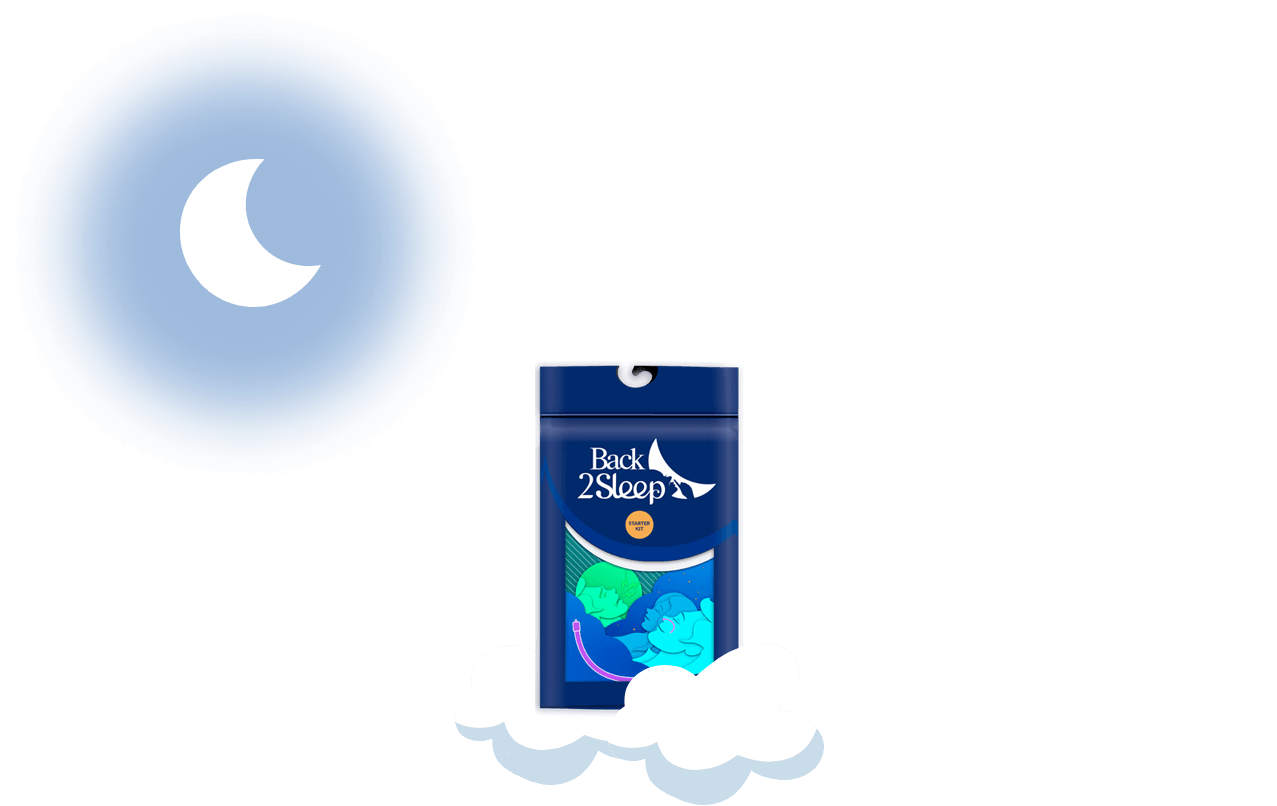
Treatment only works with consistent use. For mild to moderate snoring and sleep apnea, the Back2Sleep starter kit provides four sizes to find your fit over a 15-night trial. It costs 44.90 euros, requires no prescription, and takes ten seconds to insert. For severe cases, pair it with whatever your sleep physician recommends.
Step 4: Track and Quantify Your Improvement
Use a sleep tracking app to monitor snoring intensity before and after treatment. Simultaneously track work metrics: tasks completed per day, errors caught, energy levels at 2 PM, caffeine consumption. The data reinforces adherence and gives you concrete evidence of return on investment.
Step 5: Talk to Your Employer
If your workplace has a wellness program, ask whether sleep health is included. If not, share the employer ROI data from this article. Many companies will partially or fully fund screening when they see that every euro spent on sleep health returns three to five euros in productivity and reduced healthcare costs.
Frequently Asked Questions
How much does snoring actually cost in lost work productivity?
Can untreated sleep apnea actually get you fired?
How quickly does work performance improve after starting treatment?
Is simple snoring without apnea enough to damage productivity?
Why doesn't caffeine fix the problem?
What should I tell my employer about sleep screening programs?
Can a nasal stent replace CPAP for work-related sleep issues?
Read more on our sleep health blog, learn about our story, or find a pharmacy near you.