
Is Mouth Taping Safe? What Doctors Say About the Viral Sleep Trend

Is Mouth Taping Safe? What Doctors Actually Say About This Viral Sleep Trend
Millions of people tape their mouths shut at night hoping to stop snoring. But sleep physicians warn the risks may outweigh the benefits. Here is what the science really shows, and a safer, evidence-backed alternative.
The Mouth Taping Trend: Why Millions Are Doing It
Mouth taping involves placing adhesive tape over your lips before bed to force nasal breathing during sleep. The trend exploded on TikTok and Instagram, with some videos racking up tens of millions of views. Proponents claim it reduces snoring, improves oxygen levels, and even reshapes the jaw.
But here is what the viral videos leave out: medical experts at Cleveland Clinic, the Sleep Foundation, and major sleep research centres do not recommend mouth taping for most people. The research behind it is extremely limited, and the risks can be serious.
If you snore or suspect sleep apnea, you deserve a solution grounded in clinical evidence, not social media hype. This guide breaks down every study, every doctor opinion, and every risk factor so you can make an informed decision.
- Mouth taping has been studied in only 3 small clinical trials with fewer than 80 total participants
- Cleveland Clinic states it introduces an "unacceptable level of risk" for people with breathing conditions
- A 2025 systematic review in a peer-reviewed journal called mouth taping a "potentially unsafe trend"
- Internal nasal stents offer the same nasal breathing benefits without sealing your airway
Mouth Taping by the Numbers
These numbers tell a clear story. Despite millions of social media impressions, the actual scientific evidence behind mouth taping for sleep is paper-thin. Compare that to internal nasal stents, which have been validated in clinical settings with measurable improvements in REI (Respiratory Event Index) from 22.4 to 15.7 (p<0.01) and lowest SpO2 from 81.9% to 86.6% (p<0.01).
What the Published Research Actually Shows
Let us look at every peer-reviewed study on mouth taping available as of 2026. There are surprisingly few.
Study 1: Lee et al., 2022 (Healthcare Journal)
This is the most commonly cited study by mouth taping advocates. Researchers applied 3M silicone hypoallergenic tape over participants' mouths during sleep.
- Sample size: 30 participants with mild obstructive sleep apnea
- Finding: Snoring frequency decreased, and participants breathed through their noses more consistently
- Key limitation: Only studied mild OSA. The correlation between baseline severity and improvement was strong (r = -0.77, p = 0.001), meaning it mainly helped those with the mildest symptoms
- Not studied: Long-term safety, effects on moderate or severe apnea
Study 2: Jau et al., 2023 (Sleep Research)
This study revealed a troubling phenomenon: when researchers taped participants' mouths shut, many patients continued trying to breathe through their mouths, creating a "mouth puffing" effect where the lips balloon outward against the tape.
- Sample size: 10 participants
- Finding: The body fights the tape. Your breathing reflex does not simply switch to nasal mode because your mouth is sealed
- Implication: Mouth taping may create partial airway obstruction rather than redirecting airflow
Study 3: Cooper et al., 2009 (Respiratory Medicine)
A randomized, single-blind crossover study testing mouth taping in asthma patients.
- Sample size: 36 asthma patients
- Finding: No measurable improvement in asthma control or breathing quality
- Conclusion: Mouth taping provided no clinical benefit for this population
The 2025 Systematic Review
In 2025, researchers Rhee, Iansavitchene, Mannala, Graham, and Rotenberg published a systematic review examining all available evidence on mouth taping. Their conclusion was stark: social media has promoted what they described as a "potentially unsafe trend." They found insufficient evidence to support the practice for either mouth breathing or sleep apnea treatment.
What Sleep Doctors Actually Say About Mouth Taping
Major medical institutions have weighed in, and the consensus is cautious to negative.
Cleveland Clinic: "Do Not Recommend"
Dr. Chen, a sleep specialist at Cleveland Clinic, stated plainly: "Mouth taping introduces an unacceptable level of risk" for those with breathing conditions. The institution does not recommend the practice. They warn it can cause severe respiratory distress and significant drops in oxygen levels in people with nasal obstruction, sleep apnea, asthma, or COPD.
Dr. Chen also noted: "There is not strong enough evidence to support that mouth tape is beneficial."
Sleep Foundation Assessment
The National Sleep Foundation reviewed the available literature and concluded that there are no official guidelines for safe mouth taping. They noted that "the risks that come with mouth taping without a doctor's advice are unknown" and that mouth taping "is not a treatment for sleep apnea on its own."
The Consensus Among Sleep Physicians
After reviewing statements from major medical centres and published reviews, the pattern is clear:
- No major medical organisation recommends mouth taping as a primary treatment for snoring or sleep apnea
- Every institution emphasises consulting a doctor before attempting it
- The practice is considered experimental at best and potentially dangerous for many people
The Real Risks of Taping Your Mouth Shut at Night
The theoretical appeal of mouth taping is understandable: nasal breathing is generally healthier. But forcing nasal breathing by blocking your only backup airway is a fundamentally different proposition than encouraging nasal breathing by keeping the nasal passage open.
Breathing Obstruction
If your nose becomes congested during the night (allergies, colds, dry air), you have no fallback airway. This can cause oxygen levels to plummet.
Panic & Anxiety
Waking up unable to breathe freely through your mouth triggers a fight-or-flight response. Users report gasping, panic attacks, and severe sleep disruption.
Skin Irritation
Adhesive tape on facial skin for 6-8 hours per night causes redness, rashes, and allergic reactions. People with sensitive skin or facial hair face worse outcomes.
Vomiting Hazard
If you experience nausea or vomiting during sleep (acid reflux, illness, alcohol), taped lips create an aspiration risk that can be life-threatening.
Who Should Absolutely Never Try Mouth Taping
Both the Sleep Foundation and Cleveland Clinic identify these contraindications:
- People with untreated obstructive sleep apnea (moderate or severe)
- Anyone with nasal obstruction, deviated septum, or chronic congestion
- People with asthma or COPD
- Those with enlarged tonsils or adenoids
- People who experience acid reflux or GERD at night
- Anyone with anxiety or panic disorders
- People with heart conditions
- Children (not studied, potentially very dangerous)
Real User Experiences: What People Report After Trying Mouth Taping
Online forums and sleep communities are filled with firsthand accounts of mouth taping. The experiences are highly mixed, and the negative stories reveal patterns that match the clinical concerns.
Positive Experiences (Mild Cases)
Some users with mild snoring report benefits:
- A man in his 40s with mild snoring reported his wife noticed less noise within the first week. He used medical-grade micropore tape and had no nasal issues.
- A woman with dry mouth problems found that mouth taping reduced her nighttime thirst and morning sore throats.
- Several users in online sleep communities report feeling slightly more rested after consistent use over 2-3 weeks.
Negative & Concerning Experiences
But the cautionary tales are numerous and alarming:
- Panic episodes: Multiple users describe waking at 2-3 AM in a cold sweat, unable to breathe properly. One user wrote: "I ripped the tape off in a half-asleep panic. My heart was pounding. I will never try it again."
- Worsened apnea: A user with undiagnosed mild sleep apnea noticed more daytime fatigue after a week of mouth taping. His sleep tracker showed increased oxygen dips below 90%.
- Skin damage: Several users report persistent redness, peeling skin around the lips, and one developed contact dermatitis requiring prescription cream.
- The "mouth puffing" problem: Consistent with the Jau et al. 2023 study, many users report their lips ballooning against the tape, the tape coming loose repeatedly, or drooling pooling behind the tape.
- Nasal congestion trap: A recurring complaint: "I fell asleep fine, but at 4 AM my nose clogged up from allergies. With my mouth taped, I could barely breathe. It was terrifying."
The pattern is clear: mouth taping sometimes works for people with very mild snoring and perfect nasal function. For everyone else, it ranges from ineffective to dangerous. Individual results vary significantly.
Mouth Taping vs. Internal Nasal Stent: A Direct Comparison
Both approaches aim to promote nasal breathing during sleep. But they work in fundamentally opposite ways, and the safety profiles could not be more different.
Mouth Taping
- Blocks the mouth airway with adhesive
- Forces nasal breathing by eliminating backup
- No clinical guidelines for safe use
- Creates aspiration risk if vomiting occurs
- Body fights against it (mouth puffing)
- Causes skin irritation over time
- Does nothing to improve nasal airflow
- Supported by fewer than 80 study participants
Internal Nasal Stent
- Keeps the nasal passage open and supported
- Encourages nasal breathing by improving airflow
- CE-certified medical device with clinical data
- Mouth remains free as safety backup
- Soft silicone conforms to anatomy
- Dermatologically tested for skin safety
- Actively improves airway patency
- Clinical results: REI reduction, SpO2 improvement
The fundamental difference is this: mouth taping restricts your breathing options, while an internal nasal stent expands them. One approach bets your safety on your nose never getting congested during the night. The other makes your nasal breathing more effective while keeping your mouth available as a backup.
| Feature | Mouth Taping | Internal Nasal Stent |
|---|---|---|
| Mechanism | Blocks mouth breathing | Opens nasal airway |
| Regulatory status | Not a medical device | CE-certified Class I medical device |
| Clinical evidence | 3 small studies, <80 total participants | Clinical data showing REI & SpO2 improvement |
| Backup airway | None (mouth sealed) | Mouth remains open as safety backup |
| Skin side effects | Redness, rashes, dermatitis | Minimal (silicone, dermatologically tested) |
| Comfort adaptation | Panic, anxiety common in first nights | 3-5 day adaptation period typical |
| Usability | Difficult with facial hair or dry lips | 10-second insertion, works for all face types |
| Travel friendly | Yes (tape is light) | Yes (compact, no electricity needed) |
| Addresses root cause | No (does not improve airflow) | Yes (prevents soft palate collapse) |
| User satisfaction | Mixed (no published satisfaction data) | 92% reported effectiveness |
Why Nasal Breathing During Sleep Matters
The science behind why nasal breathing is beneficial during sleep is actually solid. The problem with mouth taping is not the goal but the method.
Proven Benefits of Nasal Breathing
- Air filtration: Your nasal passages filter allergens, dust, and pathogens before they reach your lungs
- Humidification: Nasal breathing warms and moistens air, reducing dry mouth and sore throats
- Nitric oxide production: Nasal sinuses produce nitric oxide, which helps dilate blood vessels and may improve oxygen absorption
- Reduced snoring: Keeping the oral airway resting (not forced shut) while nasal passages stay patent reduces soft palate vibration
- Blood pressure regulation: Studies link consistent nasal breathing to lower nocturnal blood pressure readings
The question is not whether nasal breathing helps. It does. The question is how to achieve it safely. Blocking your mouth is the riskiest approach. Improving nasal airflow with a medical device designed for that purpose is the evidence-based approach.

How an Internal Nasal Stent Works (Without Taping Your Mouth)
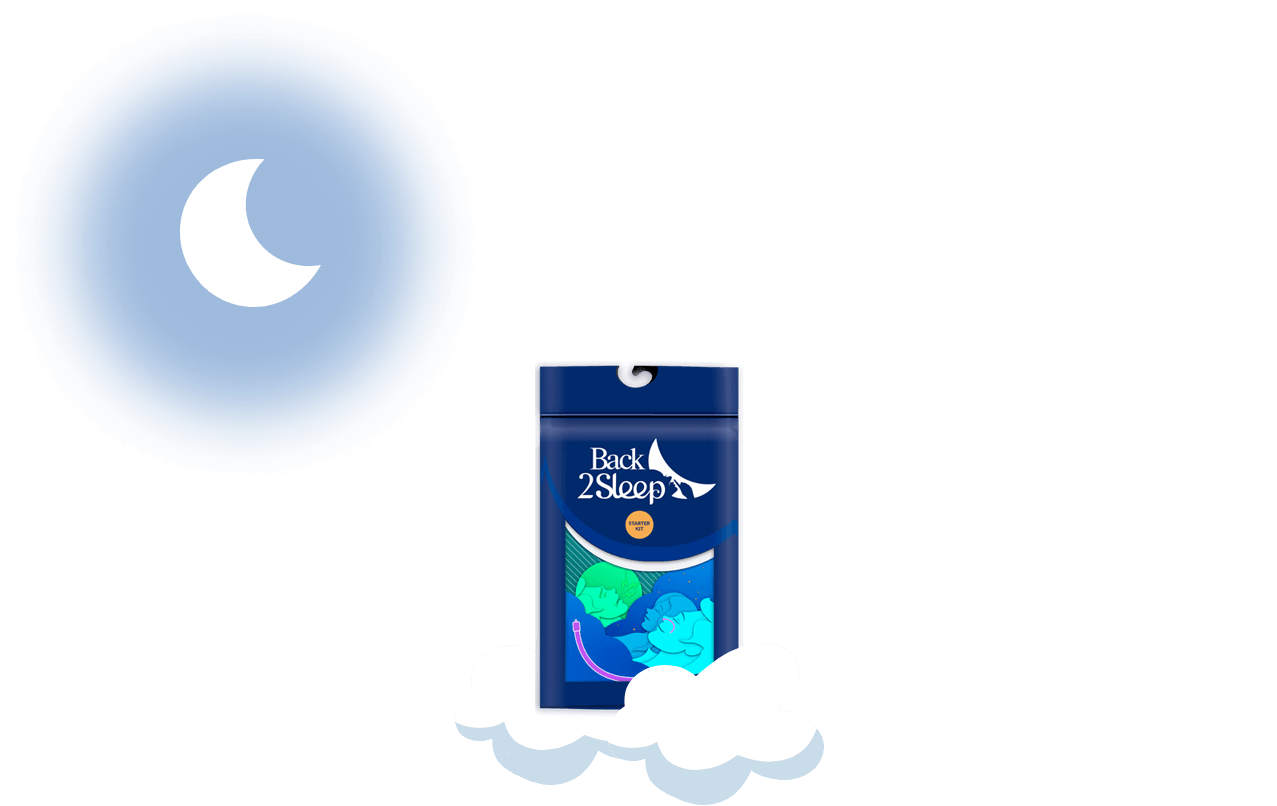
The Back2Sleep nasal stent takes a fundamentally different approach to promoting nasal breathing during sleep. Instead of blocking your mouth, it opens your nasal airway from the inside.
The Mechanism
A soft, medical-grade silicone tube is inserted into one nostril. It extends gently to the soft palate, the area at the back of your throat where airway collapse causes snoring. By keeping this passage physically open, the stent:
- Prevents the soft tissue collapse that creates snoring vibrations
- Maintains consistent airflow throughout the night, even during deep sleep
- Allows natural mouth breathing as a backup if needed
The Clinical Results
Unlike mouth taping, the nasal stent approach has measurable clinical outcomes:
- REI (Respiratory Event Index): Reduced from 22.4 to 15.7 (p<0.01), a statistically significant improvement
- Lowest SpO2: Improved from 81.9% to 86.6% (p<0.01), meaning blood oxygen levels stayed higher
- User satisfaction: 92% of users reported the device as effective
- Over 1 million devices sold across Europe
The Adaptation Process
Like any device you wear during sleep, there is an adjustment period:
- Days 1-2: Awareness of the stent. Some users compare it to a new contact lens
- Days 3-5: Most users report forgetting the stent is there
- Week 2+: Insertion becomes second nature (about 10 seconds)
The Starter Kit includes four sizes (S, M, L, XL) so you can find the right fit during a 15-night trial period.
What Users Say After Switching From Mouth Taping
Many Back2Sleep users tried mouth taping before discovering the nasal stent. Their comparisons are telling. Individual results may vary.
These experiences reflect the broader pattern: mouth taping addresses the symptom (mouth breathing) by force, while the nasal stent addresses the cause (inadequate nasal airflow) with a medical device.
If You Still Want to Try Mouth Taping: Safety Checklist
We believe an internal nasal stent is the safer, more effective approach. But if you decide to try mouth taping despite the limited evidence, follow these precautions recommended by sleep medicine professionals:
- See a doctor first. Get a sleep study to rule out moderate or severe sleep apnea. Mouth taping with undiagnosed apnea is dangerous.
- Test nasal breathing during the day. Close your mouth and breathe through your nose for 5 minutes. If you feel air-starved, your nasal passages may not handle a full night.
- Use only porous, medical-grade tape. Never use duct tape, electrical tape, or regular adhesive tape. Micropore surgical tape is the safest option.
- Leave a small gap. Some practitioners suggest taping in an "H" pattern rather than fully sealing the lips, allowing some mouth breathing as a safety valve.
- Fold the corners. Create small tabs for quick removal if you feel panicked during the night.
- Never combine with alcohol or sedatives. These reduce your arousal response, meaning you may not wake up if breathing becomes obstructed.
- Stop immediately if you experience skin irritation, increased daytime fatigue, morning headaches, or disrupted sleep.
Frequently Asked Questions About Mouth Taping
Is mouth taping safe for everyone?
No. Medical experts at Cleveland Clinic and other institutions advise against mouth taping for people with nasal obstruction, sleep apnea, asthma, COPD, enlarged tonsils, heart conditions, acid reflux, or anxiety disorders. Children should never use mouth tape. Even for healthy adults, the Sleep Foundation notes there are no official safety guidelines. Consult a healthcare professional before trying it.
Does mouth taping actually reduce snoring?
One small study of 30 people with mild sleep apnea showed reduced snoring frequency. However, this only applied to mild cases with good nasal function. A 2023 study found that many people continue trying to mouth-breathe against the tape, creating a "mouth puffing" effect rather than switching to nasal breathing. The evidence is too limited to draw broad conclusions.
What do doctors recommend instead of mouth taping?
Sleep physicians recommend addressing the root cause of mouth breathing and snoring. Options include internal nasal stents (which keep the airway open from inside), nasal strips, positional therapy (side sleeping), treating allergies or congestion, CPAP for diagnosed sleep apnea, and oral appliance therapy. An internal nasal stent like Back2Sleep promotes nasal breathing without blocking your mouth.
Can mouth taping help with sleep apnea?
The Sleep Foundation explicitly states that mouth taping "is not a treatment for sleep apnea on its own." The limited research only studied mild cases, and even then the improvements were modest. If you suspect sleep apnea, you need a proper sleep study and diagnosis. Taping your mouth with undiagnosed or untreated apnea can worsen oxygen desaturation and is potentially dangerous.
How is a nasal stent different from mouth taping?
A nasal stent opens your airway from the inside by keeping the nasal passage and soft palate area supported. Mouth taping blocks your mouth shut. The key safety difference: with a nasal stent, your mouth remains free as a backup airway. With tape, if your nose becomes congested during the night, you have no alternative breathing path. The nasal stent also has clinical data showing improvements in respiratory events and oxygen levels.
What kind of tape is used for mouth taping?
If attempting mouth taping, only porous, medical-grade surgical tape should be used (such as 3M micropore tape). Never use duct tape, packing tape, or non-medical adhesives. Even with proper tape, skin irritation, redness, and allergic reactions are common side effects. The tape should have folded corners for easy removal in case of panic or breathing difficulty.
Why is mouth taping so popular on social media?
Mouth taping went viral because it appears simple, costs almost nothing, and the concept of nasal breathing benefits is well-supported by science. However, the 2025 systematic review by Rhee et al. specifically flagged that social media has promoted a "potentially unsafe trend" based on insufficient evidence. The appeal of a simple fix is understandable, but the method carries risks that viral videos rarely mention.
The Bottom Line: Choose Evidence Over Trends
Mouth taping is a social media trend built on a sound principle (nasal breathing is healthier) but a flawed method (sealing your backup airway). The research is insufficient, the risks are real, and no major medical institution endorses it.
If you want the benefits of nasal breathing during sleep without the risks of mouth taping, an internal nasal stent offers a CE-certified, clinically supported alternative. It keeps your airway open from the inside, lets your mouth stay free as a safety backup, and has helped over one million users across Europe breathe better at night.
15-day trial with 4 sizes (S, M, L, XL) • Free returns within 15 days • View FAQ