
My Partner Snores, What Can I Do?

My Partner Snores: What Can I Do? Solutions That Actually Work
Discover proven strategies to reclaim peaceful nights, strengthen your relationship, and help your partner stop snoring for good
Does your partner's snoring keep you awake night after night? You're not alone in this exhausting struggle. When your partner snores loudly enough to shake the walls—sometimes reaching volumes comparable to a passing truck at 95 decibels—it's more than just an annoyance. It's a relationship crisis that affects both your health and happiness. The good news? Effective solutions exist, from simple lifestyle adjustments to innovative medical devices like the Back2Sleep nasal stent. This comprehensive guide explores why your partner snores, how it impacts your relationship, and most importantly, what you can do together to restore peaceful, restorative sleep for both of you.
Choose Your Size →Startling Reality: Research shows that 54% of people with snoring partners experience disrupted sleep every single night, losing an average of one hour of sleep nightly. That's 365 hours—or 15 full days—of lost sleep per year!
The Hidden Toll: How Partner Snoring Destroys Relationships
These aren't just numbers—they represent millions of relationships strained to breaking point. Studies from the Mayo Clinic and Rush University Medical Center reveal that partners of snorers suffer sleep efficiency rates of just 74% compared to the normal 90%, creating a cascade of health and relationship problems that cannot be ignored.

Why Does My Partner Snore? Understanding the Root Causes
Before you can solve snoring, you need to understand what causes it. Snoring occurs when airflow becomes restricted in the nose and throat during sleep, causing surrounding tissues to vibrate and create that infamous sound. This happens when muscles in the throat, uvula, soft palate, and tongue relax excessively during deep sleep, partially obstructing the airway.
The Physiological Mechanism Behind Snoring
During sleep, especially deep REM stages, the body's muscle tone decreases naturally. For some individuals, this relaxation causes the soft tissues in the upper airway to collapse inward, narrowing the passage through which air must flow. As air squeezes through this narrowed space at higher velocity, it causes the surrounding tissues to flutter and vibrate—producing the characteristic snoring sound.
In many cases, snoring signals more serious conditions like obstructive sleep apnea (OSA), where breathing actually stops temporarily during sleep. This dangerous condition reduces blood oxygen levels and increases risks for cardiovascular disease, stroke, and diabetes.
Critical Distinction: Simple snoring vs. sleep apnea. If your partner gasps for air, stops breathing temporarily, or experiences extreme daytime fatigue, they need immediate medical evaluation for sleep apnea.
Structural and Anatomical Causes
Some people are anatomically predisposed to snoring due to physical characteristics:
Aggravating Factors: What Makes Snoring Worse?
Understanding the factors that exacerbate snoring helps identify actionable solutions. Many of these triggers are modifiable through lifestyle changes.
⚖️ Excess Weight
Obesity increases fatty tissue around the throat and neck, physically compressing airways. Even modest weight loss of 10-15 pounds can significantly reduce snoring intensity.
🍷 Alcohol Consumption
Drinking alcohol within 4 hours of bedtime relaxes throat muscles excessively, dramatically increasing snoring likelihood and severity regardless of other factors.
🚬 Smoking
Tobacco irritates and inflames upper airway tissues, causing swelling that restricts airflow. Smokers are significantly more likely to snore than non-smokers.
🛏️ Sleep Position
Sleeping on the back allows gravity to pull the tongue backward, obstructing the airway. Side sleeping often eliminates or reduces snoring dramatically.
Additional Contributing Factors
| Factor | How It Causes Snoring | Modifiable? |
|---|---|---|
| Age | Muscle tone decreases naturally with age, increasing airway collapse | No (manage symptoms) |
| Gender | Men have narrower airways anatomically; 44% of men snore vs 28% of women | No (manage symptoms) |
| Medications | Sedatives, antihistamines, muscle relaxants reduce airway muscle tone | Yes (consult doctor) |
| Nasal Congestion | Allergies, colds, rhinitis force mouth breathing at night | Yes (treat underlying cause) |
| Pregnancy | Hormonal changes and weight gain increase snoring temporarily | Temporary (resolves post-pregnancy) |
The Devastating Impact on Relationships: More Than Just Lost Sleep
Snoring doesn't just steal sleep—it erodes the foundation of intimate relationships. The phenomenon of "secondhand snoring" creates a victim beyond the snorer themselves: the exhausted, resentful partner desperately seeking rest.
The Physical Toll on Non-Snoring Partners
Partners of chronic snorers experience documented health consequences:
The Emotional and Relational Destruction
Beyond physical health, snoring corrodes relationship quality in insidious ways:
Resentment builds gradually. The non-snoring partner grows bitter about nightly disturbances while feeling guilty for these negative feelings. Meanwhile, the snorer may feel defensive, embarrassed, or accused of something beyond their control. This creates a toxic cycle where both partners feel victimized.
Intimacy suffers profoundly. Studies show that 25% of couples report having sex less frequently because they're simply too exhausted. Research demonstrates that poor sleep affects sexual function: men experience higher rates of erectile dysfunction, while women report decreased arousal and difficulty achieving orgasm.
Shocking Statistics: 18% of couples report arguing regularly about snoring, while 40% of women admit finding their partner's snoring a major turn-off. Over 40% of adults over 60 who ended relationships secretly cited partner snoring as a significant reason—though most never shared this with their partner.
Real Couple Experiences: The Human Cost

The "Sleep Divorce" Phenomenon
Faced with chronic sleep disruption, many couples resort to sleeping in separate bedrooms—a trend the New York Times dubbed "sleep divorce." While this may improve sleep quality, it carries unintended consequences:
One in four couples now sleeps separately, with 46% expressing desire to do so. While physical separation resolves the immediate noise problem, it often damages emotional bonding and physical intimacy. Couples lose those precious moments of connection before sleep and upon waking—the quiet conversations, physical closeness, and sense of partnership that strengthen relationships.
Read More Health ArticlesImmediate Relief: How to Sleep Better While Your Partner Snores
While addressing the root cause of snoring takes time, you need sleep tonight. These strategies provide immediate relief for the non-snoring partner.
Strategic Bedtime Timing
Go to bed 20-30 minutes before your snoring partner. Once you reach deep sleep, you're less likely to be awakened by snoring noises.
White Noise Masking
Use white noise machines, fans, or apps to create consistent ambient sound that masks irregular snoring patterns.
Quality Earplugs
Invest in properly fitted silicone or foam earplugs. Research shows they improve sleep quality and perceived snoring severity significantly.
Position Management
Use body pillows to prevent your partner from rolling onto their back, the position that typically worsens snoring.
Advanced Coping Strategies
Important Reminder: These are temporary coping mechanisms. Long-term relationship health requires addressing the underlying snoring problem, not just managing its symptoms. Your partner's snoring likely indicates a health issue that needs treatment for their sake too.
How to Talk to Your Partner About Their Snoring Without Starting a Fight
Approaching the snoring conversation requires sensitivity and strategy. Many snorers don't realize they snore or underestimate its severity. Communication is crucial, but timing, tone, and approach determine whether you solve the problem or create defensiveness.
Choose the Right Time and Approach
Never start this conversation at 3 AM when you're exhausted and frustrated. Instead, choose a calm moment during the day when both partners are well-rested and relaxed. Frame the discussion around mutual concern, not blame.
Express Concern
"I'm worried about your health and our sleep quality. Can we talk about your snoring?"
Provide Evidence
Use sleep tracking apps to record snoring objectively. Let your partner choose the app and review data together.
Emphasize Partnership
"This is something we can solve together" rather than "You need to fix your snoring."
Offer Support
Volunteer to attend medical appointments, research solutions, and implement lifestyle changes together.
Key Conversation Strategies
Focus on health, not annoyance. Explain that loud snoring often indicates sleep apnea, which increases risks for heart disease, stroke, and diabetes. Your partner's health is at stake, not just your comfort.
Acknowledge their perspective. Recognize that they may feel embarrassed, defensive, or skeptical. Many people have tried over-the-counter remedies without success, leading to resignation. Reassure them that professional solutions work differently.
Document the impact objectively. Explain specific consequences: "I've been exhausted at work this week," or "I'm worried about falling asleep while driving." Concrete examples resonate more than general complaints.
Partnership Mindset: Remember that snoring affects both partners. The snorer likely experiences poor sleep quality too, even if unaware. Approaching this as a shared problem requiring joint solution builds cooperation rather than defensiveness.
What If They Resist?
Some partners minimize the problem or resist seeking help. Additional strategies include:
Proven Solutions: How to Stop Snoring and Save Your Relationship
Addressing snoring requires tackling both immediate symptoms and underlying causes. From simple lifestyle modifications to innovative medical devices, multiple effective solutions exist.
Lifestyle Changes That Reduce Snoring
Many cases of snoring improve significantly with behavioral modifications:
💤 Sleep Position Training
Side sleeping prevents tongue and soft palate from collapsing backward. Use body pillows, positional devices, or even tennis balls sewn into pajama backs to maintain side position throughout night.
⚖️ Weight Management
Losing even 10% of body weight dramatically reduces snoring by decreasing fatty tissue compression around airways. Combine diet modifications with regular exercise.
🚫 Eliminate Triggers
Avoid alcohol for 4+ hours before bed, quit smoking entirely, and review medications with your doctor to identify muscle-relaxing drugs that worsen snoring.
🛏️ Elevate Head
Raising the head of your bed by 4-6 inches (not just using more pillows) helps gravity keep airways open and reduces nasal congestion naturally.
Nasal and Airway Clearance
Chronic nasal congestion forces mouth breathing, significantly worsening snoring. Address this with:
The Back2Sleep Revolution: A Game-Changing Solution for Snorers
For couples desperate for relief, Back2Sleep offers an innovative, non-invasive alternative to bulky CPAP machines and ineffective drugstore remedies. Since its launch in June 2017 (formerly known as Nastent™), this CE-certified medical device has been regularly featured in major health publications and has helped over 1 million people worldwide reclaim peaceful sleep.

How Back2Sleep Works: The Science
Back2Sleep is a soft silicone nasal stent inserted into one nostril before sleep. Unlike external devices, it works internally by extending to the soft palate area, providing gentle support that prevents airway collapse—the primary mechanism behind both snoring and mild-to-moderate obstructive sleep apnea.
The device maintains an open airway throughout the night by:
Why Couples Choose Back2Sleep
⚡ Immediate Results
Over 92% of users report noticeable snoring reduction from the very first night. No lengthy adjustment period required—start sleeping better tonight.
🤫 Completely Silent
Unlike CPAP machines that hum and hiss throughout the night, Back2Sleep operates without electricity or noise. Your partner finally experiences true silence.
✈️ Travel-Friendly
Compact packaging fits in your pocket. Perfect for business trips, vacations, or staying at friends' homes without embarrassment or bulky equipment.
👥 Partner-Approved
Practically invisible in use with no external components. Your partner barely notices you're wearing anything, yet enjoys dramatically quieter nights.
Real Results: Couples Who Got Their Lives Back
Product Options and Pricing
| Product Option | Price | What's Included | Best For |
|---|---|---|---|
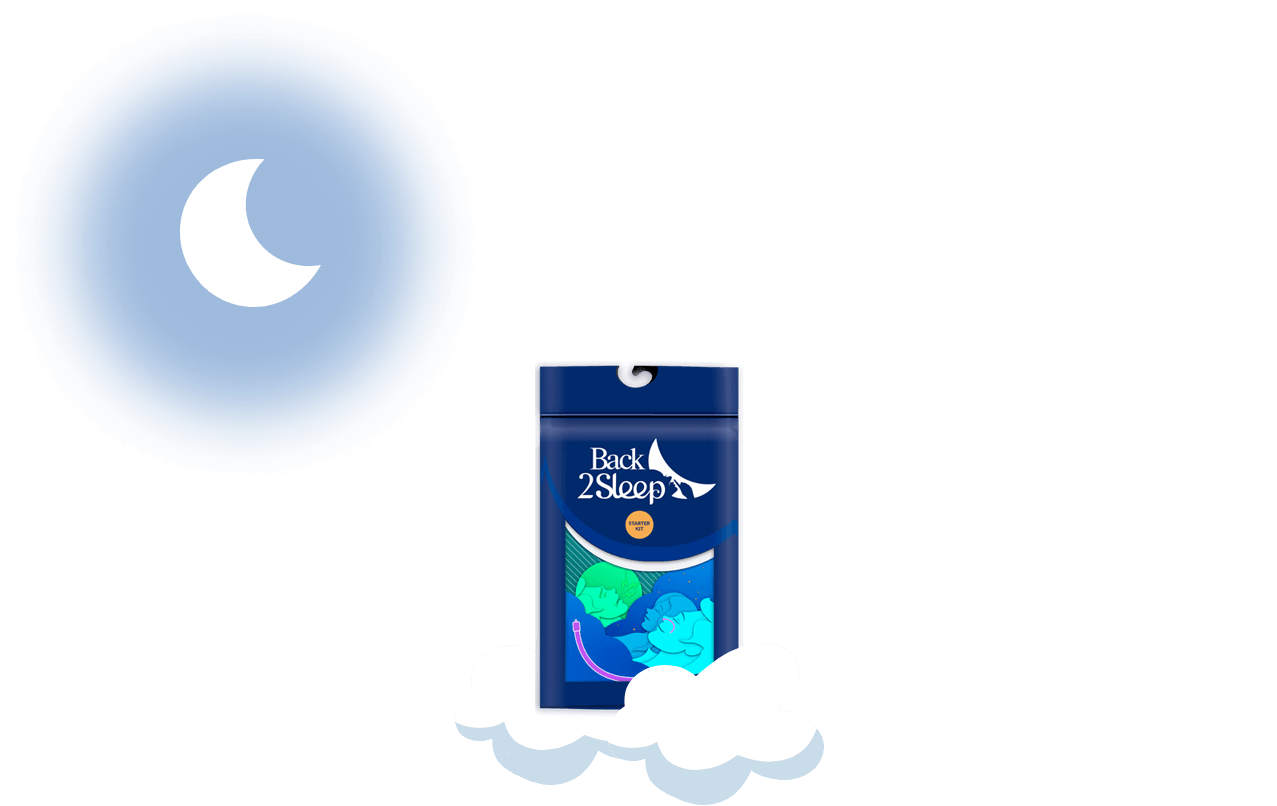
| Starter Kit | €44.90 | 4 tubes (S, M, L, XL), lubricant, manual - 15-night trial | First-time users finding their perfect fit |
| Individual Box | €34 | 1 device in your size, 3 lubricants, instructions for use - 1 month supply | Users who know their size |
| Monthly Subscription | €34/month | 2 tubes + free delivery, automatic monthly shipment | Consistent users wanting convenience |
| Annual Subscription | €285/year | 12 deliveries (€23.75 each) - Maximum savings | Long-term committed users |
Find Your Fit: Every Starter Kit lets you try all four sizes, find your perfect fit, and experience the difference.
Comparison: Back2Sleep vs. Traditional Solutions
| Feature | Back2Sleep | CPAP Machine | Nasal Strips | Mandibular Devices |
|---|---|---|---|---|
| Setup Time | 10 seconds | 5+ minutes | 30 seconds | 2 minutes |
| Noise Level | Silent | 45-60 dB | Silent | Silent |
| Travel Portability | Fits in pocket | Heavy, requires power | Portable | Case required |
| Effectiveness | 92% satisfaction | High (if tolerated) | Limited, mild cases | Good for jaw issues |
| Monthly Cost | €25-35 | €50-100+ | €15-25 | €40-80 |
| Partner Impact | Invisible, no noise | Visible mask, machine noise | Visible but quiet | Affects speech/intimacy |
| Adaptation Period | 3-5 days | 2-4 weeks | Immediate | 1-2 weeks |
Available Through Pharmacies
Back2Sleep is available through participating pharmacies across Europe, making professional guidance accessible. Pharmacists can provide personalized advice on sizing, insertion technique, and expected results.
Find a Participating PharmacyWhen to Seek Medical Help: Professional Interventions for Severe Snoring
While lifestyle changes and devices like Back2Sleep address most snoring cases, some situations require medical evaluation and potentially surgical intervention.
Warning Signs Requiring Immediate Medical Attention
Medical Evaluation Process
If snoring persists despite lifestyle modifications, or if warning signs appear, consult an ENT specialist (otolaryngologist) who will:
Physical Examination
Inspect nasal passages, throat, and airway structures to identify anatomical abnormalities causing obstruction.
Sleep Study
Conduct polysomnography (sleep study) to measure breathing patterns, oxygen levels, and sleep quality objectively.
Diagnosis
Determine whether simple snoring or sleep apnea is present, along with severity classification.
Treatment Plan
Recommend appropriate interventions based on cause, severity, and individual circumstances.
Surgical Options for Structural Issues
When anatomical abnormalities cause snoring, surgical correction may provide permanent relief:
Modern Approaches: Many ENT procedures are now minimally invasive, performed in office settings with quick recovery times. Surgery is typically reserved for cases where conservative measures fail or structural abnormalities clearly cause the problem.
Natural Remedies and Complementary Approaches
Beyond medical devices and lifestyle changes, several natural approaches can complement snoring treatment:
Throat and Tongue Exercises
Oropharyngeal exercises strengthen muscles around the airway, reducing collapse during sleep. Research shows consistent practice over 3 months reduces snoring frequency and intensity:
Anti-Snoring Devices and Aids
| Device Type | How It Works | Effectiveness | Best For |
|---|---|---|---|
| Nasal Strips | Adhesive strips mechanically widen nostrils externally | Mild cases, congestion | Temporary relief, athletes |
| Mandibular Devices | Mouthpieces hold jaw forward to enlarge airway | Moderate to high | Jaw-related obstruction |
| Chin Straps | Keep mouth closed to promote nasal breathing | Low to moderate | Mouth breathers with clear nose |
| Anti-Snore Pillows | Position head/neck to maintain open airway | Low to moderate | Position-dependent snorers |
| Nasal Stents (Back2Sleep) | Internal support prevents soft palate collapse | High (92%) | Most snoring types, OSA |
Herbal and Natural Approaches
While not standalone solutions, these natural remedies can complement other treatments:
Evidence-Based Approach: While natural remedies can help, they should complement—not replace—proven medical interventions. If snoring significantly impacts your life, pursue effective treatments like Back2Sleep rather than relying solely on unproven natural approaches.
Your Action Plan: Steps to Take Starting Today
Solving snoring requires coordinated action from both partners. Here's a practical timeline for addressing this issue effectively:
Week 1: Assessment and Communication
Document the Problem
Use sleep tracking apps to record snoring intensity, frequency, and patterns for one week. Gather objective data.
Have "The Talk"
Choose a calm moment to discuss findings. Frame as health concern, not blame. Express willingness to solve together.
Identify Triggers
Note whether snoring worsens after alcohol, on back, when congested, etc. Understanding patterns guides solutions.
Research Solutions
Review options together, including Back2Sleep, lifestyle changes, and medical consultations. Both partners invest time.
Week 2-4: Implement Lifestyle Changes
Week 4+: Medical Solutions
If lifestyle changes provide insufficient relief after 3-4 weeks:
Try Back2Sleep
Order the Starter Kit to test all four sizes. Most users find their fit within 15 nights and experience immediate improvement.
Consider Medical Evaluation
If Back2Sleep doesn't fully resolve snoring, schedule ENT consultation to rule out structural issues or sleep apnea.
Pursue Sleep Study
If apnea suspected (breathing pauses, extreme fatigue), undergo polysomnography for accurate diagnosis.
Implement Treatment
Follow medical recommendations, whether CPAP therapy, oral appliances, or surgical intervention for severe cases.
Timeline Expectations: Most couples experience significant improvement within 4-6 weeks when combining lifestyle changes with devices like Back2Sleep. Don't give up if results aren't immediate—consistent effort yields transformative results.
Frequently Asked Questions: Partner Snoring Solutions
Ready to Reclaim Peaceful Nights and Save Your Relationship?
Join over 1 million couples worldwide who've restored intimacy, health, and happiness by solving snoring together.
Get Your Starter Kit - €44.90✓ 92% satisfaction rate ✓ Results from night one
Conclusion: Peaceful Nights and Stronger Relationships Are Possible
Living with a snoring partner doesn't have to mean choosing between sleep and intimacy. Effective solutions exist for every situation, from simple lifestyle adjustments to innovative medical devices like Back2Sleep. The key is taking action together as partners rather than letting resentment and exhaustion erode your relationship.
Remember these critical points:
Your relationship deserves better than sleepless nights and growing resentment. Whether through lifestyle changes, communication improvements, or medical devices like Back2Sleep, solutions exist that work. The 1 million+ people who've already found relief prove that peaceful nights and restored intimacy are achievable—starting tonight.
Don't let another year pass with deteriorating sleep quality and relationship strain. Take the first step toward transformation today.
Your Next Step: Order the Back2Sleep Starter Kit today. Try all four sizes for 15 nights. Experience the difference that 92% of couples report—from the very first night. Your relationship will thank you.