
Myofunctional Therapy for Snoring: Tongue Exercises That Actually Work

Myofunctional Therapy for Snoring: Tongue & Throat Exercises That Actually Reduce Nighttime Noise
Clinical evidence shows oropharyngeal exercises may cut snoring intensity by up to 66% and reduce sleep apnea severity by 50%. Here is every exercise, the science behind each one, a realistic timeline, and how to combine them with other proven solutions for quiet, restorative sleep.
What Is Myofunctional Therapy and Why Does It Help Snoring?
Myofunctional therapy (also called orofacial myofunctional therapy or oropharyngeal exercises) is a structured program of tongue, throat, and facial muscle exercises. These movements strengthen the muscles that keep your airway open during sleep. When those muscles are weak or floppy, they collapse inward as you breathe, vibrating against each other and producing the sound we call snoring.
Think of it like physical therapy for your upper airway. Just as you might strengthen a weak knee with targeted exercises, you can tone the genioglossus (main tongue muscle), the soft palate, and the lateral pharyngeal walls so they resist collapse under the negative pressure of each breath.
The concept is not new. A landmark 2009 study by Guimaraes and colleagues at the University of Sao Paulo demonstrated that three months of daily oropharyngeal exercises reduced the apnea-hypopnea index (AHI) by 39% in patients with moderate obstructive sleep apnea. Snoring frequency dropped by 36% and snoring intensity fell significantly compared to the control group.
- Myofunctional therapy targets the root cause of snoring: weak, collapsible airway muscles
- It involves daily exercises for the tongue, palate, and throat lasting 10-15 minutes
- Published clinical trials show measurable reductions in both snoring and mild-to-moderate sleep apnea
What Does the Clinical Evidence Actually Show?
Unlike many "natural" anti-snoring methods that rely on anecdotal claims, myofunctional therapy has been evaluated in randomized controlled trials (RCTs) and multiple systematic reviews. Below are the most important findings.
The 2020 Cochrane Review (Gold Standard)
The Cochrane Collaboration published a systematic review analyzing 9 RCTs with 347 total participants. Their conclusions:
- Compared to sham therapy, myofunctional exercises probably reduce daytime sleepiness (moderate-certainty evidence)
- They may produce a large reduction in AHI (low-certainty evidence)
- They probably reduce subjective snoring intensity slightly (moderate-certainty evidence)
- Zero adverse events were reported across all included studies
The reviewers noted that study sizes remain small and called for larger, longer trials. However, they did not find any evidence of harm, making these exercises a genuinely safe option to try.
The 2015 Meta-Analysis (Largest to Date)
A meta-analysis published in the journal Sleep pooled data from 9 adult studies (120 patients) and 2 pediatric studies (25 children). The results:
| Outcome | Before Therapy | After Therapy | Improvement |
|---|---|---|---|
| AHI (adults) | 24.5 events/hr | 12.3 events/hr | ~50% reduction |
| AHI (children) | 4.87 events/hr | 1.84 events/hr | ~62% reduction |
| Snoring (% of sleep time) | 14.05% | 3.87% | 72% reduction |
| Lowest O2 saturation | 83.9% | 86.6% | +2.7 points |
| Epworth Sleepiness Scale | 14.8 | 8.2 | 45% less daytime sleepiness |
Perhaps most compelling: snoring measured by polysomnography (sleep lab recording) decreased from 14% of total sleep time to under 4%. That is an objective, lab-verified reduction, not just a partner's subjective impression.
2025 Network Meta-Analysis (Latest)
A 2025 systematic review and network meta-analysis published in Sleep Medicine Reviews confirmed that myofunctional therapy improves subjective sleep quality and daytime sleepiness scores. Critically, the authors found that when daily training exceeds 30 minutes, AHI reductions become statistically significant. This suggests a dose-response relationship: the more consistently you practice, the better the outcomes.
Why Weak Airway Muscles Cause Snoring
Understanding why these exercises work requires a quick look at the anatomy of snoring.
When you fall asleep, every muscle in your body relaxes, including the muscles that hold your tongue forward, keep your soft palate lifted, and maintain the width of your pharynx. In people who snore, this relaxation causes the upper airway to narrow. Air passing through the constricted space vibrates the surrounding tissues, creating the rumbling, rattling sound that keeps partners awake.
Several factors make this worse:
- Low tongue posture allows the tongue to slide backward during sleep
- Weak palatal muscles let the soft palate droop and flutter
- A recessed jaw or excess tissue further narrows the pharyngeal space
- Mouth breathing changes jaw position and worsens airway collapse
- Aging naturally reduces muscle tone throughout the throat
Myofunctional exercises directly address the first three factors. By strengthening the tongue, palate, and pharyngeal walls, you create a more rigid airway that resists collapse even during deep sleep.
Tongue (Genioglossus)
The largest airway muscle. When toned, it stays forward during sleep instead of falling back to block the throat.
Soft Palate
The flexible tissue at the back of the roof of your mouth. Strengthening it reduces flutter and vibration.
Lateral Pharyngeal Walls
The side walls of your throat. Toning them prevents the airway from narrowing side to side.
Facial Muscles (Orbicularis Oris)
Lip and cheek muscles that promote nasal breathing and proper mouth closure during sleep.
9 Clinically Tested Tongue and Throat Exercises
The following exercises are drawn from the protocols used in published clinical trials. Each targets a specific muscle group involved in keeping the airway open. Aim for 10-15 minutes per day, split into morning and evening sessions if you prefer.
1. Tongue Slide (Palate Sweep)
- Place the tip of your tongue against the back of your upper front teeth
- Slowly slide the tip of your tongue backward along the roof of your mouth
- Slide as far back as comfortable, then return to the starting position
- Keep firm pressure against the palate throughout the entire movement
Why it works: This exercise activates the full length of the tongue against the hard and soft palate, building strength in the genioglossus and palatal muscles simultaneously.
2. Tongue Push-Up (Palate Press)
- Press your entire tongue flat against the roof of your mouth
- Push upward with as much force as you can
- Hold the press for 10 seconds while breathing through your nose
- Release and rest for 5 seconds before the next repetition
Why it works: Isometric holds build endurance in the muscles that prevent the tongue from falling backward during sleep.
3. Tongue Push-Down
- Place the tip of your tongue against the back of your lower front teeth
- Press the back of your tongue flat against the floor of your mouth
- Hold for 10 seconds while keeping the tip of the tongue in place
- Release and repeat
Why it works: This targets the floor-of-mouth muscles (mylohyoid, geniohyoid) that help pull the tongue forward and stabilize the hyoid bone.
4. Tongue Stretch (Chin Reach)
- Open your mouth and extend your tongue as far outward and downward as possible
- Try to touch your chin with the tip of your tongue
- Look up toward the ceiling while holding the stretch
- Hold for 10-15 seconds, then relax
Why it works: This stretches and strengthens the tongue extensors, improving range of motion and building the muscle mass that keeps the tongue from collapsing during sleep.
5. Cheek Hook (Buccinator Exercise)
- Hook your right index finger inside your right cheek
- Gently pull the cheek outward
- Use your cheek muscles to pull your finger back inward against resistance
- Repeat 10 times, then switch to the left side
Why it works: The buccinator connects to the pharyngeal muscles. Strengthening the cheeks indirectly supports the lateral pharyngeal walls that narrow during sleep.
6. Vowel Pronunciation (A-E-I-O-U)
- Say each vowel sound loudly and clearly: A - E - I - O - U
- Exaggerate the mouth shapes, stretching wide for "A" and rounding for "O"
- Hold each vowel for 3 seconds
- Cycle through all five vowels 10-20 times
Why it works: Each vowel activates a slightly different combination of palatal, pharyngeal, and tongue muscles, providing varied multi-muscle training in one exercise.
7. Soft Palate Lift (Say "Ahh")
- Open your mouth wide and say "Ahhh" while looking in a mirror
- Watch the uvula and soft palate lift at the back of your throat
- Try to hold the palate in the raised position for 5 seconds
- Relax and repeat 10 times
Why it works: Directly targets the levator veli palatini and tensor veli palatini, the muscles that prevent the soft palate from vibrating during breathing.
8. Tongue Click (Palate Snap)
- Press your tongue firmly against the roof of your mouth
- Create suction between the tongue and palate
- Quickly snap the tongue downward to make a loud clicking sound
- Click rapidly for 15 seconds, then rest for 10 seconds
Why it works: The suction-and-release motion trains the tongue to maintain upward pressure against the palate, which is exactly the position that keeps the airway open during sleep.
9. Jaw Stretch (Mouth Open-Close)
- Purse your lips tightly together
- Open your mouth as wide as possible, stretching the jaw fully
- Hold the open position for 3 seconds
- Close slowly and repeat
Why it works: Opening and closing the jaw under controlled tension strengthens the suprahyoid muscles that elevate the larynx and support the base of the tongue.
Your 12-Minute Daily Routine (Sample Schedule)
Consistency matters more than intensity. The studies showing the best results used protocols lasting 8-15 minutes per day over 3 months. Here is a practical daily plan you can start tonight.
| Time | Exercise | Duration | Target |
|---|---|---|---|
| Morning (6 min) | Tongue Slide | 2 min | Tongue body |
| Tongue Push-Up | 1.5 min | Upper tongue | |
| Vowel Pronunciation | 2.5 min | Throat & palate | |
| Evening (6 min) | Tongue Stretch | 1.5 min | Tongue extensors |
| Cheek Hook | 2 min | Lateral walls | |
| Soft Palate Lift | 1 min | Soft palate | |
| Tongue Click | 1.5 min | Tongue suction |
Realistic Timeline: When to Expect Results
One of the most common frustrations with myofunctional therapy is the delayed gratification. Unlike a nasal stent that works from night one, exercises require weeks of consistent practice before the muscles adapt. Here is what published studies suggest you can expect:
Building awareness. Your tongue and throat muscles may feel tired or sore after the exercises, similar to starting a new gym routine. You are activating muscles that have been under-used for years. No snoring improvement yet.
First changes appear. Partners may notice quieter breathing on some nights. Your tongue naturally begins resting against the palate more often during the day. Nasal breathing becomes more habitual.
Measurable improvement. Sleep tracking apps begin showing reduced snoring episodes. Daytime alertness may improve. This is when most study participants began reporting subjective benefit.
Full effect. Clinical trials measured peak improvement at the 3-month mark. AHI reductions of ~50% and snoring reductions of 66-72% were seen at this stage. Continued daily practice maintains the gains.
What Real People Report About Tongue Exercises
Clinical data tells one story. Lived experience tells another. While individual results vary, here is what people commonly report across sleep health forums, clinical trial feedback, and patient surveys.
Common themes from user experiences include:
- Patience is essential. Most people report no noticeable change for the first 2-3 weeks
- Partners notice first. The snorer often does not realize improvement until told
- Alcohol and exhaustion override the benefits. Even strong airway muscles lose their edge when deeply sedated
- Combining methods works better. People who use exercises alongside a nasal stent or positional therapy report the best overall results
- Motivation fades. The biggest challenge is maintaining the routine after initial enthusiasm wears off
Individual results may vary. These experiences do not constitute medical advice.
Myofunctional Therapy vs. Other Anti-Snoring Approaches
Tongue exercises are one tool in a larger toolkit. Here is how they compare to other common approaches for reducing snoring.
| Approach | How Fast? | Evidence Level | Effort | Best For |
|---|---|---|---|---|
| Myofunctional Therapy | 3+ months | 9 RCTs, Cochrane review | 10-15 min/day, ongoing | Mild OSA, habitual snoring |
| Internal Nasal Stent | Night 1 | Clinical studies, CE-certified | 10-second insertion | Nasal snoring, mild-moderate OSA |
| CPAP Machine | Night 1 | Gold standard (extensive RCTs) | Nightly mask wear | Moderate-severe OSA |
| Mandibular Advancement Device | 1-2 weeks | Multiple RCTs | Nightly device wear | Mild-moderate OSA, tongue-base snoring |
| Positional Therapy | Night 1 | Several RCTs | Sleep position device | Supine-dominant snoring |
| Weight Loss (5-10%) | Months | Strong observational evidence | Sustained lifestyle change | Overweight snorers (BMI >25) |
The most effective approach for many people is combining methods. For instance, you might use an internal nasal stent for immediate relief while building long-term airway strength through daily exercises. This layered strategy addresses snoring from multiple angles simultaneously.
Try the Back2Sleep Starter KitWho Benefits Most from Myofunctional Therapy?
Oropharyngeal exercises do not work equally well for everyone. Research suggests the following groups see the strongest results:
Mild-to-Moderate OSA
Patients with an AHI between 5 and 30 events per hour showed the most consistent improvements in clinical trials.
Primary (Simple) Snoring
People who snore but do not have diagnosed sleep apnea. Their airways are partially narrowed but not fully collapsing.
Post-Adenotonsillectomy Children
Children who had tonsil/adenoid surgery but still have residual snoring. Exercises address the remaining muscular component.
CPAP-Intolerant Patients
People who cannot tolerate CPAP masks may use exercises as part of a combined alternative strategy under medical guidance.
Who May See Limited Results
- Severe OSA (AHI >30): Exercises alone are unlikely to be sufficient. CPAP remains the recommended treatment
- Anatomical obstructions: Deviated septum, large tonsils, or nasal polyps may need surgical correction first
- Obesity-driven apnea: Exercises help, but weight loss often has a greater impact when BMI is significantly elevated
- Central sleep apnea: This type involves brain signaling, not airway collapse, so muscular exercises do not address the root cause
Combining Exercises with a Nasal Stent for Maximum Effect
One approach that many users find effective is pairing nightly use of an internal nasal stent with daily myofunctional exercises. This combination attacks snoring from two directions:
- The nasal stent works instantly. It mechanically holds the nasal passage open, reducing airway resistance from night one. No waiting period. No muscle building required.
- The exercises build long-term strength. Over 3+ months, your tongue and throat muscles become firmer and more resistant to collapse, providing an additional layer of protection.
Think of it as wearing a knee brace (nasal stent) while doing physical therapy (exercises). The brace provides immediate support. The therapy builds the underlying strength. Together, they produce better outcomes than either alone.
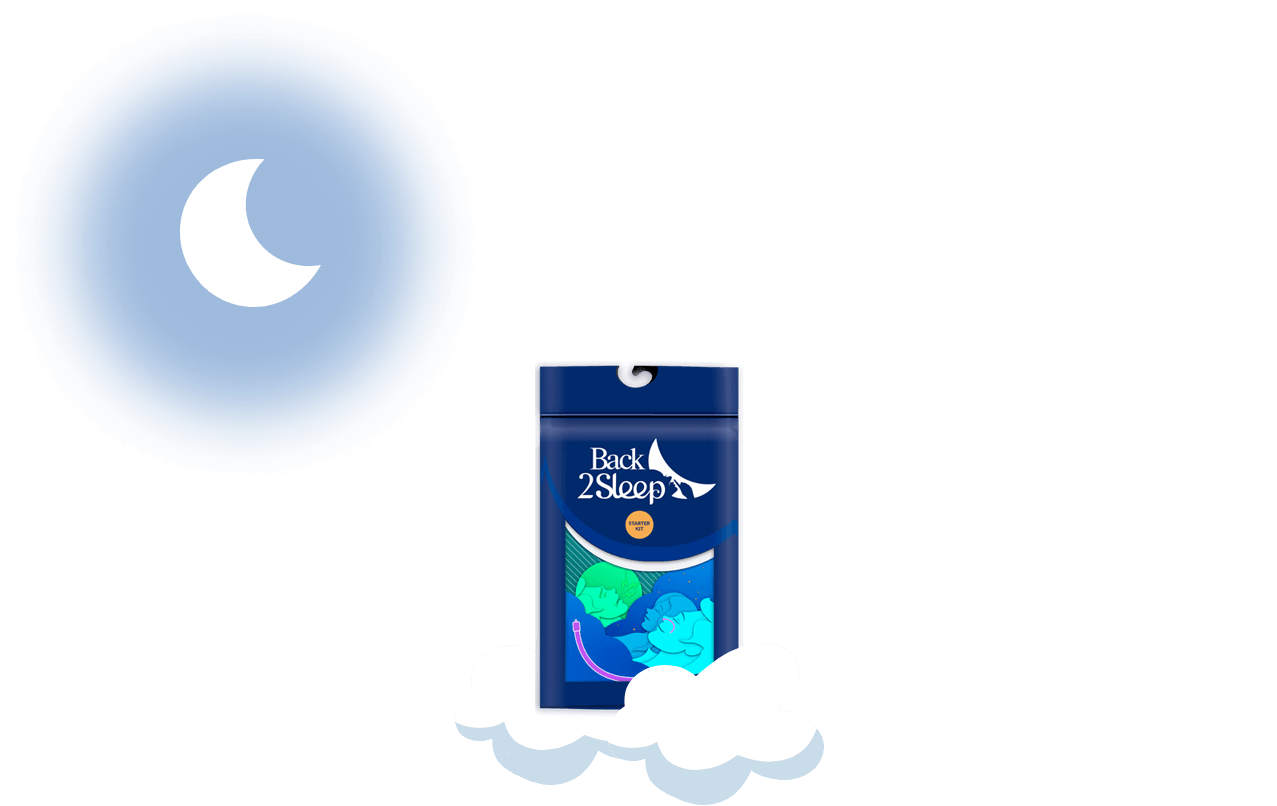
The Back2Sleep Starter Kit includes four sizes of the internal nasal stent (S, M, L, XL), lubricant, and a usage guide. Over 92% of users report satisfaction, and the device takes approximately 10 seconds to insert. It is a practical way to get immediate snoring relief while you invest in the longer-term benefits of exercise.
 Get Immediate Relief with Back2Sleep
7 Common Mistakes That Sabotage Your Progress
Many people try myofunctional exercises, see no results, and give up. Often, the problem is not the exercises themselves but how they are performed. Avoid these pitfalls:
1 Quitting before 3 months
Muscle adaptation takes time. Studies showing real AHI improvement measured results at the 3-month mark. If you stop at week 4 because "nothing is happening," you may be abandoning the routine right before it starts to pay off.
2 Doing exercises too quickly
Rushing through movements reduces muscle activation. The tongue push-up, for example, requires a full 10-second hold to generate the isometric load needed for strengthening. Speed-running through 5 repetitions in 20 seconds accomplishes little.
3 Skipping days
Muscle memory requires consistency. Missing several days per week means the muscles never fully adapt. Aim for a minimum of 5-6 days per week. Daily practice is ideal.
4 Only doing one exercise
Snoring involves multiple muscle groups. A single exercise (like tongue slides alone) only targets one area. The studies that showed the largest improvements used comprehensive protocols involving 4-6 different movements.
5 Expecting exercises to replace CPAP
For moderate-to-severe obstructive sleep apnea, myofunctional therapy is a complement, not a replacement. The Cochrane review found that myofunctional therapy may increase AHI compared to CPAP when used alone for more severe cases.
6 Ignoring nasal breathing
All the throat exercises in the world matter less if you breathe through your mouth at night. Nasal breathing is a foundational pillar. If nasal congestion is an issue, consider an internal nasal stent to keep the nasal passage open.
7 Not tracking progress
Without measurement, you cannot know if the exercises are working. Use a sleep tracking app (like SnoreLab) to record snoring frequency and intensity over time. Objective data keeps you motivated and helps you adjust your approach.
Frequently Asked Questions
How long do myofunctional exercises take to reduce snoring?
Most clinical trials measured results at the 3-month mark. Some patients and their partners notice early improvements as soon as week 3-4, but significant, consistent reduction typically requires at least 12 weeks of daily 10-15 minute practice. Individual results may vary depending on snoring severity and exercise consistency.
Can tongue exercises cure sleep apnea?
No. Myofunctional therapy may reduce the severity of mild-to-moderate obstructive sleep apnea, but it is not considered a standalone cure. Meta-analyses show an average 50% AHI reduction in adults, which is meaningful but does not eliminate apnea entirely. For moderate-to-severe OSA, medical treatments such as CPAP remain the recommended approach. Always consult a healthcare professional for a proper diagnosis and treatment plan.
Are there any side effects or risks?
The 2020 Cochrane review reported zero adverse events across all 9 included clinical trials involving 347 participants. Some people experience mild jaw or tongue muscle soreness in the first week, similar to muscle fatigue after starting a new exercise. This typically resolves within a few days. If you have TMJ disorder, consult your dentist before beginning jaw exercises.
Do I need a therapist, or can I do exercises on my own?
Some people work with a certified myofunctional therapist who tailors exercises to their specific anatomy and monitors progress. However, the exercises described in published studies are straightforward enough to practice independently. A therapist can be helpful for ensuring correct form and motivation, especially in the beginning.
Can I combine tongue exercises with an anti-snoring device?
Yes, and many sleep professionals recommend this approach. A nasal stent like Back2Sleep provides immediate snoring relief by keeping the nasal airway open, while exercises build long-term muscle tone. Using both addresses snoring from multiple angles. The exercises are done during the day; the device is used at night. They do not interfere with each other.
What happens if I stop doing the exercises?
A long-term follow-up study found that patients who stopped exercising saw their AHI return to pre-treatment levels (5.3 events/hr versus 0.5 events/hr in those who continued). Like any physical training, the benefits require ongoing maintenance. Most people settle into a shorter 5-minute daily routine for maintenance once the initial 3-month training period is complete.
Do singing or playing wind instruments count as myofunctional therapy?
There is some preliminary evidence. A study on didgeridoo playing showed reduced snoring and daytime sleepiness after 4 months of regular practice, likely because the instrument requires sustained activation of pharyngeal muscles. Singing exercises that emphasize forceful vowel sounds may also help. However, these activities are less targeted than a structured exercise program. Think of them as supplementary, not replacement, exercises.
Next Steps for Quieter Sleep
Myofunctional therapy is a well-researched, zero-risk way to strengthen the muscles that cause snoring. For many people, it delivers meaningful improvement when practiced consistently over 3 or more months. But it requires patience, discipline, and daily commitment.
If you want immediate relief while building long-term strength, combining exercises with a proven nasal stent is a practical solution. The Back2Sleep Starter Kit provides four sizes to find your perfect fit, with results from the very first night.
Helpful resources to continue your journey:
- Understanding Sleep Apnea -- learn the difference between snoring and obstructive sleep apnea
- Frequently Asked Questions -- common questions about the Back2Sleep device and sizing
- Back2Sleep Blog -- more articles on snoring science, sleep health, and practical tips
 Start Sleeping Quietly Tonight