
Nose Breathing vs Mouth Breathing: Why It Matters for Sleep

Nose Breathing vs Mouth Breathing: Why Your Sleep Depends on It
Breathing through your nose while you sleep produces nitric oxide, filters airborne particles, and may reduce snoring intensity by keeping your airway open and moist. Mouth breathing does the opposite. Here is what the science says and what you can do about it tonight.
The Breathing Route You Choose at Night Changes Everything
Most adults take between 12 and 20 breaths per minute during sleep. That adds up to roughly 7,000 to 10,000 breaths every single night. Whether those breaths travel through your nose or your mouth can shape your sleep quality, cardiovascular health, oral hygiene, and even your facial structure over time.
Research from the American Physiological Society found that nasal breathing lowers diastolic blood pressure and shifts the nervous system toward a parasympathetic state—the "rest and digest" mode that supports deep, restorative sleep. Mouth breathing, on the other hand, activates the sympathetic ("fight or flight") branch, which can make your sleep lighter and more fragmented.
If you wake up with a dry mouth, sore throat, or morning headache, there is a strong chance you are breathing through your mouth at night. This guide explains why that matters, what the medical evidence shows, and practical steps to restore nasal breathing—including solutions that work from the very first night.
- Nasal breathing produces nitric oxide, a molecule that widens blood vessels and may improve oxygen uptake by 10–20%
- Mouth breathing during sleep is linked to snoring, sleep apnea, dry mouth, and higher blood pressure
- Simple interventions—like an intranasal stent—can help restore nose breathing without surgery
Nose vs Mouth Breathing: The Numbers
Published clinical studies reveal measurable differences between the two breathing routes. These are not theoretical—they are data points from peer-reviewed research.
A study published in Nature Medicine measured nitric oxide levels in the paranasal sinuses at concentrations exceeding 20 parts per million. When you breathe through your nose, that gas travels into your lungs, where it acts as a bronchodilator and vasodilator. Switch to mouth breathing, and exhaled nitric oxide drops by roughly half, according to research in the European Respiratory Journal.

What Happens Inside Your Body During Nasal Breathing
Nitric Oxide: Your Built-In Airway Optimizer
Your paranasal sinuses continuously produce nitric oxide (NO). This colourless gas was identified as a key signalling molecule in a landmark study by Lundberg et al. published in Nature Medicine (1995). During nasal breathing, NO mixes with inhaled air and reaches the lungs, where it:
- Dilates blood vessels – lowering pulmonary vascular resistance and improving gas exchange
- Opens bronchial tubes – acting as a natural bronchodilator that reduces airway resistance
- Fights pathogens – NO concentrations in healthy sinuses exceed levels needed for antibacterial effects
When you breathe through your mouth, you bypass the sinuses entirely. The NO never reaches your lungs. The result is reduced oxygen transfer and a drier, more vulnerable airway.
Air Conditioning: Filtration, Warming & Humidification
According to Cleveland Clinic pulmonologist Dr. Jason Turowski, your nose performs three critical functions that your mouth simply cannot replicate:
- Filtering – nasal cilia trap dust, pollen, bacteria, and airborne particles before they reach the lungs
- Warming – nasal passages heat cold air to near body temperature, protecting sensitive lung tissue
- Humidifying – the nasal mucosa adds moisture, preventing the airway dryness that triggers snoring and irritation
Mouth breathing skips all three steps. Cold, dry, unfiltered air hits the back of the throat directly—drying the soft tissues and making them more likely to vibrate and collapse.
Parasympathetic Activation & Blood Pressure
A 2024 study from the American Physiological Society demonstrated that nasal breathing shifts the autonomic nervous system toward a parasympathetic state. Participants who breathed through their noses showed lower diastolic blood pressure and a lower perceived rate of exertion compared to mouth breathers—even at rest.
This parasympathetic activation is exactly what your body needs during sleep. It supports the deep, slow-wave sleep phases where physical repair and memory consolidation happen.
Side-by-Side: Nasal Breathing vs Mouth Breathing During Sleep
The differences are not subtle. Here is how the two breathing routes compare across the factors that matter most for sleep and overall health.
| Factor | Nose Breathing | Mouth Breathing |
|---|---|---|
| Nitric oxide delivery | Full production from sinuses reaches lungs | Bypassed; ~50% less NO exhaled |
| Oxygen uptake | 10–20% higher transcutaneous O2 tension | Lower oxygen saturation during sleep |
| Airway moisture | Air warmed and humidified to ~37°C | Dry, cold air; airway tissues dehydrate |
| Particle filtration | Cilia trap allergens, dust, bacteria | Unfiltered air enters lungs directly |
| Snoring risk | Lower; moist airway reduces tissue vibration | Higher; dry tissues vibrate and collapse |
| Sleep apnea severity | Reduced airway collapse risk | Worsened OSA; mandible drops, airway narrows |
| Nervous system | Parasympathetic ("rest & digest") | Sympathetic ("fight or flight") |
| Blood pressure | Lower diastolic BP at rest | Elevated BP; cardiovascular stress |
| Oral health | Saliva flow maintained; teeth protected | Dry mouth; higher cavity & gum disease risk |
| Cognitive function | Normal memory and learning ability | Impaired working memory and arithmetic |
A review published in PMC (2024) found that individuals with habitual oral breathing exhibited measurable impairments in working memory, olfactory memory, and learning skills, along with diminished blood oxygenation in the hippocampus, brainstem, and cerebellum. These cognitive deficits were linked directly to the route of breathing.
Health Consequences of Chronic Mouth Breathing
Mouth breathing is not just an inconvenience. When it becomes your default breathing route during sleep, it creates a cascade of problems across multiple body systems.
Oral Health Deterioration
Saliva is your mouth's natural defence system. It neutralises acids, washes away food particles, and keeps bacterial populations in check. Mouth breathing dries out the oral cavity, reducing saliva's protective effect. The Cleveland Clinic reports that chronic mouth breathers face higher rates of:
- Cavities and tooth decay
- Gingivitis and periodontal disease
- Persistent bad breath (halitosis)
- Oral yeast infections from chronic dryness
Snoring & Obstructive Sleep Apnea
Research published in Frontiers in Sleep (2024) found that mouth breathing during sleep causes the soft palate to shift backward and the mandible to drop. This narrows both the retropalatal and retroglossal areas of the upper airway—the exact regions where obstructive sleep apnea occurs.
The study also noted that mouth breathing reduces the length of upper-airway dilator muscles, making them less effective at keeping the airway open. This is why many people who snore only snore when they sleep with their mouth open.
Cardiovascular Stress
The American Physiological Society's research showed that mouth breathing elevates blood pressure and increases sympathetic nervous system activity. Over months and years, this chronic low-grade stress may contribute to hypertension and increased cardiovascular risk.
Facial Development in Children
A systematic review and meta-analysis in PMC documented that children who breathe through their mouths during sleep are at risk of developing long face syndrome—characterised by a narrow palate, open bite, and a receding chin. The prevalence of mouth breathing in children ranges from 5% to 75% depending on the population studied.
Even more concerning, children with habitual mouth breathing are 40–100 times more likely to develop behavioural problems resembling ADHD, according to research on sleep-disordered breathing in paediatric populations.
Real Experiences: What Switching to Nasal Breathing Feels Like
Clinical data tells one story. The lived experience of people who have transitioned from mouth breathing to nasal breathing tells another. Here are accounts from real users who made the switch.
My wife was almost wanting to sleep in a separate room because of my snoring. Since switching to nasal breathing with the stent, she sleeps through the night. I feel less drowsy during the day and can maintain concentration while driving.
I travel frequently by train and used to avoid sleeping in public because of snoring anxiety. Now I can breathe through my nose and rest wherever I need to. It took about three nights to fully adapt.
At first, I was not sure about inserting something into my nostril. But after the adaptation period, I stopped noticing it—just like a contact lens. My morning dry mouth is completely gone.
Individual results may vary. These testimonials reflect personal experiences and are not a guarantee of specific outcomes.
The Adaptation Curve
Most people who switch from mouth breathing to assisted nasal breathing report a 3 to 5 day adaptation period. During this time, there may be mild awareness of the device or slight nasal sensitivity. By the end of the first week, users consistently report that the sensation disappears—much like forgetting you are wearing contact lenses.
Staff testing at Back2Sleep documented this pattern systematically: three days of baseline measurement, three days of adaptation, and three days of full-effectiveness measurement. The data confirmed that snoring intensity dropped measurably once the adaptation phase was complete.
How to Restore Nasal Breathing During Sleep
If you have identified yourself as a mouth breather, the good news is that multiple interventions exist—ranging from simple environmental changes to purpose-built medical devices.
Environmental & Behavioural Changes
- Elevate your head – sleeping with your head slightly raised can reduce nasal congestion and encourage nose breathing
- Use a humidifier – dry bedroom air irritates nasal passages and pushes you toward mouth breathing
- Clear nasal passages before bed – saline rinse or nasal spray can open blocked airways
- Sleep on your side – back sleeping encourages the jaw to drop open; side sleeping helps keep the mouth closed
- Avoid alcohol before bed – alcohol relaxes throat muscles excessively and promotes mouth breathing
Medical Interventions
| Approach | How It Works | Best For | Limitations |
|---|---|---|---|
| Intranasal stent | Soft silicone tube holds nasal airway open from nostril to soft palate | Snorers, mild-to-moderate OSA, mouth breathers | 3–5 day adaptation period |
| External nasal dilator | Adhesive strip or clip opens nostrils from outside | Mild nasal congestion, occasional snoring | Does not address internal airway collapse |
| Mouth taping | Tape holds lips closed to force nasal breathing | People with clear nasal passages | Carries asphyxiation risk if nasal obstruction present; limited evidence |
| CPAP therapy | Continuous positive pressure keeps airway open | Moderate-to-severe sleep apnea | Bulky, noisy, low long-term compliance |
| Oral appliance | Custom mouthguard advances the lower jaw | Mild-to-moderate OSA | Requires dental fitting; may cause jaw discomfort |
| Surgery | Septoplasty, turbinate reduction, or adenoid removal | Structural nasal obstruction | Invasive; recovery period; not always successful |
Why an Intranasal Stent Is Different
External nasal strips open the nostrils from the outside, but they cannot prevent the internal soft tissue collapse that causes most snoring. Mouth taping forces the lips closed, but a systematic review published in PLOS ONE (2025) warned about potential risks including asphyxiation when nasal obstruction is present.
The Back2Sleep intranasal stent works from the inside. It is a soft, medical-grade silicone tube that fits in one nostril and extends to the soft palate, gently holding the airway open throughout the night. A pilot study on nasal airway stents found that this approach reduced apnea-hypopnea events and improved oxygen saturation in subjects with mild to moderate OSA.
Portable & Silent
No electricity, no hoses, no noise. Fits in any travel bag—ideal for hotels, flights, and camping.
10-Second Insertion
Apply water-based lubricant and insert. No complex setup or dental fitting required.
4 Sizes Available
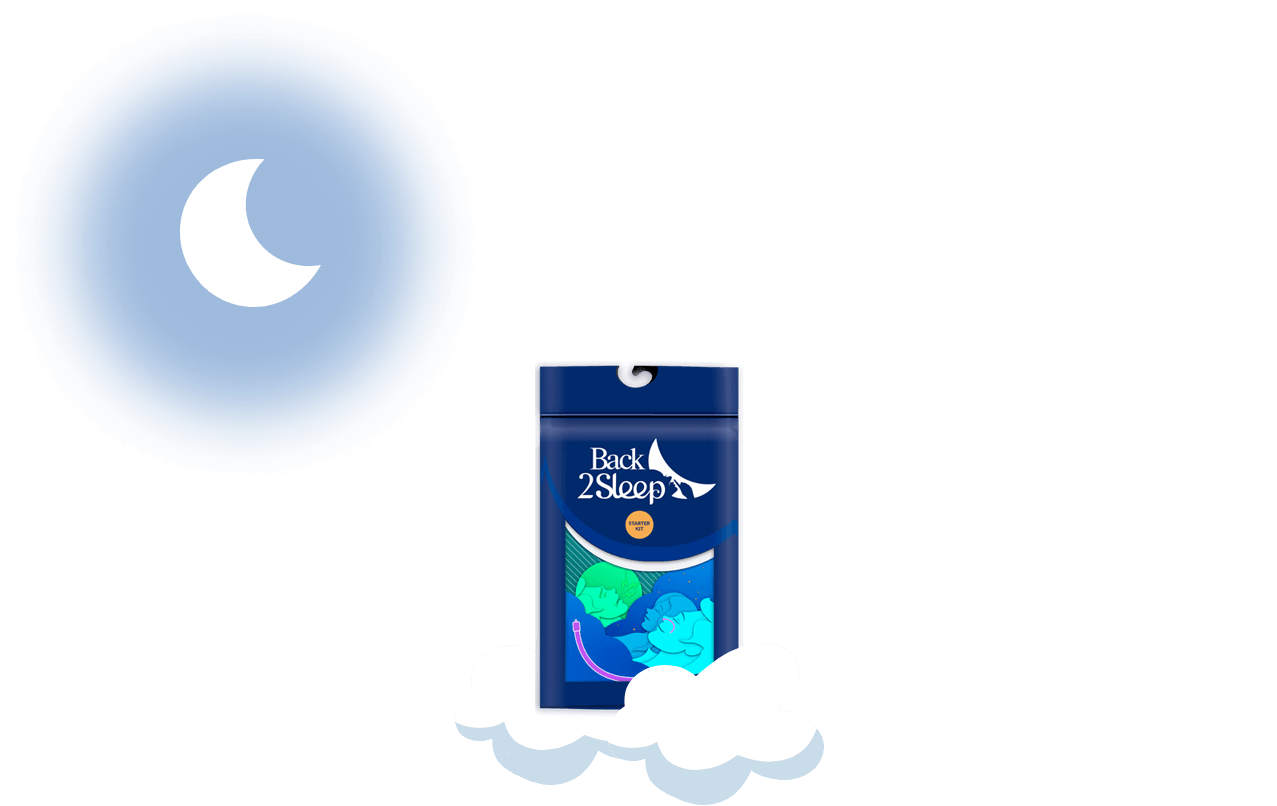
The Starter Kit includes S, M, L, and XL to match your unique nasal anatomy.
CE-Certified Medical Device
Designed and tested as a Class I medical device. Dermatologically tested silicone.
Clinical Evidence: Nasal Stents & Breathing Outcomes
The Back2Sleep device has been evaluated in clinical settings. Here are the published findings.
| Measurement | Before Device | With Device | Significance |
|---|---|---|---|
| REI (Respiratory Event Index) | 22.4 ± 14.1 | 15.7 ± 10.4 | p < 0.01 |
| Lowest SpO2 (%) | 81.9 ± 7.5 | 86.6 ± 4.8 | p < 0.01 |
| User satisfaction | — | 92% | Post-trial survey |
The Respiratory Event Index dropped from 22.4 to 15.7—a 30% reduction in breathing disturbances per hour of sleep. Lowest oxygen saturation improved from 81.9% to 86.6%, meaning the body maintained better oxygenation throughout the night.
It is worth noting that 5 of 23 subjects in the study dropped out due to initial discomfort, reinforcing the importance of the adaptation period and correct size selection. The Starter Kit addresses this by including all four sizes so you can find your optimal fit.
Mouth Breathing in Children: A Developmental Concern
The stakes of mouth breathing are especially high for growing children. While adults can address the problem at any age, children face structural consequences that become harder to reverse over time.
Facial & Dental Development
A meta-analysis in BMC Oral Health found that persistent childhood mouth breathing is associated with:
- Vertical elongation of the lower face ("long face syndrome")
- Narrow palate and dental crowding
- Anterior open bite and posterior crossbite
- Lip incompetence – the inability to close the lips comfortably at rest
- Altered tongue posture – the tongue drops to the floor of the mouth instead of resting on the palate
Sleep, Behaviour & School Performance
Nearly one-third of mouth-breathing children report awareness of sleep problems—such as sleeping with their mouth open or drooling on the pillow. About 18.6% report snoring awareness, and 34% experience daytime sleepiness.
The behavioural consequences can be severe. Research shows that children with breathing problems like snoring and mouth breathing are 40 to 100 times more likely to develop symptoms resembling attention-deficit hyperactivity disorder, including difficulty sustaining attention in school, easy fatigue, and behavioural disruptions.
- Watch for open-mouth posture during daytime rest—it often predicts nighttime mouth breathing
- Check for morning dry mouth, chapped lips, or dark circles under the eyes
- If your child snores regularly, consult a paediatrician or ENT specialist
- Early intervention (such as adenoid assessment or myofunctional therapy) can prevent permanent facial changes
Are You a Mouth Breather? Self-Assessment Checklist
Many people breathe through their mouth at night without realising it. This is sometimes called "hidden mouth breathing" because the nasal passages feel clear during the day but become congested when lying down. Use this checklist to evaluate your risk.
- You wake up with a dry mouth or sore throat most mornings
- Your partner has told you that you snore
- You frequently wake with a headache that fades within an hour
- You notice drool marks on your pillow
- You feel unrested despite sleeping 7–8 hours
- You have chronic bad breath that does not respond to dental hygiene alone
- Your lips are often dry or cracked when you wake
- You experience nasal congestion that worsens at night
- You feel more alert on nights when your nose is completely clear
- You tend to sleep with your mouth open (confirmed by partner or sleep recording)
Scoring: If you checked 3 or more items, nighttime mouth breathing is likely. 5 or more items suggests a strong pattern that may benefit from intervention. Consider discussing your results with a healthcare professional, especially if snoring or daytime fatigue is present.
Lifestyle Factors That Influence Breathing Route
Your breathing route during sleep is not fixed. Several modifiable factors can push you toward mouth breathing or help you maintain nasal breathing.
Factors That Promote Mouth Breathing
| Factor | Mechanism | What to Do |
|---|---|---|
| Alcohol | Relaxes throat muscles excessively; causes nasal congestion | Avoid alcohol within 3 hours of bedtime |
| Excess weight | Fat deposits around the neck narrow the airway | Even 5–10% weight loss can reduce snoring severity |
| Dry bedroom air | Dehydrates nasal mucosa, causing swelling and blockage | Use a humidifier; target 40–60% humidity |
| Allergies | Inflammatory response swells nasal tissues | Allergen-proof bedding; antihistamines as directed |
| Back sleeping | Gravity pulls the jaw and tongue backward | Side sleeping or positional therapy devices |
| Sedatives & muscle relaxants | Over-relax upper airway muscles | Discuss alternatives with your prescribing doctor |
Factors That Support Nasal Breathing
- Regular exercise – improves nasal airflow and reduces inflammation
- Nasal hygiene – daily saline rinse keeps passages clear
- Proper hydration – well-hydrated mucous membranes resist congestion
- Sleeping posture – side sleeping with a supportive pillow keeps the airway aligned
- Intranasal support – a nasal stent mechanically maintains the nasal airway open throughout the night
What to Expect: Your First Two Weeks of Nasal Breathing
Switching from mouth breathing to nasal breathing is not always instant. Here is a realistic timeline based on documented user experiences and clinical observations.
| Timeframe | What Happens | What You May Notice |
|---|---|---|
| Night 1 | First use of nasal stent or other intervention | Awareness of the device; possibly lighter sleep; reduced or absent snoring |
| Nights 2–3 | Nasal passages begin adjusting to sustained airflow | Slightly less awareness; partner may notice quieter breathing |
| Nights 4–5 | Adaptation largely complete; nasal breathing becoming habitual | Dry mouth gone; may notice better morning energy |
| Week 1–2 | Consistent nasal breathing established; sleep architecture improving | Deeper sleep; less daytime fatigue; no morning sore throat |
| Week 3+ | Full benefits; measurable improvement in oxygen levels and sleep quality | Sustained energy; clearer thinking; partner sleeps better too |
The most common reason people give up on nasal breathing interventions is stopping during the first three nights—before adaptation is complete. The documented adaptation timeline for intranasal stents is 3 to 5 nights. After that window, 92% of users report satisfaction with the device.
Frequently Asked Questions
Is nose breathing really better than mouth breathing during sleep?
Yes, according to published research. Nasal breathing produces nitric oxide (a vasodilator), filters airborne particles, humidifies incoming air, and activates the parasympathetic nervous system. Mouth breathing bypasses all of these mechanisms, which is associated with snoring, lower oxygen levels, dry mouth, and fragmented sleep.
How do I know if I breathe through my mouth at night?
Common signs include waking with a dry mouth or sore throat, morning headaches, drool on the pillow, persistent bad breath, and daytime fatigue despite adequate sleep hours. Sleep apps or asking a partner to observe you can also confirm mouth breathing. If you experience three or more of these symptoms regularly, it is likely.
What is nitric oxide and why does it matter for sleep?
Nitric oxide (NO) is a gas produced in the paranasal sinuses at concentrations exceeding 20 parts per million. During nasal breathing, NO enters the lungs where it widens blood vessels, improves oxygen transfer, and has antibacterial properties. Mouth breathing bypasses the sinuses, reducing exhaled NO by approximately 50%.
Can mouth breathing cause permanent facial changes?
In children, chronic mouth breathing during growth periods can lead to vertical elongation of the face, a narrow palate, dental crowding, and an open bite. These changes become progressively harder to correct after growth is complete. In adults, the facial structure is already set, but mouth breathing can still worsen oral health and sleep quality.
Is mouth taping safe for switching to nasal breathing?
Mouth taping carries safety risks, particularly for people with any degree of nasal obstruction. A systematic review published in PLOS ONE (2025) highlighted potential dangers including asphyxiation when the nose is blocked. An intranasal stent is generally considered a safer alternative because it mechanically keeps the nasal airway open rather than simply closing the mouth.
How long does it take to adapt to nasal breathing with a stent?
Most users report full adaptation within 3 to 5 nights. During this period, you may notice mild awareness of the device, similar to wearing new contact lenses. After the adaptation window, the sensation typically disappears. The Back2Sleep Starter Kit includes four sizes (S, M, L, XL) so you can find the most comfortable fit during this phase.
Can a nasal stent help with sleep apnea?
Clinical data shows that intranasal stents may reduce the Respiratory Event Index (a measure of breathing disturbances per hour) by approximately 30% and improve lowest oxygen saturation. This makes them a potential option for mild-to-moderate obstructive sleep apnea. For moderate-to-severe cases, consult a sleep specialist to determine whether additional treatment such as CPAP is needed.
Breathe Through Your Nose Tonight
Over 1 million Back2Sleep stents sold. 92% user satisfaction. Results from night one. The Starter Kit includes four sizes, lubricant, and a full instruction guide—everything you need for a 15-night trial to find your perfect fit.
Get the Starter Kit – €44.90