
Sleep Apnea and Driving: Why Drowsy Driving Kills More Than Drunk Driving

Sleep Apnea and Driving: Why Drowsy Driving Kills More Than You Think
Untreated sleep apnea doubles your crash risk. 21% of fatal road accidents involve a drowsy driver. Here is what EU law says, how to protect your license, and how proper treatment brings that risk back to normal.
Sleep Apnea Behind the Wheel: A Silent Killer on European Roads
Sleep apnea and driving is a combination that kills thousands of people every year across Europe and North America. If you have obstructive sleep apnea (OSA) and you drive to work each morning, your crash risk is 2.5 times higher than the driver in the next lane. That is not a guess. That is the conclusion of a meta-analysis published in the American Journal of Respiratory and Critical Care Medicine, pooling data from over a dozen studies.
The reason is straightforward. OSA fragments your sleep dozens of times per hour. You never reach the deep, restorative stages. By morning, your brain is running on fumes. Reaction times slow. Attention drifts. And unlike alcohol, there is no breathalyzer for fatigue. No roadside test. No social stigma that makes you hand your keys to a friend.
In this guide, we break down the real statistics, the EU driving regulations that could cost you your license, stories from drivers who nearly lost their lives, and the treatment options that bring your crash risk back to baseline within days.

Drowsy Driving Statistics: The Numbers Nobody Talks About
Drunk driving gets the headlines. Drowsy driving gets buried in footnotes. Yet the AAA Foundation for Traffic Safety found that drowsy driving is a factor in 21% of all fatal car crashes. Alcohol is involved in 31%. The gap is far smaller than most people assume, and researchers believe the drowsy figure is severely underreported.
A French sleep cohort study from the Pays de la Loire region tracked 843 OSA patients. The results were sobering: 35.3% reported falling asleep or feeling overwhelming drowsiness while driving. Among those, nearly a third experienced it at least once a week. And 3.6% had already been in a sleep-related car accident in the previous year alone.
Drowsy Driving vs. Drunk Driving: A Side-by-Side Comparison
People understand drunk driving is dangerous. Campaigns, laws, and social pressure have made that clear. But drowsy driving gets almost no public attention, despite causing comparable harm. Here is how the two stack up:
| Factor | Drunk Driving (BAC 0.08%) | Drowsy Driving (18-24h awake) |
|---|---|---|
| Reaction time | Slowed by ~20-30% | Slowed by up to 50% |
| Share of fatal crashes | ~31% | ~21% (likely underreported) |
| Driver awareness | Often aware of impairment | Often unaware of drifting off |
| Roadside test available | Yes (breathalyzer) | No reliable test exists |
| Crash severity | High-speed impacts common | No braking before impact (driver asleep) |
| Legal consequence | Criminal charges, license loss | Rarely prosecuted |
| Social stigma | High | Almost none |
The most dangerous aspect of drowsy driving? The driver does not brake. When someone falls asleep at the wheel, the car hits whatever is in its path at full speed. No swerving, no deceleration. This is why fatigue-related crashes are disproportionately fatal compared to other accident types.
4 Warning Signs You Should Not Be Driving with Sleep Apnea
Many drivers with untreated OSA do not realize how impaired they are. The sleepiness creeps in gradually. Watch for these red flags:
Microsleeps at Traffic Lights
You close your eyes for what feels like a blink, then realize the light turned green seconds ago. These microsleeps last 1-10 seconds and happen without warning. At 100 km/h, a 4-second microsleep covers 110 meters blindly.
Memory Gaps on Familiar Routes
You arrive at work with no memory of the last few kilometers. This "automatic driving" is a classic sign of severe fatigue. Your brain disengages from active monitoring while your hands follow muscle memory.
Drifting Across Lanes
Rumble strips jolting you awake. Hitting the shoulder. Overcorrecting toward oncoming traffic. If this has happened even once, your sleep apnea needs immediate medical attention.
Needing Windows Down or Radio Blasting
If you rely on cold air, loud music, or caffeine shots just to stay awake on a 30-minute commute, your body is telling you something. These tricks buy minutes at best. They do not fix the underlying oxygen deprivation happening every night.
EU Driving License and Sleep Apnea: What the Law Actually Says
Since 31 December 2015, every EU member state has been required to enforce Directive 2014/85/EU, which directly addresses obstructive sleep apnea and driving fitness. If you have moderate or severe OSA and hold a European driving license, this regulation affects you.
Who Is Affected
The directive targets drivers with moderate OSA (AHI 15-29 with excessive daytime sleepiness) and severe OSA (AHI 30+). If you fall into either category, you must receive authorized medical evaluation before your license is issued or renewed.
Group 1 vs. Group 2 Drivers
| Requirement | Group 1 (Car & Motorcycle) | Group 2 (Bus, Truck, Commercial) |
|---|---|---|
| Medical review interval | Every 3 years maximum | Every 1 year maximum |
| Must report condition | Yes, if symptomatic | Yes, all moderate/severe cases |
| Treatment compliance | Required | Strictly monitored |
| Driving during diagnosis | May be advised to stop | Must stop until evaluation complete |
France: Specific National Rules
France transposed the EU directive through the Arrêté of 18 December 2015, updated on 28 March 2022. A driver with excessive sleepiness must stop driving immediately. After beginning treatment, they can resume driving one month later, following evaluation by an approved physician (médecin agréé). The alertness maintenance test (test de maintien d'éveil) may be required to confirm vigilance.
Sleep Apnea and Commercial Drivers: A 28% Prevalence Crisis
The stakes multiply for professional drivers. A study sponsored by the US Federal Motor Carrier Safety Administration (FMCSA) found that 28% of commercial truck drivers have mild to severe sleep apnea. A Portuguese cohort study found the number even higher: 77.9% of heavy truck drivers screened positive for OSA.
And the consequences are not abstract. Truck drivers who do not adhere to OSA treatment have a five times higher rate of preventable crashes than drivers without OSA. Fatigue accounts for 30-40% of heavy truck accidents overall, and sleepiness-related accidents are twice as likely to be fatal (11.4% fatality rate vs. 5.6% for general accidents).
For commercial drivers, the EU directive requires annual medical review. In practice, this means maintaining treatment logs, demonstrating CPAP or alternative device usage, and passing vigilance tests. Losing your medical clearance means losing your livelihood.
Real Stories: When Sleep Apnea Takes the Wheel
Statistics tell one story. The people behind them tell another. These are documented accounts from drivers who discovered their sleep apnea only after a dangerous incident on the road.
These are not rare edge cases. The French Pays de la Loire cohort found that 16.2% of OSA patients reported a near-miss driving accident in the past year. Among those who had already experienced drowsiness at the wheel, the odds of a near-miss or actual crash were 12 times higher.
Treatment Works: 70% Crash Risk Reduction Within Days
Here is the good news. Treating sleep apnea dramatically reduces your driving risk. A systematic review and meta-analysis of 9 studies found that CPAP therapy reduced the crash risk ratio to 0.278—a 70% reduction in motor vehicle accidents. More importantly, daytime sleepiness improves after a single night of treatment, and driving simulator performance improves within 2 to 7 days.
A Canadian study tracked accident rates before and after diagnosis. In the 3 years before treatment, OSA patients had a 3-fold higher accident rate. After starting therapy, their rate dropped to the same level as the general population. The risk normalizes completely with consistent treatment.
Beyond CPAP: Why Drivers Need Portable Treatment Options
CPAP is the gold standard for severe OSA, but it has a serious problem: fewer than 50% of patients use it consistently. The machine needs electricity, regular cleaning, and a mask that many people find uncomfortable. For drivers—especially commercial ones living in truck cabs for weeks—these limitations are deal-breakers.
That is why portable, electricity-free alternatives matter enormously for driving safety. If a treatment sits unused in a closet, it protects nobody. The best device is the one you actually use every night.
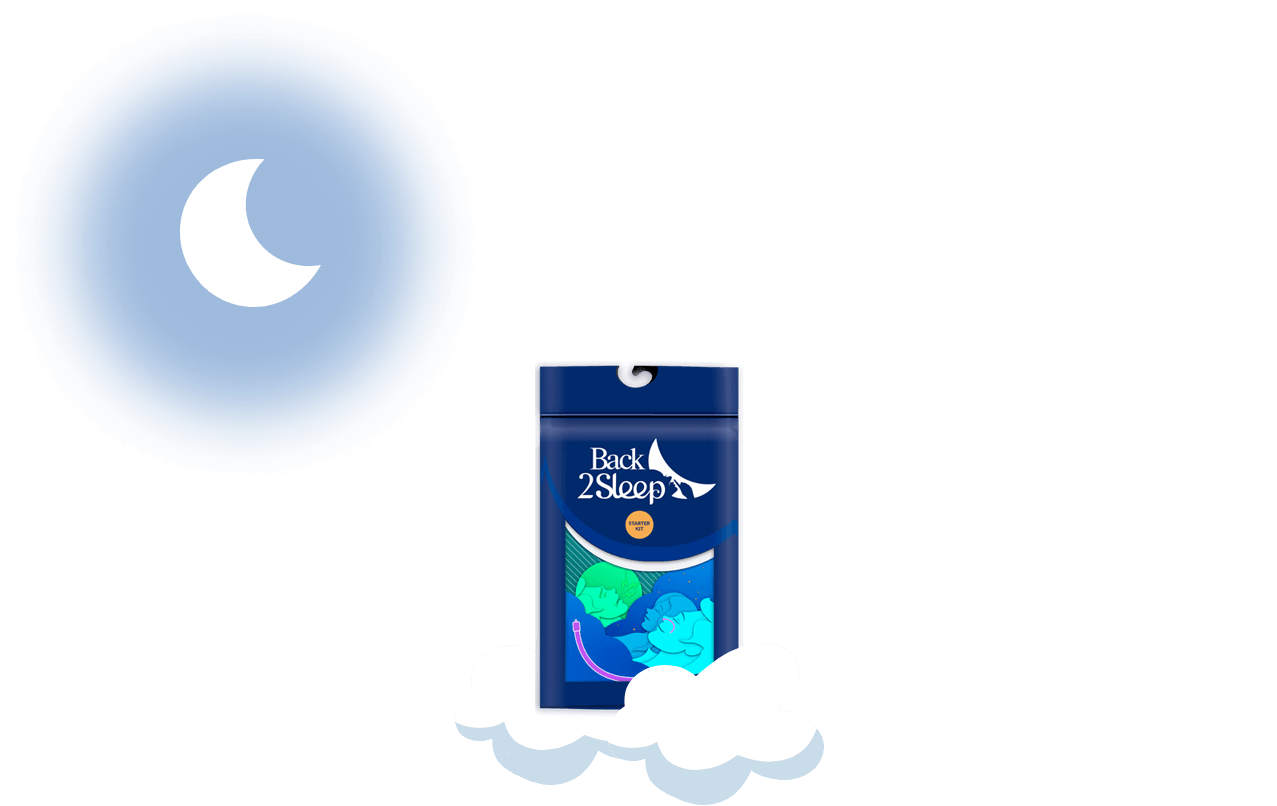
The Back2Sleep nasal stent is a CE-certified medical device that inserts in 10 seconds, requires no electricity, no mask, and no cleaning routine. It keeps the airway open from the nostril to the soft palate—the exact area that collapses during obstructive sleep apnea. For mild-to-moderate OSA, it offers an alternative that travels anywhere and works from night one.
| Feature | CPAP Machine | Back2Sleep Nasal Stent |
|---|---|---|
| Portability | Bulky, needs power outlet | Pocket-sized, no electricity |
| Setup time | 5-10 minutes | 10 seconds |
| Cleaning required | Daily hose + mask cleaning | Quick rinse |
| Acceptance rate | <50% long-term compliance | 92% user satisfaction |
| Noise | Audible motor hum | Completely silent |
| Ideal for travel/trucking | Difficult (power, space, cleaning) | Yes (fits in pocket) |
| Price | €500-1,500+ machine cost | €44.90 starter kit |
Drowsy Driving Self-Assessment: Should You Be Behind the Wheel?
Before your next drive, ask yourself these questions honestly. If you answer "yes" to two or more, you should not drive until you have been evaluated for a sleep disorder.
1. Morning Exhaustion
Do you wake up feeling tired even after 7-8 hours in bed? Does your partner report loud snoring, gasping, or breathing pauses at night?
2. Daytime Drowsiness
Do you struggle to stay awake during meetings, while watching TV, or as a passenger in a car? Have you ever nodded off at a traffic light?
3. Concentration Problems
Do you find it hard to focus on the road during routine commutes? Do you miss exits or turns you take every day?
4. Physical Warning Signs
Frequent yawning, heavy eyelids, head bobbing, or drifting between lanes? Any one of these while driving means you should pull over immediately.
The French cohort study identified the critical threshold: an Epworth Sleepiness Scale score of 11 or higher increased accident and near-miss odds by 4.75 times. If your score is above 10, consult a sleep specialist before your next long drive.
Learn About Treatment OptionsYour Action Plan: Protecting Yourself and Other Drivers
If you suspect sleep apnea is affecting your driving, here is what to do right now:
What Drivers Say About Better Sleep
Stop Driving Drowsy. Start Sleeping Better Tonight.
The Back2Sleep starter kit includes 4 sizes for €44.90. No electricity. No mask. No excuses. Find the right fit and feel the difference from night one.
Order Your Starter Kit NowAvailable at selected pharmacies • Free delivery on subscriptions • 15-day returns
Frequently Asked Questions: Sleep Apnea and Driving
More Resources from Back2Sleep
Continue your research with our in-depth guides on sleep apnea management: