
Sleep Apnea and Stroke Risk: What the Latest Research Shows

Sleep Apnea & Stroke Risk: What New Research Reveals in 2026
Obstructive sleep apnea nearly doubles your chance of a first stroke. One in four strokes happens during sleep. Here is what the science says and what you can do tonight.
Why Sleep Apnea Is a Cerebrovascular Time Bomb
Obstructive sleep apnea (OSA) is an independent risk factor for stroke, ranking alongside uncontrolled hypertension and atrial fibrillation. Every airway collapse during sleep triggers oxygen desaturation, blood pressure surges reaching 240/130 mmHg, and a prothrombotic shift in blood chemistry. Left untreated, these repeated insults quietly erode cerebrovascular health over months and years.
Choose Your Size →The Sleep Heart Health Study, which tracked over 5,400 adults, found that men with an apnea-hypopnea index (AHI) above 19 had a threefold increased risk of ischemic stroke compared to those with an AHI below 4. A separate analysis of 392 patients with coronary heart disease found an adjusted hazard ratio of 2.9 for incident stroke at an AHI of just 5 or more.
And here is the part most articles skip: roughly 70% of stroke survivors are found to have previously undiagnosed sleep apnea when tested after their event. That means the majority never knew their nightly breathing was slowly raising their stroke risk. Solutions like the Back2Sleep nasal stent address this gap by keeping the airway open without cumbersome equipment.
The Numbers That Should Concern You
Four Mechanisms Connecting OSA to Stroke
The pathway from a collapsed airway to a cerebrovascular event is not a single chain. It is four parallel mechanisms that amplify each other. Each apnea episode, lasting 10 to 60 seconds, triggers all four simultaneously:
Intermittent Hypoxia & Oxidative Stress
Blood oxygen drops below 90% (sometimes below 80%) dozens of times per hour. This chronic intermittent hypoxia generates reactive oxygen species that strip away the endothelial lining of blood vessels. Carotid intima-media thickness increases. Atherosclerotic plaque forms faster.
Nocturnal Blood Pressure Surges
Each arousal triggers a sympathetic nervous system explosion. Catecholamines surge. Blood pressure spikes 20-40 mmHg, sometimes reaching 240/130 mmHg. The normal nocturnal dip vanishes. Reverse-dipping patterns develop. This nocturnal hypertension predicts cerebrovascular events better than daytime readings.
Atrial Fibrillation Pathway
Negative intrathoracic pressure swings stretch the left atrium. Chronic hypoxia alters myocyte ion channels. Fibrosis develops. OSA patients have a 4x higher risk of AF, and AF is the single largest cause of cardioembolic stroke.
Hypercoagulable Blood State
Hypoxia activates platelets and raises fibrinogen. Blood viscosity increases. The prothrombotic state persists into daytime hours, explaining why OSA-related strokes happen both during sleep and after waking.
The AF-OSA-Stroke Triangle Most Doctors Miss
Most cardiovascular risk discussions treat atrial fibrillation and obstructive sleep apnea as separate conditions. They are not. They form a self-reinforcing triangle that dramatically escalates stroke risk. Understanding this triangle could save your life.
Here is how the triangle works. During each apnea event, you breathe against a closed airway. This generates extreme negative pressure inside your chest, stretching the left atrium like a balloon pulled from the inside. Meanwhile, oxygen drops trigger a sympathetic adrenaline surge. Over weeks and months, the atrial wall develops fibrosis—scarring that disrupts the electrical signals coordinating heart rhythm.
Once AF develops, blood pools and swirls inside the stretched, scarred atrium. Clots form. Those clots travel directly to the brain. A study published in Circulation: Arrhythmia and Electrophysiology found that OSA patients on CPAP were less likely to progress from paroxysmal to permanent AF. Treating the apnea breaks the triangle at its weakest point.
If you snore heavily and have been told your heart rhythm is occasionally irregular, do not treat these as unrelated problems. They are two faces of the same underlying issue.

2025 Breakthrough: Brain Microbleeds Linked to OSA Severity
A landmark study published in JAMA Network Open in November 2025 changed the conversation about sleep apnea and brain health. Researchers at Korea University Ansan Hospital tracked 1,441 adults without prior cardiovascular disease for eight years using polysomnography and brain MRI.
The findings were striking:
- No OSA group: 3.33% developed new cerebral microbleeds at 8 years
- Mild OSA: 3.21% (essentially the same as no OSA)
- Moderate-to-severe OSA: 7.25%—more than double the rate
Cerebral microbleeds are tiny hemorrhages visible on MRI. They are not strokes themselves, but they signal that small blood vessels in the brain are already damaged. People with microbleeds face a higher risk of future ischemic and hemorrhagic strokes, plus faster cognitive decline.
When researchers factored in the APOE-ε4 gene (a known risk factor for both Alzheimer's and vascular disease), the relative risk for moderate-to-severe OSA climbed to 2.91. This means sleep apnea is not just a stroke risk factor—it may also be accelerating dementia-related brain damage.
Nocturnal Hypertension: The Risk Your Doctor Cannot See
Here is an uncomfortable truth: your daytime blood pressure may be perfectly normal while your brain endures dangerous pressure surges every single night.
Blood pressure normally drops 10-20% during sleep—a protective pattern called nocturnal dipping. In OSA patients, that dip disappears entirely. Many develop a reverse-dipping pattern where blood pressure actually rises during sleep, driven by repeated sympathetic activation from apnea events.
Research published in the International Journal of Hypertension showed that nocturnal catecholamine surges in OSA patients can push blood pressure as high as 240/130 mmHg—levels typically associated with hypertensive emergencies. These spikes happen while you are asleep and completely unaware.
A standard blood pressure reading at your doctor's office will miss this entirely. Only 24-hour ambulatory blood pressure monitoring reveals the true nocturnal pattern. This is one reason why many strokes in OSA patients occur during sleep or within the first hours of waking.
Post-Stroke Recovery: With vs. Without OSA Treatment
Stroke recovery is hard enough. Untreated sleep apnea makes it measurably worse. Research from the Cleveland Clinic Journal of Medicine and multiple meta-analyses have quantified the difference:
| Recovery Metric | Untreated OSA | Treated OSA | Difference |
|---|---|---|---|
| Rehabilitation duration | Extended by 13+ days | Standard timeline | Nearly two extra weeks |
| Motor function recovery | Slower, less complete | Faster independence | Significant on FIM scale |
| Cognitive recovery | Impaired memory & attention | Measurable improvement at 3 months | Clinically meaningful |
| Post-stroke depression | Higher rates | 35% lower rates | Quality of life impact |
| Recurrent stroke risk | RR 1.8 (80% higher) | Significantly reduced | Hazard ratio improvement |
| All-cause mortality | RR 1.69 (69% higher) | 20% lower at 5 years | Survival advantage |
The data is consistent: oxygen desaturation during sleep impairs neural repair. The brain cannot heal properly when it is repeatedly starved of oxygen at night. Patients using treatment for 4+ hours per night showed the greatest benefit, emphasizing that compliance matters as much as choosing a treatment.
Real Stories: When Sleep Apnea Gets Missed
Medical statistics tell you what happens. Real stories tell you how it feels to live through it.
These stories share a common thread: the diagnosis came too late or almost too late. Snoring was dismissed. Fatigue was blamed on age or stress. Nobody connected the dots between disrupted breathing and cerebrovascular danger. If someone in your life snores loudly or gasps during sleep, treat it with the urgency it deserves.
Patent Foramen Ovale: A Hidden Extra Risk
Here is a detail almost no sleep apnea article covers. A patent foramen ovale (PFO) is a small hole between the upper chambers of the heart. About 25% of the general population has one. Most never know.
Research shows that people with OSA are twice as likely to have a PFO. The combination is dangerous: the repeated negative intrathoracic pressure from apnea events can force venous blood (potentially carrying clots) through the PFO and directly into the arterial circulation headed for the brain. This is called paradoxical embolism—a clot from the venous side reaching the brain without passing through the lung filter.
If you have had a cryptogenic stroke (a stroke with no identified cause) and also have sleep apnea, ask your cardiologist about screening for PFO. The overlap between these two conditions may finally explain what happened.
OSA Severity & Stroke Risk by the Numbers
| AHI Range | OSA Severity | Stroke Risk | Post-Stroke Prevalence |
|---|---|---|---|
| <5 | Normal | Baseline | 28% of stroke patients |
| 5–15 | Mild | ~2x baseline | 72% have AHI >5 |
| 15–30 | Moderate | ~3x baseline | 63% have AHI >10 |
| >30 | Severe | ~4x baseline | 29% have AHI >30 |
Source: Sleep Heart Health Study, meta-analysis of post-stroke OSA prevalence (Journal of Clinical Sleep Medicine)
Treatment Comparison: Protecting Your Brain Every Night
The best stroke-prevention treatment is the one you actually use every single night. A meta-analysis of 10 randomized controlled trials found that average CPAP use in post-stroke patients was only 4.5 hours per night, with dropout rates nearly double the treatment group. Compliance is the bottleneck.
| Treatment | Best For | Avg. Nightly Compliance | Key Advantage |
|---|---|---|---|
| CPAP | Severe OSA (AHI >30) | 50-60% achieve 4+ hrs | Most studied, gold standard for severe cases |
| Back2Sleep Nasal Stent | Mild-moderate OSA, snoring | 85%+ (no mask, no power) | 10-second insertion, portable, high adherence |
| Oral Appliance (MAD) | Mild-moderate, good dentition | 60-70% | Custom-fitted, no power needed |
| Positional Therapy | Supine-predominant OSA | Variable | No device needed, simple to start |
For mild-to-moderate OSA, the Back2Sleep nasal stent is a CE-certified Class I medical device that holds the airway open from nostril to soft palate. No masks, no electricity, no noise. Clinical data shows a reduction in respiratory event index from 22.4 to 15.7 (p<0.01) and improvement in lowest SpO2 from 81.9% to 86.6% (p<0.01). It takes 10 seconds to insert and works from the first night.
Your Brain Needs Uninterrupted Oxygen Tonight
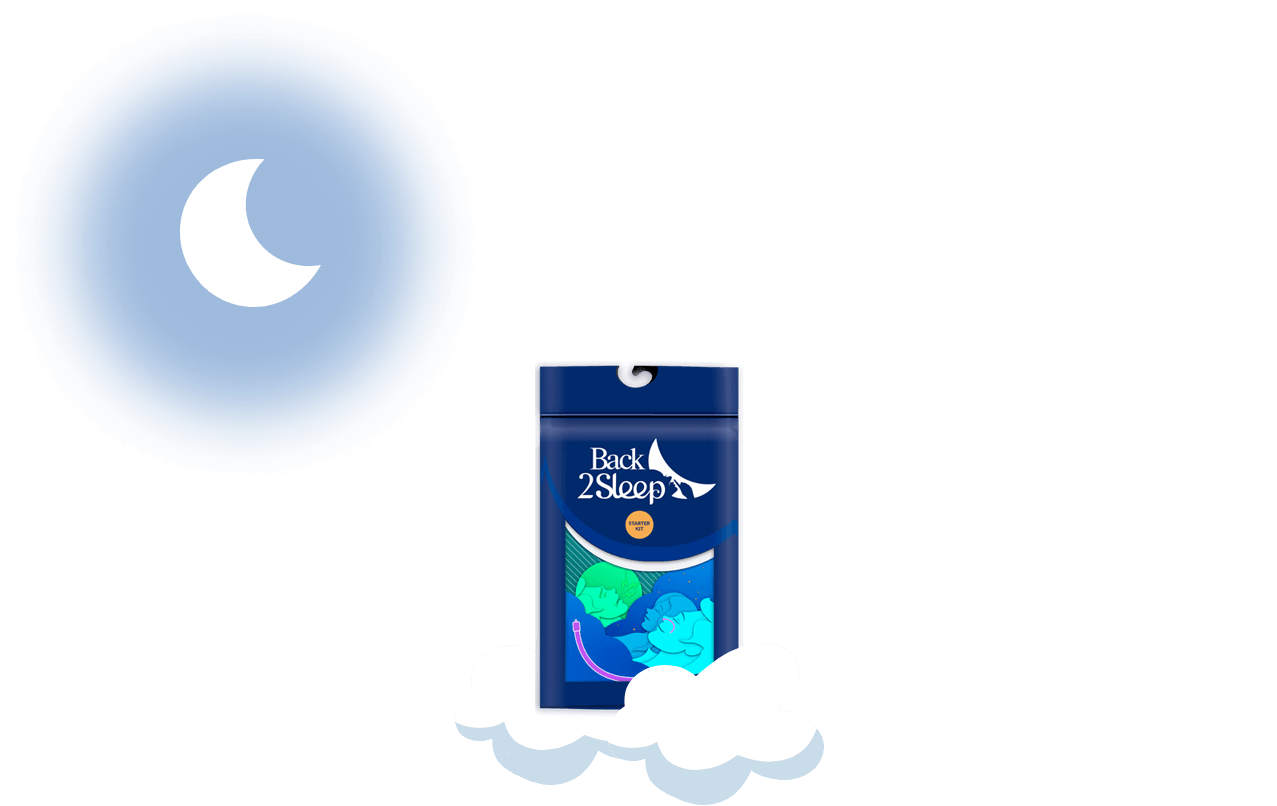
The Back2Sleep starter kit includes 4 sizes (S, M, L, XL) for a 15-night trial. Find your fit. Protect your brain.
Order the Starter Kit – €44.90Who Should Get Screened for Sleep Apnea?
Given that 70% of stroke patients had undiagnosed OSA, the better question might be: who should not get screened? The following groups carry the highest risk and should request a sleep study now:
- Resistant hypertension—blood pressure uncontrolled despite 3+ medications
- Atrial fibrillation, especially nocturnal or early-morning episodes
- History of TIA (transient ischemic attack / mini-stroke)
- Loud snoring with witnessed pauses in breathing
- Family history of stroke combined with any sleep complaints
- Morning headaches or unexplained daytime exhaustion
- Neck circumference above 40 cm (16 inches) or BMI over 30
- Cryptogenic stroke—a stroke with no identified cause
The STOP-BANG questionnaire is the most widely used screening tool. If you score 5 or higher, a formal sleep study is strongly recommended. Read more on our anti-snoring solutions page or explore the Back2Sleep health journal.
A Practical Prevention Action Plan
Get Your AHI Number
Request a home sleep apnea test or in-lab polysomnography. Know your severity. Mild is treatable with simple devices. Moderate-to-severe requires immediate action.
Start Treatment Without Delay
Every untreated night adds cumulative vascular damage. A nasal stent can be started the same day it arrives while you wait for formal diagnosis.
Check Nocturnal Blood Pressure
Ask for a 24-hour ambulatory blood pressure monitor. Daytime office readings miss the overnight surges that drive stroke risk in OSA patients.
Screen for AF
If you have moderate-to-severe OSA, discuss an ECG or Holter monitor with your doctor. Catching AF early can prevent cardioembolic stroke.
Combine OSA treatment with weight management, reduced alcohol intake, regular exercise, and blood pressure control. Visit a pharmacy near you to find Back2Sleep or order directly online.