
The Complete 2026 Sleep Apnea Treatment Guide: Every Option Ranked by Evidence

The Complete 2026 Sleep Apnea Treatment Guide: From CPAP to GLP-1 Drugs, Ranked by the Evidence
From CPAP to nasal stents, oral appliances to surgery and the new GLP-1 drugs — a clear, evidence-based ranking written for European patients in 2026.

The 2026 sleep apnea treatment landscape: what changed
Sleep apnea treatment in 2026 is no longer a CPAP-or-nothing choice. European clinicians now reach for nine evidence-backed options before considering surgery. Each has a specific role, a real efficacy range, and a price point — and the right choice depends on your apnea-hypopnea index, anatomy, and tolerance. This guide ranks every option using only published European and international evidence, so you can decide what to test first.
If you are still working through the basics, read our overview of sleep apnea symptoms and treatments and the types of sleep apnea before going further. Knowing whether you have obstructive, central, or mixed apnea changes which therapies will work for you. Most readers of this guide have obstructive sleep apnea (OSA), which accounts for around 90% of diagnoses across Europe.
- Mild OSA (AHI 5–15) responds to nasal stents, oral appliances, and lifestyle changes.
- Moderate OSA (AHI 15–30) typically needs CPAP, mandibular advancement, or hypoglossal stimulation.
- Severe OSA (AHI > 30) is a CPAP-first condition unless contraindicated.
- No single device "cures" OSA; the best therapy is the one you actually use every night.

Why adherence beats efficacy on paper
The European Respiratory Society reminded clinicians in 2024 that any treatment used five nights a week beats a treatment used twice. CPAP is the most effective option ever tested, with up to 95% AHI reduction in trials. Yet long-term studies in Sleep Medicine Reviews show that 30% to 50% of European CPAP users abandon therapy within a year.
That gap between trial efficacy and real-world effectiveness is why simpler options keep their place in 2026 guidelines. Mandibular advancement devices (MAD), nasal stents, and positional therapy all show smaller AHI drops on paper but much higher adherence in long-term cohorts. Choosing your treatment is partly a comfort decision, not just a medical one.
How efficacy is measured in 2026
Modern guidelines from the European Sleep Research Society no longer report only AHI change. They also track oxygen desaturation index, sleep fragmentation, daytime sleepiness on the Epworth scale, blood pressure, and quality of life. A treatment that drops AHI from 25 to 15 but restores normal energy and blood pressure can be a clinical success even if AHI is not "normalised".
Treatment ranking — full comparison table
This table summarises the nine evidence-backed treatments available across European pharmacies, sleep clinics, and specialist surgical centres in 2026. Prices are typical European out-of-pocket retail or private-clinic estimates. Coverage varies by country (Sécurité Sociale + Mutuelle in France, GKV in Germany, NHS in the UK, SSN in Italy, Seguridad Social in Spain, Zorgverzekering in the Netherlands).
| Treatment | Best for | AHI reduction | Adherence | EU price range |
|---|---|---|---|---|
| CPAP / APAP | Moderate to severe OSA | 80–95% | Low–medium | Covered or €450–€900 private |
| Mandibular advancement device | Mild to moderate OSA | 50–60% | Medium–high | €350–€1,800 private |
| Nasal stent (Back2Sleep) | Snoring + mild-to-moderate OSA | 30–55% | High | €44.90 starter kit |
| Positional therapy | Position-dependent OSA | 30–50% | Medium | €60–€250 |
| Hypoglossal stimulation | CPAP-intolerant moderate OSA | ~70% | High | Covered if eligible |
| Weight loss + GLP-1 (tirzepatide) | Obesity-driven OSA | ~55% | Medium | ~€250/month private |
| UPPP / soft-palate surgery | Anatomical obstruction | 30–50% | Permanent | Covered when indicated |
| Maxillomandibular advancement | Severe OSA, surgical candidates | ~85% | Permanent | Covered, hospital-based |
| Lifestyle alone | Very mild OSA / snoring | 10–30% | Variable | €0 |
Sources: meta-analyses in The Lancet Respiratory Medicine (2019, 2024), Sleep Medicine Reviews (2023), the European Respiratory Society 2024 statement on OSA, and the SERVE-HF follow-up cohort.
1. CPAP and APAP: the gold standard
Continuous positive airway pressure (CPAP) blows pressurised air through a mask to splint the upper airway open. Auto-titrating CPAP (APAP) adjusts pressure breath by breath. Together they remain the first-line option for moderate-to-severe OSA in every major European guideline, including those of the French Société de Pneumologie de Langue Française (SPLF) and the British Thoracic Society.
The evidence is overwhelming. A 2024 meta-analysis in The Lancet Respiratory Medicine pooled 32 randomised trials and reported an average AHI reduction of 84%, with significant drops in 24-hour blood pressure and daytime sleepiness. CPAP also cuts the risk of fatal cardiovascular events in patients who use it more than four hours per night.
What goes wrong with CPAP in real life
The numbers above come from selected trial populations. In primary-care cohorts, around 30% of new users stop within three months and 50% within twelve. The most common reasons cited in European registries are mask discomfort, claustrophobia, dry mouth, partner disturbance, and the hassle of travelling with the device. These are practical problems, not failures of physiology.
Reading our overview of CPAP side effects can help you fix most of them — heated humidifiers, nasal pillows instead of full-face masks, and chinstraps solve a surprising share. If you have already tried CPAP and stopped, we maintain a complete list of CPAP alternatives ranked.
- Most effective treatment ever tested — 80–95% AHI reduction.
- Covered by Sécu/Mutuelle, GKV, NHS, SSN with prescription and a sleep study.
- Long-term adherence is the weakest link, not the technology.
- Modern auto-CPAP plus nasal pillow masks dramatically improve comfort.
2. Mandibular advancement devices (MAD)
A mandibular advancement device is a custom-made oral appliance that moves the lower jaw forward, opening the airway behind the tongue. Modern MADs from European labs use titrating screws so a dentist can fine-tune the protrusion millimetre by millimetre.
The European Academy of Dental Sleep Medicine considers MADs first-line for mild OSA and a valid alternative for moderate OSA when CPAP is refused. A 2023 review in Sleep Medicine Reviews reported AHI reductions of 50% on average, with up to 70% in carefully selected patients.
Who should not use a MAD
MADs are not appropriate for severe OSA in most cases, for patients with active periodontal disease, full dentures, or temporomandibular joint dysfunction. They also need a custom impression — boil-and-bite consumer copies underperform and can damage teeth.
Cost and reimbursement
In France, custom MADs (Orthèse d'Avancée Mandibulaire) are partly reimbursed by Sécurité Sociale plus Mutuelle once a sleep study confirms OSA and CPAP is refused or has failed. In Germany, GKV reimbursement requires a sleep specialist letter. In the UK, NHS coverage is patchy and most patients pay £400–£1,800 privately. Italian SSN, Spanish Seguridad Social, and Dutch Zorgverzekering follow case-by-case approval.
3. Nasal stents: the at-home, no-prescription option
Nasal stents are soft silicone tubes inserted into each nostril at bedtime. They keep the nasal valve and front of the airway from collapsing during inhalation, which is the trigger for many cases of snoring and mild OSA. Unlike CPAP, they need no electricity, no mask, and no titration.
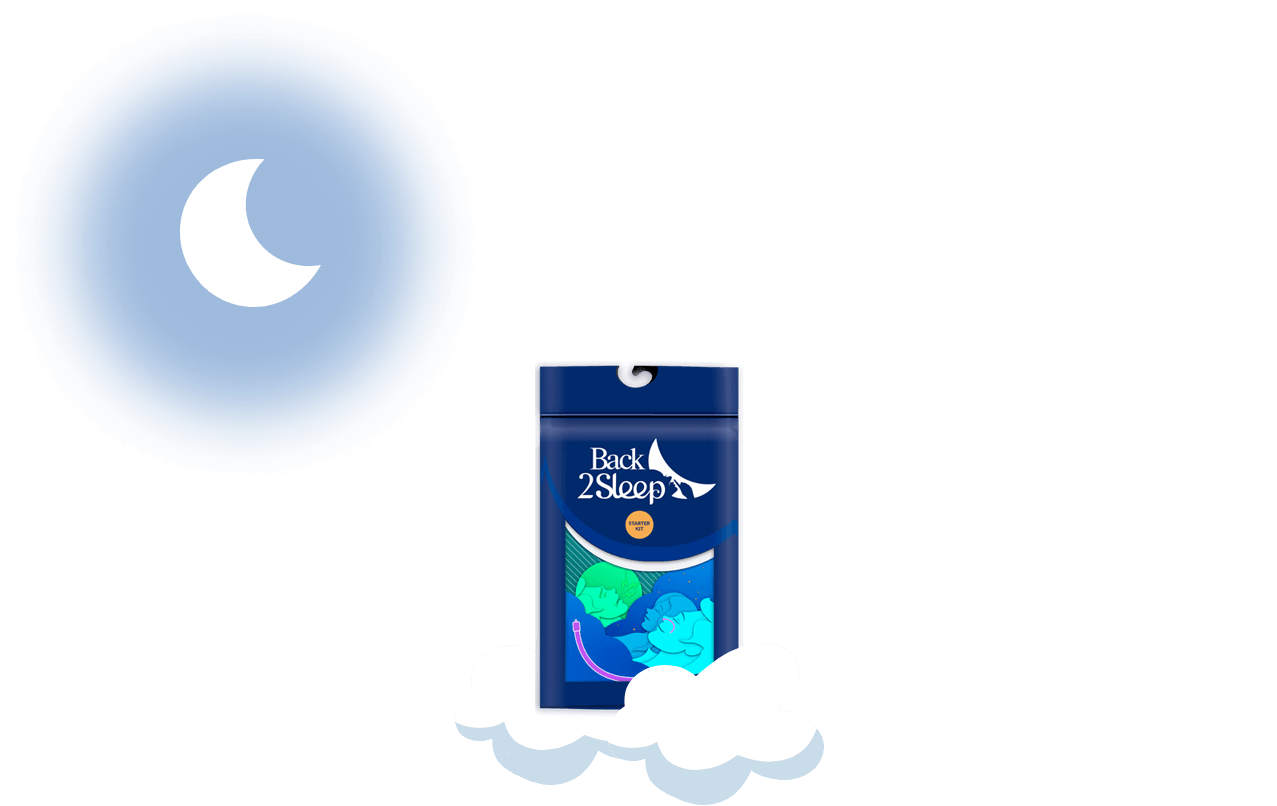
Back2Sleep is a French CE-certified Class I medical nasal stent, made of soft medical silicone in four sizes. The starter kit at €44.90 lets you test all four sizes and find your fit at home. There is no prescription requirement and no insurance reimbursement — that is the point: total price is low enough that reimbursement is irrelevant.
What the evidence says
Published clinical work on intranasal stents (Nastent, Back2Sleep, and similar devices) shows AHI reductions of 30% to 55% in mild-to-moderate OSA, with strong effects on snoring intensity and oxygen saturation. A 2018 study in Sleep and Breathing on Nastent reported a mean AHI drop from 22 to 12 in mild-to-moderate cases. Our own clinical summary lives on the Back2Sleep clinical data page.
Where nasal stents win
- Adherence is high because there is no mask, no noise, no maintenance.
- Travel-friendly — fits any pocket, no power needed.
- Great as a CPAP add-on for mouth-breathers and nasal-valve collapsers.
- Same-day shipping across the EU and UK.
Where nasal stents do not win
- Severe OSA still needs CPAP or hypoglossal stimulation.
- People with active sinusitis or recurrent epistaxis should ask a doctor first.
- Anatomical obstructions (severe deviated septum, large polyps) reduce comfort.
4. Positional therapy
Positional sleep apnea is OSA that occurs only or mainly when sleeping on the back. Around 50% of mild OSA cases and 25% of moderate cases are positional, according to data from the Erasmus University Rotterdam group.
Positional therapy means sleeping on the side. Modern devices range from chest-belt vibrators (Philips NightBalance, Somnibel) to simple tennis-ball t-shirts. A 2022 randomised trial in the European Respiratory Journal showed vibrational positional therapy cut supine sleep time by 80% and dropped AHI by 30–50% in selected patients. Read our deeper guide on positional therapy for the protocol.
How to know if you are positional
A home sleep test or smart-watch sleep study that reports AHI by position is the simplest way. If your supine AHI is more than twice your non-supine AHI, you are positional and should consider this option before more invasive ones.
5. Hypoglossal nerve stimulation: Inspire and Genio
Hypoglossal nerve stimulation is an implant that gently activates the tongue muscles during inhalation, preventing collapse. Two systems are CE-marked and used across Europe in 2026: Inspire (Inspire Medical Systems) and Genio (Nyxoah, a Belgian company). Genio is battery-free and externally powered, which avoids battery-replacement surgery.
The STAR trial follow-up published in The New England Journal of Medicine reported 68% AHI reduction at 12 months for Inspire patients, with sustained results at five years. Genio's BETTER SLEEP trial showed a similar 70% AHI reduction profile in moderate-to-severe OSA.
Who is eligible
- Adults with moderate-to-severe OSA (AHI 15–65 typically).
- BMI under 32 (Inspire) or under 35 (Genio EU).
- CPAP intolerance documented after a fair trial.
- No complete concentric soft-palate collapse on drug-induced sleep endoscopy.
Coverage exists in Germany, France, Belgium, the Netherlands, and several Nordic systems for eligible patients. The procedure is hospital-based, performed by an ENT or maxillofacial surgeon, and recovery takes about a week.
6. GLP-1 drugs and tirzepatide for sleep apnea
Tirzepatide (Eli Lilly's Mounjaro for diabetes, Zepbound for obesity) was approved by the European Medicines Agency in 2024 for chronic weight management. The SURMOUNT-OSA trial published in The New England Journal of Medicine in mid-2024 showed that tirzepatide cut AHI by an average of 25 events per hour in patients with obesity and OSA — a roughly 55% reduction.
This is the first time a drug has been formally validated as an OSA treatment. The European Medicines Agency added an OSA indication in late 2025, making tirzepatide a legitimate first-line tool when obesity is the dominant driver. For the full picture, read our explainer on GLP-1 drugs and sleep apnea.
Realities of GLP-1 therapy in 2026
Treatment is expensive privately (around €250 per month in EU pharmacies), reimbursement is limited to defined obesity criteria, and supply remains constrained in some markets. Side effects include nausea, gallbladder events, and rare pancreatitis. Tirzepatide is most effective when paired with structured nutrition support.
7. Soft-palate and pharyngeal surgery (UPPP, expansion sphincter pharyngoplasty)
Uvulopalatopharyngoplasty (UPPP) and expansion sphincter pharyngoplasty (ESP) reshape the soft palate and lateral pharyngeal walls. Modern variations are far less destructive than 1980s UPPP and target only what drug-induced sleep endoscopy shows is collapsing.
Success rates in 2024 European cohorts hover around 50% — meaning 50% AHI drop AND post-op AHI under 20. ESP and barbed-suture techniques pioneered in Italian ENT departments have higher success in carefully selected patients. Surgery is irreversible, so it is reserved for clear anatomic obstruction in patients who cannot tolerate other treatments.
8. Maxillomandibular advancement (MMA) — the surgical heavyweight
MMA moves both the upper and lower jaw forward by 8–12 millimetres, enlarging the entire upper airway. It is the most effective OSA surgery ever studied: a 2022 meta-analysis in JAMA Otolaryngology reported an 86% surgical success rate and 43% cure rate in severe OSA.
The trade-off is significant. MMA requires general anaesthesia, two to three weeks of recovery, and a long-term commitment to orthodontics. It is best suited to younger patients with severe OSA, retrognathia, or CPAP failure who want a definitive solution.
9. Lifestyle changes — small percentages, big multiplier effects
Lifestyle alone rarely cures OSA above mild severity. But combined with any device-based therapy, it amplifies results.
The five highest-impact changes
- Weight loss — Every 10% drop in body weight cuts AHI by ~25% in obese OSA patients (Sleep, 2014).
- Alcohol cut-off — No alcohol within four hours of bed; alcohol relaxes pharyngeal muscles and worsens AHI by 25%.
- Quit smoking — Smokers have 40% higher OSA risk than non-smokers (American Journal of Respiratory and Critical Care Medicine, 2014).
- Side-sleeping — Free, immediate, works for around half of mild OSA cases.
- Sleep schedule consistency — Same bed and wake times stabilise breathing patterns and reduce REM-rebound desaturations.
- Lifestyle alone rarely fixes OSA.
- Lifestyle plus a device (CPAP, MAD, nasal stent) compounds results by 20–40%.
- Crash diets fail; aim for 5–10% weight loss over six months.
How to choose: a decision tree by severity
Use this ladder once you have a confirmed AHI from a home sleep test or in-lab polysomnography. If you do not yet, take our sleep risk screening to estimate your risk in five minutes.
| If you have… | First try | If that fails | Long-term option |
|---|---|---|---|
| Snoring, no OSA | Nasal stent + side-sleep | Add positional therapy | Lifestyle, weight loss |
| Mild OSA (AHI 5–15) | Nasal stent or MAD | CPAP / APAP | Hypoglossal stim if anatomy fits |
| Moderate OSA (AHI 15–30) | CPAP / APAP | MAD or hypoglossal stim | MMA surgery if young, refractory |
| Severe OSA (AHI > 30) | CPAP / APAP — non-negotiable | Hypoglossal stim | MMA surgery |
| Obesity-driven OSA | Tirzepatide + CPAP | Bariatric surgery | Maintenance + reassess yearly |
Cost and access in major EU markets
Cost varies dramatically across Europe. The good news: every EU system covers CPAP for severe OSA. The hard part is the wait, the documentation, and the gap between mild diagnosis and reimbursable severity.
| Country | CPAP coverage | MAD coverage | Inspire / Genio | Wait time avg |
|---|---|---|---|---|
| France (Sécu + Mutuelle) | Yes, with adherence >4h | Partial after CPAP fail | Hospital, eligible cases | 4–8 weeks |
| Germany (GKV) | Yes, full | Case-by-case | Yes, eligible cases | 3–6 weeks |
| UK (NHS) | Yes, severe + symptomatic | Patchy | Limited, private most | 8–20 weeks |
| Italy (SSN) | Yes, severe | Mostly private | Yes, select centres | 6–12 weeks |
| Spain (Seguridad Social) | Yes, moderate-severe | Mostly private | Few centres | 6–14 weeks |
| Netherlands (Zorgverzekering) | Yes | Yes, certified labs | Yes | 3–6 weeks |
The €44.90 Back2Sleep starter kit is positioned as an out-of-pocket option that is affordable enough to use during the diagnostic wait — when your sleep is already broken but reimbursable therapy is months away. It does not replace CPAP for severe cases.
Common combinations that work better than any single therapy
CPAP + nasal stent
For mouth-breathers on CPAP, a nasal stent keeps the nose open enough to use a nasal pillow mask comfortably and reduces leak rate. This is one of the most underused tricks in 2026 sleep medicine. Patients who switch from full-face to nasal pillow masks while wearing a stent report less air leak, less dry mouth, and easier travel packing.
MAD + positional therapy
Patients with positional and oral-pharyngeal collapse often respond to a MAD on the back and complete control on the side. AHI normalisation rates rise from 50% to 70% in published cohorts using both. The MAD does the work the moment you roll onto your back; the side-sleep belt prevents you from getting there for too long.
Tirzepatide + CPAP
The SURMOUNT-OSA data already showed this combination outperforms either alone in obese patients, and EMA-approved labelling reflects the synergy. Some patients on CPAP plus tirzepatide drop two severity bands within a year — going from severe to mild — and qualify to step down to a less intensive therapy.
Lifestyle + anything
A 10% weight loss plus alcohol cessation can convert moderate OSA into mild OSA, sometimes letting patients downgrade from CPAP to MAD or nasal stent. The biological logic is simple: less pharyngeal fat, less alcohol-induced muscle relaxation, less collapse.
Hypoglossal stimulation + positional belt
Some Inspire and Genio patients have residual supine collapse despite stimulation. Adding a side-sleep belt cuts residual AHI further. Sleep clinics in Belgium, Germany, and the Netherlands now routinely test this combination for partial responders.
- Pair therapies. The best results come from layering, not switching.
- Reassess with a sleep test 3–6 months after any change.
- Track adherence honestly — the device on your bedside table does nothing.
- Add lifestyle to every plan; it amplifies every device.
What 2026 research changed about sleep apnea care
Three shifts have pulled European sleep medicine into a new era between 2023 and 2026. They explain why the treatment landscape now looks broader and more personalised than five years ago.
Endotype-driven therapy selection
OSA is now understood as a syndrome with several drivers. Some patients have a "loose airway" (anatomical collapse), others have low respiratory drive, others have low arousal threshold. Sleep clinics in 2026 are starting to map these endotypes from a routine sleep study, then steer treatment to fit. A loose-airway patient often does best with CPAP, MAD, or hypoglossal stimulation. A low-drive patient may need oxygen or atomoxetine plus oxybutynin (the "AD109" combination still under late-stage EU trials). A low-arousal patient often benefits from improved sleep hygiene before any device.
Drug therapy joins the toolkit
Until 2024, drugs were not part of OSA treatment. Tirzepatide changed that for obesity-driven OSA. Sulthiame and AD109 are advancing through EU trials for non-obese OSA. By 2027, expect at least one daily pill for non-obese OSA available in major EU markets.
Smarter, smaller hardware
Battery-free implants like Genio remove a key reason patients refused Inspire. Travel-friendly mini-CPAPs from ResMed, Philips, and Transcend let people maintain therapy on the road without 3 kg of equipment. Closed-loop auto-CPAP algorithms are now standard rather than optional, and oral pressure devices like iNAP add another non-mask option for patients who hate everything else.
How to build your personal treatment plan in five steps
Step 1 — Confirm your AHI and severity
Get a home sleep test or in-lab polysomnography. Note your AHI, oxygen desaturation index, and any position dependence. If you have not been tested, take our sleep apnea warning signs review and ask your GP for a referral.
Step 2 — Match severity to first-line option
Use the decision tree above. Severe OSA: CPAP. Moderate: CPAP first, then MAD or hypoglossal stim. Mild: nasal stent or MAD plus lifestyle. Snoring without OSA: nasal stent and side-sleep.
Step 3 — Set adherence targets, not just a prescription
Decide before you start: how many nights a week, what minimum duration, what comfort threshold? Write it down. Patients with explicit goals are 30–40% more adherent than patients who simply "try" a device.
Step 4 — Add layered support
One device alone is rarely enough. Add side-sleep, alcohol limits, and a 5–10% weight goal regardless of which device you start with.
Step 5 — Reassess in 3 months
Repeat or remote-monitor a sleep test. If AHI is well controlled, continue. If it is not, switch or stack — do not white-knuckle a failing therapy.
Mistakes patients and clinicians keep making
Mistake 1 — Using CPAP only as fallback
CPAP is the first-line for moderate-to-severe OSA, not a last resort. Delaying it for years while trying mouthpieces and gadgets can cost cardiovascular and metabolic health. If your AHI is over 30, start CPAP and then add comfort fixes — do not flip the order.
Mistake 2 — Buying boil-and-bite mouthpieces
Generic mouthguards from supermarkets and pharmacies underperform custom MADs by a wide margin. Worse, they can damage teeth or temporomandibular joints. If a MAD is on your list, see a dentist trained in dental sleep medicine.
Mistake 3 — Treating snoring with nothing because "it is just snoring"
Loud habitual snoring is the single best predictor of underlying OSA. If you snore most nights, get tested even if you feel rested. Read our note on the link between snoring and sleep apnea.
Mistake 4 — Ignoring the partner's report
Bed partners are the most reliable source of information about your night-time breathing. Doctors and clinicians take partner-witnessed apneas seriously; you should too.
Mistake 5 — Stopping treatment when you feel better
OSA is chronic. Symptoms come back within nights of stopping therapy. Effective treatment is for life unless surgery or major weight loss has been objectively confirmed to resolve the breathing pattern.
- Start CPAP early when AHI is high — fix comfort second, not first.
- Custom MAD only — never a boil-and-bite from the supermarket.
- Snoring is data, not background noise.
- Listen to your bed partner.
- OSA treatment is forever unless objectively cured.
Frequently overlooked tools that make any treatment easier
Nasal saline rinses
A simple saline rinse before bed reduces nasal congestion and improves the comfort of CPAP, nasal pillow masks, and nasal stents alike. Pharmacy saline sprays cost €5 and pay back the first night.
Heated humidifiers
For CPAP users in dry winter air, a heated humidifier eliminates 70% of the dry-mouth complaints that drive abandonment.
Mouth taping with caution
For mouth-breathers on CPAP nasal pillows or nasal stents, gentle mouth taping can keep the mouth closed enough to maintain therapy. Only use medical-grade tape and never tape if you cannot easily breathe through your nose.
Side-sleep belts
For position-dependent OSA, vibration belts (NightBalance, Somnibel) outperform tennis-ball t-shirts in adherence and comfort.
Wedge pillows and adjustable beds
Elevating the head 30 degrees reduces airway collapse for many patients with mild OSA, particularly those with reflux. Combine with side sleeping for the best effect.
Apps that track adherence
Modern CPAP machines transmit usage to a smartphone app. Use it. Patients who watch their adherence numbers daily are 25% more likely to hit four hours per night.
Special situations that change the calculus
Pregnancy
OSA worsens through pregnancy, especially the third trimester. CPAP is safe and recommended for moderate-to-severe cases. Mild snoring may respond to nasal stents and side-sleep, both safe in pregnancy with obstetric clearance.
Older adults
OSA prevalence rises steeply after 65. Treatment thresholds and goals shift — daytime function and falls risk often matter more than absolute AHI. CPAP, MAD, and nasal stents are all options; surgery is rarely indicated.
Children and adolescents
Paediatric OSA is mostly anatomical (large adenoids, tonsils). Adenotonsillectomy is first-line. CPAP is reserved for residual cases. Adult devices are not used in children.
Heart failure and atrial fibrillation
OSA worsens both. Treatment is mandatory regardless of severity, with CPAP usually first-line. Hypoglossal stimulation is being studied in this population.
Athletes
Endurance and strength athletes often have neck muscle hypertrophy that contributes to OSA. Treatment is the same as for any adult, but compliance with travel-heavy schedules favours nasal stents and travel-friendly CPAP.
What does the next five years look like?
Three trends will reshape European sleep apnea care between 2026 and 2030.
Drug therapy normalises
Tirzepatide is the first; AD109, sulthiame, and refined dronabinol formulations are not far behind. Expect at least one oral OSA drug routinely prescribed in EU markets by 2028.
Wearables become legitimate diagnostic tools
The Apple Watch's sleep apnea screening feature received CE clearance in 2024. By 2027, smartwatch and ring screening (Oura, Whoop) will plug directly into European sleep clinic referral pathways.
Personalised device selection
AI-driven analysis of the sleep study will recommend a starting device with much higher precision than today's "everyone tries CPAP first" approach. Several European universities are running validation trials now.
- Get tested today — diagnosis is the gateway to every option.
- Treat now with what works in 2026 — improved options will be additive, not replacements.
- Keep records of your AHI, weight, and adherence so future personalised tools have data to work with.
The cost of doing nothing
Untreated severe OSA shortens life expectancy by an average of 5–10 years according to the Wisconsin Sleep Cohort. The mechanism is not mysterious: nightly hypoxia drives heart attacks, strokes, atrial fibrillation, and metabolic disease. Each missed year of treatment compounds the damage.
Cardiovascular cost
Untreated severe OSA roughly triples the risk of fatal cardiovascular events over 10 years versus matched controls. Effective treatment cuts that excess risk in half — sometimes more in adherent patients.
Metabolic cost
Severe OSA accelerates the slide from prediabetes to type 2 diabetes by 2–3 years on average. Treating OSA can delay or prevent that transition.
Cognitive cost
Memory, executive function, and reaction time suffer measurably with chronic untreated OSA. Several large 2024 cohorts also report a higher dementia incidence in untreated severe OSA over 10–15 years of follow-up.
Quality of life cost
Daytime sleepiness, irritability, and partner conflict often turn out to be the costs that motivate treatment most. Read more on snoring and relationships for the social side of untreated OSA.
Financial cost
Across EU systems, the average direct healthcare cost of untreated OSA is around €2,000–€3,500 per patient per year — emergency visits, antihypertensives, diabetes drugs, lost work days. Treatment usually pays back within two to three years.
How Back2Sleep fits into the 2026 toolkit
To be clear and direct: Back2Sleep is not a competitor to CPAP. CPAP remains the most effective treatment for moderate-to-severe OSA in 2026 and into the future. Back2Sleep is positioned at a different point in the patient journey.
Where Back2Sleep is the right answer
- Snoring without sleep apnea (the largest group).
- Mild OSA in adults who refuse, fail, or are waiting for CPAP.
- CPAP-adherent patients who travel and need a backup for occasional hotel nights.
- CPAP nasal-pillow users who need to keep nasal valves open and reduce mask leak.
- Patients in the diagnostic queue who want immediate symptom relief while they wait for a sleep study.
Where Back2Sleep is the wrong answer
- Severe OSA — CPAP first, no exceptions.
- Central sleep apnea — needs different therapy (BiPAP, ASV).
- Patients with active sinusitis, severe deviated septum, or recurrent nosebleeds.
- Children and adolescents — paediatric OSA is treated differently.
Why €44.90 matters
The Back2Sleep starter kit is priced low enough to remove the "should I or should I not" hesitation. Reimbursement is not part of the equation — the absolute cost is already lower than most pharmacy snore strips for a month. CE-certified Class I medical silicone, four sizes, same-day EU shipping.
How patients use it alongside other therapies
The most common 2026 patterns we see:
- Bridge therapy — used during the 4–20 week wait for CPAP titration in NHS UK or SSN Italy queues.
- Travel kit — the CPAP user packs it as a back-up when hotel power is unreliable.
- Mild-OSA primary therapy — patients with AHI 5–10 who tested CPAP and abandoned it.
- Mask-leak fix — CPAP nasal pillow users add a stent to keep nasal valves open and reduce side leak.
- It is an at-home, no-prescription, €44.90 EU device for snoring and mild-to-moderate OSA.
- It is not reimbursed by any health system — the price is built to make reimbursement irrelevant.
- It is not a CPAP replacement for severe OSA.
- For the right patient, it is the simplest and fastest first step in the 2026 toolkit.
EU regulatory and clinical context for 2026
European medical device rules tightened under MDR (Medical Device Regulation, 2017/745). Back2Sleep, like all CE-certified Class I devices, holds a notified-body-issued certificate, manufactures in EU-compliant facilities, and reports adverse events to national agencies.
What CE Class I means
Class I covers low-risk devices with minimal invasive contact. Back2Sleep, as a soft silicone nasal stent, qualifies. The class does not mean low quality — many widely used medical devices (manual stethoscopes, certain bandages, some respiratory accessories) are Class I.
Clinical evidence requirements
Under MDR, clinical evidence must be ongoing rather than one-time. Back2Sleep maintains a clinical evaluation file referencing both internal data and the external Nastent and intranasal stent literature. Read more on the clinical data page.
National pharmacy distribution
Back2Sleep is available through EU pharmacies and pharmacy networks across France, Belgium, Switzerland, Germany, Spain, and Italy, plus direct online shipping across the EU and UK.
What you should know about counterfeits
Cheap copies on online marketplaces sometimes mimic the form factor of nasal stents but lack CE certification, use non-medical-grade silicone, or skip clinical evaluation. Always check the CE mark and buy from official channels.
If you have made it this far, you have a clearer map than 95% of patients walking into a sleep clinic in 2026. Use it. Confirm severity with a sleep test, choose a starting therapy that fits your life, layer at least one supporting habit, and reassess at three months. The treatments are good in 2026 — what is missing in most cases is a structured plan and the will to start tonight.
Frequently asked questions
What is the most effective sleep apnea treatment in 2026?
CPAP remains the most effective sleep apnea treatment in 2026, with 80–95% AHI reduction in clinical trials. Maxillomandibular advancement surgery achieves about 86% surgical success in severe cases. Adherence rules real-world outcomes, so a less-effective therapy used every night can outperform CPAP used four nights a week.
What is the cheapest sleep apnea treatment that actually works?
In Europe, the Back2Sleep nasal stent starter kit at €44.90 is the cheapest evidence-backed option for snoring and mild-to-moderate OSA. Side-sleep and weight loss are free but slower. Cheap consumer devices on Amazon often lack CE certification and underperform compared to medically certified products.
Is sleep apnea treatment covered by health insurance in Europe?
CPAP, MAD, and hypoglossal stimulation are covered by most European public health systems (Sécu/Mutuelle, GKV, NHS, SSN, Seguridad Social, Zorgverzekering) when severity criteria are met. Nasal stents and positional belts are typically out-of-pocket purchases. Coverage rules and required documentation vary by country and by region within each country.
Can I treat sleep apnea without CPAP?
Yes, for mild and many moderate cases. Mandibular advancement devices, nasal stents, hypoglossal nerve stimulation, positional therapy, GLP-1 weight loss drugs, and lifestyle interventions are all evidence-backed alternatives. Severe OSA still requires CPAP or surgery in most patients because no other treatment matches its efficacy at high AHI.
How long does it take to see results from sleep apnea treatment?
CPAP and nasal stents work the first night. MADs require 1–4 weeks of titration. Hypoglossal stimulation needs about three months for activation and full titration. Tirzepatide effects on AHI follow 6–12 months of weight loss. Surgical results stabilise around six months after the operation.
Is sleep apnea curable in 2026?
Most adult OSA is managed, not cured. Maxillomandibular advancement surgery cures about 43% of severe cases. Significant weight loss can resolve obesity-driven OSA. For most patients, treatment is a lifelong management plan that lowers AHI to safe levels and protects cardiovascular and metabolic health.
Can a nasal stent replace CPAP?
A nasal stent can replace CPAP for snoring and mild OSA in many patients. It cannot replace CPAP for severe OSA. Some patients use a nasal stent during travel or for short periods when a CPAP machine is impractical, then return to CPAP at home. Always discuss switching with a sleep doctor.
What is the safest treatment for mild sleep apnea?
Nasal stents, positional therapy, and weight loss are the safest options for mild sleep apnea because they are non-invasive and reversible. CPAP is also very safe but requires adherence. Surgery and hypoglossal nerve stimulation are reserved for refractory cases because of their permanence and recovery profile.
How do I know which treatment is right for me?
Start with a confirmed diagnosis: AHI from a sleep study, position-dependence, BMI, and any anatomical findings. Combine those with personal preferences (mask tolerance, travel, partner). Most patients benefit from a stepwise approach starting with the simplest therapy that matches the severity, then escalating only if results are insufficient after three months.
Ready for quieter nights? Discover the Back2Sleep starter kit and find the right fit for you.
Not sure if you are at risk? Take our sleep risk screening to find out in just a few minutes.
Want to learn how it works? Explore the Back2Sleep nasal stent designed for comfortable, effective relief.

What Back2Sleep Users Say
Frequently Asked Questions
What is the most effective sleep apnea treatment in 2026?
CPAP remains the most effective sleep apnea treatment in 2026, with 80–95% AHI reduction in clinical trials. Maxillomandibular advancement surgery achieves about 86% surgical success in severe cases. Adherence rules real-world outcomes, so a less-effective therapy used every night can outperform CPAP used four nights a week.
What is the cheapest sleep apnea treatment that actually works?
In Europe, the Back2Sleep nasal stent starter kit at €44.90 is the cheapest evidence-backed option for snoring and mild-to-moderate OSA. Side-sleep and weight loss are free but slower. Cheap consumer devices on Amazon often lack CE certification and underperform compared to medically certified products.
Is sleep apnea treatment covered by health insurance in Europe?
CPAP, MAD, and hypoglossal stimulation are covered by most European public health systems (Sécu/Mutuelle, GKV, NHS, SSN, Seguridad Social, Zorgverzekering) when severity criteria are met. Nasal stents and positional belts are typically out-of-pocket purchases. Coverage rules and required documentation vary by country and by region within each country.
Can I treat sleep apnea without CPAP?
Yes, for mild and many moderate cases. Mandibular advancement devices, nasal stents, hypoglossal nerve stimulation, positional therapy, GLP-1 weight loss drugs, and lifestyle interventions are all evidence-backed alternatives. Severe OSA still requires CPAP or surgery in most patients because no other treatment matches its efficacy at high AHI.
How long does it take to see results from sleep apnea treatment?
CPAP and nasal stents work the first night. MADs require 1–4 weeks of titration. Hypoglossal stimulation needs about three months for activation and full titration. Tirzepatide effects on AHI follow 6–12 months of weight loss. Surgical results stabilise around six months after the operation.
Is sleep apnea curable in 2026?
Most adult OSA is managed, not cured. Maxillomandibular advancement surgery cures about 43% of severe cases. Significant weight loss can resolve obesity-driven OSA. For most patients, treatment is a lifelong management plan that lowers AHI to safe levels and protects cardiovascular and metabolic health.
Can a nasal stent replace CPAP?
A nasal stent can replace CPAP for snoring and mild OSA in many patients. It cannot replace CPAP for severe OSA. Some patients use a nasal stent during travel or for short periods when a CPAP machine is impractical, then return to CPAP at home. Always discuss switching with a sleep doctor.
What is the safest treatment for mild sleep apnea?
Nasal stents, positional therapy, and weight loss are the safest options for mild sleep apnea because they are non-invasive and reversible. CPAP is also very safe but requires adherence. Surgery and hypoglossal nerve stimulation are reserved for refractory cases because of their permanence and recovery profile.
How do I know which treatment is right for me?
Start with a confirmed diagnosis: AHI from a sleep study, position-dependence, BMI, and any anatomical findings. Combine those with personal preferences (mask tolerance, travel, partner). Most patients benefit from a stepwise approach starting with the simplest therapy that matches the severity, then escalating only if results are insufficient after three months.
Ready for quieter nights? Discover the Back2Sleep starter kit and find the right fit for you.
Not sure if you are at risk? Take our sleep risk screening to find out in just a few minutes.
Want to learn how it works? Explore the Back2Sleep nasal stent designed for comfortable, effective relief.